
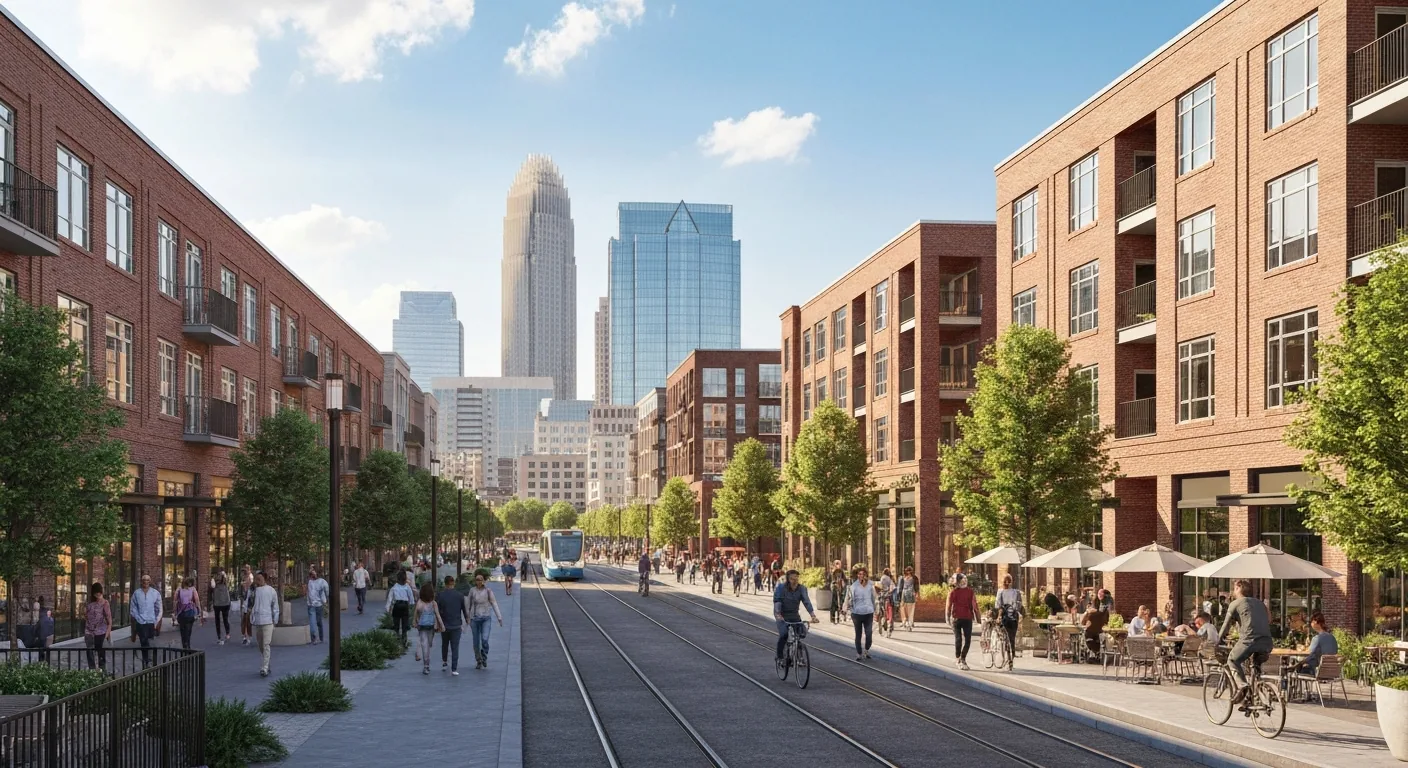
Charlotte has become one of the fastest-growing cities in the country, and the question I hear most from out-of-town buyers is some version of the same thing: where is everyone actually moving, and why there? If you are relocating to Charlotte NC, you are joining a wave. The city added more than 20,000 residents in a single year, and the wider metro now tops three million people. But “Charlotte” is really a dozen very different places, and choosing the wrong one is the most common and most expensive mistake I see relocating buyers make.
I am Steve Jarrell, a licensed agent with The Longleaf Group at eXp Realty, and I help people relocating to Charlotte NC sort through these choices every week. This guide breaks down the specific areas drawing the most newcomers, the verified migration numbers behind the growth, and the real reasons people are choosing Charlotte over the cities they are leaving. By the end you will have a clear, straight map of where to point your search.
16 min read | By Steve Jarrell, The Longleaf Group at eXp Realty | Updated August 2026
What This Guide Covers
- Is Charlotte Really Growing? The Migration Numbers
- Where People Are Relocating in the Charlotte Area
- Why People Are Relocating to Charlotte NC
- What Relocating Buyers Often Get Wrong
- How to Choose the Right Area for Your Move
- The Charlotte Relocation Process, Step by Step
- Frequently Asked Questions
The Short Answer
Charlotte added more residents in a single year than any other major American city, and almost all of that growth is landing in a ring of suburbs rather than inside the city core. Fort Mill, Indian Trail, Waxhaw and the I-77 corridor are absorbing the most. The driver is simple arithmetic: jobs are growing and the median home price is well below the metros people are leaving.
Key numbers right now:
- The city of Charlotte added 20,731 residents from July 2024 to July 2025 to reach 964,784 — the largest numeric gain of any major US city
- Charlotte’s population is up more than 12% since the 2020 census
- The 14-county metro added 289,331 residents between 2020 and 2025 and now sits above three million
- Net migration ran 57,300 in a single recent year, roughly 157 people moving in every day
- More than 60% of Mecklenburg County’s in-migration comes from out of state; Fort Mill alone grew almost 7% in a single year
- Jobs followed: finance added more than 2,200 positions in a recent year, and Atrium Health and Novant Health added around 4,000
Where People Are Relocating in Charlotte NC: The Short Answer
Most newcomers to the Charlotte NC area are settling in the fast-growing suburbs and border towns rather than the urban core, drawn by newer housing, schools, and value. The growth is real and well documented: from July 2024 to July 2025 the city of Charlotte added 20,731 residents to reach a population of 964,784, the largest numeric gain of any major U.S. city in that period. People are relocating here for job opportunities, a lower cost of living than many origin markets, and access to both the city and the surrounding suburban towns. Below I break down the specific areas drawing the most newcomers and the real reasons behind each one.
Is Charlotte Really Growing? The Migration Numbers
The growth is real, and the data backs it up. From July 2024 to July 2025, the city of Charlotte added 20,731 residents to reach a population of 964,784, the largest numeric gain of any major U.S. city in that period. Since the 2020 census, Charlotte's population has climbed more than 12%. The broader 14-county metro region added 289,331 residents between 2020 and 2025 and now sits above three million people.
Most of that growth is migration, not births. The Charlotte region gained a net 57,300 residents through migration in a single recent year, which works out to roughly 157 people moving in every single day. U-Haul ranked Charlotte among the top metros in the country for one-way moves, and North Carolina as the third-fastest-growing state. When you are relocating to Charlotte NC, you are part of a measurable, documented trend, not a hunch.
Where Newcomers Are Coming From
More than 60% of Mecklenburg County's in-migration comes from out of state. The largest streams arrive from South Carolina, Florida, and Georgia, along with high-cost metros like New York, Chicago, Washington D.C., Los Angeles, and Miami. Many are trading a more expensive coast for Charlotte's lower cost of living. Plenty of in-state moves come from Raleigh, Greensboro, and Wilmington too. The common thread among people relocating to Charlotte NC is a search for more home and more income left over at the end of the month.
It is worth understanding why this matters for your search. When a metro absorbs 157 new residents a day, demand stays high and good homes move quickly, especially in the most popular school zones and price points. That pace is why I tell buyers relocating to Charlotte NC to get their financing and priorities locked in before they start touring. In a steadily growing market, the prepared buyer wins the home, and the one still deciding what they want often watches it sell to someone else. The growth is an opportunity, but only if you move through it with a plan.
Where People Are Relocating in the Charlotte Area
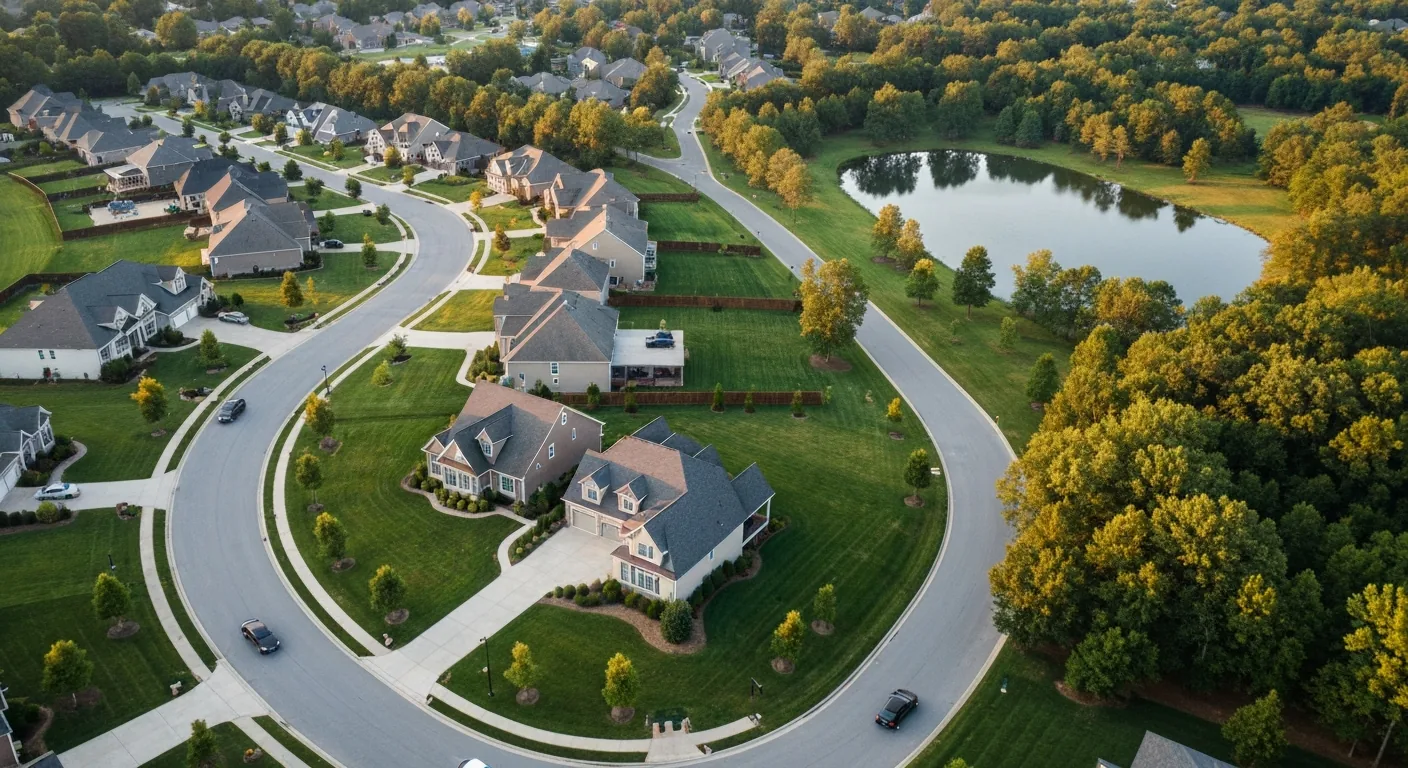
Charlotte is a hub-and-spoke metro, and newcomers tend to cluster in a handful of distinct areas, each with its own draw. Here is where people relocating to Charlotte NC are actually landing, and the real reason each one pulls the crowd it does.
South Charlotte and Ballantyne
South Charlotte, anchored by Ballantyne, is the perennial favorite for buyers who prioritize top schools and short commutes to corporate offices. Ballantyne is its own employment center, packed with corporate campuses, upscale shopping, and dining, so many residents live and work in the same zip code. It is one of the most consistent destinations for people relocating to Charlotte NC who want amenities and school quality in one package. If this is your lane, my guide to the best neighborhoods in Ballantyne is a good next read.
Fort Mill and Indian Land, South Carolina
Just across the state line, Fort Mill and Indian Land have exploded in popularity, and the reason is mostly taxes and new construction. South Carolina's property taxes on owner-occupied homes run dramatically lower than North Carolina's, which is a powerful magnet for buyers crossing the border. Fort Mill alone grew almost 7% in a single year. Both towns offer master-planned communities and highly rated schools while keeping Charlotte's job market a reasonable drive away. I compare these two head to head in my Indian Land vs Fort Mill guide.
The catch worth knowing is the commute. Indian Land and Fort Mill sit along the US-521 and I-77 corridors, and the same growth that makes them attractive has put real pressure on those roads at peak hours. For a buyer whose job is in South Charlotte or Ballantyne, the tax savings can be excellent and the drive still manageable. For a buyer commuting Uptown daily, the I-77 crawl deserves a hard look before committing. This is the kind of tradeoff I want every buyer relocating to Charlotte NC to weigh with real numbers, not just the sticker appeal of a lower tax bill.
Waxhaw, Weddington, and Marvin
These affluent Union County towns south of the city are the luxury and large-lot corner of the market. Buyers come for some of the highest-rated schools in the region, spacious properties, and a semi-rural feel that still sits within reach of South Charlotte. Union County was one of the two largest-growing counties in the entire region from 2020 to 2024. This is where a lot of move-up buyers relocating to Charlotte NC end up once they tour the area.
Lake Norman: Huntersville, Cornelius, and Davidson
North of the city, the Lake Norman towns sell a lifestyle: lakefront living, boating, and waterfront dining, with I-77 connecting back to Uptown. Huntersville, Cornelius, and Davidson offer a mix of established neighborhoods and new construction, plus a growing set of local jobs so not everyone has to commute south. For water-minded buyers relocating to Charlotte NC, this is the corner of the metro they gravitate to first.
Matthews and Mint Hill
East of the city, Matthews and Mint Hill offer an established, small-town feel with walkable downtowns and a strong sense of community. They tend to be a bit more attainable than the Union County luxury towns while still offering solid schools and easy access to Charlotte. Matthews has grown steadily and remains a favorite for buyers who want character over brand-new sprawl.
Concord and Cabarrus County
To the northeast, Concord and Cabarrus County are among the more affordable landing spots, with heavy new construction and a job base in advanced manufacturing and motorsports. For buyers relocating to Charlotte NC on a tighter budget who still want a new home and a growing community, Cabarrus often delivers the most house for the money.
Uptown and South End
Closer in, Uptown and South End draw the renters and buyers who want a walkable, urban life next to the banking jobs. The housing is mostly apartments, condos, and townhomes, and the light-rail line makes a car optional. Young professionals relocating to Charlotte NC for finance and tech roles often start here before deciding whether to stay urban or move to the suburbs.
If there is a pattern across all of these areas, it is this: people relocating to Charlotte NC are not choosing a single city, they are choosing a lifestyle and a price point, then finding the corner of the metro that matches. The buyer who wants walkability lands in South End. The buyer who wants land and schools lands in Union County. The buyer chasing the lowest tax bill crosses into South Carolina. None of them is wrong, they just weighted their priorities differently, and that is exactly the conversation worth having before you tour.
Not sure which area fits if you are relocating to Charlotte NC?
That is exactly the conversation I have every week. Tell me your priorities and budget, and I will point you to the right two or three areas to tour first.
Why People Are Relocating to Charlotte NC
Knowing where people land is only half the picture. The reasons behind the move tell you whether Charlotte fits your own situation. Here is what actually drives the decision for most people relocating to Charlotte NC.
The Job Market and the Banking Economy
Charlotte is the second-largest banking center in the United States, and the job market is the number-one engine of its growth. The region is home to eight Fortune 500 companies, including Bank of America, Lowe's, and Duke Energy, plus a deep bench of finance, healthcare, and manufacturing employers. In a single recent year the finance sector added more than 2,200 jobs and the healthcare systems Atrium Health and Novant Health added around 4,000. Job opportunity is the reason a large share of people relocating to Charlotte NC give first.
Cost of Living Compared to Where People Are Leaving
Compared to the Northeast and the West Coast, Charlotte is still a relative bargain, which is why so many movers come from New York, D.C., Miami, and California. The Charlotte-area median home price has run in the range of roughly $360,000 to the low $400,000s in recent reporting, well under what the same household would pay in the metros they are leaving. Affordability has tightened as demand has risen, so it is no longer cheap, but for many people relocating to Charlotte NC it still represents a meaningful upgrade in what their money buys.
The North Carolina vs South Carolina Tax Question
One of the first things I explain to buyers is that the state line runs right through this metro, and it matters. South Carolina's property taxes on a primary residence are significantly lower than North Carolina's, which is why Fort Mill and Indian Land pull so many border-crossing buyers. North Carolina, in turn, has a flat income tax that is lower than many of the high-tax states people are leaving. The tax math is a real part of why people relocating to Charlotte NC often weigh both sides of the border.
Climate and the Airport
Charlotte's climate is a quiet selling point: four real seasons, but mild winters compared to the Northeast and Midwest. Snow is rare and rarely sticks, and the long, warm shoulder seasons make for a genuinely outdoor-friendly calendar. And Charlotte Douglas International Airport is a major American Airlines hub, one of the busiest airports in the world, with nonstop service to well over 100 destinations. For anyone who travels for work or wants to get back to their hometown easily, that connectivity is a genuine factor in relocating to Charlotte NC.
Put those reasons together and the appeal makes sense. A strong job market gives you a reason to come, the cost of living lets you keep more of what you earn, the tax options let you optimize at the state line, and the climate and airport make daily life and travel easy. Few metros combine all four as cleanly, which is the simplest explanation for why so many people are relocating to Charlotte NC right now rather than to one of its peer cities.
Want a visual tour of these areas? I break down the South Charlotte suburbs for relocating buyers on my Welcome to Charlotte NC channel, including how to choose a neighborhood before you move.
What Relocating Buyers Often Get Wrong
Charlotte deserves its reputation, but no growing metro is all upside, and the buyers who are happiest a year later are the ones who went in clear-eyed. These are the assumptions I most often have to correct for people relocating to Charlotte NC before they choose an area.
Underestimating Traffic and Sprawl
Charlotte grew outward, not just upward, so a 12-mile commute can take far longer than a newcomer expects at rush hour. Independence Boulevard, I-485, and the I-77 corridor all have well-known bottlenecks. Before you fall for a home, drive the actual commute at 8 a.m. on a weekday. The map distance and the real travel time are often very different things, and it is one of the first realities I show buyers relocating to Charlotte NC.
Assuming All of Charlotte Is Still Cheap
Charlotte is affordable relative to New York or California, but the days of bargain prices are over. Rapid demand has pushed prices up and tightened inventory, and the income needed to afford a median home has climbed sharply. The metro is still a value compared to the coasts, but anyone relocating to Charlotte NC expecting 2015 prices will be surprised. Set expectations to current numbers, not old headlines.
Overlooking School Assignment Rules
Buyers who prioritize schools sometimes assume a home automatically feeds the school they toured online. Assignment boundaries can change, and some districts use choice or reassignment systems. If schools rank high on your list, confirm the current assignment for the specific address before you write an offer, not the neighborhood in general. This single check prevents one of the more painful surprises for people relocating to Charlotte NC.
How to Choose the Right Area for Your Move
With so many options, the buyers who do best are the ones who get specific about priorities before they tour. When I work with someone relocating to Charlotte NC, we usually start by ranking four things in order: budget, commute, schools, and lifestyle. Once those are ranked, the map narrows fast.
Start With Budget and the State Line
Decide early whether the South Carolina tax advantage matters enough to focus your search across the border. For some buyers it is decisive; for others, being closer to a North Carolina job or school zone wins. Either way, settling the budget and the state-line question first eliminates half the metro and saves you weeks of scattered touring.
Match the Area to How You Actually Live
If you want walkability and nightlife, South End beats a half-acre in Waxhaw. If you want land and top schools, the reverse is true. If you want a boat in the driveway, Lake Norman is the answer. Being clear-eyed about your daily life, not the life you imagine, is the single biggest factor in a successful move. Most regret I see from people relocating to Charlotte NC traces back to choosing an area that looked good online but did not fit their routine.
Tour With Someone Who Knows the Tradeoffs
Every area here has a downside the brochures will not mention, from commute bottlenecks to flood-prone streets to school reassignment risk. A local agent who works these submarkets daily can save you from the expensive surprises. That is the role I play for buyers relocating to Charlotte NC: connecting what you want to the specific streets where you can actually have it. You can start with my Charlotte relocation guide or learn how I represent buyers on the buying page.
The Charlotte Relocation Process, Step by Step
Most of the stress of a long-distance move comes from not knowing the order of operations. The good news is that buyers do this from out of state every day, and the path is well worn. Here is the process I walk clients through when they are relocating to Charlotte NC, start to finish.
1. Get Pre-Approved and Set a Real Budget
Before touring anything, talk to a lender and get a true pre-approval, not a quick online estimate. This sets your real budget and, just as important, settles the North Carolina versus South Carolina tax question with actual monthly numbers. A good local lender can show you how the same payment buys differently on each side of the state line, which often reshapes where people relocating to Charlotte NC decide to look.
2. Do a Focused Discovery Tour
Rather than trying to see everything, plan one or two days touring the two or three areas that fit your priorities. We drive the neighborhoods, check commutes at real rush-hour times, and walk a few homes so you can feel the differences in person. A focused tour beats a scattered one every time, and it is how most successful buyers relocating to Charlotte NC narrow their choice to a single area.
3. Make an Offer, Even From Out of State
You do not need to be physically present to buy. Modern transactions run on electronic signatures, video walkthroughs, and a trusted agent acting as your eyes on the ground. I regularly write and negotiate offers for buyers still living hundreds of miles away. The key is having someone local who can verify condition, catch red flags, and represent your interests in person.
4. Close and Land Smoothly
From accepted offer to closing usually runs about 30 to 45 days, during which we coordinate inspections, appraisal, and your move logistics. Closing itself can be handled remotely in most cases. The goal is that by the time you arrive, the keys are ready and the hardest decisions are already behind you. Done right, relocating to Charlotte NC should feel organized, not chaotic.
The thread running through all four steps is preparation. The buyers who have the smoothest moves are not the ones with the biggest budgets, they are the ones who decided their priorities early, got their financing in order, and leaned on a local guide for the parts they could not see from out of town. If you take one thing from this guide, let it be that. Charlotte rewards the prepared buyer, and the prepared buyer is the one who reaches out before the search, not in the middle of it. That early conversation is the single best move you can make when relocating to Charlotte NC.
Frequently Asked Questions About Relocating to Charlotte NC
Why are so many people relocating to Charlotte NC?
People are relocating to Charlotte NC mainly for the job market, led by the second-largest banking center in the country, plus a lower cost of living than the Northeast and West Coast, mild winters, and a major airport hub. The region adds roughly 157 new residents a day through migration.
Where do most people moving to Charlotte come from?
More than 60% of Mecklenburg County's in-migration is from out of state. The largest streams come from South Carolina, Florida, and Georgia, along with high-cost metros like New York, Chicago, Washington D.C., Los Angeles, and Miami.
What are the best areas to live when relocating to Charlotte NC?
It depends on your priorities. South Charlotte and Ballantyne lead for schools and corporate jobs, Fort Mill and Indian Land for lower South Carolina taxes and new construction, Waxhaw and Weddington for luxury and large lots, Lake Norman for waterfront living, and South End for a walkable urban life.
Is it cheaper to live in Fort Mill SC or Charlotte NC?
Many buyers move to Fort Mill or Indian Land, South Carolina because property taxes on a primary residence are significantly lower than in North Carolina. North Carolina counters with a lower flat income tax, so the right side of the border depends on your full financial picture.
How fast is Charlotte growing?
Charlotte added 20,731 residents from July 2024 to July 2025, the largest numeric gain of any major U.S. city that year, reaching 964,784 people. The 14-county metro added 289,331 residents between 2020 and 2025 and now exceeds three million.
Do I need a local agent to relocate to Charlotte?
It helps significantly. For the Ballantyne corridor specifically, start with the best real estate agent in Ballantyne NC rankings. Charlotte is really a dozen different submarkets split across two states, each with tradeoffs that are hard to see from out of town. A local agent matches your budget, commute, and lifestyle to the right areas and steers you away from expensive mistakes.
About the Author
Steve Jarrell is a licensed North Carolina and South Carolina real estate agent with The Longleaf Group at eXp Realty, a 2026 RealTrends Verified Top Team. He lives in Weddington and specializes in guiding buyers relocating to Charlotte NC and the surrounding South Charlotte and Union County markets. Reach Steve at 704-774-7170 or steve@jarrellhomes.com, or learn more at thelongleafgroup.com.
Thinking About Relocating to Charlotte NC?
Let me help you skip the guesswork. Tell me your budget, your job, and how you want to live, and I will map out the right areas to tour first and walk you through the entire relocation process.
Schedule a Free Relocation Consultation704-774-7170 | steve@jarrellhomes.com | thelongleafgroup.com
 |
Free · 26-Page Insider Guide Which South Charlotte Town Is Right for You? Towns, villages, and cities compared, NC vs SC taxes and schools, and the 5 mistakes out-of-state buyers make. Everything you’d want a local to tell you before you move. Get the free guide → |