
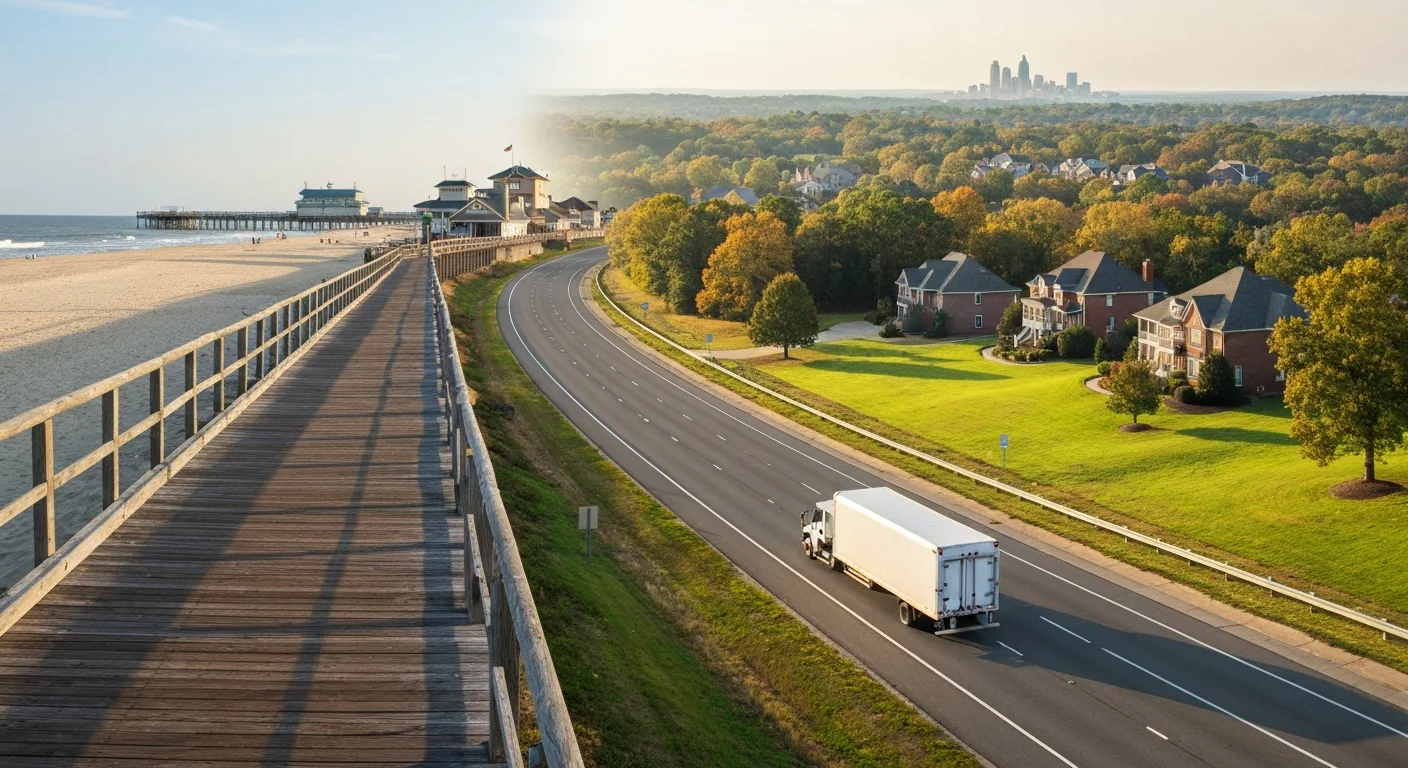
If you are weighing moving from New Jersey to Charlotte NC, you are probably not asking whether the South is cheaper. You already suspect it is. The real question is harder: what does daily life actually feel like once the U-Haul is unpacked, and will the things you trade away be worth the space, the lower taxes, and the milder winters you gain. I have helped a steady stream of buyers make exactly this move, and the real answer has more nuance than most relocation pages admit.
I am Steve Jarrell, a Weddington resident and licensed real estate agent with The Longleaf Group at eXp Realty. I work with relocating buyers across the south Charlotte and Union County suburbs every week, and a large share of them come from the Northeast. This guide compares New Jersey and Charlotte the way I would walk a client through it on a call: cost of living, what your housing dollar buys, the tax picture (including one surprise that cuts against the usual story), schools, weather, the commute, and the small daily differences that catch Jersey transplants off guard.
19 min read | By Steve Jarrell, The Longleaf Group at eXp Realty | Updated August 2026
What This Guide Covers
- The quick verdict: who this move actually fits
- Cost of living: New Jersey vs Charlotte compared
- Housing: what your dollar buys in each place
- Taxes compared: income, property, and the surprise
- Schools compared: New Jersey vs Charlotte’s suburbs
- Weather, pace, and what you will miss
- Getting around, flights home, beaches and mountains
- Differences people from New Jersey don’t expect
- Where New Jersey buyers tend to land in south Charlotte
- How the move actually works with a local agent
- Frequently asked questions
The Short Answer
The New Jersey to Charlotte move is a property tax story before it is anything else. New Jersey’s average bill was the highest in the nation in 2025 and a comparable North Carolina home often runs less than half of it. Home prices are lower here too, and North Carolina’s flat income tax helps high earners the most. The tradeoff is a smaller job market and no easy train.
Key numbers right now:
- Property tax: New Jersey averaged about $10,570 in 2025, the highest in the nation; North Carolina’s effective rate is roughly 0.66% statewide (Tax Foundation)
- Income tax: North Carolina is flat at 4.25% in 2025 and 3.99% in 2026; New Jersey is graduated from 1.4% up to 10.75% on income over $1 million
- New Jersey’s statewide median home price reached roughly $560,000 in 2024 (New Jersey Realtors)
- Monmouth County’s median sale price sat around $723,000 in early 2026
- The Charlotte metro median sale price was about $435,000 in mid-2025 (Canopy MLS)
- Inside Charlotte, the combined city-and-county rate is about 76.68 cents per $100 of assessed value
The Quick Verdict: Who This Move Actually Fits
Here is the short version before the detail. Moving from New Jersey to Charlotte NC is a strong move for buyers who want more house and land for the money, a lower property tax bill, and a milder winter, and who are willing to trade some of the things New Jersey does better than almost anywhere: dense walkable towns, world-class diners and pizza, and a one-hour reach into New York City. If those Northeast staples are the center of your life, you will feel the loss. If they are nice-to-haves, the Charlotte suburbs tend to win the math and the lifestyle for relocating buyers.
The quick comparison, moving from New Jersey to Charlotte NC:
- Home prices: Charlotte metro median was about $435,000 in mid-2025 versus roughly $560,000 statewide in New Jersey and far higher in commuter counties.
- Property tax: New Jersey averaged about $10,570 in 2025, the highest in the nation; a comparable North Carolina home often runs less than half that.
- Income tax: North Carolina is a flat 4.25% in 2025 and 3.99% in 2026; New Jersey is graduated up to 10.75%, so the flat rate helps high earners most.
- Weather: Charlotte averages about 4.3 inches of snow a year versus 10 to 30 inches across New Jersey, with milder winters.
- Staying connected: Charlotte Douglas offers frequent two-hour nonstops to Newark, LaGuardia, and JFK.
North Carolina has become one of the top landing spots for people leaving New Jersey. A 2024 HireAHelper migration study ranked North Carolina the second most popular destination for New Jersey movers, behind only Florida. That tracks with what I see on the ground, and it connects to a pattern worth naming. Many Northeast residents moved to Florida first, then found the summers too punishing and the distance from home too far, so they moved halfway back to the Carolinas. Charlotte sits right in that sweet spot. Locals call these buyers half-backs, and a good number of my New Jersey clients are making the move directly, skipping the Florida chapter entirely.
The reason the comparison matters so much is that New Jersey and the Charlotte suburbs are genuinely different products, not the same lifestyle at two price points. You are not just buying a cheaper house. You are choosing a car-first suburban pace over a transit-and-density one, a long warm-weather season over four hard seasons, and a flat state income tax over one of the most expensive tax stacks in the country. Let me break down each piece.
Already planning a move from New Jersey to Charlotte?
I help Jersey buyers map the timeline, the NC vs SC tax decision, and the right submarket before they ever book a flight down.
Schedule a 15-Minute Introductory Call704-774-7170 | steve@jarrellhomes.com | thelongleafgroup.com
Cost of Living When Moving From New Jersey to Charlotte NC
Cost of living is the headline reason most people start looking south, and for anyone moving from New Jersey to Charlotte NC the gap is real, but it is not evenly spread. The biggest savings show up in housing and property taxes. Groceries, gas, and everyday goods are closer than you might expect, and a few categories in Charlotte have crept up as the region has grown.
New Jersey carries one of the highest costs of living in the nation, and the single largest driver is housing, followed closely by property taxes and utilities. Charlotte sits near or just below the national average on most cost-of-living indexes. When buyers tell me their dollar stretches further here, they are almost always describing two line items: their mortgage and their tax bill. Those two are where the move pays for itself.
The caveat worth stating plainly is that Charlotte is no longer the bargain it was a decade ago. Strong in-migration, including a wave of buyers from the Northeast, has pushed prices up steadily. You will still save meaningfully compared to most of New Jersey, but if you are picturing 2015 Charlotte prices, reset that expectation. The savings are best measured against what the same house and the same tax bill would cost you back home, not against an outdated number.
Housing: What Your Dollar Buys in Each Place
This is where moving from New Jersey to Charlotte NC gets concrete. New Jersey’s statewide median home price reached roughly $560,000 in 2024 according to New Jersey Realtors data, and in the desirable commuter counties the numbers run far higher. Monmouth County’s median sale price sat around $723,000 in early 2026, and Bergen and Essex County buyers know the story well. By contrast, the Charlotte metro median sale price was about $435,000 in mid-2025 per Canopy MLS reporting.
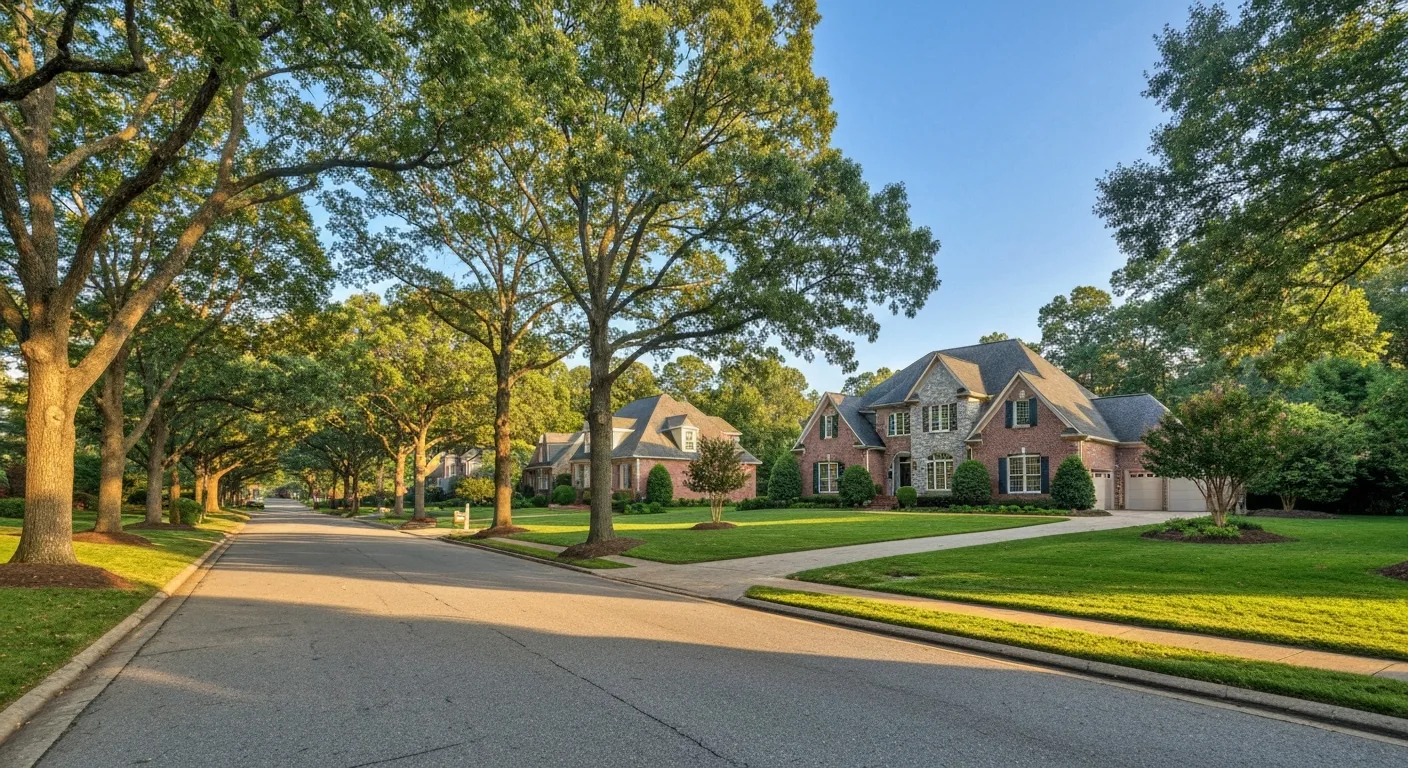
The averages only tell part of it. What changes the daily experience is what that money buys. In much of northern and central New Jersey, a budget in the mid-$500,000s often means an older home on a modest lot, sometimes needing updates, sometimes a townhouse or condo. In the south Charlotte suburbs, a similar number reaches a newer, larger single-family home, frequently with a half-acre or more, modern systems, and a two-car garage. The square footage and the lot size are usually the first things my New Jersey buyers comment on when they walk through.
It is worth being precise about the trade. New Jersey homes hold value extremely well and sit close to one of the strongest job markets in the country. Charlotte homes give you more space and a lower carrying cost, but you are betting on a growth market rather than an established one. For most relocating buyers that bet has paid off, because the region keeps adding jobs and residents, but it is a different financial profile than the Northeast and worth understanding before you sign. If you want help reading the local market block by block, that is exactly the kind of thing I cover on a buyer consultation.
Taxes Compared: Income, Property, and the Surprise
Taxes are where the story of moving from New Jersey to Charlotte NC usually gets oversimplified, so let me give you the version with the nuance intact. There are three taxes that matter: property, income, and sales. They do not all move in the direction you expect.
Property Tax: The Biggest, Most Reliable Savings
This is the clearest win, and for most buyers it is the line that makes the move pencil out. New Jersey has the highest property taxes in the country. The average residential property tax bill hit a record of about $10,570 in 2025 per the New Jersey Department of Community Affairs data, and in Bergen and Essex Counties the average bill ran north of $13,000 in 2024. North Carolina’s effective property tax rate is roughly 0.66% statewide per Tax Foundation figures, among the lower tiers in the country.
In Union County, NC, the county tax rate for fiscal year 2025-2026 is 43.42 cents per $100 of assessed value, set after the county’s 2025 revaluation, and you can confirm current county rates on the official North Carolina county tax rate schedule. Inside the city of Charlotte in Mecklenburg County, the combined city-and-county rate is about 76.68 cents per $100 for the same year. Either way, a New Jersey buyer used to a five-figure tax bill is often looking at less than half of it here on a comparable home. That single change frees up real monthly cash flow.
Income Tax: The Surprise That Cuts Against the Story
Here is the part most relocation pages get wrong. North Carolina has a flat income tax: 4.25% for 2025, dropping to 3.99% for 2026, per the North Carolina Department of Revenue. New Jersey is graduated, from 1.4% up to 10.75% on income over $1 million. People assume that means a guaranteed income-tax win in North Carolina. At the middle of the income range, it is not.
Run the numbers on a $150,000 married-filing-jointly income. Using New Jersey’s tax rate schedules, that household owes roughly $5,500 in state income tax, because New Jersey’s lower brackets are genuinely low. North Carolina’s flat 4.25% on the same $150,000 is about $6,375 for 2025, and $5,985 at the 2026 rate. So a middle-income household can actually pay slightly more in income tax after the move.
The flat rate only becomes a clear advantage at higher incomes, where New Jersey’s rate climbs to 6.37% above $150,000 and 8.97% above $500,000. If you are a high earner, North Carolina’s flat rate is a meaningful break. If you are not, do not count on income tax savings when moving from New Jersey to Charlotte NC. Count on the property tax and the home price instead.
Sales Tax and the South Carolina Option
Sales tax is close to a wash. New Jersey’s statewide rate is 6.625%, North Carolina’s combined average runs about 7%, and South Carolina’s averages about 7.49%. The bigger lever is the state line itself. Just south of Charlotte, the South Carolina towns of Fort Mill and Indian Land offer lower property taxes on owner-occupied homes thanks to the state’s 4% assessment ratio, while many residents still work in Charlotte. That NC-versus-SC choice is one of the most consequential decisions a relocating buyer makes, and I walk through it in detail in my video on North Carolina vs South Carolina for south Charlotte buyers.
Schools Compared: New Jersey vs Charlotte’s Suburbs
Schools are usually the make-or-break factor for anyone moving from New Jersey to Charlotte NC, and I will be straight with you: New Jersey sets a high bar. In the national public school rankings by state, New Jersey has ranked number one in the country for pre-K through 12, while North Carolina sits closer to the middle of the pack at the state level. So the right framing is not that North Carolina schools beat New Jersey schools statewide. They do not. The framing is that the specific suburbs relocating buyers choose here are among the strongest in the state, and they hold up well.
The key thing to understand is that assignment is by home address. Both Charlotte-Mecklenburg Schools (CMS) and Union County Public Schools (UCPS) assign students to a base school based on where the home sits, so the house you buy determines the school your student attends. That is different from how some New Jersey towns operate, and it is the number one thing I tell out-of-state buyers to verify before they fall for a house. Always confirm the exact assignment for a specific address, because boundaries can run down the middle of a neighborhood.
On the strength of the suburban options: in Union County, Marvin Ridge High School is frequently ranked the number one public high school in the Charlotte area by Niche and sits in the top tier statewide, and Weddington High School ranks in the top 1% of North Carolina schools for test scores. Across the South Carolina line, the Fort Mill School District was named the number one school district in South Carolina by Niche in 2025. These are the districts that draw relocating buyers, and they are the reason buyers from strong New Jersey towns generally feel at home with the academics here. You can read more about one of these markets in my Marvin NC insider guide.
Weather, Pace, and What You Will Miss
The weather is one of the most reliable wins of moving from New Jersey to Charlotte NC. Charlotte averages about 4.3 inches of snow per year, against 10 to 30 inches across New Jersey depending on how far north you live. January lows in Charlotte hover around 30 degrees with highs near 50, while New Jersey lows commonly sit in the low-to-mid 20s. Charlotte also picks up a few more sunny days a year, roughly 214 to New Jersey’s 205. The growing season is longer, the spring arrives earlier, and the brutal stretch of Northeast winter simply does not happen here.
There is a trade on the back end. Charlotte summers are humid subtropical, hot and sticky in July and August in a way that rivals or beats a Jersey summer. And the region has a long, intense pollen season that runs from late February through November, with a notorious yellow tree-pollen peak in April. If anyone in the home has allergies, that first Carolina spring is an adjustment. It is manageable, but no one warns you, so consider this the warning.
The bigger adjustment is pace and culture. New Jersey transplants consistently tell me they miss a handful of specific things: real diners, proper bagels, New Jersey pizza, the density of good food within ten minutes, the Shore, and the easy reach of New York City. Those are genuine losses, and I do not pretend the Charlotte food scene fully replaces them, though it has come a long way. What they gain is a slower, friendlier rhythm, more room to breathe, neighbors who wave, and far less of the everyday grind that comes with Northeast density and traffic. Whether that trade feels like relief or like boredom depends entirely on what you valued about home.
Getting Around, Flights Home, Beaches and Mountains
Transportation is the category where people moving from New Jersey to Charlotte NC feel the change fastest. New Jersey gives you NJ Transit, PATH, and a one-seat ride into Manhattan from much of the state. Charlotte is car-dependent. There is a LYNX light rail line running through Uptown, but its reach is limited, and for the suburbs where relocating buyers actually land, you will drive for nearly everything. The road network leans on I-485 around the city, I-77 north to south, and I-85 to the northeast. The upside is that the average Charlotte commute is shorter, about 25.8 minutes against New Jersey’s 32.2, and the daily traffic, while real and growing, rarely reaches Turnpike-at-rush-hour misery.
Staying connected to New Jersey is easy, and this matters more than buyers expect. Charlotte Douglas International is a major American Airlines hub with frequent nonstop flights to Newark, LaGuardia, and JFK, and the flight runs about two hours gate to gate. For visiting parents, holidays, or the occasional work trip back, you are a short, cheap nonstop from home. That single fact settles a lot of nerves for buyers worried about leaving family behind.
You also gain a geography that is hard to beat for weekends. From Charlotte you can reach Myrtle Beach in about three and a half hours and Wilmington in a similar window, so the coast is a doable weekend rather than a summer-only pilgrimage. In the other direction, Asheville and the Blue Ridge mountains are about two hours away. Beach one weekend, mountains the next, both from the same driveway, is a real lifestyle upgrade for a lot of New Jersey transplants.
Differences People From New Jersey Don’t Expect
These are the small surprises that come up after closing, the ones that have nothing to do with price and everything to do with daily life. When you are moving from New Jersey to Charlotte NC, I flag these early so you are not caught off guard.
- HOAs are everywhere. Most newer suburban neighborhoods here have a homeowners association with dues and rules. If you are coming from an older New Jersey town with no HOA, this is a new layer to read carefully before you buy.
- Well and septic exist in the outer suburbs. Closer-in homes are on public water and sewer, but parts of outer Union County run on private wells and septic systems. Neither is a dealbreaker, but it changes inspections and maintenance, and it surprises buyers expecting municipal everything.
- North Carolina taxes your car. New Jersey has no annual vehicle property tax. North Carolina does, billed together with your registration through the Tag and Tax Together program, and the state requires an annual safety inspection, plus emissions in Mecklenburg County. It is a modest but recurring cost New Jersey drivers are not used to.
- The state line is a real decision. South Charlotte straddles the NC and SC border. Living in South Carolina can lower your property tax and income tax while keeping a Charlotte job, but it changes your DMV, your schools, and your tax filing. It is worth modeling both sides.
- Winter is mild but not zero. Charlotte gets the occasional ice event, and the region effectively shuts down for it because there is little snow equipment. A New Jersey driver will find the caution almost funny, until the one ice storm a year proves the locals right.
Where New Jersey Buyers Tend to Land in South Charlotte
When someone moving from New Jersey to Charlotte NC asks me where they would actually feel at home, I steer the conversation toward the south Charlotte and Union County submarkets, because they line up best with what Northeast buyers tend to prioritize: strong schools, space, and a reasonable commute. Here is how I match them.
- Weddington and Marvin, NC. The space-and-schools choice. Large lots, top-rated assignments, an established upscale feel. This is where buyers who valued the best New Jersey suburbs but want more land tend to gravitate. I live in Weddington, so this is home turf.
- Waxhaw, NC. A historic downtown with genuine character, strong schools, and a slightly more attainable entry point than Weddington. Good fit for buyers who want walkable small-town texture without giving up the suburbs.
- Matthews and Indian Trail, NC. Closer in, more attainable, with quicker access to Charlotte proper. A practical landing spot for commuters and first-move buyers who want value.
- Ballantyne, NC. South Charlotte’s corporate and residential hub, popular with relocating professionals who want amenities and a short drive to major employers.
- Fort Mill and Indian Land, SC. Just over the line, with lower taxes, highly rated Fort Mill schools, and heavy new construction in Indian Land. This is the destination for buyers optimizing the tax and new-home angle.
If you want the numbers behind one of these markets, my breakdown of the cost of living in Weddington NC is a good companion read, and if you are coming the half-back route, my guide on moving from Florida to Charlotte covers that path.
How the Move From New Jersey to Charlotte NC Actually Works
The logistics of an out-of-state move are where a local agent earns their keep, because the process is genuinely different from buying down the street from your current home. When I help a buyer relocating from New Jersey to Charlotte NC, the first conversation is rarely about a specific house. It is about sequencing: are you selling in New Jersey first, can you carry two homes for a stretch, and do you need a temporary rental while you learn the submarkets before committing.
From there, the search itself runs differently for an out-of-state buyer. You cannot pop over after work to see a listing, so we lean on video walkthroughs, neighborhood-by-neighborhood orientation, and tightly planned in-person trips where we see a lot in a short window. I also front-load the things that surprise people, the well-and-septic question, the exact school assignment, the HOA documents, and the NC-versus-SC tax decision, so we are not discovering them during a stressful inspection period. If you are also selling, my guidance on the selling side helps line up the timing on both ends.
The point of working with someone who does this regularly is simple: a relocating buyer should not pay for the same learning curve a local already absorbed. You can read more about my background on the About page, or reach out through the contact page whenever you want to talk through your specific situation.
Frequently Asked Questions About Moving From New Jersey to Charlotte NC
Is it cheaper to live in Charlotte than New Jersey?
For most buyers, yes, and the savings concentrate in housing and property taxes. A comparable home in the Charlotte suburbs typically costs less to buy and far less to carry than one in New Jersey’s commuter counties, where property tax bills often top $10,000 a year. Everyday costs like groceries and gas are closer between the two, so the move pays off mainly through your mortgage and tax bill rather than your weekly spending.
How much do you save on taxes moving from New Jersey to North Carolina?
The reliable savings is property tax. New Jersey’s average bill hit about $10,570 in 2025, while a comparable North Carolina home in Union County or Mecklenburg County often runs less than half that. Income tax is more nuanced: North Carolina’s flat rate of 4.25% in 2025 and 3.99% in 2026 is a clear win for high earners but can be roughly even with, or slightly higher than, New Jersey for middle incomes. Model your own numbers rather than assuming an automatic income-tax break.
What are the best Charlotte suburbs for buyers moving from New Jersey?
The south Charlotte and Union County suburbs line up best with what Northeast buyers prioritize. Weddington and Marvin lead on space and schools, Waxhaw adds a walkable historic downtown, Matthews and Indian Trail offer value and a shorter commute, Ballantyne suits relocating professionals, and Fort Mill and Indian Land across the South Carolina line add lower taxes and new construction. The right fit depends on your commute, budget, and how much land you want.
Are North Carolina schools as good as New Jersey schools?
At the state level, New Jersey ranks number one in the country for K-12 and North Carolina ranks closer to the middle. But the specific suburbs relocating buyers choose here are among the strongest in the state. Marvin Ridge High is regularly the top-ranked public high school in the Charlotte area, Weddington High ranks in the top 1% statewide, and Fort Mill in South Carolina was named the state’s number one district. Always verify the exact assignment for the address you are considering, since schools are assigned by home location.
What do New Jersey transplants miss most about home?
The most common answers are food and proximity: real diners, proper bagels, New Jersey pizza, the density of good restaurants nearby, the Jersey Shore, and the easy reach into New York City. Charlotte’s food scene has grown a lot but does not fully replicate those Northeast staples. The offsetting gains are space, lower costs, milder winters, and a slower, friendlier pace, plus a quick two-hour nonstop flight back to Newark when you need a fix.
How long is the flight and drive between Charlotte and New Jersey?
Charlotte Douglas International offers frequent nonstop flights to Newark, LaGuardia, and JFK, with a flight time of about two hours. Driving is roughly 600 to 650 miles, generally a 9 to 10 hour trip depending on traffic through the I-95 corridor. Most relocating buyers fly for visits and reserve the drive for the move itself.
Should I buy in North Carolina or South Carolina near Charlotte?
It depends on your priorities. South Carolina towns like Fort Mill and Indian Land can lower your property and income tax while you keep a Charlotte job, and Fort Mill’s schools are highly rated. North Carolina suburbs like Weddington, Marvin, and Waxhaw offer their own top schools and more established communities. The decision affects your taxes, DMV, and school assignment, so it is worth modeling both sides before you commit.
About the Author
I am Steve Jarrell, a licensed real estate agent in both North Carolina and South Carolina and a Weddington resident, working with The Longleaf Group at eXp Realty. I specialize in relocation across the south Charlotte and Union County suburbs, and a large share of my clients move here from the Northeast, including New Jersey. Before real estate, I spent more than a decade building real estate marketing technology, which is why I lean on data and systems to give relocating buyers a clear, data-backed read on the market rather than a sales pitch.
Thinking About a Move From New Jersey to Charlotte?
Let’s talk through your timeline, your must-haves, and exactly where a New Jersey buyer lands best in the south Charlotte suburbs. I help relocating buyers plan the whole move, from selling there to buying here.
Schedule a 15-Minute Introductory Call704-774-7170 | steve@jarrellhomes.com | thelongleafgroup.com
 |
Free · 26-Page Insider Guide Which South Charlotte Town Is Right for You? Towns, villages, and cities compared, NC vs SC taxes and schools, and the 5 mistakes out-of-state buyers make. Everything you’d want a local to tell you before you move. Get the free guide → |