
Last updated June 2026
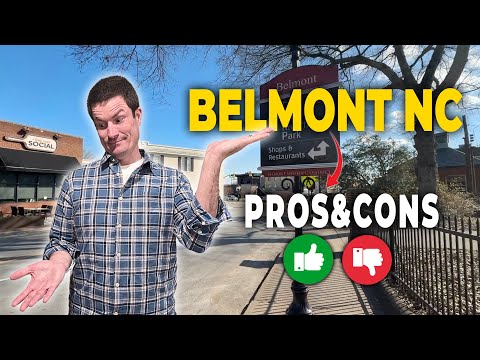
If you are considering moving to Belmont NC, the question underneath the question is usually this: can a former mill town on the west side of the Catawba River really compete with the south Charlotte suburbs everyone else is shopping? I am Steve Jarrell with The Longleaf Group at eXp Realty, and the short answer is yes, with caveats worth understanding before you fall in love with Main Street on a Saturday afternoon, because everyone falls in love with Main Street on a Saturday afternoon.
Belmont has quietly become one of the most complete small towns in the Charlotte metro: a walkable historic downtown, a college, a brand new hospital, riverfront parks, and a fifteen-minute run to the airport. It has also picked up the growing pains that come with that resume. This guide walks through the 2026 numbers, the neighborhoods, the schools, the tax math, and the tradeoffs, the same way I would lay it out for you in the car.
What This Guide Covers
- Moving to Belmont NC: The Quick Take
- What Homes Cost in Belmont in 2026
- Neighborhoods to Know in Belmont
- Downtown Belmont: The Main Street Everyone Wants
- From Mill Town to Loft Apartments
- Parks, the River, and Things to Do
- Schools and Belmont Abbey College
- The New Hospital and the Commute
- The Tax Math Nobody Explains
- The Honest Cons
- Belmont NC FAQ
16 min read | By Steve Jarrell, The Longleaf Group at eXp Realty | Updated September 2026
The Short Answer
Belmont is the shortest airport run of any town in this market — about 7 miles and 15 minutes to CLT — with a real downtown and a $525,000 median. The catch is the tax rate: Gaston County plus the City of Belmont lands a little over $1.05 per $100, materially higher than the Union County towns. For anyone who flies for work, it is a sleeper pick.
Key numbers right now:
- The 2020 census counted 15,010 residents; 2026 estimates put the town around 16,700, roughly ten percent growth in six years
- Redfin’s median sale price was $525,000 for the three months ending April 2026, down about 10% year over year; Zillow’s index sat near $434,000, up about 1.7%
- Most 2026 transactions land between the mid $400s and mid $500s, with Stowe Pointe from the $480s and South Point Village from the $510s
- Charlotte Douglas International is roughly 7 miles and 15 minutes away, one of the shortest airport commutes in the metro
- Uptown Charlotte is about 15 miles west, an 18 to 25 minute drive via I-85 or Wilkinson Boulevard
- Property tax: the Gaston County rate for 2025-2026 is 59.9 cents per $100 and the City of Belmont adds about 45.5 cents, for a combined rate a little over $1.05
Moving to Belmont NC: The Quick Take
Belmont sits in eastern Gaston County, about 15 miles west of Uptown Charlotte, wedged between the Catawba River and the South Fork River. The 2020 census counted 15,010 residents; 2026 estimates put the town around 16,700, roughly ten percent growth in six years. That growth is the headline and the subplot of everything else here: the town that Charlotte forgot about for decades is now firmly on the relocation map, and both the charm and the friction in this guide flow from that fact.
What makes Belmont different from the interchangeable growth suburbs is that it was a real town first. The mill-village street grid, the brick storefronts, the college on the hill, the church steeples you can see from the river: none of it was master-planned, and you can feel the difference the moment you park. Buyers who tour Belmont after a week of looking at south Charlotte subdivisions consistently tell me the same thing: this is the first place that felt like somewhere.
Who does Belmont fit best? In my experience, three buyer profiles keep choosing it: frequent flyers who want the shortest possible airport run in the metro, buyers priced out of NoDa and Plaza Midwood who still want walkable character, and downsizers drawn by the river, the hospital, and now a Del Webb community. Who should think twice? Anyone whose daily destination is Ballantyne, SouthPark, or Union County, because you would be commuting across the entire metro, and anyone whose home search starts and ends with elementary school dashboards. Everyone else owes the town a Saturday visit before crossing it off.
What Homes Cost in Belmont in 2026
Here is where I have to slow down, because the 2026 data tells two stories depending on the source. Redfin’s median sale price for Belmont was $525,000 for the three months ending April 2026, down about 10% year over year. Zillow’s home value index for the same window sat near $434,000, up about 1.7%. Neither source is wrong; Belmont is a small market where a few months of luxury riverfront closings or a wave of entry-level townhome sales will swing the median dramatically. The fair summary: typical Belmont buyers in 2026 are transacting somewhere in the mid $400s to mid $500s, the frenzy pricing of 2021 and 2022 has cooled into a more balanced market, and well-priced homes still move while ambitious listings sit.
The inventory mix runs wide. Historic mill cottages and bungalows near downtown, established neighborhoods from the 1990s and 2000s, and a serious wave of new construction: McLean South Shore and Seven Oaks at McLean near the river, the Enclave at Belmont by Davidson Homes, and Carolina Riverside, a Del Webb 55-plus community. That last one matters even if you are not the 55-plus buyer, because a national active-adult brand choosing Belmont tells you where the demographic demand curve is pointing. If new construction is on your list, read my guide to buying new construction in the Charlotte area before you sign anything in a model home.
My local read: the best long-term value in Belmont is walking distance to downtown, full stop. The premium for those streets has grown every year I have been doing this, and the town’s own investments keep pushing the same direction. A renovated bungalow you can walk to Friday dinner from will outperform a bigger house on the bypass over a ten-year hold, and it is not particularly close.
Neighborhoods to Know in Belmont
Belmont’s map sorts into three bands: the lake, the downtown core, and the master-planned middle. On the lake, Reflection Pointe is the marquee gated community, custom homes built from 2006 into the mid-2020s running 2,900 to over 6,700 square feet, with recent sales from about $1.19 million to over $2.2 million for Lake Wylie waterfront. McLean is the big master-planned name, and its sections tell the price story by themselves: McLean Overlake from the $450s, The Conservancy at McLean from the $510s, McLean South Shore from the $850s, and McLean Hunts Point clearing $1 million on the water.
Closer to town, Eagle Park is the neighborhood I show most: single-family homes and townhomes built 2007 to 2018 within an easy reach of Main Street, with the past year’s sales running roughly $470,000 to $740,000 and a median around $615,000. The Belmont Historic District carries the early-1900s Craftsman bungalows and porch-front streets that give the town its postcard look, with prices anywhere from the high $200s for a project to about $700,000 renovated. Stowe Pointe from the $480s and South Point Village from the $510s fill the newer-traditional middle.
How I sort it for buyers: Eagle Park or the Historic District if walking to dinner is the point of moving here; McLean if you want master-planned amenities and a newer build; Reflection Pointe or Hunts Point if the lake is the brief. And one warning that applies across all three bands: walkability premiums in Belmont are real and growing, so the cheapest house on a walkable street usually beats the nicest house on the bypass as an investment.
Downtown Belmont: The Main Street Everyone Wants
Downtown is Belmont’s closing argument. Within a few walkable blocks you have Nellie’s Southern Kitchen, the Jonas family’s restaurant that put Belmont on plenty of out-of-state radars; Old Stone Steakhouse for the anniversary dinner; The String Bean as the everyday market, butcher, and cafe; Primal Brewery and Rivermen Brewing for local beer; plus Jekyll and Hyde Taphouse, Sammy’s Neighborhood Pub, Pita Wheel, and the Bearded Buffalo. That is a real restaurant economy for a town of sixteen thousand, and it did not exist at this depth ten years ago.
The thing I tell buyers to notice is not any single restaurant but the vacancy rate: Main Street storefronts do not stay empty in Belmont. The town runs a steady calendar of street festivals and markets through the year, and on a warm Friday night the sidewalks are genuinely full. If a walkable evening is a top-three priority for you, Belmont competes with Waxhaw and Matthews for the best downtown in the metro, and plenty of people would hand Belmont the trophy.
Anchoring the downtown calendar is Stowe Park, a shaded green with a playground and a community amphitheater that hosts outdoor concerts and seasonal festivals. The annual rhythm is part of what residents buy into: the Garibaldi Festival each spring (April 25 in 2026) fills downtown with art and music, Friday Night Live runs through June, the town’s Juneteenth celebration lands the same month, and the first Saturday of December brings Christmas Village, with carriage rides, a carousel, and the Festival of Trees lighting up Stowe Park. I tell relocating buyers to check the event calendar before a visit, because seeing Main Street during Garibaldi or Christmas Village answers the “what is this town actually like” question better than any listing ever will.
From Mill Town to Loft Apartments
Belmont’s bones are textile bones, and knowing the history explains the housing stock. The Stowesville Cotton Mill opened back in 1853, but the town’s real run started in 1901 when Robert Lee Stowe Sr. founded the Chronicle Mill. By the 1930s Belmont had more than twenty mills, including Majestic, Acme, Imperial, Sterling Spinning, and the R.L. Stowe operations, each with its own mill village of worker housing, churches, and stores. Those villages are why Belmont has walkable street grids and front-porch neighborhoods where other suburbs have cul-de-sac pods.
The industry wound down between the 1970s and 2000s; R.L. Stowe closed its last two plants in 2009 and the Chronicle Mill spun its final thread in 2010. The ending became a beginning: the Chronicle Mill building has been converted into 238 loft apartments with exposed brick, original hardwoods, and timber beams, plus about 9,000 square feet of commercial space and the Mill Collective coworking area. For buyers, the mill story has a practical lesson: Belmont has done adaptive reuse instead of demolition, which protects the character that makes the town worth moving to in the first place.
Parks, the River, and Things to Do
The river is the amenity the subdivisions cannot copy. Kevin Loftin Riverfront Park puts a kayak launch, a fishing pier, an amphitheater, a playground, and picnic shelters right on the Catawba, a short walk from downtown. Rocky Branch Park adds a 1.2-mile multi-use trail that is part of the Carolina Thread Trail network plus mountain biking trails, with fundraising underway for an advanced 1.2-mile addition. The city is also working with NCDOT on the Belmont Rail Trail, a planned greenway along an inactive rail corridor connecting downtown to Belmont Abbey College in three phases, and in April 2026 the city issued an RFP for a waterfront village master plan along the Catawba. Follow the projects on the City of Belmont’s official site.
Then there is Daniel Stowe Botanical Garden, 380 acres on the shore of Lake Wylie just south of town, with an 8,000 square foot Orchid Conservatory, the Lost Hollow children’s garden with its new Adventure Trail and Prairie Castle playground, and seasonal events from Scarecrow Hollow in the fall to Holiday Lights in December. Adult admission runs $18.95, kids 2 to 12 are $10.95, and the events calendar makes it a repeat destination rather than a one-time visit; it is one of the most reliably kid-friendly outings in the region. Details and seasonal hours are on Go Gaston, the county’s official tourism site.
One more outdoor card Belmont holds: the U.S. National Whitewater Center sits about 10 miles away, just across the river. Whitewater rafting, kayaking, paddleboarding, ziplines, ropes courses, climbing, and some of the best mountain bike trails in the region, plus a year-round calendar of races and festivals. Most of Charlotte fights forty minutes of traffic to get there; from Belmont it is a casual after-work trip, and for active buyers that proximity quietly beats another community pool.
Schools and Belmont Abbey College
Schools are the part of the Belmont story where I make buyers slow down. The assigned path for most of town is Belmont Central Elementary, Belmont Middle, and South Point High. South Point is the strong anchor: an A- on Niche, 9/10 on GreatSchools, and a state report card ranking in the top third of North Carolina high schools. Belmont Central carries an A- on Niche but a 5/10 on GreatSchools, and Belmont Middle sits at a B+ and 5/10, which tells you the test-score picture is more mixed at the lower grades than the real estate marketing lets on. If you are comparing against the Union County clusters on the other side of the metro, the honest answer is that south Charlotte wins the spreadsheet contest, and Belmont answers with everything else in this guide. Verify any specific address with Gaston County Schools before you write an offer.
Belmont Abbey College shapes the town more than its size suggests. The Catholic liberal arts college posted a record enrollment of 1,741 students in fall 2025, and it gives Belmont a college-town undertone you do not get anywhere else in Gaston County: lectures, basilica concerts, college sports, and a steady supply of young energy downtown.
The New Hospital and the Commute
The biggest infrastructure upgrade in Belmont’s modern history opened on January 8, 2025: CaroMont Regional Medical Center Belmont, a 54-bed hospital that means emergency care no longer requires a drive to Gastonia or across the river to Charlotte. For relocating buyers, and especially for the Del Webb demographic, this single project changed Belmont’s livability score more than anything else in the last decade. Details are at CaroMont Health.
The commute story is Belmont’s quiet superpower in one direction and its weakness in another. Charlotte Douglas International Airport is about 15 minutes and 7 miles away, the shortest airport run of any town I work, which makes Belmont a sleeper pick for road warriors and airline employees. Uptown Charlotte is 18 to 25 minutes on a clear run via I-85 or Wilkinson Boulevard, but I-85 through this corridor is the metro’s most congestion-prone artery, and a wreck on the Catawba River bridge can turn 20 minutes into an hour. My standing advice applies double here: drive your exact commute at your exact hour before you commit, and if your office is in Ballantyne or SouthPark rather than Uptown, think hard, because you will be crossing the entire city twice a day.
The Tax Math Nobody Explains
Buyers assume Gaston County means cheaper taxes across the board, and the truth needs a calculator. The Gaston County rate for 2025-2026 is 59.9 cents per $100 of assessed value, and the City of Belmont adds about 45.5 cents, for a combined rate a little over $1.05. That combined rate is meaningfully higher than Mecklenburg plus Charlotte. What saves the actual bill is that Belmont’s assessed values run lower than comparable Mecklenburg addresses, so the dollars owed often land in the same neighborhood even though the rate is higher. The takeaway: do not move to Belmont for a tax break that may not materialize; move for the town and treat the tax bill as roughly a wash. Current rates and assessment data are on the Gaston County government site.
Three buyer scenarios show how the math plays out in practice. The airport-based road warrior comparing Belmont against Steele Creek: Belmont wins on downtown and the river, roughly ties on airport time, and the tax difference rarely changes the decision once you run actual assessed values. The downsizer comparing Carolina Riverside against a Fort Mill 55-plus community: South Carolina’s owner-occupied tax structure undercuts Gaston’s rates, but the hospital five minutes away and a real Main Street are the variables that usually decide it. The lake buyer comparing Reflection Pointe against Tega Cay: similar water, different states, and the right answer turns entirely on where you work and how you feel about the I-85 bridge. In all three cases the tax line matters less than buyers expect and the lifestyle line matters more.
The Honest Cons
Four things I would want known before moving to Belmont NC. First, I-85 is the unavoidable fact of west-side living; when it flows, life is great, and when it does not, there is no second river crossing that saves you. Second, the elementary and middle school ratings trail the high school, and trail the top Union County clusters by a wider margin, so buyers optimizing purely for school dashboards usually land elsewhere. Third, growth friction is real: the new construction wave has brought rezoning fights, crowded Saturday sidewalks, and the general sense among longtime residents that the secret is out. And fourth, Belmont’s job base is still thin; this is a commuter town, and almost everyone crosses the river for work, which makes the I-85 point circular and worth repeating.
Belmont NC FAQ
Is Belmont NC a good place to live?
Belmont offers one of the strongest combinations of walkable downtown, riverfront parks, and airport access in the Charlotte metro, with a new 54-bed hospital as of January 2025. The tradeoffs are I-85 congestion, mixed elementary and middle school ratings, and a combined tax rate higher than many buyers expect.
How much does a house cost in Belmont NC in 2026?
Most 2026 transactions land between the mid $400s and mid $500s. Redfin’s median sale price was $525,000 for the three months ending April 2026, while Zillow’s home value index sat near $434,000; the spread reflects a small market where the sales mix swings the median.
How far is Belmont NC from Charlotte?
Belmont is about 15 miles west of Uptown Charlotte, an 18 to 25 minute drive via I-85 or Wilkinson Boulevard in normal traffic. Charlotte Douglas International Airport is roughly 7 miles and 15 minutes away, one of the shortest airport commutes in the metro.
What schools serve Belmont NC?
Most Belmont addresses feed Belmont Central Elementary, Belmont Middle, and South Point High within Gaston County Schools. South Point High rates 9/10 on GreatSchools with an A- on Niche; the elementary and middle schools carry more mixed ratings, so verify the assignment and visit the schools for any address you are considering.
Does Belmont NC have a hospital?
Yes. CaroMont Regional Medical Center Belmont opened January 8, 2025 with 54 licensed inpatient beds, bringing emergency and inpatient care inside city limits for the first time.
What is there to do in Belmont NC?
A walkable downtown with restaurants and breweries including Nellie’s Southern Kitchen, Primal Brewery, and Rivermen Brewing; Kevin Loftin Riverfront Park with a kayak launch and amphitheater; Rocky Branch Park’s Carolina Thread Trail segment and mountain bike trails; and Daniel Stowe Botanical Garden’s 380 acres on Lake Wylie with kid-friendly attractions like the Lost Hollow children’s garden.
What new construction is coming to Belmont NC?
Active communities include McLean South Shore and Seven Oaks at McLean near the Catawba River, the Enclave at Belmont by Davidson Homes, and Carolina Riverside, a Del Webb 55-plus community. The city is also planning a waterfront village master plan and the Belmont Rail Trail greenway to Belmont Abbey College.
What neighborhoods are in Belmont NC?
On Lake Wylie, Reflection Pointe runs from about $1.19 million to over $2.2 million and McLean’s sections range from the $450s (Overlake) to over $1 million (Hunts Point). Near downtown, Eagle Park sales ran roughly $470,000 to $740,000 over the past year, and the Historic District offers early-1900s bungalows from the high $200s to about $700,000. Stowe Pointe and South Point Village fill the $480s-plus middle.
What annual events does Belmont NC have?
The Garibaldi Festival each spring (April 25 in 2026), Friday Night Live and the Juneteenth celebration in June, and the first-Saturday-of-December Christmas Village with the Festival of Trees in Stowe Park. The U.S. National Whitewater Center, about 10 miles away, adds a year-round calendar of races and outdoor festivals.
Final Thoughts
Belmont is the rare Charlotte-area town where the intangibles are the asset: a downtown that works, a river you can actually touch, a college, and now a hospital. The numbers ask you to look closely at I-85, the school dashboards, and a tax rate that is not the bargain people assume. If your search has you comparing both sides of the metro, my guides to the top South Charlotte suburbs and relocating to South Charlotte show what the other side of the river offers, and I am happy to walk you through the honest version of both.
My closing advice for anyone moving to Belmont NC: book a Saturday, not a weekday. Walk Main Street at lunch, take the kids or the kayak to Kevin Loftin Riverfront Park, drive Eagle Park and the Historic District streets slowly, then cross the bridge at 5:15pm so you feel the worst of I-85 before you commit. If the town still has you after the bridge, that is your answer. Belmont does not win on spreadsheets; it wins in person, and the buyers who end up happiest here are the ones who tested both.
About the Author
Steve Jarrell is a Charlotte area real estate agent with The Longleaf Group at eXp Realty and the host of a YouTube channel focused on living in Charlotte and its suburbs. Steve helps buyers and sellers across South Charlotte, Waxhaw, Weddington, Belmont, Fort Mill, and surrounding markets. He holds multiple industry designations and is consistently ranked among the top agents in the South Charlotte area. Subscribe to his YouTube channel for weekly videos on Charlotte area neighborhoods, market updates, and honest takes on where to live.
Thinking About a Move to Belmont or the Charlotte Area?
Let’s talk through your situation before you commit to a neighborhood. No pressure, just a local agent’s honest read on where you’ll be happiest.
704-774-7170 | steve@jarrellhomes.com | thelongleafgroup.com
 |
Free · 26-Page Insider Guide Which South Charlotte Town Is Right for You? Towns, villages, and cities compared, NC vs SC taxes and schools, and the 5 mistakes out-of-state buyers make. Everything you’d want a local to tell you before you move. Get the free guide → |