
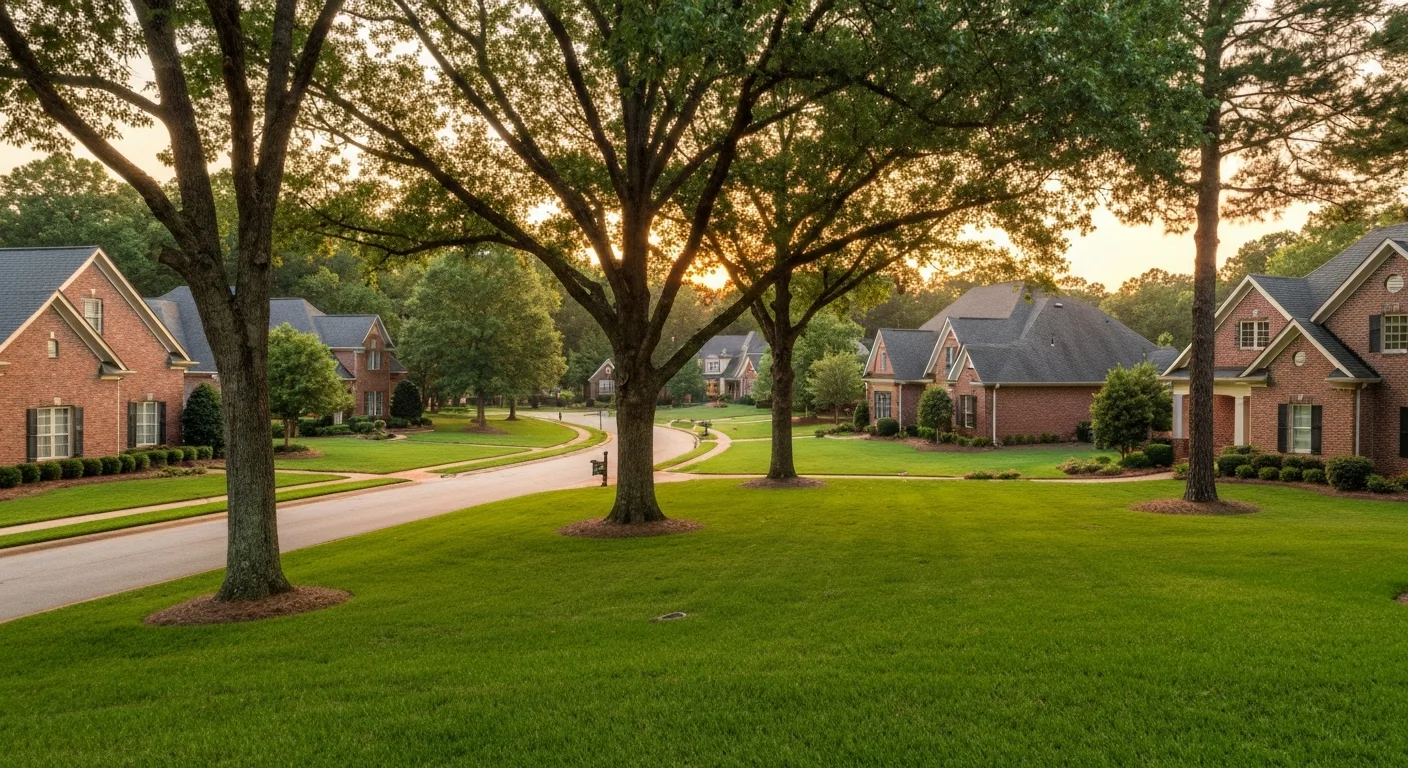
If you are putting together a moving to North Carolina checklist, you are in good company. About 157 people move to the Charlotte region every single day, roughly 57,300 new residents a year, according to the Charlotte Regional Business Alliance. I help a lot of those buyers land softly, and the ones who arrive least stressed are the ones who treated the move like a project with a real list, not a pile of errands they would sort out later.
The catch is that North Carolina runs on deadlines. You have 60 days to swap your driver’s license, 30 days to register your car, and a handful of tax and enrollment steps that are easy to miss until a letter shows up in the mail. This guide walks the full moving to North Carolina checklist in the order I would actually do it, with the current 2026 numbers, the official links, and the one step most people rush that costs them the most.
16 min read | By Steve Jarrell, The Longleaf Group at eXp Realty | Updated August 2026
What This Guide Covers
- The short answer: your moving to North Carolina checklist at a glance
- Before you move: timeline and first steps
- Your North Carolina driver’s license: the 60-day clock
- Registering your car in North Carolina: 30 days, the 3% tax, and inspections
- Taxes after moving: income, sales, and property
- Utilities, voter registration, and school enrollment
- Where to live: the step most buyers skip on their moving to North Carolina checklist
- A week-by-week moving to North Carolina checklist
- Three mistakes I see on almost every checklist
- Moving to North Carolina checklist: frequently asked questions
The Short Answer
The moves with real deadlines come first: your driver’s license and vehicle registration are on a 60- and 30-day clock, and the Highway Use Tax on a car you bring in is capped if you file as a new resident. Everything else — utilities, voter registration, doctors, schools — can follow. Do the clock items in the first month and the rest gets easy.
Key numbers right now:
- About 157 people move to the Charlotte region every day, roughly 57,300 new residents a year (Charlotte Regional Business Alliance)
- Vehicles carry a 3% Highway Use Tax instead of sales tax — capped at $250 for a car already titled in another state
- A $40,000 car that would otherwise owe $1,200 owes only $250 when you move it in
- State income tax: 4.25% for tax year 2025, dropping to 3.99% for 2026
- Sales tax: 4.75% state, 7.25% combined in Mecklenburg County through June 30, 2026
- Emissions test exemptions include the three most recent model years with under 70,000 miles, pre-1996 vehicles, diesels and EVs
The Short Answer: Your Moving to North Carolina Checklist at a Glance
The short answer is that a complete moving to North Carolina checklist has six time-sensitive pieces: get your North Carolina driver’s license within 60 days, title and register your vehicle within 30 days, set up utilities like Duke Energy before move-in day, understand the new tax picture (a 3.99% flat income tax in 2026), register to vote, and enroll any students with the right documents. Do those six on time and the rest is logistics.
Here is the whole list in plain order so you can scan it, then we will work through each item with the real numbers and the official links.
- Before the move: book movers, line up your home, start utility transfers, gather your documents.
- Within 30 days: title and register your out-of-state vehicle with the NC DMV.
- Within 60 days: trade your old driver’s license for a North Carolina license or REAL ID.
- Right away: turn on power, water, gas, and internet, and change your address.
- Before the next election: register to vote (the deadline is 25 days out).
- Before the school year: enroll students with proof of residency, immunization records, and a birth certificate.
Already know North Carolina is the move? Let’s map your landing.
A quick call now saves weeks of guesswork on neighborhoods, taxes, and timing.
Schedule a 15-Minute Introductory Call →704-774-7170 | steve@jarrellhomes.com | thelongleafgroup.com
Before You Move: Timeline and First Steps
The smoothest moves start four to six weeks out. That is enough runway to book a reputable mover during peak season, schedule your utility start dates, and pull together the documents the DMV and your new schools will ask for. If you wait until the truck is loaded, you end up paying rush prices and standing in lines you could have skipped.
Gather your documents in one folder
North Carolina agencies want originals, not photocopies, so keep these together and easy to reach. You will need them for the license, the car, and school enrollment, so one folder saves you three searches.
- Your current driver’s license and your Social Security card.
- Your vehicle title (or the registration card if a lender holds the title).
- Proof of your new North Carolina address, such as a signed lease, a closing document, or a utility bill.
- Birth certificates and immunization records for any students.
- Proof of car insurance that meets North Carolina requirements.
Start utility transfers early
Duke Energy is the primary electric provider across Charlotte and Mecklenburg County, and it serves much of Union County too, though some Union addresses are on the Union Power cooperative. Duke recommends starting your service request at least three days before you want the power on, and you can do it online or by phone at 800-600-3853. Set your start date for the day before closing or move-in so you are never carrying boxes in the dark.
One thing relocating buyers underestimate is how much of the move is just sequencing. The tasks are not hard. They simply have to happen in the right order and inside the right windows, which is exactly what the rest of this checklist lays out.
Your North Carolina Driver’s License: The 60-Day Clock
Once you establish permanent residency, you have 60 days to get a North Carolina driver’s license. This is the deadline people miss most, usually because they assume their old license is fine until it expires. It is not. After 60 days you are technically driving on an out-of-state license you are no longer entitled to use as a resident.
You apply in person at an NC DMV driver license office. New residents who hold a valid license from another state usually do not have to take the road test, but you will take a vision screening and, in some cases, a knowledge test. Appointments fill fast in the fast-growing counties, so book online ahead of time at the official NC DMV website rather than walking in.
What to bring to the DMV
The NC DMV asks for documents that prove four things: who you are, your Social Security number, and where you live. For a standard license you need one proof of identity and date of birth (your current license usually works), proof of your Social Security number, and one document showing your North Carolina address.
If you want a REAL ID, and most people moving here should get one, you need two documents proving your North Carolina address instead of one. A REAL ID is the gold-star license that will be required to board domestic flights, so handling it now means one trip instead of two. Remember the rule that trips people up: every document has to be an original. Photocopies and phone photos are turned away.
Registering Your Car in North Carolina: 30 Days, the 3% Tax, and Inspections
Your car is on a tighter clock than your license. You must title and register an out-of-state vehicle within 30 days of establishing residency or starting a job in North Carolina, whichever comes first. Because the deadlines are different, I tell buyers to handle the car first and the license second, even though most people think of them in the opposite order.

The 3% Highway Use Tax and the $250 cap for new residents
North Carolina does not charge sales tax on vehicles. Instead it charges a Highway Use Tax of 3% of the vehicle’s value when the title transfers. Here is the part that saves you money: if you are a new resident bringing in a car that was already titled in another state, that Highway Use Tax is capped at $250. So a car worth $40,000 that would otherwise owe $1,200 only owes $250 when you move it in. You can confirm the current rules on the NC DMV vehicle taxes page.
Inspections: safety statewide, emissions in Mecklenburg and Union
North Carolina requires an annual safety inspection on most vehicles under 30 years old. On top of that, an annual emissions inspection is required in 19 counties, and both Mecklenburg County (Charlotte) and Union County (Waxhaw, Monroe, Indian Trail) are on that list. A few cars are exempt from the emissions test: the three most recent model years with under 70,000 miles, anything older than the 1996 model year, diesels, and electric vehicles. You can register the car first, but you cannot renew that registration the following year until it passes inspection.
Tag and Tax Together: one bill for plates and property tax
North Carolina bills your annual registration renewal and your county vehicle property tax in one combined notice called Tag and Tax Together, paid to the DMV. Out-of-state buyers are often surprised that the state taxes the value of the car every year, so budget for it. When you first buy or move in a vehicle, you can defer the property tax for 60 days with a temporary “T” sticker, but it has to be paid inside that window.
Curious about buying or selling in the Charlotte area?
It’s free, it’s 15 minutes, and Steve actually picks up.
Grab 15 Minutes with Steve →Taxes After Moving: Income, Sales, and Property
Taxes are where the surprises live, and they belong on every moving to North Carolina checklist because they change your monthly math. The good news for most movers is that North Carolina’s tax picture is simple and trending down.
A flat income tax that keeps dropping
North Carolina has a single flat individual income tax rate, not a bracket system. The rate was 4.25% for the 2025 tax year and drops to 3.99% for 2026. That flat structure makes planning easy, and you can verify the current figure on the NC Department of Revenue income tax page. If you are weighing the North Carolina side against the South Carolina border towns, I broke down the full comparison in my guide to NC versus SC taxes, because the right answer depends on your income and your home’s value.
Sales tax: 4.75% state, more locally
The statewide sales tax is 4.75%. Counties add their own, so the combined rate in Mecklenburg County is 7.25% through June 30, 2026. After voters approved a 1% increase for roads and transit in November 2025, Mecklenburg’s combined rate rises to 8.25% on July 1, 2026. You can check rates by county on the NC Department of Revenue sales tax page.
Property tax: it is set by your county and city
Property tax is the line item that varies most by where you land, and it is quoted in cents per $100 of assessed value. In Union County the county rate is about $0.4342 per $100. In Mecklenburg County, a home inside the City of Charlotte pays both the county rate of roughly $0.4927 and the city rate of about $0.293, for a combined rate near $0.7857 per $100 starting with the fiscal year that begins July 1, 2026.
On a $450,000 home, that combined Charlotte rate works out to roughly $3,536 a year. The lesson is simple: the same house can carry very different annual taxes depending on the town line it sits on. That is why a property tax check on every home belongs on your moving to North Carolina checklist, not as an afterthought once you are under contract.
Utilities, Voter Registration, and School Enrollment
With the big-ticket items handled, these three steps round out the move. None is hard, but each has a quiet deadline.
Turn on utilities and change your address
Beyond electricity from Duke Energy, set up water and sewer through your city or county, natural gas where it serves your street, and internet from providers like Spectrum or AT&T Fiber. File a change of address with the U.S. Postal Service so mail forwards, and update your address with your bank, employer, and insurance. You can start a Duke Energy account directly on the Duke Energy start service page.
Register to vote
North Carolina’s voter registration deadline is 25 days before an election. If you miss it, you can still register and vote in person during the early voting period, but not on Election Day itself, and you must have lived in the county for at least 30 days. The NC State Board of Elections registration page has the forms and current dates.
Enroll students with the right documents
If you are moving with school-age children, North Carolina public schools generally ask for two proofs of residency, a certificate of immunization, and a certified copy of the student’s birth certificate. You have up to 30 calendar days from the first day of attendance to turn in the immunization record and a North Carolina health assessment, but it is far less stressful to have them ready on day one. School assignment is tied to your home’s address, which is one more reason the address you choose matters so much.
If you want to see the metro through a local lens before you pick a town, I walk through the trade-offs in my video Moving to Charlotte or Raleigh NC (2026 Relocation Guide) over on my YouTube channel, Welcome to Charlotte NC.
Where to Live: The Step Most Buyers Skip on Their Moving to North Carolina Checklist
Here is where I land after helping buyers relocate from all over the country: the DMV and the tax forms are the easy part. The decision that actually shapes your years here is where you plant. Charlotte is not one place. It is a metro of distinct towns, each with its own tax rate, school assignment, commute, and feel, and the line between two of them can sit on a single street.
People moving from out of state often lock in a neighborhood from photos and a weekend visit, then realize after closing that the commute is longer than it looked or the property taxes are higher than the town next door. The fix is to sequence it correctly: figure out your must-haves, then match them to towns, then tour homes. I put together a ranked, metro-wide overview in my guide to the best places to move in Charlotte, and a deeper look at the southern suburbs in my relocating to South Charlotte buyer guide.
What the numbers say about demand
The Charlotte metro ranks among the fastest-growing in the country, sitting near 7th nationally for population growth and approaching 2.9 million residents, per the Census Bureau’s Vintage 2025 estimates. The median home sale price in the city of Charlotte was around $415,000 in early 2026, with Mecklenburg County closer to $440,000, according to Redfin and Canopy MLS data. Strong demand means good homes move quickly, so the buyers who already know their criteria win the ones worth having.
That is the whole point of building the moving to North Carolina checklist around the home decision rather than the paperwork. Get the location right and everything else, the schools, the commute, the tax bill, the resale value, follows from it. Get it wrong and no amount of paperwork fixes it. If you start your home buying process with a clear picture of the towns, the rest of this list is just check marks.
A Week-by-Week Moving to North Carolina Checklist
Once you know roughly when you are landing, it helps to spread the moving to North Carolina checklist across a calendar instead of cramming it into move week. Here is the rhythm I see work best for relocating buyers, scaled to a four to six week runway.
Four to six weeks out
Lock in your town and your home, or at least your shortlist, because everything downstream is tied to the address. Book your mover early, since the best crews fill up in spring and summer. Start collecting the original documents you will need for the DMV and for school enrollment, and price out a few car insurance quotes that meet North Carolina’s requirements so the policy is ready before you register the vehicle.
Two weeks out
Schedule your utility start dates so power and water are on the day you arrive. File your change of address with the Postal Service so mail forwards on time. If you have students, call the school to confirm exactly which documents they want, since the assigned school depends on your specific address. This is also the point to book your DMV appointment online, because walk-in waits in the growing counties can eat a whole afternoon.
Move week and the first 30 days
Confirm utilities are live, then start the clock on the time-sensitive government items. Title and register your vehicle inside the 30-day window, and aim to knock out your driver’s license in the same trip if your appointment allows it, even though you technically have 60 days for the license. Register to vote, finish school enrollment, and update your address with your bank, employer, and insurers. Work this part of the moving to North Carolina checklist in the first month and you avoid every late penalty the state can hand you.
Three Mistakes I See on Almost Every Checklist
After enough relocations, the same few stumbles show up again and again. None of them is the end of the world, but each one costs time or money you did not need to spend, so I flag them for every buyer.
The first is treating the 30-day car deadline and the 60-day license deadline as the same thing. They are not, and the car is the one that bites first. The second is forgetting that every document the DMV wants has to be an original, which sends people home for a second trip more than any other single thing. The third, and the costliest, is choosing the home before understanding the town, because the address you pick sets your taxes, your school assignment, and your commute for years. Put the location decision at the top of your moving to North Carolina checklist and the paperwork below it, never the other way around.
Moving to North Carolina Checklist: Frequently Asked Questions
How long do I have to get a North Carolina driver’s license after moving?
You have 60 days from establishing permanent residency to get a North Carolina driver’s license. You apply in person at an NC DMV office with proof of identity, your Social Security number, and one proof of your North Carolina address (two if you want a REAL ID). New residents with a valid out-of-state license usually skip the road test.
How long do I have to register my car in North Carolina?
You must title and register an out-of-state vehicle within 30 days of becoming a resident or taking a job in North Carolina, whichever happens first. That is a shorter window than the license deadline, so handle the car first.
How much does it cost to title a car when moving to North Carolina?
North Carolina charges a 3% Highway Use Tax instead of sales tax on vehicles, but for new residents bringing in a car already titled in another state, that tax is capped at $250. You will also pay standard title and plate fees plus an annual county vehicle property tax through the Tag and Tax Together program.
What is the North Carolina income tax rate for 2026?
North Carolina has a flat individual income tax rate of 3.99% for 2026, down from 4.25% in 2025. It is a single rate that applies to all taxable income, which makes budgeting after your move straightforward.
Do I need a vehicle emissions inspection in Mecklenburg County?
Yes. Mecklenburg County (Charlotte) and Union County are both among the 19 North Carolina counties that require an annual emissions inspection in addition to the statewide safety inspection. Exemptions include the three newest model years under 70,000 miles, vehicles older than the 1996 model year, diesels, and electric vehicles.
What do I need to enroll my child in North Carolina public schools?
Most North Carolina public schools require two proofs of residency, a certificate of immunization, and a certified copy of the student’s birth certificate. You generally have 30 days from the first day of attendance to submit immunization records and a North Carolina health assessment. School assignment is based on your home address.
What should be first on a moving to North Carolina checklist?
Choosing the right town should come first, because your address sets your taxes, school assignment, and commute. After that, the time-sensitive items are registering your car within 30 days and getting your license within 60 days. Setting up utilities and changing your address round out the first week.
About the Author
I am Steve Jarrell, a licensed Realtor in both North Carolina and South Carolina with The Longleaf Group at eXp Realty. I have helped buyers relocate to the Charlotte area from across the country, so I have walked this exact checklist alongside people landing here for the first time. Before real estate I spent a decade building marketing technology for agents nationwide, which is why I lean on real data and clear steps rather than guesswork. You can reach me at 704-774-7170 or steve@jarrellhomes.com, or learn more at thelongleafgroup.com.
 |
Free · 26-Page Insider Guide Which South Charlotte Town Is Right for You? Towns, villages, and cities compared, NC vs SC taxes and schools, and the 5 mistakes out-of-state buyers make. Everything you’d want a local to tell you before you move. Get the free guide → |
Quick call. Real answers.
Ready to make the Charlotte area home? Let’s figure it out together.
Book a Free 15-Min Chat with Steve →704-774-7170 | steve@jarrellhomes.com | thelongleafgroup.com