
15 min read | By Steve Jarrell, The Longleaf Group at eXp Realty | Updated September 2026
Waxhaw NC growth is the question every relocating buyer ends up asking. The town has a legitimate small-town feel, a historic walkable downtown, Union County school access, and home prices that still make sense for what you get. But before you commit to a neighborhood, you need a clear-eyed answer: how fast is Waxhaw growing, what is being built, and what does that mean for traffic, schools, and your daily life?
That is not a hypothetical. Waxhaw doubled in population between 2010 and 2020, a 108.5% increase that made it one of the fastest-growing towns in North Carolina. Its current estimated population sits around 22,000 to 23,000 residents, and projections put it above 24,000 by 2026. Over 4,700 housing units are currently in the developer pipeline. And in October 2025, the town’s Board of Commissioners formally adopted a Downtown Master Plan designed to shape what the next decade of growth actually looks like on the ground.
So here is the picture: what is being built, what the downtown plan does and does not do, where the real friction points are for buyers, and why some of what sounds alarming is actually a sign the town is being thoughtful about growth rather than ignoring it.
The Short Answer
Yes, by any normal measure — Waxhaw more than doubled between 2010 and 2020 and has over 4,700 more housing units already in the developer pipeline for a town of about 23,000. The town has approved a downtown master plan to shape what comes next. Buyers should expect schools and Providence Road to feel the strain before the infrastructure catches up.
Key numbers right now:
- Waxhaw doubled between 2010 and 2020, a 108.5% increase, one of the fastest-growing towns in North Carolina
- Fewer than 10,000 residents in 2010, past 20,500 at the 2020 census, now around 22,000 to 23,000, with projections above 24,000 by 2026
- Over 4,700 housing units are currently in the developer pipeline
- Union County as a whole has grown 9.9% since the 2020 census, outpacing Mecklenburg County at 8%
- The downtown plan identifies approximately 138,000 square feet of potential commercial and mixed-use redevelopment on underused parcels
- Commuting to Uptown Charlotte: plan for 45 minutes or more at peak
Is Waxhaw NC Growing Too Fast? The Short Answer
Waxhaw is growing fast, but calling it too fast oversimplifies the picture. The town more than doubled between 2010 and 2020, a 108.5% jump that made it one of the fastest-growing towns in North Carolina, and the population now sits around 22,000 to 23,000 residents. That pace brings real strain on traffic and school capacity, which buyers should plan around, but it also funds the downtown master plan, new amenities, and the demand that has kept home values resilient. Where I land is that the growth is manageable if you buy with the road and school pressure in mind, and the sections below break down the development pipeline, traffic, schools, and what it all means for buyers.
What This Guide Covers
- How fast is Waxhaw actually growing?
- What the Downtown Master Plan actually does
- The development pipeline: what is being built and where
- Traffic: what to expect
- Schools and capacity
- The upside of growth: what buyers actually gain
- What the Waxhaw housing market looks like right now
- Frequently asked questions
Waxhaw NC Growth: How Fast Is It Actually Moving?
Let’s put the numbers in context. Waxhaw had fewer than 10,000 residents in 2010. By the 2020 census it had crossed 20,500. That kind of decade-over-decade doubling is rare anywhere in the country, and it happened while most of the surrounding Union County infrastructure was still designed for a much smaller population. Union County as a whole has grown 9.9% since the 2020 census, outpacing even Mecklenburg County (home to Charlotte) at 8% over the same period.
What is driving it? Proximity to Charlotte without Charlotte prices, access to Union County Public Schools (UCPS, consistently one of the top-rated public school districts in North Carolina), and a lower property tax rate than Mecklenburg County. Those fundamentals have not changed. So the growth pressure is not going away.
The question for a buyer is not “will Waxhaw stop growing?” It will not. The real question is: is the town managing that growth in a way that protects what made it worth moving to in the first place?
What the Downtown Master Plan Actually Does
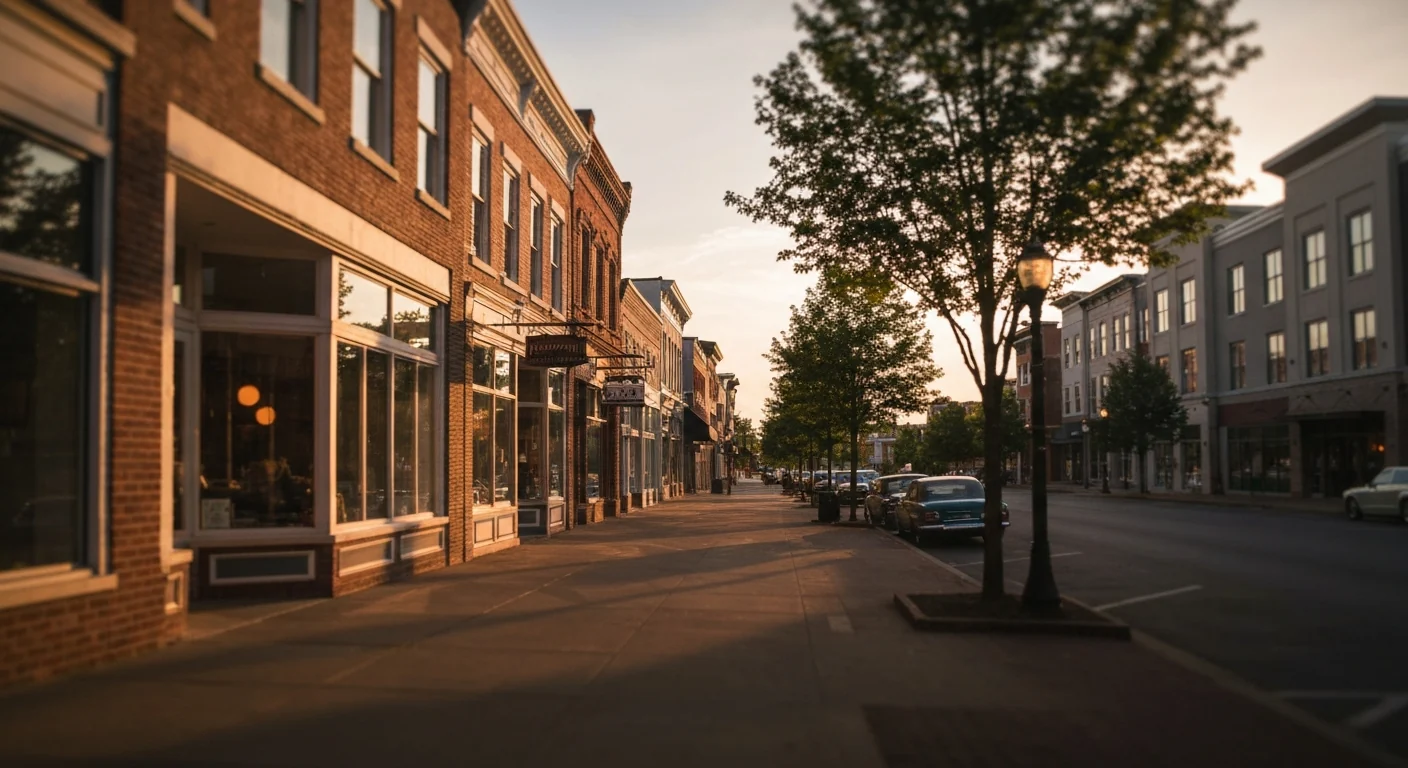
On October 28, 2025, the Town of Waxhaw‘s Board of Commissioners formally adopted the Downtown Master Plan, a document that had been in development for several years and involved significant public input. This is the town’s official long-term blueprint for what downtown Waxhaw should look like in five to ten years.
Here is what it actually does, in plain terms:
It preserves the historic core. Waxhaw’s downtown is listed on the National Register of Historic Places. The Historic District was formally established in 1991, and the plan reinforces that status with an active Historic Preservation Commission, a Certificate of Appropriateness process for any changes to designated landmarks, and a Facade Improvement Grant Program that helps property owners fund historically appropriate renovations. The antique shops, the brick storefronts, the water tower, the overhead pedestrian bridge, Provisions (a popular breakfast and lunch spot at 107 W South Main St), Cork and Ale (a wine bar and taproom at 113 E N Main St), and Mary O’Neill’s Irish pub near the Water Tower, these are protected by design standards, not just goodwill.
It focuses new density on infill, not sprawl. The plan calls for redeveloping vacant or underutilized land within the existing downtown footprint rather than pushing outward. One specific proposal: converting “The Triangle,” an empty lot near North Church Street and North Broome Street in the center of downtown, into a three-story parking structure with retail, restaurant, or hospitality space wrapping the exterior so it looks and feels like a downtown building rather than a garage. The plan also identifies approximately 138,000 square feet of potential commercial and mixed-use redevelopment on underused parcels.
It prioritizes walkability. Improved sidewalk networks, better street lighting, expanded pedestrian connectivity, and more accessible public spaces are core recommendations. The goal is to make it possible to park once and walk to multiple destinations, which matters a lot as the population grows and parking pressure increases.
It does not address new residential development. This is an important distinction. The Downtown Master Plan is specifically focused on the commercial and civic core. Residential growth outside of that area is governed separately by the Waxhaw 2040 Comprehensive Plan and the town’s Land Development Code, which was updated in 2024 to include Conservation Design Development (CDD) standards requiring that 50% of land in new developments remain undisturbed, preserving open space and tree canopy.
The town also shifted politically in late 2025. The November 2025 elections seated new commissioners who campaigned on a “residents first” platform, explicitly calling for slower high-density approvals and a greater focus on infrastructure capacity before new units get approved. That political shift has real implications for what the approval pipeline looks like over the next two to three years.
The Waxhaw NC Growth Pipeline: What Is Being Built and Where
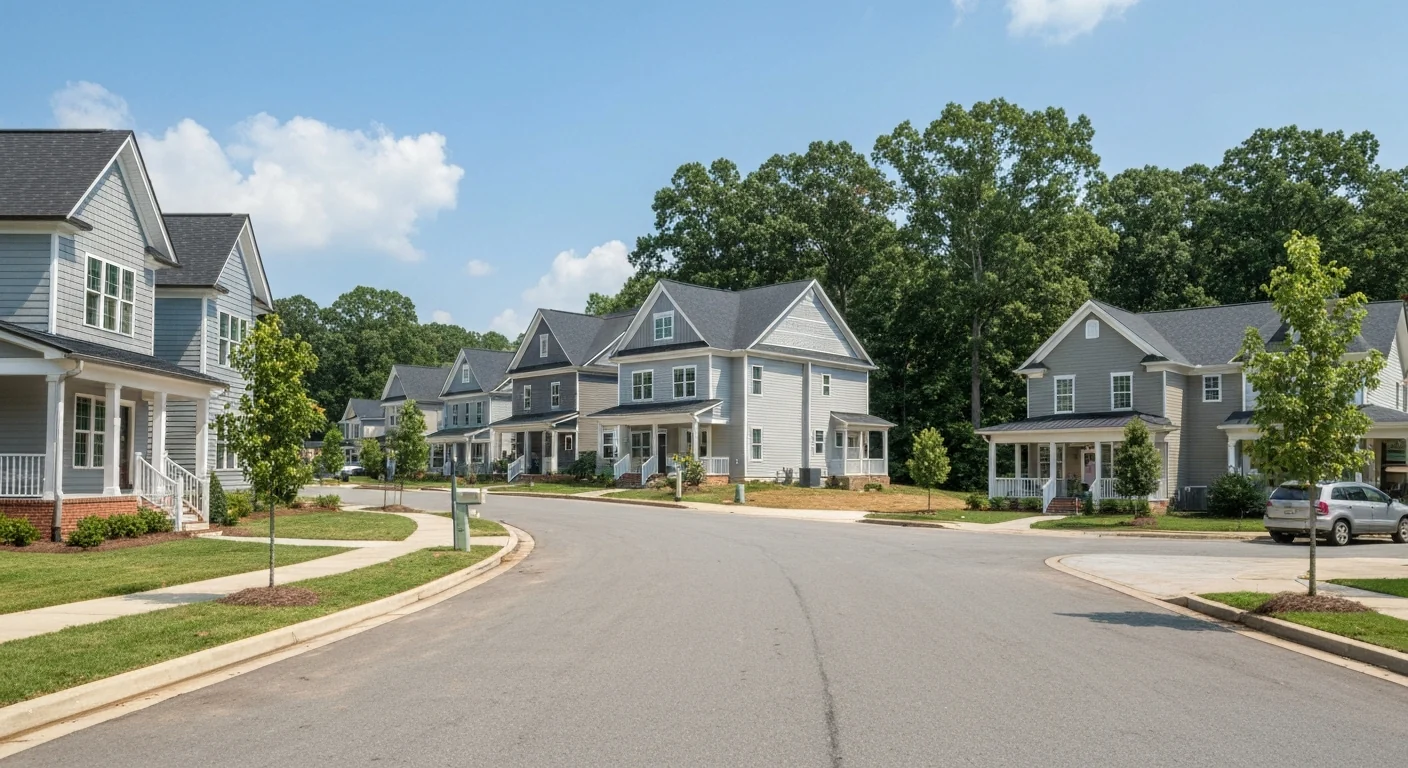
There are over 4,700 housing units currently listed in Waxhaw’s developer project queue. That number sounds large, and it is. Not all of those units will be built on the same timeline, and some are still working through the approval process.
One notable project that drew significant public attention in 2025: a mixed-use development along Waxhaw Parkway East (one of the town’s main east-west corridors) that includes multifamily rental units alongside commercial office space. Part of the approval required the developer to extend Waxhaw Parkway East, implement traffic management improvements, and construct a section of the town’s pedestrian trail network, a pattern the town has been using consistently to tie development approvals to infrastructure commitments.
Southpoint, a proposed development combining townhomes and single-family homes, was still in the public review process as of late 2025 and had not been approved. It drew pushback from nearby residents, specifically from communities along Pine Oak Road and Providence Road, primarily over traffic and school capacity concerns.
For buyers considering established master-planned communities, Waxhaw has several significant neighborhoods already built out or nearing completion: MillBridge (a large master-planned community on the south side of town with its own amenity center, pools, and trails), Cureton (a mixed-product community closer to Providence Road, NC-16, the main north-south artery connecting Waxhaw to Charlotte), and Providence Downs South (a luxury community with larger lots and a golf course. These are largely built out, meaning buyers there are buying into an established neighborhood rather than an active construction zone.
Buying into an established Waxhaw neighborhood also tends to be the steadier bet on value, and I walk through how Waxhaw home values have held up through two very different markets.
Traffic: What to Expect
Traffic is the number one complaint among Waxhaw residents, and if you are relocating from a lower-density area, it will be an adjustment. Here is what you need to know.
The two roads that matter most for commuters are Providence Road (NC-16), which runs north from Waxhaw toward the Ballantyne area and eventually into Uptown Charlotte, and Waxhaw Parkway (NC-75), the main east-west corridor through the area. Both are two-lane roads for significant stretches, and both carry volumes they were not originally designed for.
The morning commute north on Providence Road toward Ballantyne (approximately 20 to 25 minutes under normal conditions, roughly 15 miles) gets meaningfully longer during peak hours, particularly between 7:30 and 9:00 AM. If you are commuting to Uptown Charlotte, plan for 45 minutes or more during peak times, depending on where exactly you are heading.
The town is aware of this. Infrastructure commitments tied to new development approvals, like the Waxhaw Parkway East extension required as a condition of the Views at Olivia project, are one mechanism. The Downtown Master Plan’s walkability improvements are another. But road widening takes years, and the realistic expectation for buyers is that traffic will remain a friction point for the near term. If you work remotely or have flexibility on commute timing, Waxhaw’s traffic is a manageable nuisance. If you are in an office five days a week with a rigid schedule, budget the commute time realistically before you commit to a specific neighborhood.
One underappreciated advantage: Waxhaw’s proximity to Indian Land, SC (just across the state line, about 10 minutes south) gives some residents an alternative route south toward Fort Mill and I-77, which provides a meaningful option for those commuting toward Rock Hill or the York County employment corridor.
If you want a deeper look at how South Charlotte commute times compare across towns, I put together a full breakdown on the channel:
🎥 Moving to South Charlotte? Don’t Choose a Neighborhood Until You Watch This, I walk through what separates each town and what buyers consistently get wrong when they are choosing between them.
Schools and Capacity
Union County Public Schools (UCPS) is one of the primary reasons buyers choose this part of the Charlotte area. The district consistently earns strong state ratings, and Waxhaw feeds into some of UCPS’s highest-rated schools.
Cuthbertson High School (the main public high school serving most of Waxhaw) and its feeder schools have strong academic reputations, but they are operating under enrollment pressure. The pace of residential growth has pushed several UCPS schools serving Waxhaw to or near their designed capacity, and this concern comes up consistently at town council meetings whenever high-density developments come up for approval.
This is not unique to Waxhaw. UCPS as a whole is managing growth-driven enrollment increases, and new schools are periodically added as population thresholds are reached. What that means for buyers: the schools serving Waxhaw remain among the better public school options in the greater Charlotte metro, but they are not operating with excess capacity, and overcrowding has become a visible community concern at town council meetings when high-density developments come up for approval.
For buyers prioritizing a specific school assignment, the feeder patterns in Union County matter. The boundary lines have shifted before as new schools open, so verifying current assignment boundaries directly with UCPS before you commit to a specific neighborhood is worth the five-minute phone call. More on UCPS school zones and what to ask: Relocating to Waxhaw NC: What You Need to Know.
The Upside of Growth: What Buyers Actually Gain
The conversation around Waxhaw growth tends to focus on the downsides, and those downsides are real. But growth also brings things that improve daily life for residents, and buyers who only look at the friction miss half the picture.
Waxhaw’s downtown has benefited directly from its population growth. The Farmers Market (Saturdays from April through December, 9 AM to 1 PM at 27283 Waxhaw Pkwy, featuring local produce, baked goods, handmade goods, and artisan vendors) draws a crowd that sustains the local restaurant and retail economy. Restaurants like Provisions, Cork and Ale, and Mary O’Neill’s have established themselves because the residential base is there to support them. A national Main Street America accreditation signals that Waxhaw’s downtown is being managed with preservation principles, not just growth-at-all-costs development.
The commercial tax base is also expanding in a way that has long been a known gap. Waxhaw has historically operated with a roughly 93% residential to 7% commercial tax split, meaning homeowners shoulder a disproportionate share of the tax burden compared to a more balanced mix. The Downtown Master Plan’s focus on commercial infill, new retail, and mixed-use redevelopment is a direct attempt to shift that ratio over time, which benefits existing homeowners through a more diversified tax base.
And the home values reflect it. The average home value in Waxhaw is approximately $627,000 to $650,000 as of spring 2026, with the median sale price around $622,500 according to Zillow. Values have held relatively stable year-over-year even as inventory has increased. A 25.7% increase in active listings compared to April 2025 means buyers have more choices and slightly more negotiating room than they did two years ago, without a significant drop in underlying value.
Lot size is a quiet part of what that price gets you, and I walk through how big Waxhaw lots really are by zoning district so the per-square-foot numbers make more sense.
What the Waxhaw Housing Market Looks Like Right Now
Here is where Waxhaw NC growth stands in the housing market as of spring 2026:
Prices: Median sale price around $622,500, average home value approximately $627,000 to $650,000. The luxury segment (above $1.5M) averaged 47 days on market through Q1 2026.
Days on market: Homes in the general market are taking 45 to 71 days to sell, depending on price point and condition, up significantly from the 30 to 42 days typical in 2024 and early 2025. This is a meaningful shift toward buyer-favorable conditions.
Sale-to-list ratio: Approximately 98.2% to 99%, meaning sellers are getting very close to asking price but the era of routine overbidding has cooled.
Active inventory: Approximately 614 active listings as of late May 2026, a 25.7% increase from the same period last year. That is a market with real options for buyers.
The bottom line: Waxhaw is not a market where you need to panic-buy, but it is also not a market where strong properties sit forever. The window to negotiate has widened, and buyers who come in prepared with a clear picture of what they want in a specific neighborhood, school zone, and commute profile are well-positioned right now.
For a full picture of what separates Waxhaw, Weddington, Marvin, and Indian Trail for buyers at similar price points, read: Marvin vs Weddington NC: How I Help Buyers Choose.
And for context on the Union County tax rate you will be paying as a Waxhaw homeowner: Union County NC Property Tax Rates 2026: Your Relocating Buyer’s Guide.
Frequently Asked Questions About Waxhaw NC Growth
Is Waxhaw NC growing too fast?
Waxhaw doubled in population between 2010 and 2020 and continues to grow. Whether that pace is “too fast” depends on your perspective. Traffic congestion and school capacity are real friction points that the town is actively working to address. The 2025 elections seated commissioners explicitly committed to slowing high-density approvals until infrastructure catches up. Growth will continue, but the political direction has shifted toward more cautious review of new projects.
What is the Waxhaw Downtown Master Plan?
The Downtown Master Plan was formally adopted by the Waxhaw Board of Commissioners on October 28, 2025. It is a 5-to-10-year blueprint for the commercial and civic core of downtown Waxhaw, focused on preserving historic character, improving walkability and parking, encouraging infill commercial development on vacant parcels, and strengthening the local business base. It does not govern new residential development outside the downtown footprint.
What are the schools like in Waxhaw NC?
Waxhaw is served by Union County Public Schools (UCPS), one of the stronger public school districts in the Charlotte metro area. Cuthbertson High School and its feeder schools consistently earn good ratings, but they are operating under enrollment pressure driven by residential growth. Buyers prioritizing a specific school assignment should verify current boundary lines with UCPS before committing to a neighborhood, as lines do shift when new schools open.
How bad is the traffic in Waxhaw NC?
Traffic is the most common complaint among Waxhaw residents. Providence Road (NC-16), the main north-south artery toward Charlotte, sees significant congestion during morning and evening peak hours. A commute to Uptown Charlotte typically takes 45 minutes or more during peak times. The town is tying road infrastructure improvements to new development approvals, but meaningful relief from road widening is a multi-year timeline. Buyers who work remotely or have flexible schedules will find Waxhaw’s traffic manageable. Those with rigid five-day commutes should test the drive during peak hours before deciding on a specific neighborhood.
What new construction is coming to Waxhaw NC in 2026?
Over 4,700 housing units are in the developer pipeline in Waxhaw as of 2026. Active projects include mixed-use developments along Waxhaw Parkway East. The pace of new approvals has slowed somewhat following the November 2025 elections, with the new Board taking a more cautious stance on high-density projects. Several proposed developments are still in public review. For buyers interested in new construction specifically, the options in nearby Indian Trail and the Waxhaw-adjacent areas along the Union-Mecklenburg county line are worth evaluating alongside projects within Waxhaw’s town limits.
Is Waxhaw NC a good place to buy a home?
Waxhaw offers a combination of a walkable historic downtown, access to strong public schools, Union County tax rates below Mecklenburg County, and home values that have held stable through the 2025-2026 market softening. The trade-offs are real: traffic is a friction point, school capacity is under pressure, and the development pipeline means active construction in some parts of town for the foreseeable future. For buyers who want a real-town feel with South Charlotte proximity and are willing to manage a commute, it remains one of the stronger value propositions in the market.
How does Waxhaw compare to Weddington NC for buyers?
Weddington is immediately adjacent to Waxhaw and shares some school zones, but it has a very different development profile. Weddington has no downtown commercial core, no town-center retail, and is almost exclusively large-lot single-family residential. It tends to run slightly higher on price per square foot at comparable lot sizes. Waxhaw offers more walkable character and a growing restaurant and retail scene. Buyers who want a real downtown and community events tend to prefer Waxhaw; buyers who want maximum residential quiet and larger lots with less density often prefer Weddington.
What is the housing market like in Waxhaw NC right now?
As of spring 2026, Waxhaw has a median home sale price around $622,500, homes selling in approximately 45 to 71 days on market (up from 30 to 42 days in 2024-2025), a sale-to-list ratio of approximately 98-99%, and about 614 active listings, up 25.7% year-over-year. The market has shifted to more buyer-friendly conditions compared to 2023 and 2024 without a meaningful drop in underlying values.
About the Author
Steve Jarrell is the team leader of The Longleaf Group at eXp Realty and has been licensed in both NC and SC since 2021. He lives in Weddington with his wife Amanda (also a licensed realtor) and their two kids, and works primarily in the South Charlotte and Union County markets. Before real estate, Steve led Paradym, a national real estate marketing technology platform, through its acquisition by Constellation Software in 2020. He holds an MBA from the University of Tennessee with a concentration in Marketing. Steve focuses on relocating buyers who are doing serious research before they ever visit, and on helping them avoid the mistakes that come from choosing a zip code without understanding the full picture of what they are buying into.
Ready to Talk Through Waxhaw Specifically?
I work with a lot of buyers who are researching Waxhaw from out of state. The question is never just “is the market good?” It is whether the specific neighborhood, school zone, and commute profile match what your household actually needs. That is a 20-minute conversation worth having before you fly in to look at houses.
Schedule a Free Intro CallOr reach Steve directly: 704-774-7170 | steve@jarrellhomes.com
 |
Free · 26-Page Insider Guide Which South Charlotte Town Is Right for You? Towns, villages, and cities compared, NC vs SC taxes and schools, and the 5 mistakes out-of-state buyers make. Everything you’d want a local to tell you before you move. Get the free guide → |