
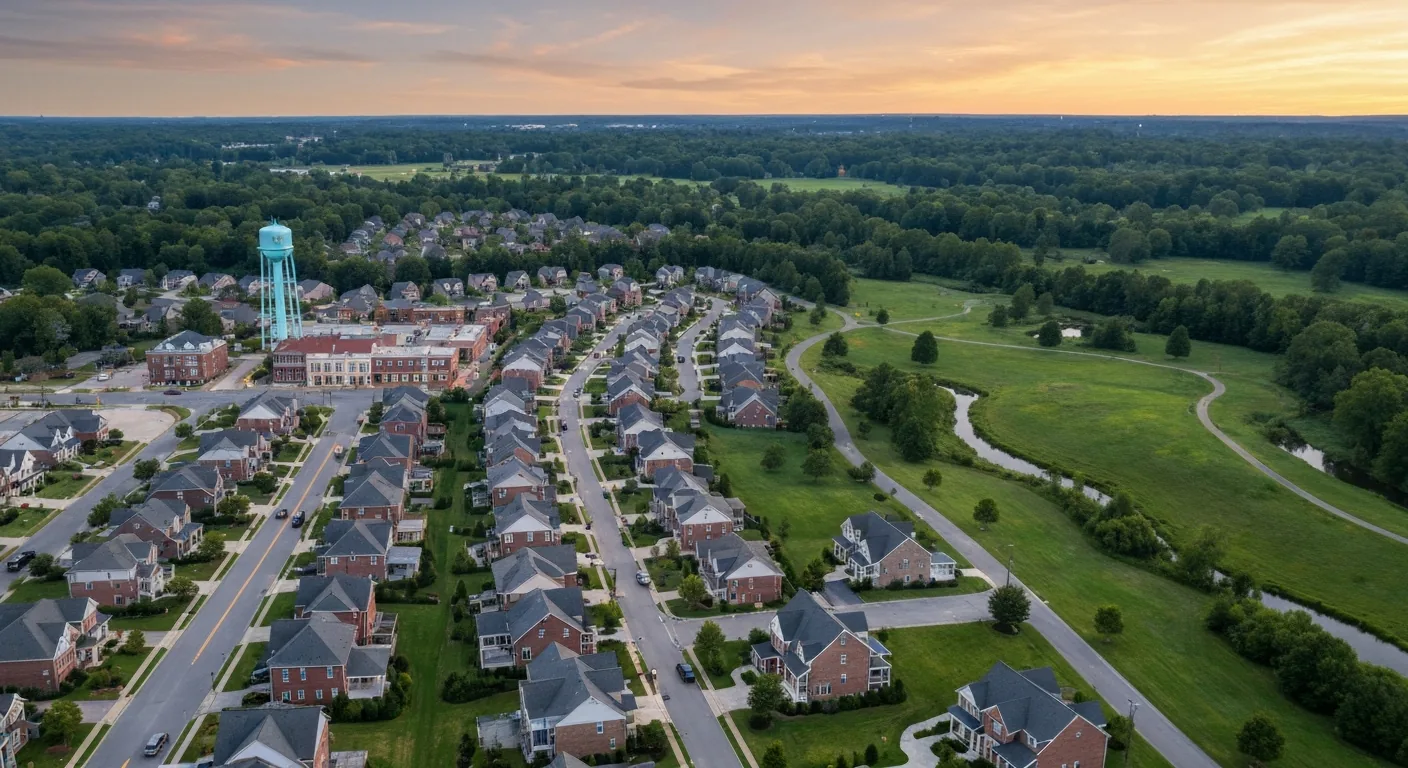
Indian Land SC vs Fort Mill SC is the single most common matchup I hear from buyers relocating to the South Carolina side of Charlotte. Both sit just over the state line, both feed off the same job centers, and both have grown faster than almost anywhere else in the Carolinas. On a map they look interchangeable. On the ground they are not.
I am licensed in both North Carolina and South Carolina, and I show homes in both of these markets every month. The answer to the Indian Land SC vs Fort Mill SC question is that they solve different problems for different buyers. One has a real downtown, a famous school district, and a $29,640 surprise built into new construction. The other has no town government at all, faster access to Ballantyne, and schools that are climbing faster than their reputation. This guide lays out the actual numbers so you can decide which side of the panhandle line fits you.
17 min read | By Steve Jarrell, The Longleaf Group at eXp Realty | Updated August 2026
What This Guide Covers
- Indian Land SC vs Fort Mill SC: The 60 Second Answer
- Home Prices: Closer Than Most Buyers Expect
- Property Taxes and the $29,640 Question
- Hidden Costs in Indian Land SC vs Fort Mill SC: Cars, HOAs, and Utilities
- Schools: Fort Mill’s Reputation vs Indian Land’s Trajectory
- Commutes and Traffic: US-521 vs I-77
- Town vs No Town: Why Indian Land SC vs Fort Mill SC Feels So Different
- Where People Actually Buy: Signature Neighborhoods in Each
- Things to Do in Both: Parks, Breweries, and Kid Friendly Picks
- Which One Should You Choose?
- Indian Land SC vs Fort Mill SC: Questions Buyers Ask
- About the Author
The Short Answer
Fort Mill has the downtown and the famous school district; Indian Land has the shorter drive to Ballantyne and no impact fee. The property tax difference between York and Lancaster counties is a few hundred dollars a year, not a deciding factor. What actually decides it is where you work and whether you are buying new construction.
Key numbers right now:
- Fort Mill new construction carries a $29,640 school-impact fee; Indian Land does not
- Effective property tax: around 0.46% in York County (Fort Mill) against about 0.51% in Lancaster County (Indian Land)
- On a $525,000 home that is a difference of a few hundred dollars a year
- The Indian Land panhandle grew roughly 476% between 2000 and 2020, and newer, larger construction pulls its median up
- Indian Land High School rates 7 out of 10 on GreatSchools and ranks in the top 10% of South Carolina schools, with reading proficiency around 92%
- Commute: Ballantyne from Indian Land is often about 15 minutes, but Uptown runs 25 to 40 minutes because no interstate serves the panhandle
Indian Land SC vs Fort Mill SC: The 60 Second Answer
Here is the short version of Indian Land SC vs Fort Mill SC before we get into the data. Fort Mill is an incorporated town in York County with a historic Main Street, the top ranked school district in South Carolina, and direct I-77 access to Uptown Charlotte. Indian Land is an unincorporated community in the Lancaster County panhandle with no town government, no downtown, lower friction on new construction, and the fastest route to Ballantyne of any South Carolina address.
Price wise, the two markets have nearly converged, which surprises almost everyone. The real differences show up in taxes and fees, school structure, commute direction, and what daily life feels like. If you are deciding between Indian Land SC vs Fort Mill SC, the sections below are the exact conversation I have with relocating buyers in my car.
Home Prices: Closer Than Most Buyers Expect
A few years ago Indian Land was the clear value play in the Indian Land SC vs Fort Mill SC matchup. That gap has mostly closed. As of spring 2026, the median sale price in Fort Mill is running around $523,000, while Indian Land’s median has been landing between $499,000 on list prices and roughly $530,000 to $535,000 on closed single family sales. Depending on the month, Indian Land actually edges higher.
Why did Indian Land catch up? Volume and product mix. The panhandle grew roughly 476% between 2000 and 2020, and much of the recent construction skews larger and newer, which pulls the median up. Fort Mill’s housing stock is more varied: 1990s and 2000s neighborhoods, the master planned Baxter Village, and newer builds all blend together.
The practical takeaway in the Indian Land SC vs Fort Mill SC price comparison is this: do not pick one over the other expecting a big discount. Pick based on the cost structure underneath the price, which is where the next section comes in. For a deeper line item breakdown on the Fort Mill side, I covered utilities, insurance, and taxes in my cost of living in Fort Mill SC guide.
Property Taxes and the $29,640 Question
Both sides of the Indian Land SC vs Fort Mill SC comparison enjoy South Carolina’s owner occupied tax break: a primary residence is assessed at a 4% ratio, versus 6% for second homes and investment property. That is why property tax bills on either side of this comparison look small to anyone arriving from the Northeast, the Midwest, or even Mecklenburg County across the state line.
The county level difference is modest. York County, home to Fort Mill, carries an effective property tax rate around 0.46%. Lancaster County, home to Indian Land, runs around 0.51%. On a $525,000 home that is a difference of a few hundred dollars a year, not a deciding factor by itself. Lancaster County also exempts owner occupied homes from school operating millage, which softens the bill further. You can verify current millage with Lancaster County directly.
The impact fee that changes new construction math
Here is the number that actually moves decisions in the Indian Land SC vs Fort Mill SC debate. As of July 1, 2025, the Fort Mill School District impact fee is $29,640 per new single family home. Builders pay it at permit, and it gets passed straight into the price of every new build inside the district. It is one of the highest school impact fees in the country, and it exists because Fort Mill’s growth kept outrunning its classroom space.
Indian Land has no equivalent fee at that scale. If you are buying new construction, that single line item can make a comparable Indian Land home meaningfully cheaper to build, and it is part of why builders have been so active in the panhandle. If you are buying resale in Fort Mill, the fee does not apply to your transaction, which quietly tilts the Fort Mill value argument toward resale homes.
One more tax note for anyone weighing Indian Land SC vs Fort Mill SC: South Carolina income tax is progressive and tops out in the low 6% range, while North Carolina is flat at 3.99% in 2026. For high earners, the NC side of the line can win on income tax even while SC wins on property tax. Run both numbers before you commit to a state, not just a town.
One caution before you run them: the South Carolina property tax advantage only shows up after the legal residence form is on file with the county. I covered the form, the office that takes it and the deadline in my guide to the Indian Land SC property tax exemption.
Hidden Costs in Indian Land SC vs Fort Mill SC: Cars, HOAs, and Utilities
Property tax is only one line on the Indian Land SC vs Fort Mill SC relocation spreadsheet. A few smaller costs catch out-of-state buyers off guard in both communities, and a couple of them genuinely differ between the two. Here is what I walk buyers through after we settle the property tax conversation.
The vehicle tax both Carolinas charge
If you are arriving from a state with no annual car tax, brace yourself: South Carolina assesses personal vehicles at a 6% ratio with county millage applied, and the bill must be paid each year before your registration renews. North Carolina does the same thing through its Tag and Tax Together program. This one is a tie in the Indian Land SC vs Fort Mill SC ledger, but it is a real budget item that relocation calculators routinely miss, especially for households with two or three newer vehicles.
HOA dues and amenity communities
Nearly every subdivision built in either community since the 1990s carries an HOA, so the question is not whether you will pay dues but what you get for them. Amenity heavy communities like Baxter Village in Fort Mill or Sun City Carolina Lakes in Indian Land bundle pools, clubhouses, and common area maintenance into meaningfully higher dues than a basic neighborhood association. When buyers compare two similar listings across the Indian Land SC vs Fort Mill SC line, I always pull both HOA budgets, because a $400 difference in annual dues can outweigh the county tax difference entirely.
Utilities and internet
Inside town limits, the Town of Fort Mill runs its own water and sewer utility. Indian Land is served by the Lancaster County Water and Sewer District. Rates differ by usage, but the bigger practical note is internet: Comporium (the regional provider headquartered in nearby Rock Hill) is the dominant fiber and cable carrier on both sides, so your provider options will look similar in either place. Neither side of the Indian Land SC vs Fort Mill SC utilities comparison has a meaningful advantage; just budget for the accounts and deposits as part of the move.
Schools: Fort Mill’s Reputation vs Indian Land’s Trajectory
Schools drive more Indian Land SC vs Fort Mill SC decisions than any other factor, so let me be precise. The Fort Mill School District is ranked the number one district in South Carolina by Niche for 2026 and number one in the Charlotte metro. Fort Mill High School carries a 10 out of 10 GreatSchools rating, and all three district high schools earned an excellent rating on the most recent state report cards. That reputation is the district’s gravity: it pulls buyers, which pulls prices, which funded that impact fee.
Indian Land schools belong to the Lancaster County School District, and the story there is trajectory. Indian Land High School rates 7 out of 10 on GreatSchools and now ranks in the top 10% of South Carolina schools for overall test scores, with reading proficiency around 92%. Indian Land Elementary and Harrisburg Elementary both rate 8 out of 10. The buildings are newer, the scores are climbing, and the panhandle schools increasingly operate like their own high performing cluster within the larger county district.
Where I land on Indian Land SC vs Fort Mill SC for schools: Fort Mill is the safer headline, Indian Land is the better improvement story. Buyers prioritizing the strongest established district pick Fort Mill. Buyers comfortable with a strong and rising school cluster often find Indian Land gives them more house for the same money. I went deeper on the panhandle schools, including zoning nuances, in my Indian Land SC schools guide.
Commutes and Traffic: US-521 vs I-77
This is where the two communities genuinely diverge, and it comes down to which road owns your morning. Fort Mill commuters ride I-77, the interstate that runs straight into Uptown Charlotte. In light traffic that is a 20 to 30 minute trip; at rush hour plan on 40 plus. Indian Land commuters ride US-521 (Charlotte Highway, the main artery north into Ballantyne), and that points them at South Charlotte instead of Uptown.
The rule of thumb I give buyers weighing Indian Land SC vs Fort Mill SC on commute: if your office or your life centers on Ballantyne, Indian Land wins, often door to door in about 15 minutes. If you need Uptown Charlotte, the airport, or anywhere along the interstate, Fort Mill’s I-77 access wins. Uptown from Indian Land typically runs 25 to 40 minutes because no interstate serves the panhandle.
The tradeoff in the Indian Land SC vs Fort Mill SC commute story: US-521 congestion is real and getting heavier as Indian Land grows, and widening projects are chasing growth rather than leading it. Fort Mill has its own pinch points, especially Gold Hill Road and the I-77 interchanges, but an interstate with multiple exits absorbs growth better than a single arterial highway. Neither commute is a secret anymore.
One project worth knowing about: a $160 million rebuild of the SC-160 interchange at I-77 Exit 85 broke ground in March 2024 and is expected to finish in late 2027, replacing the old design and widening more than a mile of SC-160. Short term, that means construction traffic on Fort Mill’s busiest corridor. Long term, it is a meaningful upgrade for everyone commuting from the Fort Mill side, and one reason I do not treat today’s rush hour times as permanent.
Town vs No Town: Why Indian Land SC vs Fort Mill SC Feels So Different
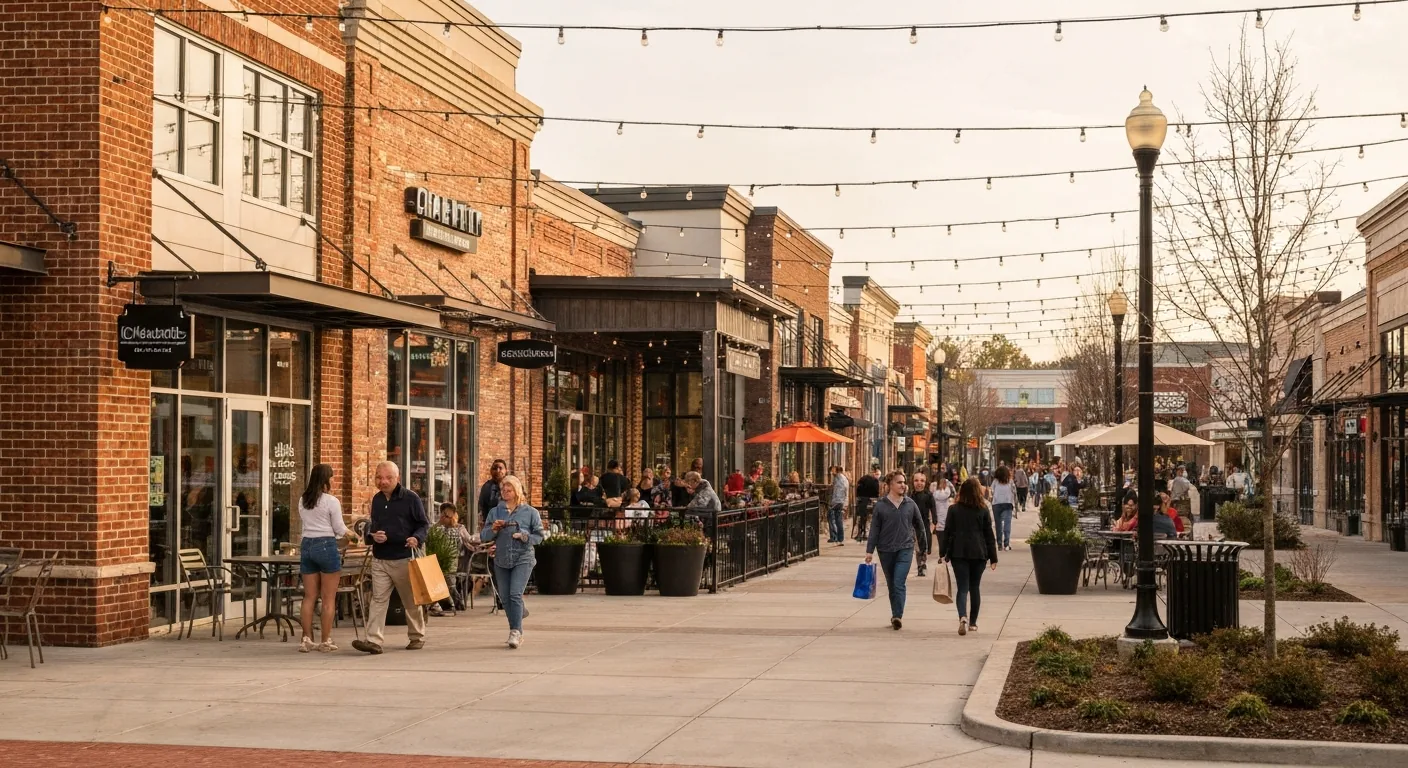
Here is the structural difference most Indian Land SC vs Fort Mill SC articles skip. Fort Mill is an incorporated town with a mayor, a council, a planning department, and a historic Main Street. Its population has roughly tripled from about 11,000 in 2010 to the mid 30,000s today, and the town actively shapes what gets built where. The result is a place with a center: downtown Fort Mill, with locally owned restaurants and shops, sits at the heart of it.
Indian Land is not a town at all. It is an unincorporated stretch of the Lancaster County panhandle, governed from the county seat in Lancaster about 20 miles south. Incorporation has been floated and voted down before, so there is no Indian Land town hall, no town property tax, and no traditional downtown. Commercial life clusters in shopping centers along US-521, anchored by RedStone, the retail and dining center with a 14 screen movie theater.
Neither structure is wrong, but they attract different buyers. People who want walkable charm and civic identity lean Fort Mill. People who want newer construction, a 55 plus option like Sun City Carolina Lakes (the large Del Webb active adult community in Indian Land), or simply less local government lean Indian Land. Lancaster County is now around 117,000 residents and remains one of the fastest growing counties in South Carolina, so the no town character is evolving fast.
If you are still weighing the two states more broadly, I made a video walking through exactly how the line changes taxes, schools, and daily life: Moving to South Charlotte? North Carolina vs South Carolina Explained on my YouTube channel, Welcome to Charlotte NC.
Where People Actually Buy: Signature Neighborhoods in Each
Abstract comparisons only go so far, so here are the neighborhoods that come up in nearly every Indian Land SC vs Fort Mill SC buyer conversation I have. Touring two or three from each list is the fastest way to feel the difference between the communities for yourself.
On the Fort Mill side of the Indian Land SC vs Fort Mill SC tour list, Baxter Village is the headliner: a master planned community with its own town center, two pools, a YMCA, a county library branch, and 12 plus miles of trails tied into the Carolina Thread Trail. Springfield wraps around a golf course, Massey delivers newer construction with resort style amenities, and Waterside at the Catawba sits along the river with a mix of home styles. All four feed Fort Mill School District, and all four price accordingly.
On the Indian Land side, Sun City Carolina Lakes is the giant: a Del Webb 55 plus community with golf, an amenity campus, and its own social calendar. Tree Tops adds a second active adult option, while Walnut Creek and Bridgemill cover the conventional single family market, with Bridgemill positioned as the panhandle’s higher end address. The common thread is age: most of Indian Land’s housing stock is under 20 years old, which shows in the kitchens, the energy bills, and the inspection reports.
One piece of texture worth knowing: Fort Mill’s identity traces back to Springs Mills, the textile giant founded here in 1887, and the Close family that led it. The Anne Springs Close Greenway is their land legacy, and the Kingsley development celebrates that heritage. Indian Land has no equivalent origin story, which is exactly the town versus no town difference playing out in the landscape.
Things to Do in Both: Parks, Breweries, and Kid Friendly Picks
Daily life is more than tax math, so here is how the two compare on weekends. This part of the Indian Land SC vs Fort Mill SC matchup is closer than the internet suggests, because residents of each freely use the other’s amenities. Nothing below is more than about 20 minutes from either community.
Parks and outdoor recreation
Fort Mill’s crown jewel is the Anne Springs Close Greenway, a 2,100 acre nature preserve with 36 miles of trails for hiking, mountain biking, horseback riding, and kayaking, plus outdoor concerts through the year. On the Indian Land side, Walnut Creek Park (the Lancaster County public park off Walnut Creek Parkway) brings lighted ballfields, tennis and pickleball courts, playgrounds, and a 3.5 mile trail. Twenty minutes south, Andrew Jackson State Park adds fishing, camping, and canoeing around an 18 acre lake.
Dining and breweries
Downtown Fort Mill has become a legitimate food and drink destination: Amor Artis Brewing anchors Main Street alongside spots like The Improper Pig and Hobo’s, with more options in Baxter Village’s town center. Indian Land answers with Lore Brewing Company and a fast expanding restaurant lineup around RedStone and the US-521 corridor. Fort Mill still wins on atmosphere; Indian Land wins on new openings per year.
Kid friendly activities
Carowinds, the amusement park that literally straddles the NC and SC state line, is about 15 minutes from Fort Mill and 25 from Indian Land. Add the greenway’s playgrounds and kayak rentals, the Stone Theatres movie screens at RedStone in Indian Land, and the Fort Mill History Museum downtown, and weekends fill themselves. I keep a running local list in my things to do in Indian Land SC guide.
Which One Should You Choose?
After dozens of buyer consultations on exactly this question, here is how I frame the Indian Land SC vs Fort Mill SC decision. Choose Fort Mill if you want the state’s top ranked school district, a walkable downtown, interstate access to Uptown Charlotte, and you are open to resale homes that sidestep the $29,640 new construction impact fee. Choose Indian Land if Ballantyne is your center of gravity, you want newer construction at a better build cost, and a strong but still climbing school cluster works for you.
Three real buyer scenarios
Scenario one: a couple relocating for a job in Ballantyne, buying new construction, schools a secondary factor. Indian Land wins on all three axes: the 15 minute commute, the impact fee savings on the build, and a strong school cluster that meets their bar. This is the most common outcome in my Indian Land SC vs Fort Mill SC consultations.
Scenario two: buyers anchoring everything on the strongest school district, working in Uptown or hybrid, open to a resale home. Fort Mill wins decisively: top ranked district, I-77 access, and buying resale sidesteps the impact fee entirely. If they insist on new construction inside Fort Mill schools, I make sure they understand what that $29,640 is doing to the price sheet, and I walk them through my new construction buyer guide before they visit a single model home.
Scenario three: empty nesters downsizing toward amenities and low maintenance. Indian Land usually wins on inventory because Sun City Carolina Lakes and Tree Tops exist, but downtown Fort Mill’s walkability appeals to buyers who want restaurants over pickleball. This is the one matchup in the Indian Land SC vs Fort Mill SC decision where I genuinely cannot predict the answer until we tour both.
Healthcare, by the way, is effectively a tie in the Indian Land SC vs Fort Mill SC comparison: both communities use the same hospital network along the US-521 and I-77 corridors, which I mapped in my hospitals near Fort Mill SC guide. Groceries, gyms, and most daily errands are equally shared territory.
The biggest mistake I see is buyers treating Indian Land SC vs Fort Mill SC as a permanent identity choice. It is really a five to ten year cost and lifestyle decision, and the right answer changes with your office location, your kids’ ages, and whether you are buying new or resale. If you want a structured way to think through it, my buyer process page walks through how I run this analysis with relocating buyers.
Indian Land SC vs Fort Mill SC: Questions Buyers Ask
Is Indian Land SC a good place to live?
Yes, for buyers who want newer construction, quick access to Ballantyne, and lower carrying costs. Indian Land is unincorporated, so there is no town tax and no downtown, and US-521 traffic is the main tradeoff. Schools in the panhandle rate well and continue to improve.
Is Fort Mill SC or Indian Land SC better for schools?
Fort Mill School District is ranked number one in South Carolina by Niche for 2026, with Fort Mill High School at 10 out of 10 on GreatSchools. Indian Land’s schools rate 7 to 8 out of 10 and rank in the top tier statewide for test score growth. Fort Mill leads today; Indian Land is closing the gap.
Is Indian Land SC cheaper than Fort Mill SC?
Not on median price anymore: the Indian Land SC vs Fort Mill SC medians both sit around $500,000 to $535,000 as of spring 2026. Indian Land is usually cheaper on new construction because it has no equivalent of Fort Mill’s $29,640 school impact fee, and Lancaster County exempts owner occupied homes from school operating millage.
What are the property taxes in Indian Land SC vs Fort Mill SC?
Both use South Carolina’s 4% owner occupied assessment ratio. York County’s effective rate runs about 0.46% and Lancaster County’s about 0.51%, so the difference on a typical home is a few hundred dollars a year. Both are far below typical rates in the Northeast and Midwest.
How far is Indian Land SC from Charlotte NC?
Indian Land sits about 15 minutes from Ballantyne in South Charlotte via US-521 and roughly 25 to 40 minutes from Uptown Charlotte depending on traffic. There is no interstate in the panhandle, which is the main Indian Land SC vs Fort Mill SC commute difference given Fort Mill’s I-77 access.
Does Indian Land SC have a downtown?
No. Indian Land is an unincorporated community in the Lancaster County panhandle, and past incorporation efforts failed at the ballot box. Shopping and dining cluster in centers along US-521 such as RedStone. Fort Mill, by contrast, has a true historic downtown on Main Street.
Are there new construction homes in Indian Land SC and Fort Mill SC?
Yes in both, but the economics differ. Every new single family permit inside the Fort Mill School District carries a $29,640 impact fee that builders fold into pricing. Indian Land has no fee at that scale, which is one reason builder activity has concentrated in the panhandle.
About the Author
Steve Jarrell is a real estate agent with The Longleaf Group at eXp Realty, licensed in both North Carolina and South Carolina since 2021, which matters in a comparison like Indian Land SC vs Fort Mill SC where the right answer can sit on either side of a county line. Steve lives in Weddington, spent a decade building real estate marketing technology used by thousands of agents nationwide, and works with relocating buyers across South Charlotte, Union County, and the SC border towns every week.
Deciding Between Indian Land and Fort Mill?
I run this exact Indian Land SC vs Fort Mill SC analysis with relocating buyers every week: taxes, schools, commute, and build costs, mapped to your situation. The first call is free and there is zero pressure.
Schedule a Free Intro Call704-774-7170 | steve@jarrellhomes.com | thelongleafgroup.com
For the complete local picture on each town, see our Fort Mill real estate guide and our Indian Land real estate guide.
 |
Free · 26-Page Insider Guide Which South Charlotte Town Is Right for You? Towns, villages, and cities compared, NC vs SC taxes and schools, and the 5 mistakes out-of-state buyers make. Everything you’d want a local to tell you before you move. Get the free guide → |