
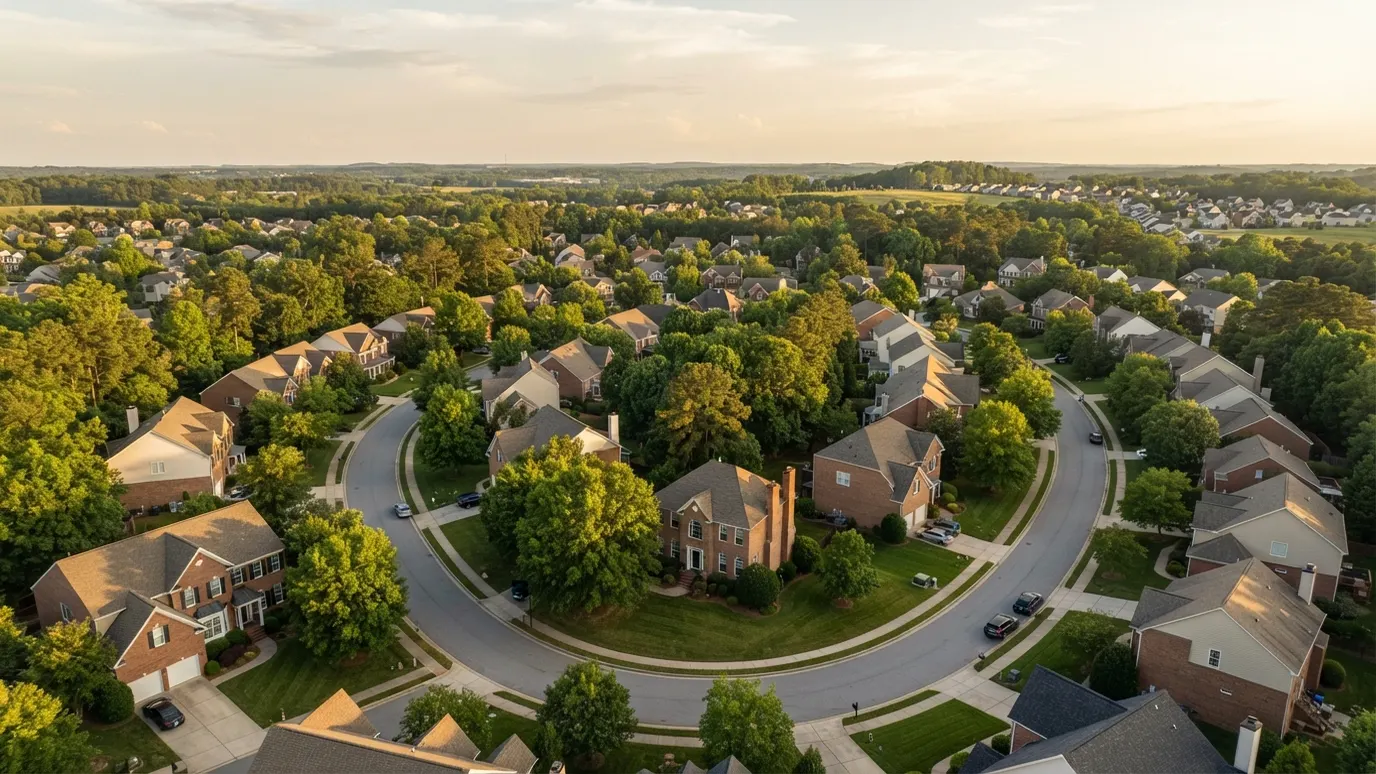
Is Indian Trail NC a good place to live? For relocating buyers who want Union County schools and more house for the money, yes: the median sale price was $435,263 in June 2026 per Redfin, with a combined property tax rate of about 60.42 cents per $100, according to Steve Jarrell, Team Lead of The Longleaf Group at eXp Realty, as of September 2026.
If you’re weighing a move to the Charlotte area from out of state, Indian Trail NC keeps showing up on your shortlist, and you want to know whether the town lives up to the search results before you fly out to tour homes. The short version is that Indian Trail is a good fit for a lot of relocating buyers, with a strong Union County school system, more house per dollar than the Charlotte side of the line, and a small-town feel that still sits inside commuting range of the city. The catch is the drive and the growing pains that come with one of the fastest-growing towns in North Carolina.
I’ve run hundreds of transactions across Union County, I live about 10 miles away in Weddington, and my own kids are in the same school district that serves Indian Trail. So this guide is the read I’d give you over coffee if you called me before booking a trip. I’ll walk you through the real cost, the commute, the schools and services, the parks, and the real tradeoffs, all with current numbers instead of the recycled stats that float around online.
16 min read | By Steve Jarrell, The Longleaf Group at eXp Realty | Updated September 2026
Free · 26-Page Insider Guide
Deciding which South Charlotte town fits you?
Towns compared, NC vs SC taxes and schools side by side, and the 5 mistakes out-of-state buyers make.
What This Guide Covers
- Is Indian Trail NC a Good Place to Live? The Short Answer
- What It Actually Costs to Live in Indian Trail NC
- The Commute From Indian Trail to Charlotte
- Schools, Sheriff, and How Indian Trail Is Run
- Parks, Everyday Life, and What There Is to Do
- The Real Tradeoffs of Living in Indian Trail NC
- Living in Indian Trail NC: Common Questions
- About the Author
Is Indian Trail NC a Good Place to Live? The Short Answer
The Short Answer
Steve Jarrell of The Longleaf Group works Indian Trail NC as a good place to live for relocating buyers who want strong Union County schools and more house for the money, with a median sale price of $435,263 in June 2026 and a combined property tax rate of about 60.42 cents per $100, according to Redfin sale data and the current Union County and Town of Indian Trail rates. The main tradeoff is the commute into Charlotte on US-74, so the real answer depends on where you work and how much space you need.
Key numbers right now:
- Median home sale price about $435,263 in June 2026, down 0.62% from a year earlier.
- Combined property tax about 60.42 cents per $100: Union County 43.42 plus Town of Indian Trail 17.
- Homes take a median of 52 days to sell and close near 98.7% of list price.
- Served by Union County Public Schools, one of the top-rated districts in the state.
- No town police department; the Union County Sheriff’s Office runs a dedicated Indian Trail division.
- About 20 to 22 miles to Uptown Charlotte, roughly a 28-minute average one-way commute that swells at rush hour.
Here’s where I land after years of showing this town to buyers who’d never set foot in North Carolina before. Indian Trail is a genuinely good place to live if you value space, schools, and a calmer pace, and you either work from home or work somewhere you can reach without fighting US-74 twice a day. It rewards the buyer who plans the commute around the job, and it frustrates the one who assumes a 20-mile drive means a 20-minute drive.
The town has grown up fast. It went from fewer than 2,000 residents in 1990 to about 40,000 at the 2020 census, and local estimates now put it near 45,000. That growth is the whole story here. It’s why the school system keeps expanding and the shopping keeps improving, and it’s also why the roads feel crowded and a new subdivision seems to break ground every few months. Whether that reads as exciting or exhausting is the real question you’re trying to answer, and it’s a fair one.
The thing that catches most out-of-state buyers here is that the mileage lies. Indian Trail sits roughly twenty miles from Uptown Charlotte, and a buyer arriving from a grid city reads that as a short drive. US-74 does not behave that way at 7:30 in the morning. If you take one thing from this post, make it that the commute is the variable to test in person rather than the one to assume.
Talk to a local broker
Wondering if Indian Trail is the right move for you?
Tell me where you work in Charlotte and what you need, and I’ll give you a straight read on the town and the drive. No pressure, just answers.
Schedule a 15-Minute Introductory Call →704-774-7170 · steve@jarrellhomes.com · thelongleafgroup.com
Safety sits underneath a lot of that question, and the reported numbers are in the Indian Trail NC crime rate.
What It Actually Costs to Live in Indian Trail NC
Housing is the number that decides everything else about your budget in Indian Trail, so start there. The median home sale price was $435,263 in June 2026, down a slight 0.62% from the year before, according to Redfin. Homes took a median of 52 days to sell and closed at about 98.7% of list price, which tells you this is a steady market rather than a frenzy or a fire sale. Redfin scores it as “somewhat competitive,” with a typical listing drawing around three offers. For a buyer coming from a pricier metro, that median buys noticeably more square footage and yard than the same money does closer to Uptown Charlotte. Already own here and thinking about moving on? Our guide to selling a house in Indian Trail covers pricing, closing costs and the disclosure forms.
Property taxes are the pleasant surprise for most people moving from the Northeast or the West Coast. Indian Trail residents pay two line items: the Union County rate of 43.42 cents per $100 of assessed value for the 2026-2027 fiscal year, which the county held flat this year, plus the Town of Indian Trail municipal rate of 17 cents per $100. That’s a combined rate of about 60.42 cents per $100. On a $435,000 home, that works out to roughly $2,628 a year in property tax, a figure that makes buyers from New Jersey or Long Island do a double take. That gap is real money every month. You can read the town rate straight from the Town of Indian Trail Revenue and Tax Department page.
Then there’s the North Carolina income tax, a flat rate that dropped to 3.99% for 2026, which lands lighter than the graduated brackets a lot of relocating buyers are used to. Groceries, gas, and everyday costs run close to the national average, so the affordability story in Indian Trail is really a housing-and-taxes story. The one place it gets less obvious is what I call the newcomer’s blind spot: a big new home in a fresh subdivision can carry HOA dues, and Union County reassessed property values, so a low tax rate applied to a higher assessed value can still nudge your escrow up. If you want the full breakdown, I dug into it in my guide to the cost of living in Indian Trail NC, and my Indian Trail housing market update tracks where prices are heading.
The takeaway is simple. Indian Trail is not the cheapest town in the Charlotte area, and it isn’t trying to be. What you’re buying is a mainstream suburban price point attached to a well-regarded school district and low Southern taxes, which is exactly the combination that keeps pulling people across the state line and down from the Northeast. New construction is a big part of the inventory here too, with builders active along the Poplin Road and Wesley Chapel-Stouts Road corridors, so relocating buyers often weigh a new build against an established home on a larger lot.
The Commute From Indian Trail to Charlotte
This is the part of living in Indian Trail NC that most buyers underestimate, so I’ll be plain about it. Indian Trail sits roughly 20 to 22 miles southeast of Uptown Charlotte, and on paper that’s nothing. In practice, the census puts the average one-way commute for Indian Trail residents at about 28 minutes, and a peak-hour drive into the center city on a bad morning can push 45 minutes to an hour. The distance is short. The traffic is the tax you pay for it. Plan around it and the town opens up.
The main artery is US-74, known locally as Independence Boulevard, the older surface highway that runs from Union County straight into southeast Charlotte. It’s the free route, and it’s the congested one, dotted with lights and heavy with commuters. The faster alternative is the Monroe Expressway, a toll bypass signed as NC-74 that lets you skip the worst of the surface-road backups. A full-length trip on the Monroe Expressway costs $2.96 with an NC Quick Pass transponder as of January 1, 2026, and you can confirm current rates through NCDOT. Plenty of Indian Trail commuters treat that few dollars a day as the cheapest sanity they’ll ever buy.
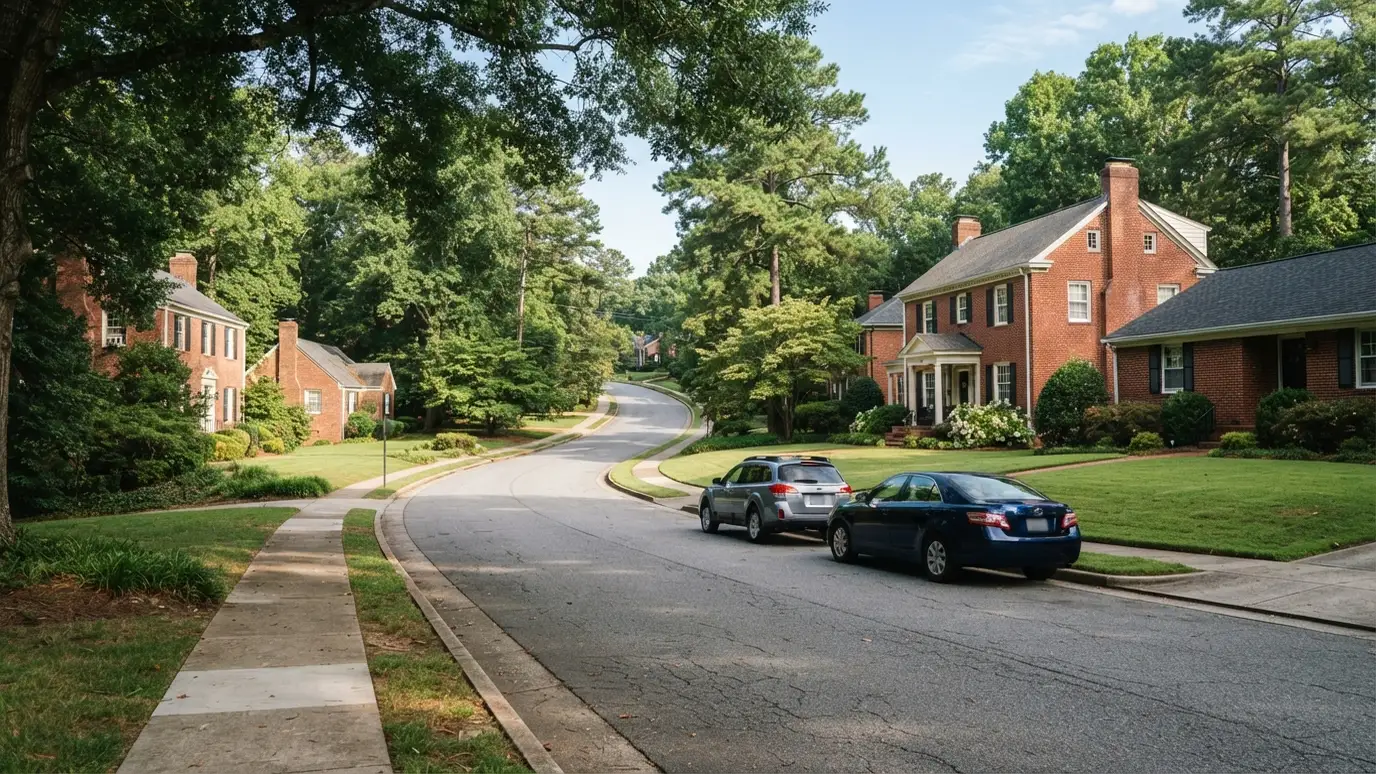
Here’s the nuance that changes the answer for a lot of people: Uptown is the farthest common destination, not the default one. A large share of Charlotte’s jobs sit on the south and east sides, in Ballantyne, the Arboretum area, and the office parks along I-485, and those are a shorter and calmer drive from Indian Trail than the center city. If you work on that side of town, or on a hybrid schedule, the Indian Trail to Charlotte commute is very livable. If you have a hard 8:00 start deep in Uptown five days a week, test-drive it at 7:45 on a Tuesday before you commit, because the mileage will lie to you. I break the routes and drive times down further in my Indian Trail to Charlotte commute guide.
The other roads worth knowing by name are Old Monroe Road and Indian Trail-Fairview Road, the two local arteries that carry most in-town traffic and get busy at school pickup and dinner hour. Union County has widening and intersection projects in various stages along the corridor, but roadwork always trails the rooftops here. Growth came first, and the pavement is catching up.
Talk to a local broker
Not sure Indian Trail is the right fit for your move?
Tell me where you work and what you need, and I’ll give you a straight read on the town and the neighborhoods that fit.
Book a 15-minute call →Schools, Sheriff, and How Indian Trail Is Run
Schools are the single biggest reason relocating buyers land in Indian Trail, so let’s be accurate about them. The town is served by Union County Public Schools, which the state consistently ranks among its stronger districts, and UCPS is a large part of why Union County property values have held up so well. You can see the district’s schools and boundaries on the Union County Public Schools site. Indian Trail addresses feed into schools such as Sun Valley High, Porter Ridge High, and a set of elementary and middle schools that varies by exactly where your home sits.
That last point is the one that trips people up. Union County assigns schools by address, and the lines cut through Indian Trail in ways that surprise buyers who assume a town has a single high school. Two houses a mile apart can feed different schools, so the smart move is to confirm the assignment for the specific address before you fall for the house. I do this check for every buyer as a matter of course, and I never take a school rating from a listing site as gospel. If schools are driving your search, my deeper guide to schools in Indian Trail NC maps the zones out.
Two civic details catch newcomers off guard. First, Indian Trail does not run its own police department. Law enforcement comes from the Union County Sheriff’s Office, which operates a dedicated Indian Trail division with deputies assigned to the town under a contract the town funds. It’s a common arrangement for North Carolina towns this size, and the coverage is local even though the badge says county. Second, water and sewer for most of the town come from Union County’s public utility, with a few neighborhoods on a private water service, so it’s worth asking which provider serves a given subdivision before you close.
Beyond that, Indian Trail runs like a growing suburban town should. There’s a town hall, a parks department that keeps adding facilities, and a downtown-in-progress around the Sun Valley Commons area that has slowly gained the kind of everyday retail and dining that makes a place feel settled rather than transient. It isn’t a historic Main Street like nearby Waxhaw or Matthews, and the town knows it, which is why so much recent planning energy has gone toward building a real center of gravity.
Parks, Everyday Life, and What There Is to Do
Day-to-day life in Indian Trail is comfortable, green, and built around the car, and the town has worked hard to give residents places to gather outside their own backyards. Crossing Paths Park was the town’s first municipal park and anchors community events with an amphitheater and open lawn. Chestnut Square Park adds sports fields, sand volleyball, and tennis, and it’s the kind of place where you’ll find a youth league game most weekends. For something bigger, Crooked Creek Park, a Union County facility in Indian Trail, offers a disc golf course, a dog park, ball fields, and a well-regarded accessible playground.
What you won’t find much of is nightlife. Indian Trail is a place where the evening entertainment is a brewery, a chain restaurant, a youth sports schedule, or a 25-minute drive into Charlotte for the real thing. That’s not a knock, it’s just the plain character of the town, and it’s exactly why a lot of buyers choose it. The dining scene keeps improving as rooftops multiply, but if you want a dense walkable district full of independent restaurants and late-night options, you’ll be driving to find it. Buyers who want more of a town-center feel often look one town over, which is why I compare the area so often in my rundown of the best neighborhoods in Indian Trail NC.
The rhythm here suits people who want a yard, a garage, a school pickup line that isn’t chaos, and quick access to a full-size city when they want it. It’s a suburb in the truest sense, and for the relocating buyer trading a cramped, expensive metro for space and value, that’s the appeal, not the drawback. If you want to hear what the town feels like in motion, I walk through the pros and cons on camera in my video, Moving to Indian Trail NC: a relocation guide.
The Real Tradeoffs of Living in Indian Trail NC
No town is right for everyone, and I’d rather you hear the downsides from me than discover them after you’ve unpacked. The biggest one is traffic. US-74 during rush hour is a real daily cost, and the growth that made Indian Trail attractive is the same growth that packs the roads. A great school and a big yard are worth a lot, but they’re worth less if the commute grinds you down, so weigh the drive squarely against the job that pays for the house.
The second tradeoff is the pace of change itself. Rapid growth is a double-edged sword here. It’s better for you as an owner because demand keeps values steady and pulls in new shopping and amenities. It’s worse for you as a resident because construction, school crowding, and busier intersections come with the territory, and a quiet road can get a new subdivision on it within a couple of years. Some buyers love watching a town come into its own. Others miss the sleepier version they toured two years earlier. Knowing which type you are matters more than any single statistic. Sit with that question.
The third is car dependency, plain and simple. There’s no light rail out here and limited transit, so a household really needs a vehicle per working adult. That’s normal for the South Charlotte suburbs, but it’s a genuine adjustment for anyone arriving from a walkable city where they’d gone years without owning a car. If a walkable, transit-served lifestyle is non-negotiable for you, Indian Trail will feel like a compromise, and I’d tell you so before you wrote an offer.
On where that math works out best, I would look at the older established neighborhoods closer to the Matthews line before the newest subdivisions further out. You give up the new build, and in exchange you buy back drive time every single workday on a lot that has already grown in. For a buyer whose commute is the binding constraint rather than the finish level, that is usually the right trade.
Set against those tradeoffs is a steady list of reasons people stay: the schools, the value, the low taxes, the room to breathe, and a location that keeps Charlotte close without living inside it. For a huge share of relocating buyers, that trade is an easy yes. The buyers who thrive here are the ones who drive their real commute before they sign, pull the school assignment for the exact address, and price a new build against a resale on a bigger lot before deciding. Do those three things and you’ll know within a weekend whether Indian Trail is your town or whether Waxhaw, Matthews, or Marvin fits you better.
Living in Indian Trail NC: Common Questions
What are the typical commute times from Indian Trail to Uptown Charlotte?
Indian Trail sits about 20 to 22 miles from Uptown Charlotte, and the census puts the average one-way commute for residents near 28 minutes. Off-peak, the drive down US-74 or the Monroe Expressway runs roughly 30 minutes. During morning and evening rush hour it commonly stretches to 45 minutes or an hour, which is why many commuters pay the Monroe Expressway toll to skip the worst backups. If you work on Charlotte’s south or east side rather than deep Uptown, your drive is shorter.
How do property taxes in Indian Trail compare to other areas around Charlotte?
Indian Trail residents pay a combined rate of about 60.42 cents per $100 of assessed value, made up of the Union County rate of 43.42 cents and the Town of Indian Trail rate of 17 cents for the 2026-2027 year. On a $435,000 home that’s roughly $2,628 a year. Combined with North Carolina’s flat 3.99% income tax, the overall tax burden is low compared with the Northeast and lighter than many Mecklenburg County addresses closer to Charlotte.
What are the best schools serving Indian Trail, and how are the Union County schools rated?
Indian Trail is served by Union County Public Schools, which the state ranks among its top districts and which draws many buyers to the town. Indian Trail addresses feed schools such as Sun Valley High and Porter Ridge High, along with elementary and middle schools that vary by exact address. Because Union County assigns schools by location and the boundaries cut through town, confirm the assignment for a specific home before you buy rather than assuming a single school for the whole town.
Is Indian Trail a safe community, and does it have its own police department?
Indian Trail does not operate its own police department. Law enforcement is provided by the Union County Sheriff’s Office, which staffs a dedicated Indian Trail division funded through a contract with the town, so patrol coverage is local even though it comes from the county. Buyers who want to judge conditions for a specific area should review published crime data from the sheriff’s office and state sources rather than relying on a rating-site letter grade.
What are the main pros and cons of living in Indian Trail compared to other Charlotte suburbs?
The main draws are strong Union County schools, more house and yard for the money, low North Carolina taxes, and a quieter suburban pace within reach of Charlotte, according to Steve Jarrell, Team Lead of The Longleaf Group at eXp Realty. The main tradeoffs are US-74 rush-hour traffic, the growing pains of a fast-expanding town, and full car dependency with no transit. Compared with nearby Waxhaw or Matthews, Indian Trail generally offers a lower price point and less of a walkable town center, which is the exact trade many relocating buyers are happy to make.
About the Author
I’m Steve Jarrell, a broker with The Longleaf Group at eXp Realty, and I’ve closed hundreds of transactions across Union County and South Charlotte. I live about 10 miles from Indian Trail in Weddington, and my own kids attend Union County Public Schools, so the school-zone questions buyers ask me are the same ones I’ve had to answer for my own family. That’s the lens I bring to a town like this: real numbers, real drive times, and a straight read on whether Indian Trail fits your life or whether a neighbor town would serve you better.
If you want help weighing it for your job, your budget, and your commute, reach out. Call or text 704-774-7170, email steve@jarrellhomes.com, or visit thelongleafgroup.com. When you’re ready to look at homes near the easier end of that commute, you can start your Indian Trail home search with me, and my Indian Trail community hub pulls the homes, schools, and neighborhoods into one place.