
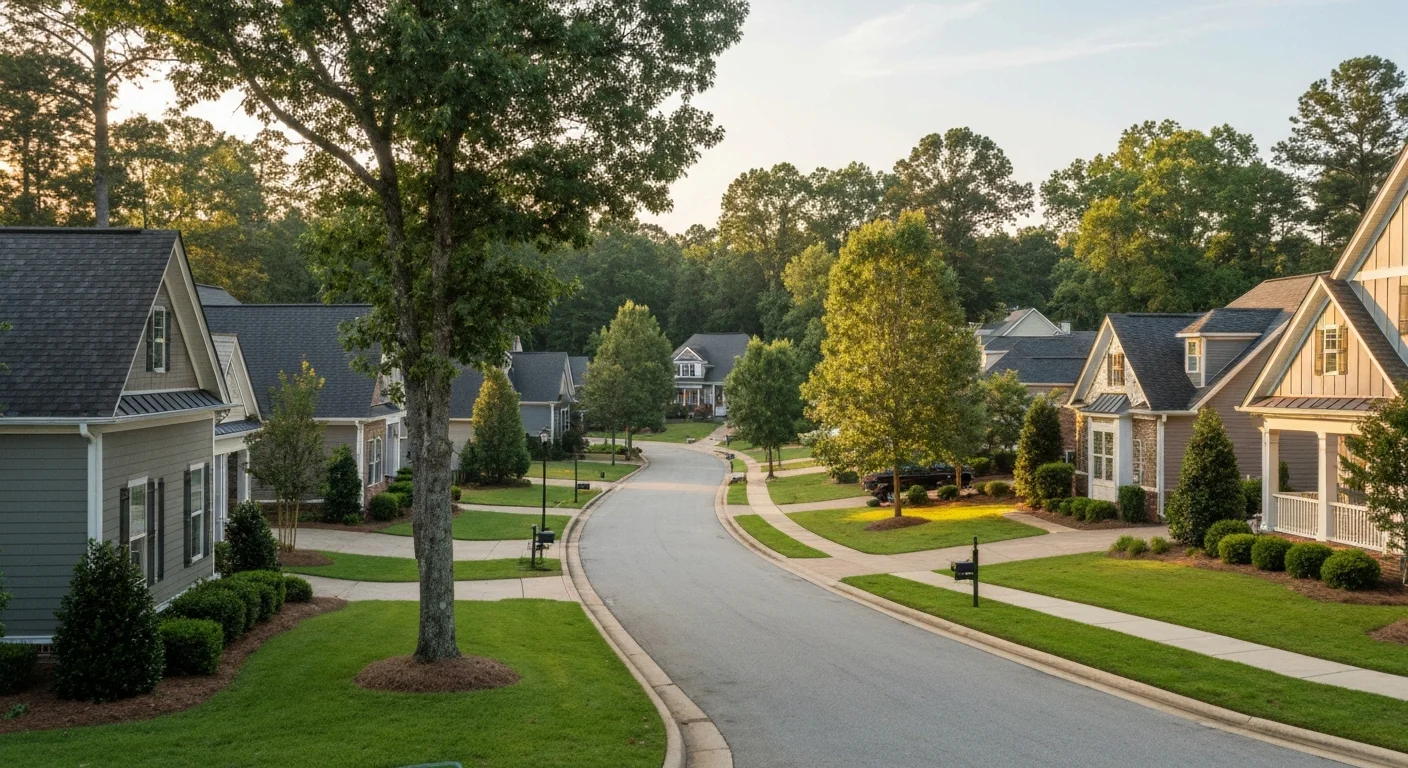
The Indian Trail NC housing market has a reputation that gets oversimplified in a lot of online research. Buyers from out of state see price points that look affordable compared to their home markets, read a few Zillow listings, and assume the purchase process here will be straightforward. Then they arrive and discover that the Indian Trail NC housing market has its own rhythms that national data platforms do not capture well. Competition levels differ by neighborhood. Certain subdivisions move quickly. New construction adds a layer of decision-making that resale-only buyers are not prepared for.
I’m Steve Jarrell, a licensed real estate agent in NC and SC based in Weddington NC (roughly 10 miles from Indian Trail), and I specialize in helping relocating buyers understand South Charlotte and Union County before they commit. This guide covers what the data shows for the Indian Trail NC housing market in 2026: median prices, days on market, neighborhood breakdowns, new construction inventory, school zones, commute times, and how Indian Trail compares to Waxhaw, Matthews, and Monroe.
19 min read | By Steve Jarrell, The Longleaf Group at eXp Realty | Updated September 2026
What This Guide Covers
- The Indian Trail NC housing market at a glance in 2026
- How prices break down by neighborhood in Indian Trail
- What buyers are actually competing against right now
- New construction in the Indian Trail NC housing market
- Property taxes and HOA costs in Indian Trail NC
- The commute from Indian Trail to Charlotte
- Indian Trail NC housing market vs. Waxhaw, Matthews, and Monroe
- Frequently asked questions
The Indian Trail NC Housing Market at a Glance in 2026
Key Takeaways
- Median sale price about $475,000 as of May 2026 (Redfin and Zillow)
- Up about 3.4% year over year on actual sale prices
- Median list prices down about 8.8%, so sellers are recalibrating
- Days on market about 63 to 73 days, a big change from the 2021-2022 frenzy
- A stabilizing suburban market after years of sharp appreciation
- About 10 miles from Weddington, a popular Union County commuter suburb
The numbers on the Indian Trail NC housing market as of spring-summer 2026 describe a stabilizing suburban market after several years of sharp appreciation. Here is what current data shows for buyers doing initial research.
The median home sale price in Indian Trail is approximately $475,000 as of May 2026, based on data tracked by Redfin and Zillow. That represents a modest increase of roughly 3.4% year-over-year when comparing actual sale prices in spring 2026 to spring 2025. Interestingly, median listing prices declined about 8.8% in the same window, which tells you sellers are still recalibrating their price expectations downward from the 2022-2023 peak. Sale prices held steadier than list prices, a sign that buyers are still paying close to asking on well-priced homes while bypassing overpriced inventory entirely.
Days on market in the Indian Trail NC housing market currently run 63 to 73 days on average. That is the most important data point for relocating buyers to understand, because it represents a dramatic change from 2021-2022 when homes in this corridor were going pending in 7-10 days with multiple offers and waived contingencies. You now have time to make deliberate decisions. You can schedule multiple tours, bring an inspector to a pre-offer walkthrough, and negotiate. That shift alone changes what it means to buy in Indian Trail today versus three years ago.
The median price per square foot in the Indian Trail NC housing market sits around $199 as of spring 2026. Indian Trail homes commonly run 2,200 to 3,000 square feet, so that per-square-foot rate translates to a price range that delivers substantially more space per dollar than comparable homes in Mecklenburg County (the county Charlotte occupies). Active listings stood at approximately 394 in late May 2026, giving buyers a real inventory of options to work through. List-to-sale price ratios are running close to 99-100%, which confirms that accurately-priced homes are still selling near asking, but the era of routine overbidding at 5-8% above list is largely over in this segment of the market.
One important caveat about any Indian Trail NC housing market data: national platforms aggregate numbers across all property types, price points, and conditions. The averages can be misleading if you are looking at a specific price tier or subdivision. What matters for your decision is the micro-market: what homes like the one you want are doing in the specific neighborhoods you are considering. That is what I track in real time for buyers I am working with.
Numbers only tell part of the story, so pair this with what daily life in Indian Trail actually feels like.
Asking prices split sharply by property type here, and I walked through what the townhome discount actually costs you each month using these same Indian Trail medians.
How Prices Break Down by Neighborhood in the Indian Trail NC Housing Market
The Indian Trail NC housing market is not uniform across all subdivisions. Indian Trail sits primarily in the 28079 zip code and covers a wide arc of Union County between Matthews (to the northwest, about 10 miles) and Monroe (to the southeast, about 15 miles). Price points and competition levels vary considerably depending on where in town you look.
Brandon Oaks is one of the most consistently requested neighborhoods among buyers I work with. It is an established community with mostly single-family homes built in the 2000s and early 2010s, a pool and tennis courts, and easy access to the Chestnut Square shopping corridor along US-74 (Independence Boulevard, the main commercial and commuter artery through Indian Trail connecting to Charlotte). Prices here range from the low-to-mid $400s for smaller homes up through the $600s for larger, updated properties in more desirable sections.
Crismark and Bonterra are newer master-planned communities that buyers researching the Indian Trail NC housing market specifically seek out for their resort-style amenities: pools, clubhouses, walking trails, and organized community programming. These communities hold value well because the amenity packages attract a consistent buyer profile. Price points in both typically run from the $450s into the $600s depending on size, lot, and update history.
Lake Park is worth mentioning for buyers who want something distinctive. The community borders a 70-acre lake, an unusual natural feature for this part of Union County. Lake Park homes command a premium for waterfront or lake-view lots and attract buyers who value a sense of place beyond the standard subdivision experience. If water access matters to you, this is the primary option in the Indian Trail NC housing market at this price point.
Taylor Glenn and Arbor Glen are established communities with mature trees and larger lots. These appeal to buyers who want more land without going further southeast toward Monroe. Homes here often carry more renovation history and custom details compared to newer build-to-spec communities.
For buyers interested specifically in new construction in the Indian Trail NC housing market, communities like Calico Ridge, Sheffield, and the upcoming McBride by DRB Homes (summer 2026) are active. I cover those builder communities in detail in my guide to new construction homes in Indian Trail NC.
What Buyers Are Actually Competing Against in the Indian Trail NC Housing Market
Here is what most out-of-town buyers get wrong when they look at the Indian Trail NC housing market from a distance: they see a 63-73 day average days-on-market figure and conclude there is very little competition. That reading misses how demand actually flows in this market.
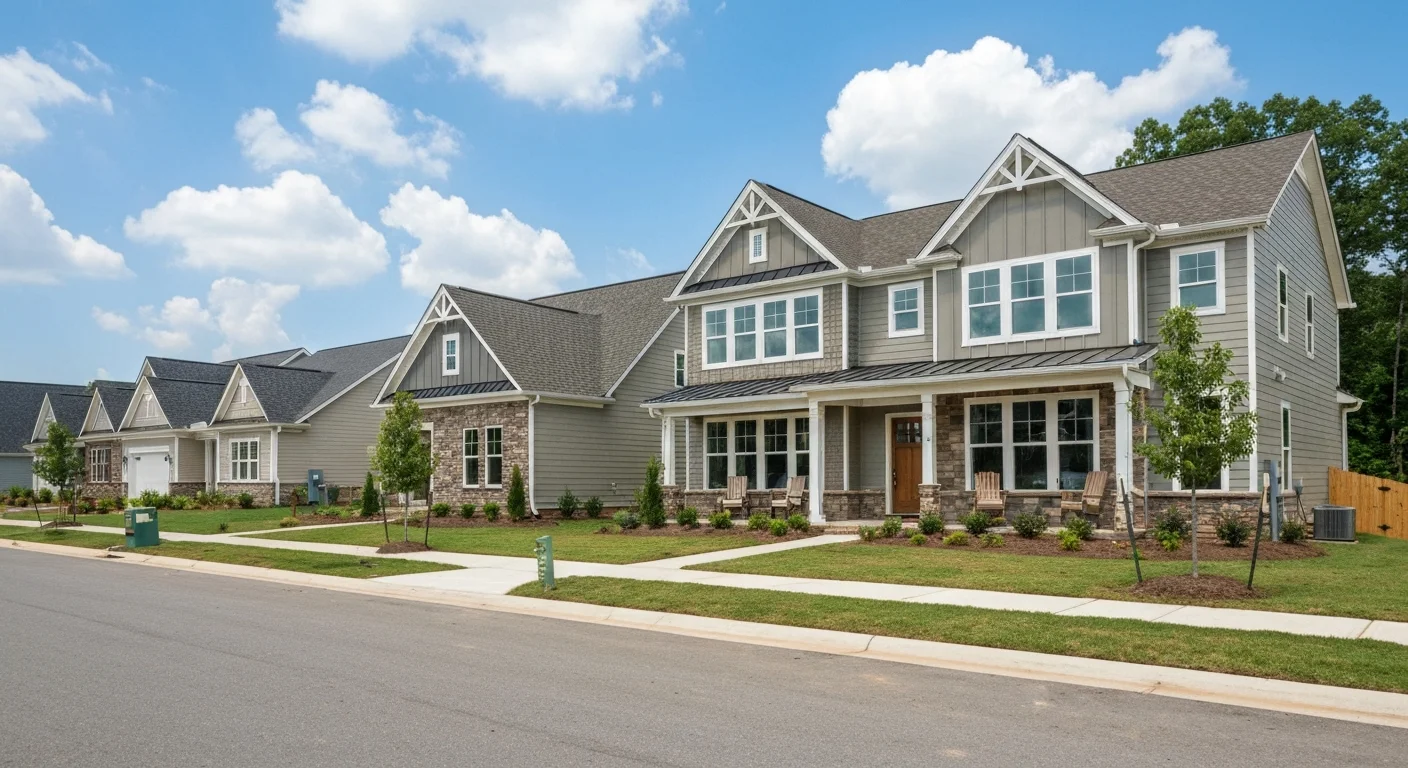
The Indian Trail NC housing market is bifurcated. Well-maintained, move-in-ready homes in desirable subdivisions still move quickly. A freshly updated home in Brandon Oaks or Bonterra, priced accurately, will often receive multiple offers within the first 7 to 10 days on market, sometimes with escalation clauses from competing buyers. The 63-73 day average is pulled up significantly by homes that need work, are overpriced relative to the condition, or sit in less desirable pockets of town. If you are only looking at top-tier inventory in top-tier communities, the effective days-on-market you experience will be shorter than the average suggests.
The list-to-sale price ratio running near 99-100% confirms this picture. Sellers are not dramatically cutting prices. They are pricing more carefully upfront and holding reasonably firm on well-positioned homes. Buyers who assume they can offer 5-8% below list on a well-maintained home in the Indian Trail NC housing market and expect it to be accepted are routinely disappointed. The days of deep discounting from list are reserved for properties with genuine deferred maintenance issues or overpriced listings that have already sat for 60-plus days.
What has genuinely changed from the frenzy years is the contingency landscape. Buyers in the Indian Trail NC housing market now routinely include inspection contingencies, financing contingencies, and reasonable due diligence periods without automatically losing to other offers. Sellers have recalibrated. Coming in prepared with a full pre-approval letter (not just a pre-qualification), a clear closing timeline, and flexibility on possession date still gives a buyer a meaningful edge, but it is no longer necessary to waive everything to compete.
One more nuance for relocating buyers: the Indian Trail NC housing market sees substantial activity from local upgrade buyers who already know which subdivisions they want. They are moving from Matthews, from other parts of Union County, or trading up within Indian Trail itself. That local demand baseline means accurately-priced homes in the best neighborhoods do not accumulate days on market the way the aggregate number implies.
My recommendation: run the Indian Trail NC housing market analysis subdivision by subdivision rather than relying on zip-code averages. The difference between what is happening in Brandon Oaks versus a less-established pocket of the 28079 zip code is significant. This is the kind of ground-level read I provide for buyers I am working with before they start making offers. You can reach me directly at 704-774-7170 or steve@jarrellhomes.com to talk through what you are seeing in your search.
New Construction in the Indian Trail NC Housing Market
New construction is one of the most active segments of the Indian Trail NC housing market right now, and it is an option that many relocating buyers underutilize because they assume builder timelines are too long or builder pricing is too high. Neither assumption is consistently true in 2026.
Ryan Homes is the most active national builder in this area, with 26 communities across Union County. Active Indian Trail and near-Indian Trail options include Laney Farms, Liberty Grove, and Moore Farm, with single-family homes starting in the $400s to low $500s depending on the plan and lot.
KB Home is active in Indian Trail with communities that emphasize energy-efficient construction and interior customization. KB homes here typically start in the mid-to-upper $400s and are worth touring if you want the ability to choose finishes without fully custom pricing.
DRB Homes is opening McBride, a new single-family community in Indian Trail expected to begin sales in summer 2026, with homes anticipated from the $500s. This is one of the newest additions to the Indian Trail NC housing market and worth tracking if your timeline stretches into late 2026 or early 2027.
If you want a ground-level feel for what life in Indian Trail is actually like before you start touring homes, I put together a full overview on my YouTube channel: Living in Indian Trail NC 2026: What You Need to Know. It covers the town character, growth, and what buyers consistently ask me once they narrow their search here.
One critical point for buyers new to new construction in the Indian Trail NC housing market: builder incentive packages can include meaningful closing cost contributions, mortgage rate buydowns, or upgrade allowances, but these incentives almost always require using the builder’s preferred lender.
Before assuming the incentive is a straight savings, I walk every buyer I work with through a full cost comparison that accounts for the preferred-lender rate versus what an independent lender would offer. Sometimes the incentive is genuinely valuable. Sometimes the rate differential wipes it out. Knowing the difference before you sign a purchase agreement matters. For a broader look at what is coming across all of Union County, see my post on new development in Union County NC.
Property Taxes and HOA Costs in the Indian Trail NC Housing Market
One of the most consistent questions I hear from buyers researching the Indian Trail NC housing market from out of state is: “How do property taxes compare to where I am coming from?” The short answer: they are low by national standards, but the combined rate has multiple components that buyers sometimes miss when they calculate initial budgets.
Property taxes in Indian Trail combine two rates. Union County’s property tax rate is $0.4342 per $100 of assessed value, held flat by county commissioners for the 2026-2027 fiscal year following the January 2025 countywide revaluation. You can confirm current rates through North Carolina Department of Revenue property tax data. The Town of Indian Trail adds a municipal rate of 17 cents ($0.17) per $100 of assessed value. Combined, that totals approximately $0.6042 per $100, giving Indian Trail an effective rate of roughly 0.60% of assessed value. That sits below the North Carolina statewide average of 0.66% (Tax Foundation) and well below what Mecklenburg County (Charlotte’s county) charges at comparable property values.
On a $475,000 home in the Indian Trail NC housing market, that combined rate translates to roughly $2,870 per year in property taxes. A comparable home in a Mecklenburg County south Charlotte zip code carries a meaningfully higher annual tax bill. This is one of the reasons buyers willing to add 25-35 minutes to their commute find Union County so financially compelling. For a full breakdown of how Union County rates compare across all its municipalities, including Indian Trail versus Waxhaw, Monroe, and neighboring Indian Land SC, see my post on Union County NC property tax rates for 2026.
HOA fees are standard in most of the Indian Trail NC housing market, particularly in the master-planned communities that dominate the 28079 zip code. Monthly HOA fees typically run $50 to $150 depending on the community and its amenity package. Communities with pools, fitness centers, walking trails, and organized programming sit at the higher end of that range. Some older, less amenity-heavy neighborhoods have no HOA or nominal dues under $30 per month. I always recommend buyers verify the specific HOA fee and review the full governing documents before going under contract, since the cumulative cost of HOA plus taxes plus insurance adds meaningfully to monthly housing costs and is often underestimated by buyers doing initial budget planning.
The Commute from Indian Trail NC to Charlotte
The commute question comes up in virtually every conversation I have with buyers considering the Indian Trail NC housing market. Here is the breakdown, because the answer varies significantly by where in Charlotte you work and what time you leave.
The average commute time from Indian Trail to major Charlotte employment centers is approximately 28 minutes, based on 2024 community data. That average covers the full geographic range of Indian Trail addresses to the full range of Charlotte job locations. The real-world experience for relocating buyers looks like this:
Uptown Charlotte (the central business district): 30 to 40 minutes in normal conditions via US-74 (Independence Boulevard, the primary connector between Indian Trail and the city). During peak morning rush hours, expect 45 to 50 minutes or more, particularly on the US-74 interchange with I-485 (the Charlotte beltway).
SouthPark and Ballantyne (major suburban employment hubs housing Wells Fargo, Ally Financial, and numerous corporate campuses): 20 to 30 minutes, since these employment centers are on the Charlotte side closer to Union County. Buyers who work in south Charlotte’s corporate corridor find the Indian Trail NC housing market particularly practical from a commute perspective.
Charlotte Douglas International Airport (CLT, the primary regional airport): 30 to 45 minutes depending on the specific Indian Trail address and traffic conditions on US-74 and I-485.
There is no light rail service to Indian Trail as of mid-2026. CATS (Charlotte Area Transit System, the regional transit authority) operates bus routes that reach parts of Indian Trail, but the overwhelming majority of residents commute by car. If car-free or reduced-car commuting is a priority, Indian Trail is not the right fit, and a closer-in neighborhood like Matthews or South End Charlotte would serve better.
My take on the commute for buyers researching the Indian Trail NC housing market: 30-40 minutes is a very real and daily reality. Buyers relocating from dense metro areas where 45-60 minutes is standard often find this completely manageable. Buyers upgrading from within South Charlotte, where 12-15 minute commutes are common, sometimes feel the difference more acutely. That conversation is worth having before you fall in love with a home at a price point that only makes sense in Indian Trail. Reach me at 704-774-7170 to talk through the trade-off.
Indian Trail NC Housing Market vs. Waxhaw, Matthews, and Monroe
Most buyers researching the Indian Trail NC housing market are simultaneously looking at neighboring communities. Here is a comparison that covers what the data shows and what the lifestyle differences actually feel like.
Indian Trail vs. Matthews NC: Matthews sits about 10 miles northwest, closer to Charlotte, with an established downtown fabric that Indian Trail currently lacks. Matthews has a walkable town center with independent restaurants, a Saturday farmers market, and a greenway system with over 13 miles of paved trails connecting residential areas. Matthews home prices run higher, with medians in the low-to-mid $500s and above for comparable home sizes, because proximity to Charlotte commands a premium. Buyers who prioritize shorter commutes and walkable neighborhood infrastructure lean toward Matthews. Buyers who want newer construction, more square footage per dollar, and newer suburban amenities lean toward the Indian Trail NC housing market.
Indian Trail vs. Waxhaw NC: Waxhaw sits about 12 miles southeast and has a distinct character built around a historic downtown with restaurants on Main Street, an antique district, and the Cane Creek park system (over 1,000 acres of trails, mountain biking, and open space in neighboring Union County). Waxhaw also carries horse farm culture in its rural edges and a wide architectural range from Victorian-era homes to newer master-planned communities.
Waxhaw median prices run comparable to Indian Trail in standard subdivisions but push meaningfully higher in premium communities near Weddington and Marvin. The Indian Trail NC housing market offers more overall new inventory. Waxhaw offers more character variety and the proximity to greenways and open space that some buyers prioritize.
Indian Trail vs. Monroe NC: Monroe is the Union County seat, about 15 miles southeast, and represents the most affordable segment of the broader Union County housing market. Monroe medians typically run in the $350s to $400s, with larger lots and more rural character. Monroe also has active new construction through builders like DR Horton and Ryan Homes, covered in my guide to new construction homes in Monroe NC.
The tradeoffs: a longer commute to Charlotte and a downtown that is still developing. Buyers with more flexible commute requirements who want the most land per dollar often find Monroe the right answer. Buyers who prioritize shorter commute times and a broader resale market typically land on the Indian Trail NC housing market instead.
For Indian Trail, the value case is straightforward: newer suburban infrastructure, competitive school zones, a price point that delivers more space than Mecklenburg County at comparable proximity to the city, and a commute that is manageable for most out-of-state buyers who are already used to 30-plus minute commutes. If you’re weighing these towns seriously, the right decision usually comes down to which commute you can live with and whether the newer-construction feel of Indian Trail matches your lifestyle preferences better than the more established character of Matthews or the rural-meets-historic feel of Waxhaw. I help buyers work through exactly this comparison every week. You can start a conversation at thelongleafgroup.com/buying.
For buyers who have already moved to the area or are considering the broader relocation picture, my post on moving to Indian Trail NC covers the growth story and what the development pace actually means for buyers who want to understand the town before they buy in it.
Frequently Asked Questions About the Indian Trail NC Housing Market
What is the median home price in Indian Trail NC in 2026?
The median home sale price in the Indian Trail NC housing market is approximately $475,000 as of May 2026, based on tracking from Redfin and Zillow. That is up roughly 3.4% year-over-year on actual sale prices, while median listing prices softened about 8.8% over the same period. The gap between list price declines and sale price stability reflects sellers repricing to move inventory while still attracting offers close to asking on well-maintained homes.
Is the Indian Trail NC housing market competitive for buyers in 2026?
It depends on the segment. The Indian Trail NC housing market is bifurcated: well-maintained, move-in-ready homes in desirable subdivisions like Brandon Oaks, Bonterra, and Crismark still attract multiple offers within 7-10 days. The 63-73 day average days-on-market figure is pulled up by overpriced or deferred-maintenance homes sitting longer. Buyers who understand this distinction and focus on accurately-priced inventory in their target neighborhoods will encounter real competition. Buyers who approach every listing assuming 30-day averages are the norm will be surprised when the best homes move fast.
How do Indian Trail NC home prices compare to Charlotte, Waxhaw, and Matthews?
The Indian Trail NC housing market is priced below comparable homes in south Charlotte Mecklenburg County zip codes, which adds a Union County premium for distance from the city. Matthews sits higher than Indian Trail on median prices (low-to-mid $500s and above) due to proximity to Charlotte. Waxhaw runs comparable to Indian Trail at the median but higher in premium communities near Weddington and Marvin. Monroe is the most affordable Union County option, with medians in the $350s-$400s but a longer commute. Indian Trail offers the best balance of newer inventory, competitive pricing, and manageable commute within this group.
What schools serve Indian Trail NC and are they rated highly?
Indian Trail is served by Union County Public Schools (UCPS), a large and generally well-regarded district. Buyers prioritizing schools should note these specific campuses: Indian Trail Elementary holds an “A” overall grade from Niche and ranks in the top 5% of NC public elementary schools. Sun Valley Middle School is ranked in the 85th percentile among NC middle schools by SchoolDigger. Porter Ridge High School serves most of Indian Trail and ranks in the top third of NC high schools.
UCPS also has a Union Prep Academy charter option in Indian Trail. School zones in the Indian Trail NC housing market vary by address, so always verify the specific zone before going under contract. The official UCPS zone finder is at ucpsnc.org.
What are the property taxes in Indian Trail NC?
Property taxes in the Indian Trail NC housing market combine Union County’s rate ($0.4342 per $100 of assessed value) with the Town of Indian Trail’s municipal rate ($0.17 per $100). The combined rate is approximately $0.6042 per $100, or an effective rate of roughly 0.60%. On a $475,000 home, that works out to approximately $2,870 per year. This is notably lower than Mecklenburg County rates on comparable homes, which is one of the primary financial reasons buyers are willing to commute from Union County.
How long is the commute from Indian Trail NC to Uptown Charlotte?
The drive from Indian Trail to Uptown Charlotte typically takes 30 to 40 minutes in normal conditions via US-74 (Independence Boulevard). During peak morning rush hours, expect 45 to 50 minutes. The average commute across all Indian Trail addresses and all Charlotte employment centers is approximately 28 minutes, but buyers targeting Uptown-based employers should plan conservatively for the 35-45 minute range. For buyers working in SouthPark or Ballantyne, the commute from the Indian Trail NC housing market is typically 20 to 30 minutes.
Are there new construction homes available in Indian Trail NC in 2026?
Yes. New construction is one of the most active segments of the Indian Trail NC housing market right now. Active builders include Ryan Homes (with communities like Laney Farms, Liberty Grove, and Moore Farm), KB Home, and DRB Homes (opening McBride in summer 2026, starting from the $500s). Homes are available across price points from the $400s to the $600s depending on the builder, plan, and lot. Builder incentives are common and worth evaluating carefully. See my full guide to new construction homes in Indian Trail NC for community-by-community details.
Home prices are one piece of the budget. Here is what it actually costs to live in Indian Trail once taxes and utilities are added in.
About the Author
Steve Jarrell is a licensed real estate agent in NC and SC based in Weddington NC, and he has tracked the Indian Trail NC housing market daily as part of serving buyers across South Charlotte and Union County since 2021. Before real estate, Steve spent 10 years building marketing technology for real estate agents nationwide, including the Paradym platform (acquired by Constellation Software in 2020).
He holds an MBA from the University of Tennessee with concentrations in Marketing and Innovation, and a luxury real estate designation. Steve approaches market data with both an agent’s ground-level read and an analyst’s eye for what the numbers actually say. Reach him at 704-774-7170 or steve@jarrellhomes.com to talk through the Indian Trail NC housing market and whether it fits your search.
Ready to Buy in Indian Trail NC?
I work with relocating buyers across South Charlotte and Union County every week. Let me help you understand what the Indian Trail NC housing market actually looks like for your budget and timeline, before you make any commitments.
Schedule a Free Buyer Consultation
704-774-7170 | steve@jarrellhomes.com | thelongleafgroup.com
For the complete local picture, see our Indian Trail real estate guide.
 |
Free · 26-Page Insider Guide Which South Charlotte Town Is Right for You? Towns, villages, and cities compared, NC vs SC taxes and schools, and the 5 mistakes out-of-state buyers make. Everything you’d want a local to tell you before you move. |