
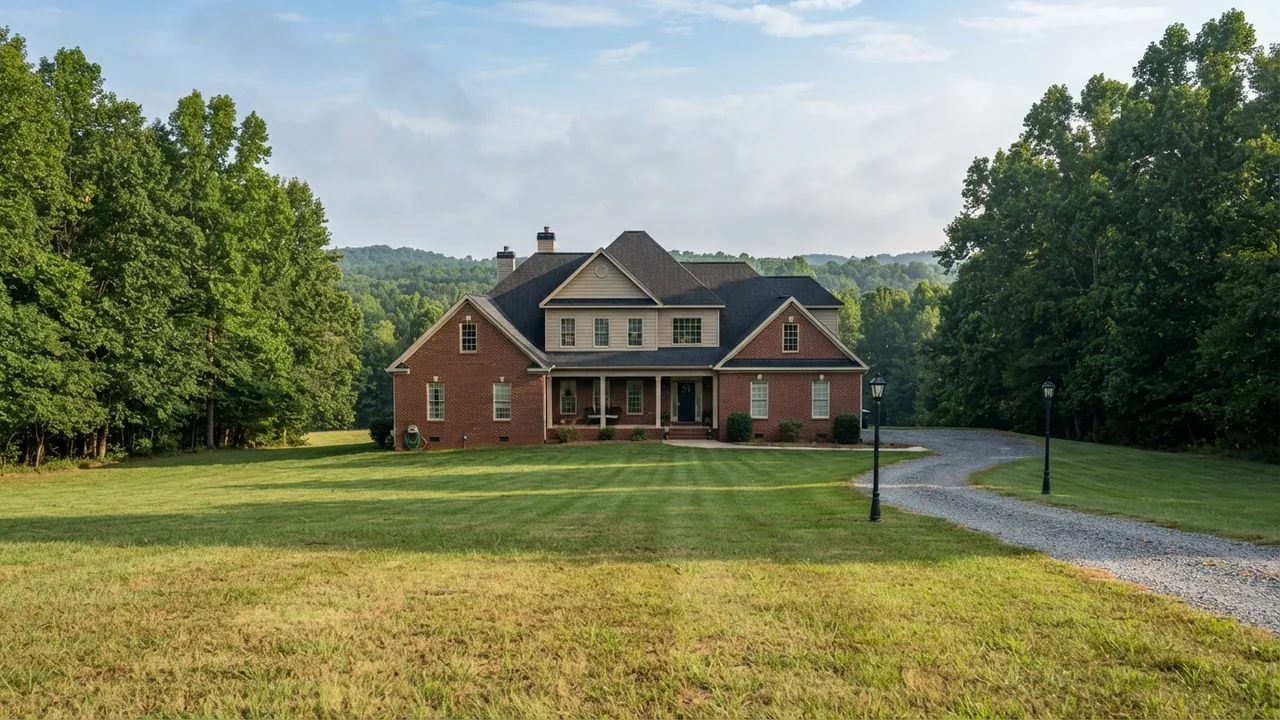
In Waxhaw, the town does not sell you your water. Union County does, and a Waxhaw address on its own tells you nothing about whether a house has public water at all. The public water system carrying the town’s own name has been switched off since July 1, 1988, while Union County Water now supplies 169,685 people through 66,805 service connections. Both numbers come from the EPA’s Safe Drinking Water Information System, read on September 16, 2026.
Find out which one a house is on before you write an offer. The answer decides how many bedrooms you can legally have, what you inspect, and what the house costs to run every year after closing. I’m Steve Jarrell, a licensed broker in North Carolina and South Carolina and team lead of The Longleaf Group at eXp Realty, and I work this stretch of Union County every week.
13 min read | By Steve Jarrell, The Longleaf Group at eXp Realty | Updated September 2026
Free · 26-Page Insider Guide
Weighing well and septic against public water?
Towns compared, NC vs SC taxes and schools side by side, and the 5 mistakes out-of-state buyers make.
What This Guide Covers
- Who actually supplies city water in Waxhaw NC
- How do you tell if a house is on city water in Waxhaw?
- The well questions that matter, and the July 2008 line
- What the septic system decides about the house itself
- What it costs to own, and the tradeoff nobody prices in
- Frequently asked questions
Who actually supplies city water in Waxhaw NC?
Union County does, not the Town of Waxhaw. If you’re coming from a city where the town and the water bill were the same organization, that’s the first thing to unlearn. What you’re calling city water in Waxhaw is a Union County connection, and the county line and the town line are not the same line. The federal Safe Drinking Water Information System lists Union County Water System, identifier NC0190413, as an active community water system run out of Monroe and serving 169,685 people across 66,805 connections. The system named Waxhaw, Town of, identifier NC0190020, is listed as inactive, deactivated July 1, 1988, with 1,188 people and 460 connections on its last record.
The Short Answer
Public water around Waxhaw, North Carolina comes from Union County Water, not from the town, and plenty of Waxhaw addresses have no public water line at all. Verified against the EPA’s Safe Drinking Water Information System on September 16, 2026.
Key numbers, Waxhaw and Union County, current rules and federal records (sources: EPA SDWIS, NC General Statutes, NC Administrative Code):
- Union County Water System serves 169,685 people through 66,805 connections
- The Town of Waxhaw’s own water system has been inactive since July 1, 1988
- County well permitting and testing applies to wells built, repaired or abandoned on or after July 1, 2008
- A newly built well gets tested for 19 parameters within 30 days of its certificate of completion
- Septic sizing runs on 120 gallons per day per bedroom
- A septic permit issued with a plat never expires; one issued with a site plan lasts five years
My advice is to confirm the water source against the parcel before you rely on the listing sheet. A listing checkbox is somebody’s summary of the property, and out here the boundary between a county water connection and a private well does not follow the town line. Ten minutes on the phone before you write can change what you offer, and no inspection afterward gives that time back.
Talk to a local broker
Looking at a Waxhaw property and not sure what it runs on?
Send me the address and I’ll tell you what to check first. No pressure, just answers.
Schedule a 15-Minute Introductory Call →704-774-7170 · steve@jarrellhomes.com · thelongleafgroup.com
Geography is why this matters. Waxhaw’s downtown core sits on a few walkable blocks, and the 28173 ZIP code around it runs for miles in every direction across land that was farms a generation ago. County water mains follow roads and development, and they stop where the last subdivision stopped. Two houses on the same two-lane road, a quarter mile apart, can easily sit on opposite sides of that line.
There are also small private systems inside the same footprint. The EPA database lists JAARS, Inc., identifier NC0190127, as an active community water system in Waxhaw serving 625 people through 234 connections. That’s a campus system, not a town utility, and it’s a useful reminder that “where does the water come from” has more than two possible answers around here. If you’re still choosing between towns, the Waxhaw community page covers the rest of what separates it from its neighbors.
How do you tell if a house is on city water in Waxhaw?
Look at the property first, then call the utility to confirm. The house will usually tell you in about a minute, but only the utility can settle it.
Four things give it away on a walkthrough. A well head is usually a capped steel or PVC pipe standing six to twelve inches out of the ground, often tucked beside the house or behind a shrub. A pressure tank, a blue or grey cylinder roughly the size of a water heater, sits in the garage, crawlspace or a utility closet. A water softener or a whole-house filter almost always means a well, because county water arrives already treated. And a septic tank leaves a clean rectangle of slightly different grass somewhere in the side or back yard, with two access lids.
Then confirm it. Ask the listing agent for the most recent water bill, which either exists or does not. Request the well permit and the septic Improvement Permit from Union County Environmental Health. A seller who has owned the house since before July 2008 may not have a well permit, because the county program did not exist yet, and that absence is itself information.
Do all of this before due diligence starts. In North Carolina the due diligence fee is money you hand the seller for the right to investigate, and it’s generally not refundable. Spending it to discover the house is on a well you didn’t budget for is an expensive way to learn something a phone call would have told you.

The well questions that matter, and the July 2008 line
One date does most of the work here. North Carolina General Statute 87-97 requires every county to run a permitting, inspection and testing program for private drinking water wells constructed, repaired or abandoned on or after July 1, 2008. Union County’s health department runs that program locally. A well drilled in 2004 and never touched since was never inside it.
For a well built after that date, subsection (h) of the statute is worth reading in full. Within 30 days of issuing a certificate of completion, the local health department has to test the water, or confirm a certified lab has, for arsenic, barium, cadmium, chromium, copper, fluoride, lead, iron, magnesium, manganese, mercury, nitrates, nitrites, selenium, silver, sodium, zinc, pH and bacterial indicators. That’s 19 parameters, and the results exist on file.
For an older well, nobody ran that panel and nobody is going to unless you pay for it. North Carolina doesn’t require a well test as a condition of sale, so a resale house can change hands with water nobody has ever sampled. Order the panel yourself during due diligence and read it before the option period closes.
Two more things belong on the list. First, setbacks, and here the two rule sets do not agree about the same piece of ground. The well rules at 15A NCAC 02C .0107, summarized in the state’s own private wells FAQ, put a well at least 100 feet from a septic system, reducible to 50 feet for a single home when the lot will not allow more, and at least 25 feet from the house. The septic rules measure the same gap from the other side and set 50 feet to a private well serving one home. Plan to the 100 foot figure, because that’s the one a well permit is judged against.
Then there are old wells. 15A NCAC 02C .0113 requires a permit to abandon a well, and a well acting as a channel of contamination has to be repaired or permanently abandoned within 30 days of notice from the health department. An unused wellhead in the corner of a Waxhaw lot is a line item, not a curiosity.
What the septic system decides about the house itself
It decides your bedroom count. On an acreage purchase that’s the line with the most money attached to it.
North Carolina sizes on-site wastewater systems by design daily flow, and 15A NCAC 18E .0401(a) sets the minimum at 120 gallons per day per bedroom. The permit on the property is written for a specific number of bedrooms. If the system was permitted for three and you want to finish the bonus room over the garage as a fourth, finishing it as a fourth bedroom is a permit question before it’s a drywall project, and the answer depends on whether the soil on that lot supports a bigger field.
The same rule set reserves a repair area. Rule 18E defines it as ground classified suitable and held in reserve for the day the first system fails or is destroyed. It has to stay available, which means you can’t put a pool, a shop or a paved parking pad on it. On a two-acre lot that usually costs you nothing. On a smaller one it can quietly eliminate the backyard plan you bought the house for.
Then there’s the permit itself, and this is the detail I’d hand to anyone shopping raw land around Waxhaw. Under G.S. 130A-335(f), an Improvement Permit issued with a plat is valid without expiration, while one issued with a site plan is valid for five years. Same lot and same soil, but a different shelf life, decided by which drawing went in with the application. The Construction Authorization is the separate document that lets work start, and under subsection (f1), if it is more than five years old a preconstruction conference with the health department is required before anyone digs, even where the Improvement Permit itself never expires.
| Requirement | What the rule says | Where it comes from |
|---|---|---|
| Well to septic, well rules | 100 feet, reducible to 50 feet for one home on a constrained lot | 15A NCAC 02C .0107 |
| Septic to any property line | 10 feet minimum | 15A NCAC 18E .0601, Table IX |
| Septic to a private well, septic rules | 50 feet minimum | 15A NCAC 18E .0601, Table IX |
| Well to the house | 25 feet minimum | 15A NCAC 02C .0107 |
| Septic sizing, per bedroom | 120 gallons per day | 15A NCAC 18E .0401(a) |
| Septic permit filed with a plat | Valid without expiration | G.S. 130A-335(f) |
| Septic permit filed with a site plan | Valid five years | G.S. 130A-335(f) |
You can check most of those numbers standing in the yard with a tape measure. The septic system has to sit 10 feet off any property line, the well has to sit 100 feet from it and 25 feet off the house, and the whole arrangement has to fit on the lot with a repair area beside it. On the big Union County parcels that’s easy. On a one-acre lot it’s a puzzle, and it’s why some perfectly nice pieces of land never get built on.
The number I’d underwrite is the replacement, not the water bill you save. A septic system is a capital asset sitting in the yard with a finite life, and the repair area beside it is the state’s way of making sure there’s somewhere to put the next one. On a well and septic house I want three documents before I get comfortable: the permit, the repair area drawn on the plat, and a pumping record. The first two tell you what the system was built to do. The pumping record tells you whether anyone kept up with it.
Talk to a local broker
Buying on acreage in Waxhaw, NC?
A quick call with a broker who works this market every week, before you spend the due diligence fee.
Book a 15-minute call →What it costs to own, and the tradeoff nobody prices in
You trade a monthly bill for an occasional one, and the occasional one is bigger.
On the good side, a well and septic house has no water bill and no sewer bill at all. Nobody can raise a rate on you, and a restriction on the county system doesn’t reach your tap. Over a long hold that adds up.
On the other side, you’re the utility now. The EPA’s maintenance guidance, current in September 2026, is to have the average household septic system inspected at least every three years and the tank pumped every three to five years. Systems with electrical float switches, pumps or mechanical components need inspection more often, generally once a year, and they carry a service contract. A well adds a pump and a pressure tank, both of which are wear items with a finite life.
Weddington runs on well and septic almost everywhere, and the same permit and setback rules drive how big the lots are in Marvin. Land that can’t take a septic field and a repair area doesn’t become a subdivision, which is a large part of why the acreage towns south and west of Charlotte still look the way they do. If you want the price side of that picture, the South Charlotte market data hub tracks it by town.
So here’s the working rule I’d give a buyer flying in for a weekend of showings: treat the utility question as part of the address, not part of the inspection. Ask it on the first call about a property, long before the 19-parameter panel is relevant. The permit file is what tells you which house you’re actually buying.
Frequently Asked Questions About Water and Septic in Waxhaw NC
What are the regulations for private well water testing in Union County NC?
North Carolina General Statute 87-97 requires every county to run a permitting, inspection and testing program for private drinking water wells constructed, repaired or abandoned on or after July 1, 2008, and Union County’s health department runs that program locally. Under subsection (h), within 30 days of issuing a certificate of completion for a newly constructed well, the local health department has to test the water, or confirm a certified lab has, for 19 parameters: arsenic, barium, cadmium, chromium, copper, fluoride, lead, iron, magnesium, manganese, mercury, nitrates, nitrites, selenium, silver, sodium, zinc, pH and bacterial indicators. A well drilled before July 2008 and never repaired since never went through that program, so order the panel yourself.
How often should a septic tank be pumped in North Carolina?
The EPA’s guidance, current in September 2026, is to have the average household system inspected at least every three years by a septic service professional and the tank pumped every three to five years. Systems with electrical float switches, pumps or mechanical components should be inspected more often, generally once a year. North Carolina does not set a statewide pumping interval for a conventional home system, so the three to five year cadence is the working standard, and on a Waxhaw purchase it’s worth asking the seller for the last pumping receipt.
What kind of inspection is required for a private well before buying a home in NC?
None is required. The testing in G.S. 87-97(h) is triggered by construction of a well, not by a sale, so a resale house on a well can change hands in 2026 with water nobody has ever sampled. That makes the 19-parameter water panel plus a check of the pump and pressure tank a buyer expense worth carrying during due diligence, rather than a seller obligation you can rely on.
Are permits required for well repair in Union County NC?
Yes. G.S. 87-97 and 15A NCAC 02C .0300 require a permit to construct or repair a private drinking water well, plus a certificate of completion before the well goes back into service. Abandonment needs a permit too, and under 15A NCAC 02C .0113 a well acting as a channel of contamination has to be repaired or permanently abandoned within 30 days of notice from the local health department. An old unused well on a Waxhaw property is a cost to plan for.
What are the annual maintenance requirements for a septic system in NC?
For a conventional gravity system the yearly job is small: keep vehicles and structures off the drainfield and the repair area, keep surface water away from it, and stay on the EPA’s three to five year pumping cycle with an inspection at least every three years. A system with a pump, a float switch or an advanced treatment unit is a different animal, because the EPA recommends inspecting those about once a year and they carry a service contract. Find out which type is in the yard before you assume the cheaper answer.
About the Author
Steve Jarrell is the team lead of The Longleaf Group at eXp Realty, which he co-leads with his wife Amanda. He is a licensed real estate broker in North Carolina and South Carolina, holds a Broker In Charge license, and lives in Weddington, in the same part of Union County this guide covers. Before real estate he joined VisualTour as President, led its rebrand to Paradym, and led the company to its acquisition by Constellation Software in 2020. The Longleaf Group is an eXp ICON Team with 140+ five-star reviews. If you’re looking at a Waxhaw property on a well and want a second read on it before you write an offer, call 704-774-7170.