
16 min read | By Steve Jarrell, The Longleaf Group at eXp Realty | Updated August 2026
I talk with people moving from Atlanta to Charlotte almost every week, and helping them relocate from Georgia is a big part of what I do. and the conversation usually starts the same way: someone is tired of the traffic, curious about the taxes, and wants to know if Charlotte is a real upgrade or just a smaller version of what they already have. It is a fair question, and one nearly everyone moving from Atlanta to Charlotte asks. The two cities look like cousins on paper. Both are Southern banking and corporate hubs, both grew fast, and both have hot, humid summers and mild winters.
The differences that actually change your daily life are quieter than the headlines suggest. They show up in your commute, your tax bill, your weekend, and how far your housing budget stretches. I am licensed in both North Carolina and South Carolina and I help buyers relocate across this whole region, so this guide walks through what moving from Atlanta to Charlotte really changes, with current numbers and the real tradeoffs.
The Short Answer
Atlanta and Charlotte are closer on cost than most people expect — rent and income tax are both slightly cheaper in Charlotte, and property tax is meaningfully cheaper. What you actually trade is scale: a smaller airport, a smaller job market, and a much shorter commute. For most households the commute is the difference they feel first.
Key numbers right now:
- Charlotte sits about 245 miles northeast of Atlanta, three and a half to four hours up I-85
- Average rent, spring 2026: roughly $1,659 a month in Charlotte against about $1,773 in Atlanta
- Income tax: Georgia moved to a flat 5.19% for 2025; North Carolina is 4.25% for 2025, stepping down to 3.99% in 2026
- Effective property tax rates: about 0.79% in Georgia, roughly 0.66% in North Carolina, about 0.51% in South Carolina (Tax Foundation)
- On a $450,000 home that gap runs several hundred dollars a year
- Typical one-way commute: around 32 minutes in metro Atlanta versus closer to 24 minutes in Mecklenburg County
The Short Answer on Moving from Atlanta to Charlotte
Moving from Atlanta to Charlotte usually means a calmer commute, a slightly lower income tax, and a comparable home price, traded for a smaller city with fewer big-league amenities. Atlanta drivers lost about 75 hours to congestion in 2025 and Charlotte drivers lost roughly 48, so traffic is the single biggest day-to-day improvement most people feel. Median home prices in both metros sit in the low-to-mid $400,000 range, North Carolina’s flat income tax is lower than Georgia’s, and the South Carolina border towns just south of Charlotte add a tax-advantaged option you do not get around Atlanta.
If you want a Southern metro with strong banking jobs, a major airport, and noticeably less gridlock, moving from Atlanta to Charlotte is a sensible call. If you cannot live without Atlanta’s professional sports lineup, its size, and its international flight options, that is the real tradeoff to weigh. Below I break down each piece so you can decide with eyes open.
Already leaning toward the Charlotte area?
Let’s spend 15 minutes matching you to the right town before you tour a single home.
Schedule a 15-Minute Intro Call →704-774-7170 | steve@jarrellhomes.com | thelongleafgroup.com
What This Guide Covers
- The short answer on moving from Atlanta to Charlotte
- How far Charlotte is from Atlanta: the drive and the flight
- Home prices and cost of living compared
- Taxes: where moving from Atlanta to Charlotte saves you money
- Traffic and commutes: the quality-of-life upgrade
- The job market: banking, headquarters, and the airport
- Weather, growth, and what feels familiar
- Where buyers moving from Atlanta to Charlotte are landing
- Things to do: what you gain and what you give up
- Schools: what relocating buyers should know
- Your first steps when moving from Atlanta to Charlotte
- Common questions about moving from Atlanta to Charlotte
- About the author
How Far Is Charlotte from Atlanta? The Drive and the Flight
Distance is the first thing people ask about when moving from Atlanta to Charlotte. Charlotte sits about 245 miles northeast of Atlanta, a straight shot up Interstate 85. In normal conditions the drive runs three and a half to four hours, though anyone who has fought Atlanta’s perimeter at the wrong hour knows the first 30 minutes can decide your whole trip. It is close enough that you can keep Atlanta in your life. Plenty of people I work with still drive down for a weekend, a ballgame, or to see the people they left behind.
If you would rather fly, a nonstop between Hartsfield-Jackson (ATL, the world’s busiest airport) and Charlotte Douglas International (CLT) takes a little over an hour. That short hop matters more than it sounds. It means moving from Atlanta to Charlotte does not cut you off from the people and obligations that kept you in Georgia. You are one easy flight or one podcast-length drive away.
The practical takeaway: this is not a move to the other side of the country. It is a regional shift inside the same part of the South, which makes the transition easier on your routines, your relationships, and your stress level. Most buyers find that reassuring once they realize how connected the two cities are.
Is Charlotte More Affordable Than Atlanta? Home Prices and Cost of Living
Here is where expectations need a reality check. A lot of people moving from Atlanta to Charlotte assume the city will feel dramatically cheaper. It does not. The two metros are close on housing. In 2025 and into 2026, the Charlotte area median sale price has hovered in the low-to-mid $400,000 range, and the Atlanta metro has tracked in a similar band, generally from the high $300,000s to around $429,000 depending on the month and the data source. On a typical home, you are looking at a small difference either direction, not a windfall.
Rent tells a slightly friendlier story for Charlotte. As of spring 2026, average rent in Charlotte ran roughly $1,659 a month against about $1,773 in Atlanta, so renters relocating before they buy often catch a modest break. Overall cost-of-living indexes put the two metros within a few percentage points of each other, with Charlotte usually landing right around the national average and Atlanta a touch above it.
What your money actually buys
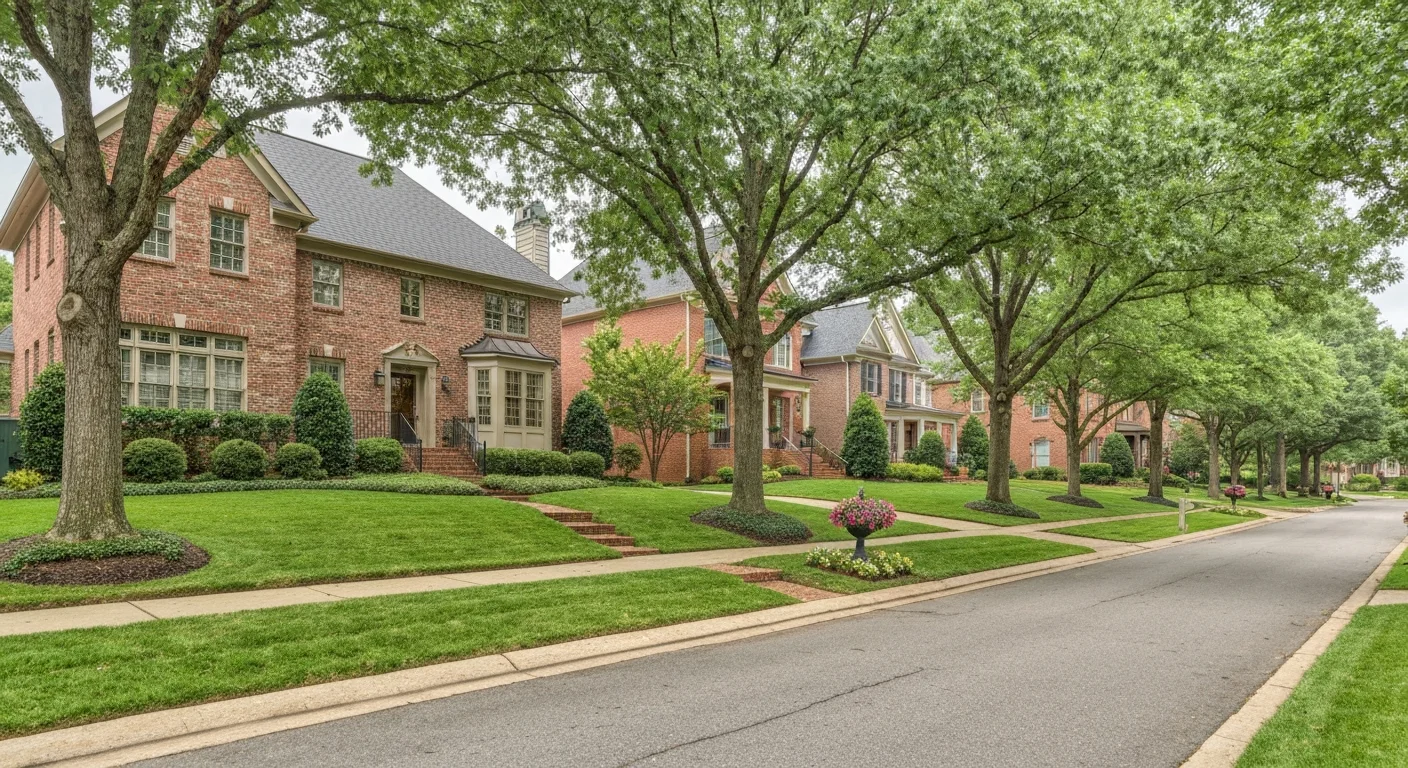
For buyers moving from Atlanta to Charlotte, the real difference is not the sticker price, it is what sits behind it. In the South Charlotte suburbs and the South Carolina border towns, that mid-$400,000s budget tends to buy newer construction, larger lots, and access to highly rated schools without the sprawl-driven super commutes that come with Atlanta’s most desirable suburbs. You are often trading a similar price for a shorter drive and a calmer pace, which is the value most Atlanta movers are really after. For a deeper look at how the suburbs stack up, I put together a guide on the best places to move in the Charlotte area.
Taxes: Where Moving from Atlanta to Charlotte Actually Saves You Money
Taxes are where moving from Atlanta to Charlotte starts to pay you back, and for most people moving from Atlanta to Charlotte it is the most underestimated part of the whole decision. Georgia moved to a flat income tax of 5.19% for 2025 (Georgia Department of Revenue). North Carolina’s flat income tax is 4.25% for 2025 and is scheduled to step down to 3.99% in 2026 (NC Department of Revenue). On the same income, that gap puts real money back in your pocket every year, and the gap is set to widen as North Carolina’s rate keeps falling.
Property taxes lean the same direction. Effective property tax rates run around 0.79% in Georgia, roughly 0.66% in North Carolina, and about 0.51% in South Carolina (Tax Foundation). On a $450,000 home, the difference between Georgia and the Carolinas can be several hundred dollars a year, and South Carolina’s owner-occupied rate is the lowest of the three.
The South Carolina border-town twist
Atlanta does not have a true equivalent of Charlotte’s state-line geography. Just south of the city sit Fort Mill, Indian Land, Tega Cay, and Lake Wylie, all in South Carolina but inside the daily commute zone. South Carolina’s top income tax rate is 6.0% for 2025, but under a 2026 law (Act 110) the structure simplifies to a top rate of 5.21%, with a path toward an eventual 1.99% flat rate if revenue triggers are met (SC Department of Revenue). Pair that with the lowest property taxes of the three states and you get a genuinely tax-friendly option that keeps you minutes from Charlotte jobs.
Picking the right side of the state line is one of the most valuable decisions in this whole move, and it depends on your income, your home price, and where you will work. I walk buyers through the full math in my NC versus SC taxes breakdown, and it is worth reading before you settle on a town.
Curious about buying or selling in the Charlotte area?
It’s free, it’s 15 minutes, and Steve actually picks up.
Grab 15 Minutes with Steve →Traffic and Commutes: The Quality-of-Life Upgrade
For anyone moving from Atlanta to Charlotte, this is the section you will feel in your bones. According to the INRIX Global Traffic Scorecard, Atlanta drivers lost about 75 hours to congestion in 2025, which ranked the metro around 7th worst in the country. Charlotte drivers lost roughly 48 hours and ranked closer to 19th. That is nearly a full work week of your life handed back every year.
Average commute times follow the same pattern. The typical one-way commute in metro Atlanta runs around 32 minutes, while Mecklenburg County (the county Charlotte sits in) averages closer to 24 minutes. Charlotte is not commute-free, and growth is putting pressure on corridors like Interstate 77 and US-521, but the baseline is meaningfully better than what most Atlanta transplants are used to.
One caveat worth stating plainly: where you choose to live drives your experience more than the metro average does. A buyer in Indian Land who works in Ballantyne can have a 20-minute door-to-door commute, while someone who picks the wrong suburb for their job can erase the advantage. This is exactly the kind of thing I help people map out before they fall in love with a house. If you want a feel for how I think about this market, I share a lot of it on my YouTube channel, Welcome to Charlotte NC, where I walk through towns, commutes, and the NC versus SC question in plain language.
The Job Market: Banking, Headquarters, and the Airport
Charlotte’s economy is one of the strongest reasons people consider moving from Atlanta to Charlotte. It is the second-largest banking center in the country, anchored by Bank of America’s global headquarters and a major Wells Fargo east-coast hub. Add Truist, Lowe’s, Honeywell, and Duke Energy, all headquartered in the region, and you have a deep bench of corporate employers in finance, energy, retail, and tech.
For an Atlanta professional, that mix often feels familiar in the best way. Both cities run on corporate headquarters and a service economy, so the kinds of roles you know how to land in Atlanta usually exist in Charlotte too. The difference is scale. Atlanta’s job market is larger and more diversified across film, logistics, and a bigger Fortune 500 roster, so if you work in a niche industry, check the depth of your field before you commit.
The airport quietly seals the deal for a lot of movers. Charlotte Douglas is the second-largest hub for American Airlines and consistently ranks among the busiest airports in the world by aircraft operations. You will not match Hartsfield-Jackson’s international reach, but you will fly nonstop to most of the country with ease, and you can be back in Atlanta in about 75 minutes when you need to be.
Weather, Growth, and What Feels Familiar
One worry I can put to rest quickly for anyone moving from Atlanta to Charlotte: the weather barely changes. Charlotte and Atlanta have nearly identical summers, with average highs in the upper 80s from June through August, and both see only a few inches of snow in a typical year. Charlotte winters are mild, springs are long and green, and falls are gorgeous. If you liked the Atlanta climate, you will be comfortable here from day one.
Growth is the other familiar feature for anyone moving from Atlanta to Charlotte. The Charlotte metro has pushed past 2.9 million residents and added more than 278,700 people between 2020 and 2025 (U.S. Census Bureau). The Charlotte Regional Business Alliance estimates roughly 157 people move to the region every single day. Georgia consistently shows up among the top origin states feeding that growth, and Atlanta is one of the cities people most often leave to come here.
That pace means you will not feel like an outsider. So much of the Charlotte area is made up of transplants that the question “where did you move from?” is practically a local greeting. Atlanta movers tend to settle in fast because the culture, the food, and the rhythm of the South all carry over.
Where Buyers Moving from Atlanta to Charlotte Are Landing
When buyers moving from Atlanta to Charlotte ask me where to look, I steer them toward South Charlotte and the South Carolina border first, because that is where the schools, the newer homes, and the commute math line up best. Here is how I describe the main options.
South Charlotte: Ballantyne, Waxhaw, and Weddington
Ballantyne is a master-planned corporate and residential hub inside Charlotte’s city limits, popular with relocating professionals who want amenities and a quick path to office parks. Just south in Union County, Waxhaw and Weddington offer larger lots, a historic walkable downtown in Waxhaw, and top-rated Union County schools. These are the areas that feel most like the established, leafy Atlanta suburbs many buyers are leaving.
The SC border: Fort Mill, Indian Land, and Tega Cay
If the tax advantages caught your attention earlier, this is where they live. Fort Mill has direct Interstate 77 access, a strong school district, and a mix of established and new-construction neighborhoods. Indian Land sits next to Ballantyne with newer master-planned communities, though it leans on US-521 rather than an interstate, so the commute is worth testing at rush hour. For current pricing and inventory I keep a running look at the Fort Mill SC housing market, and I break down day-to-day budgets in my cost of living in Indian Land SC guide.
Choosing among these towns is the heart of the work I do with relocating buyers. Two homes at the same price in two different towns can mean a different tax bill, a different commute, and a different school assignment. If you are early in the process, my guide to buying in the Charlotte area is a good starting point, and a quick call lets me match you to the right town before you waste a single weekend touring the wrong one.
Things to Do: What You Gain and What You Give Up
This is the part of the conversation I never skip, because moving from Atlanta to Charlotte means trading a true major-market lineup for a smaller, more relaxed one. Atlanta has Major League Baseball, an NFL team, the Hawks, and Atlanta United, plus a deeper bench of concerts, museums, and international dining. Charlotte counters with the NFL’s Panthers and the NBA’s Hornets, a growing food and brewery scene, and NASCAR roots, but the sheer volume of big-league options is smaller. If your weekends revolve around pro sports and marquee events, that is a real and fair thing to weigh.
What Charlotte gives back is easy access to the outdoors. Lake Norman and Lake Wylie sit minutes from town for boating and lakefront living, the U.S. National Whitewater Center offers whitewater rafting and miles of trails inside the city, and the Blue Ridge Mountains are about a 90-minute drive for hiking and weekend cabins. The South Carolina and North Carolina coasts are roughly three to four hours away. For a lot of buyers moving from Atlanta to Charlotte, that mix of lakes, mountains, and a shorter drive to the beach more than makes up for fewer stadium nights.
Day to day, the dining and brewery scene in neighborhoods like South End and the town centers of Waxhaw, Matthews, and Fort Mill keeps getting stronger. You will not be starved for good food and walkable nightlife, but you will notice Charlotte is more about quality-of-life amenities close to home than the round-the-clock big-city buzz. Most people relocating from Atlanta tell me that swap is exactly what they wanted.
Schools: What Relocating Buyers Should Know
School quality is one of the top reasons buyers choose a specific town, and it varies a lot across the Charlotte area. Union County, which includes Waxhaw, Weddington, and Marvin, is consistently among the highest-rated public school systems in the region. Across the South Carolina line, the Fort Mill School District has a strong statewide reputation and is a major reason buyers cross the border. Mecklenburg County, where Charlotte sits, is a large district where outcomes differ sharply by assignment area, so the specific address matters.
If schools are driving your search, do not rely on a town’s general reputation alone. Attendance boundaries can split a single neighborhood, and the assignment tied to one street can differ from the next. This is one of the first things I check for buyers, because it can reshape which homes are worth touring. Mapping the right school assignment to the right budget is a normal part of how I help people moving from Atlanta to Charlotte land in the right spot the first time.
Your First Steps When Moving from Atlanta to Charlotte
Once you decide moving from Atlanta to Charlotte is the right call, a little sequencing saves you money and stress. The biggest early decision is which side of the state line fits your situation, because it changes your taxes, your commute, and your school options all at once. I usually start there before we ever look at a single listing, since the answer narrows the search dramatically.
From there, the practical checklist is straightforward. Confirm where you (or your employer) will be based so we can test real commute times, not map estimates. Decide whether you want established trees and larger lots or newer construction with HOA amenities. Then line up your financing early, because the Charlotte market moves quickly and well-prepared buyers win homes. North Carolina also gives new residents a window to handle driver’s license and vehicle registration after the move, so build that into your first month.
The mistake I see most often with people moving from Atlanta to Charlotte is touring homes before the town decision is settled. It burns weekends and leads to offers on houses in the wrong commute zone or the wrong tax situation. If you are part of the steady stream relocating from Georgia, the buyers and professionals making this move benefit most from getting the town right first. That is the single most useful thing a local agent can do for you, and it is exactly where I focus. Many buyers also like to compare notes with people who came from other markets, so my guides on moving to Charlotte from other cities can help you see the patterns.
Moving from Atlanta to Charlotte: Common Questions
Is Charlotte more expensive than Atlanta?
Not by much in either direction for someone moving from Atlanta to Charlotte. Median home prices in both metros sit in the low-to-mid $400,000 range, and overall cost-of-living indexes are within a few percentage points of each other. Charlotte tends to come out slightly ahead on rent and on taxes, while day-to-day expenses are comparable. The bigger savings from moving from Atlanta to Charlotte usually come from lower income and property taxes and a shorter commute rather than from cheaper home prices.
How far is Charlotte from Atlanta, and what is the drive like?
Charlotte is about 245 miles from Atlanta when you are moving from Atlanta to Charlotte, a three and a half to four hour drive straight up Interstate 85. A nonstop flight takes a little over an hour. The two cities are close enough that you can keep your roots and weekend trips intact, which is one reason the move feels manageable for so many people.
Is traffic really better in Charlotte than Atlanta?
Yes, clearly, and it is one of the top reasons people give for moving from Atlanta to Charlotte. INRIX data shows Atlanta drivers lost about 75 hours to congestion in 2025 against roughly 48 hours for Charlotte drivers, and average commute times are shorter in the Charlotte area. Charlotte still has growth-related congestion on corridors like I-77 and US-521, so your specific town and job location matter, but the metro-wide baseline is a real improvement.
Are taxes lower in North Carolina than Georgia?
For income tax, yes. North Carolina’s flat income tax is 4.25% for 2025 and is scheduled to drop to 3.99% in 2026, while Georgia’s flat rate is 5.19%. North Carolina also has slightly lower effective property taxes than Georgia. The South Carolina border towns near Charlotte have the lowest property taxes of the three states, which is why many movers consider crossing the state line.
Is the job market better in Charlotte or Atlanta?
It depends on your field. Atlanta has the larger and more diversified economy, with strength in film, logistics, and a bigger Fortune 500 presence. Charlotte is the country’s second-largest banking center and a strong market for finance, energy, retail, and tech, anchored by Bank of America, Truist, Wells Fargo, Lowe’s, Honeywell, and Duke Energy. If you work in banking or corporate roles, Charlotte’s market is deep and competitive.
What are the best areas to live when moving from Atlanta to Charlotte?
Most people moving from Atlanta to Charlotte gravitate to South Charlotte (Ballantyne, Waxhaw, Weddington) for established suburbs and top schools, or to the South Carolina border towns (Fort Mill, Indian Land, Tega Cay) for tax advantages and newer construction within a Charlotte commute. The right choice depends on your job location, your budget, and whether the tax savings of South Carolina outweigh staying on the North Carolina side. That is the decision I help relocating buyers make.
About the Author
I am Steve Jarrell, a broker with The Longleaf Group at eXp Realty, licensed in both North Carolina and South Carolina. I work the Charlotte-area state line first-hand, which means I can run the real NC versus SC tax and commute math for buyers moving from Atlanta to Charlotte rather than guessing. Before real estate I spent a decade building marketing technology for agents nationwide, and I bring that same data-first approach to helping relocating buyers choose the right town, not just the right house. You can reach me at 704-774-7170 or steve@jarrellhomes.com, and you can learn more at thelongleafgroup.com.
Quick call. Real answers.
Ready to make the Charlotte area home? Let’s figure it out together.
Book a Free 15-Min Chat with Steve →