

Moving from Long Island to Charlotte NC is one of the biggest financial swings a Northeast buyer can make. You are leaving a market with some of the highest property taxes in the country and a progressive state income tax, and landing in a metro where a flat state tax, lower home prices, and much smaller tax bills change the math on almost everything. I am Steve Jarrell, a broker with The Longleaf Group at eXp Realty, and I help people relocate from the Northeast to south Charlotte every month. This guide compares the two places directly, the wins and the tradeoffs, so you can decide with real numbers instead of a hunch.
Long Island runs from Nassau and Suffolk counties out to the East End, and if you are reading this you already know the pattern: strong schools, a tight commute into the city, and a cost of living that never lets up. Charlotte offers a different bargain. This is a comparison a Long Islander actually needs, not a generic “move south” pitch.
17 min read | By Steve Jarrell, The Longleaf Group at eXp Realty | Updated August 2026
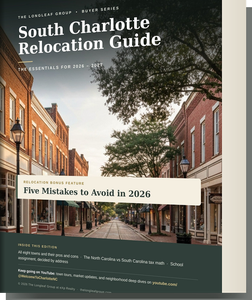
Free · 26-Page Insider Guide
Weighing NC vs SC before you leave Long Island?
Towns compared, NC vs SC taxes and schools side by side, and the 5 mistakes out-of-state buyers make.
What This Guide Covers
- Moving from Long Island to Charlotte NC: the quick verdict
- Cost of living: Long Island vs Charlotte compared
- Housing: what your Long Island home sale buys here
- Taxes compared: income, property, and sales
- Schools: Long Island districts vs Union County and Fort Mill
- Weather, pace, and lifestyle: what changes
- Getting around, flights home, beaches and mountains
- Differences Long Island buyers do not expect
- Where Long Island buyers land in south Charlotte
- How a Long Island to Charlotte move actually works
- Frequently asked questions
Moving from Long Island to Charlotte NC: The Quick Verdict
The Short Answer
Steve Jarrell of The Longleaf Group works with Long Island transplants regularly, and moving from Long Island to Charlotte NC usually means a lower cost of living, far smaller tax bills, and roughly double the house for your money, in exchange for a car-dependent lifestyle and losing the ocean at your doorstep. For most Long Island buyers, south Charlotte towns like Weddington, Waxhaw, and Fort Mill deliver the strong schools and space they want at a fraction of the carrying cost.
Key numbers right now:
- Nassau County median single-family home: about $890,000; Suffolk: about $718,250 (June 2026). Charlotte metro median: about $412,500 (May 2026).
- North Carolina income tax is a flat 4.25% for 2025, dropping to 3.99% for 2026. New York runs a progressive 4% to 10.9%.
- Median property tax bills on Long Island run above $11,000 a year; a comparable south Charlotte bill is often a fraction of that.
- You can fly Charlotte to Long Island MacArthur (ISP), LaGuardia, or JFK nonstop in about 2 hours.
Here is where I land after doing this move with dozens of Northeast buyers. If your priorities are strong public schools, more square footage, a yard, and keeping more of your paycheck, moving from Long Island to Charlotte NC is a clear financial upgrade. The tax and housing gap is not marginal, it is structural, and it compounds every year you own. What you give up is real too: no LIRR into a global job center, no beach fifteen minutes away, and a slower, more spread-out daily rhythm. Most of my Long Island clients decide the tradeoff is worth it, but you should go in with both columns filled out.
The half-back pattern matters here. Plenty of Long Islanders already made one move, from the Northeast down to Florida, then found the heat, the insurance costs, and the distance from the city too much. They come “halfway back” to the Carolinas, and Charlotte is the landing spot that keeps a real four-season feel without Long Island winters. If that is you, you are not alone, and this comparison is written for you.
Talk to a local broker
Thinking through a move from Long Island to Charlotte?
I will walk you through the tax math, the school zones, and where your budget actually goes here. No pressure, just answers.
Schedule a 15-Minute Introductory Call →704-774-7170 · steve@jarrellhomes.com · thelongleafgroup.com
Cost of Living: Long Island vs Charlotte Compared
Start with the top line, because it drives everything else. On a statewide basis, New York carries a cost-of-living index around 123.8 against a national average of 100, while North Carolina sits near 95.1. That gap widens dramatically once you zoom into Long Island specifically. Comparing Nassau County to Charlotte, the day-to-day cost of living runs roughly 40% lower here, and studies of the same move estimate a Nassau household can pick up something like $21,000 in additional disposable income after relocating, largely from housing and taxes.
The gap is not only housing and taxes, though those are the giants. Groceries in the New York metro tend to run 15% to 25% above the national average, while North Carolina groceries sit a few points below it. Utilities are lower here too, often in the $130 to $170 range monthly against $150 to $200 up north. None of these single line items is life-changing on its own, but stacked together they are the reason Long Island buyers tell me their money simply goes further the day they arrive.
One important caveat: Charlotte is not “cheap” anymore, and pretending otherwise does you no favors. Prices and property taxes here have climbed with demand. The point is relative. Against Long Island, the cost of living in Charlotte is a meaningful step down while your income, if you keep a remote or transferable job, often holds. That spread is the whole reason the move pencils out.
Housing: What Your Long Island Home Sale Buys in Charlotte
This is the section that makes people book a call. As of mid-2026, the Nassau County median single-family home price hit roughly $890,000, and Suffolk County reached about $718,250, per Long Island market reporting. The Charlotte metro median sat near $412,500 as of May 2026. In plain terms, the equity from a typical Nassau sale can buy a larger, newer home in south Charlotte outright, or leave you with a much smaller mortgage and cash to spare.
| Housing snapshot | Long Island | Charlotte area |
|---|---|---|
| Median single-family price | Nassau ~$890,000 / Suffolk ~$718,250 | ~$412,500 metro |
| Typical lot size | Often 0.15 to 0.30 acre | 0.25 to 1+ acre in the suburbs |
| Home age | Much of the stock is mid-century | Large share built after 2000 |
| Effective property tax rate | ~1.8% to 2.2% | ~0.6% to 1.0% |
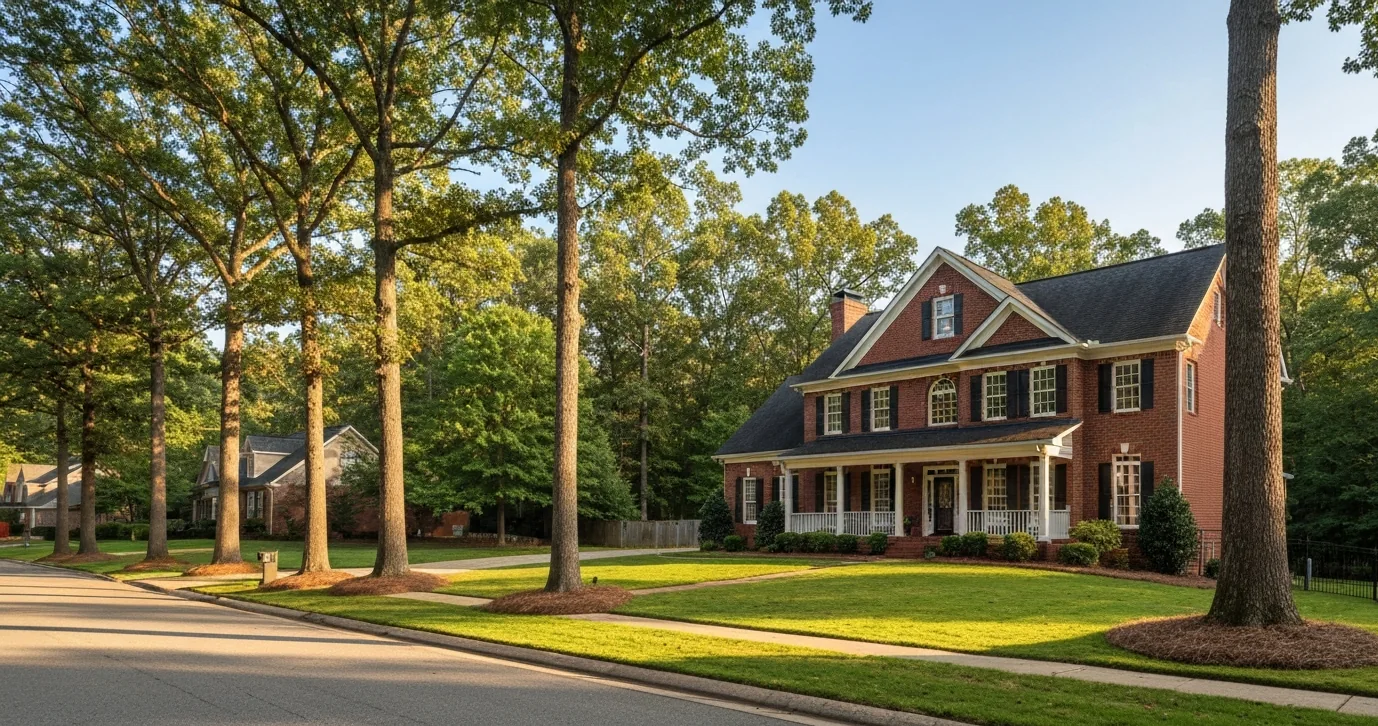
What surprises Long Island buyers most is the age and layout of the housing. A large share of south Charlotte inventory was built after 2000, with open floor plans, three-car garages, and lots that would be considered estates back home. In towns like Weddington and Marvin, one-acre lots are normal, not rare. If you are used to a 1950s cape on a quarter acre, the shift in space is the single most emotional part of the move.
A practical note on the swap. Most Long Island sellers are moving up in space and down in payment at the same time, which is unusual and worth planning around. If you sell first and rent briefly, you can buy in cash-competitive position, which matters in south Charlotte’s better school zones where good homes still move quickly. I walk through this sequencing on every relocation call because getting it right can save you a rate point and a bidding war.
Taxes Compared: Income, Property, and Sales
Taxes are where moving from Long Island to Charlotte NC stops being a lifestyle choice and becomes a math problem you win. Three taxes matter: income, property, and sales. Long Island loses on all three, and property tax is the knockout.
State income tax
North Carolina charges a flat individual income tax rate of 4.25% for 2025, scheduled to drop to 3.99% for 2026, with no local income tax anywhere in the state. New York runs a progressive system with nine brackets from 4% up to 10.9% at the top, and while Long Islanders escape the separate New York City income tax that city residents pay, a typical Nassau or Suffolk household still sits in a state bracket well above North Carolina’s flat rate. On a six-figure income, the annual difference alone can cover a car payment.
Property tax
This is the big one. Median property tax bills on Long Island run above $11,000 a year, with Nassau near $11,129 and Suffolk near $11,178, and effective rates in the 1.8% to 2.2% range. North Carolina’s effective property tax rate averages around 0.78%. In Union County, the county rate for fiscal year 2025-26 is 43.42 cents per $100 of assessed value; add the town rate and Weddington lands near 46.92 cents, Marvin near 49.05 cents, and Waxhaw near 72.42 cents. Charlotte inside Mecklenburg County runs a combined rate near 76.68 cents per $100. Even at the higher end, the bill on a comparable home is a fraction of a Long Island tax bill.
South Carolina takes it further for owner-occupants. Across the state line in Fort Mill and Indian Land, primary residences are assessed at just 4% of market value, which produces some of the lowest effective owner-occupied property tax bills in the region, often near 0.7% to 0.84%. That is a genuine reason many Long Island buyers end up looking at the SC side, and it is covered more in the “where to land” section below.
Sales tax
Sales tax is a smaller line but still favors the move. Nassau and Suffolk counties charge a combined 8.625% sales tax. In the Charlotte metro, combined rates generally run from about 6.75% in Union County to 7.25% in Mecklenburg, and 7% on the York County SC side. It will not change your life, but it is one more place where the day-to-day math tilts your way.
If you want this in plain terms, my colleague and I break down the NC versus SC tax question in a short video on my channel, Living in South Charlotte vs SC: the truth about taxes, which is a good primer before you pick a side of the state line.
Talk to a local broker
Want your own Long Island vs Charlotte tax comparison?
A quick call with a broker who works both the NC and SC sides of this market every week.
Book a 15-minute call →Schools: Long Island Districts vs Union County and Fort Mill
Long Island buyers do not compromise on schools, and they should not have to. The good news is that south Charlotte has public districts that hold up. Union County Public Schools is consistently among North Carolina’s top-performing districts, and its flagship high schools rank with the best in the state. Per the US News 2026 rankings, Marvin Ridge High in Waxhaw sits around 15th in North Carolina and in the top 1% statewide, Weddington High ranks near 32nd, and Cuthbertson High near 49th. These are the schools that anchor the towns most Long Island buyers gravitate toward.
Two mechanics differ from what you know. First, North Carolina assigns public schools by home address, so the house you buy determines the school your child attends. There is no district-of-choice cushion the way some Long Island households work the system. Second, the Charlotte-Mecklenburg Schools district, which covers Charlotte proper and Ballantyne, is large and varied, so zone matters a lot inside it. Always verify the exact assignment for a specific address before you fall for a house, because a street can straddle a boundary.
Across the line, Fort Mill Schools in York County SC carry an excellent reputation and are a major reason Northeast buyers cross into South Carolina. If schools are your top filter, and for most Long Island buyers they are, the strong options here are a genuine match for what you are leaving, not a downgrade you tolerate for lower taxes.
Weather, Pace, and Lifestyle: What Changes
The weather trade is the one people underestimate. Long Island has a coastal, humid-continental climate: real winters, snow measured in feet some years, nor’easters, and a short, glorious summer at the beach. Charlotte has a humid subtropical climate: mild winters where snow is a rare event, a long spring and fall, and hot, sticky summers that run from June into September. You trade shoveling for air conditioning. Most Long Islanders consider that a win, especially the half-backs who already did a Florida stint and wanted seasons back without the ice.
Pace is the other big shift. Long Island living is dense, fast, and oriented around the commute and the city’s gravity. South Charlotte is spread out and suburban, built around cars, cul-de-sacs, and town centers rather than a rail line and a boardwalk. Some people find it calmer and love it; others miss the energy and the walkable downtowns. Neither reaction is wrong. Be clear with yourself about which one you are, because it shapes which town will actually feel like home.
What Long Island transplants tell me they miss most: the ocean fifteen minutes away, the bagels and delis, and a certain directness in how people talk. What they say they gained: space, quiet, lower stress about money, and a shorter or nonexistent commute. Charlotte will not replace the Atlantic in your backyard, but it gives back time and breathing room that Long Island’s cost structure quietly takes.
Getting Around, Flights Home, Beaches and Mountains
Charlotte is a driving city. There is a light rail line, the LYNX Blue Line, but it serves one corridor, not the whole metro, so plan on a car for daily life. The main arteries are I-485, the loop around the city, plus I-77 north-south and I-85 toward the northeast. Traffic exists but it is not the Long Island Expressway. For a Long Islander used to the LIRR and constant congestion, the daily driving is more relaxed even without transit, though you will drive for nearly everything.
Getting back to Long Island is easy, which matters when you still have people there. Charlotte Douglas International, CLT, is a major American Airlines hub, with frequent nonstop service to LaGuardia and JFK, and the CLT to LaGuardia route is one of the busiest in the country. Southwest also flies nonstop from Charlotte straight to Long Island MacArthur, ISP, in Islip. Flight time is roughly two hours. You can leave south Charlotte in the morning and be at a Nassau or Suffolk kitchen table by lunch.
You also gain a different kind of weekend. The Carolina coast at Myrtle Beach or Wilmington is about a three-and-a-half to four-hour drive, and the Blue Ridge Mountains around Asheville are about two to two-and-a-half hours the other direction. You lose the fifteen-minute beach, but you gain mountains you never had on Long Island, and a coast that is drivable for a long weekend. It is a different geography, not a lesser one.
Differences Long Island Buyers Do Not Expect
Every Long Island buyer hits a few surprises. Getting ahead of them makes the move smoother.
- HOAs are everywhere. Most newer south Charlotte neighborhoods have a homeowners association with dues and rules. It keeps the community tidy but it is a layer of governance many Long Island buyers are not used to. Read the covenants before you buy.
- Well and septic exist outside town. In the more rural parts of Union County, some homes are on a private well and septic system rather than public water and sewer. It is manageable, but it changes inspections and maintenance, so know what a specific property has.
- Pollen season is real. Spring in the Carolinas coats everything in a yellow film of pine pollen for a few weeks. It is harmless and it passes, but it is a rite of passage no one warns you about.
- Winter is mild but not absent. Charlotte gets a cold snap and the occasional dusting of snow or ice that shuts the city down because there is little snow equipment. After Long Island winters, you will find it mild by comparison.
- The NC versus SC state line is a real decision. The metro straddles two states with different taxes, vehicle rules, and school districts. Fort Mill and Indian Land are in South Carolina; Weddington and Waxhaw are in North Carolina. Which side you choose changes your tax bill and your DMV.
- Vehicle registration and inspection differ. North Carolina requires an annual safety and, in many counties, emissions inspection, plus a combined registration and property tax on vehicles. South Carolina handles it differently. Budget for the first-year setup either way.
Where Long Island Buyers Land in South Charlotte
Here is how I match Long Island priorities to specific south Charlotte submarkets. Your top filter, usually schools plus space plus commute, points to a short list.
- Weddington, NC: Large lots, top Union County schools, and a quiet, established feel. This is the closest thing to a North Shore estate lifestyle without the North Shore tax bill.
- Waxhaw, NC: A walkable historic downtown plus newer neighborhoods and Marvin Ridge schools. Long Islanders who miss a real Main Street often click with Waxhaw.
- Marvin, NC: Small, upscale, one-acre lots, and the Marvin Ridge zone. A favorite for buyers coming from the pricier Nassau villages.
- Matthews and Indian Trail, NC: More attainable price points, a genuine town feel in Matthews, and quick access to Charlotte. Good for buyers who want value without going far out.
- Ballantyne, NC: The polished south Charlotte corner inside Mecklenburg, with corporate offices, dining, and amenities. Appeals to buyers who want a shorter commute and a built-up feel.
- Fort Mill and Indian Land, SC: Cross the state line for South Carolina’s lower owner-occupied property taxes and strong Fort Mill schools. This is where many tax-focused Long Island buyers end up.
If I had to generalize, the Long Island buyer chasing the best schools and the most land leans Weddington, Marvin, or Waxhaw. The buyer optimizing the tax bill leans Fort Mill or Indian Land in South Carolina. The buyer who wants a shorter commute and a more built-up feel leans Ballantyne or Matthews. There is a right answer for you; it just depends on which Long Island habit you are least willing to give up.
How a Move from Long Island to Charlotte NC Actually Works
Relocating from out of state is a different process than a local move, and moving from Long Island to Charlotte NC has a few specific wrinkles worth planning for. The first is sequencing: do you sell on Long Island first and rent here, or buy here before you sell? Given the price gap, most of my Long Island clients sell first, land the equity, and buy in a strong cash position. That avoids carrying two expensive payments and makes your offer more competitive in the better school zones.
The second wrinkle is the search itself. You cannot pop down every weekend, so we compress the home search into focused visits, use video walkthroughs between trips, and lean on my read of neighborhoods, school zones, and build quality that you cannot judge from Long Island. The third is timing the two closings and the moving logistics across 600 miles, plus the temporary-housing question if the dates do not line up. None of it is hard with a plan; all of it is stressful without one.
This is the part where working with a broker who does relocation regularly pays for itself. I am dual licensed in North Carolina and South Carolina, I live in south Charlotte, and I help Northeast buyers navigate exactly this move. You can see how I work with relocating buyers on my buying page, and you can watch more market and neighborhood breakdowns on my YouTube channel, Living in South Charlotte. When you are ready to map it to your own numbers, a short call is the fastest way to get clarity.
Frequently Asked Questions About Moving from Long Island to Charlotte NC
Is moving from Long Island to Charlotte NC worth it?
For most Long Island buyers, yes, if the priorities are schools, space, and lower carrying costs. You typically get roughly double the house for your money, dramatically lower property taxes, and a flat state income tax. The tradeoffs are a car-dependent lifestyle and losing the ocean nearby. If keeping the LIRR commute or beach access is non-negotiable, the move is harder to justify.
How much cheaper is Charlotte than Long Island?
Day-to-day cost of living in Charlotte runs roughly 40% lower than Nassau County, and the Charlotte metro median home price near $412,500 is less than half of Nassau’s roughly $890,000. Property taxes are the biggest single saver: Long Island bills routinely top $11,000 a year, while a comparable south Charlotte bill is often a fraction of that.
What are the property taxes like compared to Long Island?
Far lower. Long Island effective property tax rates run about 1.8% to 2.2%, with median bills above $11,000. North Carolina averages around 0.78%, and South Carolina’s owner-occupied assessment in Fort Mill and Indian Land can push effective rates near 0.7%. On a similarly priced home, the annual savings are usually thousands of dollars.
Are the schools in south Charlotte as good as Long Island schools?
The top options are competitive. Union County Public Schools is among North Carolina’s best districts, with Marvin Ridge High ranked in the state’s top 1% by US News for 2026, and Fort Mill Schools in South Carolina are highly regarded. Schools are assigned by home address here, so verify the exact zone for any property before you buy.
Should I buy in North Carolina or South Carolina?
It depends on your priorities. North Carolina towns like Weddington, Waxhaw, and Marvin offer top schools and larger lots. South Carolina towns like Fort Mill and Indian Land offer lower owner-occupied property taxes and strong schools. Many Long Island buyers who are optimizing for taxes choose the SC side; those chasing land and specific NC schools stay north of the line.
Can I fly nonstop from Charlotte back to Long Island?
Yes. Charlotte Douglas is a major American Airlines hub with frequent nonstop flights to LaGuardia and JFK, and Southwest flies nonstop to Long Island MacArthur (ISP) in Islip. The flight is about two hours, so staying connected to family and friends on Long Island is easy.
What will I miss most moving from Long Island?
Most transplants miss the ocean being fifteen minutes away, the delis and bagels, and the walkable density. You gain space, lower costs, mild winters, and mountains within a couple hours. Charlotte will not replicate Long Island, but the tradeoff works for the majority of buyers who make the move for financial and lifestyle reasons.
About the Author
I am Steve Jarrell, a licensed real estate broker with The Longleaf Group at eXp Realty and a south Charlotte resident. I am dual licensed in North Carolina and South Carolina, which is exactly what a Long Island buyer weighing the state line needs, and I spent a decade in real estate marketing technology before going all-in as a broker. I specialize in helping relocating buyers from the Northeast land in the right south Charlotte town with the right school zone and the right tax setup. Reach me at 704-774-7170, steve@jarrellhomes.com, or thelongleafgroup.com, and learn more about The Longleaf Group.