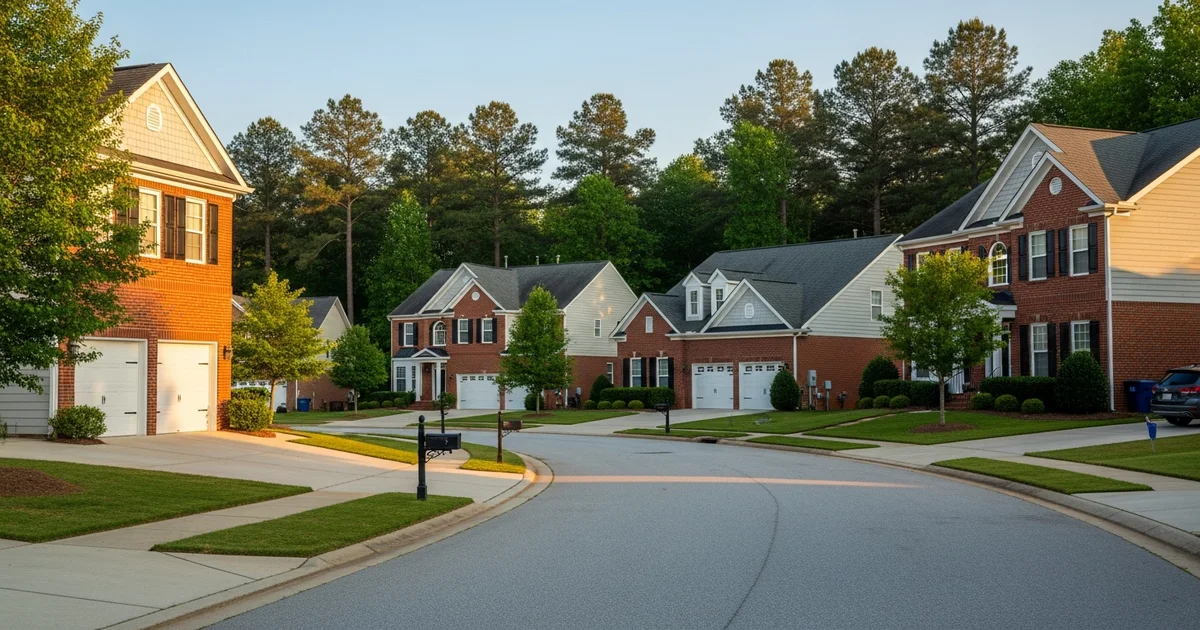
If you are relocating to the South Carolina side of the Charlotte line, one number decides more of your monthly budget than almost anything else you will read on a listing page: your property tax bill. And in York County SC, that bill is not one number. It swings by thousands of dollars depending on which town you buy in, which school district you land in, and whether your address sits inside city limits or in unincorporated county land. Two homes at the same price, ten minutes apart, can carry tax bills that differ by more than $2,000 a year.
This guide breaks down York County SC property taxes the way I explain them at the kitchen table: how South Carolina actually calculates the bill, what Fort Mill, Tega Cay, Rock Hill, and Lake Wylie buyers really pay, how those numbers stack up against Charlotte and Union County NC, and the tax surprises that catch new residents off guard. Every figure here comes from York County’s own 2025 millage levies and the South Carolina Department of Revenue, not a rounded-off estimate.
18 min read | By Steve Jarrell, The Longleaf Group at eXp Realty | Updated August 2026
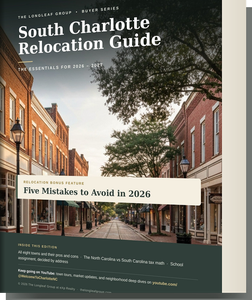
Free · 26-Page Insider Guide
Weighing NC vs SC before you buy?
Towns compared, NC vs SC taxes and schools side by side, and the 5 mistakes out-of-state buyers make.
What This Guide Covers
- York County SC Property Taxes: The Short Answer
- How South Carolina Property Tax Is Actually Calculated
- What You Pay by Town: Fort Mill, Tega Cay, Rock Hill, and Lake Wylie
- York County SC Property Taxes vs North Carolina: Is SC Really Cheaper?
- Act 388, the Homestead Exemption, and Credits That Lower Your Bill
- The Tax Surprises New SC Residents Miss
- How to Estimate Your York County Tax Bill Before You Buy
- Frequently Asked Questions
York County SC Property Taxes: The Short Answer
The Short Answer
York County SC taxes an owner-occupied primary residence on 4% of its value, then applies the local millage for that town and school district. On a $500,000 home, that works out to roughly $4,700 a year inside Fort Mill or Tega Cay, about $4,300 in the city of Rock Hill, and closer to $2,600 in unincorporated areas and the Lake Wylie (Clover) district. Your school district and whether you are inside city limits move the bill more than the price of the house.
Key numbers right now:
- Owner-occupied primary residence is assessed at 4% of market value; second homes and rentals at 6%.
- Fort Mill (town limits) and Tega Cay carry the county’s highest millage, near 0.95% effective on an owner-occupied home.
- Outside city limits (unincorporated York County and the Rock Hill and Lake Wylie districts) it drops to about 0.50% to 0.66%; inside the city of Rock Hill it is about 0.86%.
- By comparison, the median effective rate is about 0.80% in Charlotte (Mecklenburg) and roughly 0.72% across Union County NC.
- South Carolina also taxes your vehicles every year, a line item most North Carolina movers do not budget for.
Here is where I land after working both sides of this border. The idea that moving to South Carolina automatically slashes your property tax bill is only half true. It holds up beautifully in unincorporated York County and in the Lake Wylie and outer Rock Hill areas outside city limits, where an owner-occupied home can be taxed at close to half the rate of a comparable house in Charlotte. But inside the town limits of Fort Mill and Tega Cay, both served by the fast-growing Fort Mill School District, the effective rate climbs to roughly 0.95%, which is actually higher than Union County NC and right on top of Charlotte.
The savings are real, but they are not automatic, and they depend almost entirely on where the property sits. That is why I never let a buyer assume the South Carolina side is cheaper until we have checked the exact district for the exact address.
That is the whole reason this guide exists. A buyer who assumes every South Carolina address is a tax bargain can overpay by thousands a year without realizing it, while a buyer who understands the district map can find a genuinely lower bill a few minutes down the road. Let me walk you through exactly how the number is built.
Want the exact tax bill on a specific York County home before you make an offer?
I will pull the real number for any address in Fort Mill, Tega Cay, Rock Hill, or Lake Wylie and walk you through what it means for your monthly payment. Free, 15 minutes, no pressure.
Schedule a 15-Minute Introductory Call →704-774-7170 | steve@jarrellhomes.com | thelongleafgroup.com
How South Carolina Property Tax Is Actually Calculated
Understanding York County SC property taxes starts with how the state assembles the bill. South Carolina builds a property tax bill in three steps, and once you see them, the town-by-town differences make sense. North Carolina buyers are used to a simpler math: market value times one county rate. South Carolina adds a twist at the very first step that works strongly in a homeowner’s favor.
Step one: the 4% assessment ratio for your primary home
South Carolina does not tax your home on its full market value. It taxes an assessed value, and for an owner-occupied primary residence that assessment ratio is just 4% of fair market value. Every other kind of property, a second home, a vacation place, or a rental, is assessed at 6%. This is the single most important rule in the state, and it is why claiming your home as your legal residence matters so much. On a $500,000 primary home, your assessed value is $20,000. On that same house as a rental, it is $30,000. Same house, a 50% higher tax base.
Step two: the local millage rate
Millage is South Carolina’s version of a tax rate, expressed in mills, where one mill equals $1 of tax for every $1,000 of assessed value. Your total millage is a stack of levies: York County government, your municipality if you live in one, your school district, and any special districts such as fire or recreation. York County Council and each town and district set these rates every year. Because the school portion is the largest slice, the school district your home sits in drives most of the difference between one town’s bill and another’s.
Step three: subtract the school operating credit
For an owner-occupied primary residence, South Carolina removes the school operating portion of the millage under a 2006 law called Act 388. You still pay the school bond millage that funds school construction, but not the day-to-day operating levy. York County publishes a separate “4% Owner Occupied” millage column that already reflects this credit, so a primary homeowner never pays the full posted rate. The formula, once you put it together, is simple: market value times 4%, times the owner-occupied millage divided by 1,000. For an owner-occupied home, that means your effective rate is just the millage divided by 250. A 237-mill town works out to about 0.95%.
What You Pay by Town: Fort Mill, Tega Cay, Rock Hill, and Lake Wylie
This is the section buyers actually want, so let me put the real numbers on the table. The spread in York County SC property taxes from one town to the next is wider than most relocating buyers expect. The figures below use York County’s published 2025 owner-occupied millage levies applied to a $500,000 primary residence. They are estimates before any individual credits such as the Homestead Exemption, and the county’s own tax estimator will give you the exact figure for a specific parcel. But they are close enough to plan a budget around, and they tell a clear story.
| Area (owner-occupied primary home) | 2025 millage (4% ratio) | Est. annual tax on a $500,000 home | Effective rate |
|---|---|---|---|
| Tega Cay (city, Fort Mill District 4) | 240.2 | ~$4,804 | ~0.96% |
| Fort Mill (town limits, District 4) | 237.2 | ~$4,744 | ~0.95% |
| Clover (town, District 2) | 248.7 | ~$4,974 | ~0.99% |
| Rock Hill (city, District 3) | 214.9 | ~$4,298 | ~0.86% |
| Fort Mill address, unincorporated York County (District 4) | 165.6 | ~$3,312 | ~0.66% |
| Lake Wylie (unincorporated, Clover District 2) | 131.9 | ~$2,638 | ~0.53% |
| Rock Hill area, unincorporated (District 3) | 131.6 | ~$2,632 | ~0.53% |
Look at the spread. A $500,000 owner-occupied home in Tega Cay is estimated near $4,800 a year, while the same-priced home in unincorporated Lake Wylie or the Rock Hill district lands closer to $2,600. That is a difference of more than $2,100 every year, or roughly $180 a month on your mortgage payment, driven entirely by school district and city-limits status rather than the price of the house.
Why Fort Mill and Tega Cay sit at the top
Fort Mill School District 4 carries the highest school millage in York County, and it is not close. The district has been building schools as fast as the rooftops go up, and voters have approved bond after bond to pay for it. Those construction bonds are exactly the part of the bill that Act 388 does not exempt, so owner-occupied buyers in Fort Mill and Tega Cay feel them in their York County SC property taxes.
It is the tradeoff for one of the most sought-after school systems in the Carolinas: you pay for the growth on your tax bill. If top-rated schools are your priority, that is money well spent, and it is worth understanding before you are surprised by the escrow number. For the full price picture in that market, our cost of living in Fort Mill SC guide breaks down the rest of the budget.
Why Rock Hill and Lake Wylie come in lower
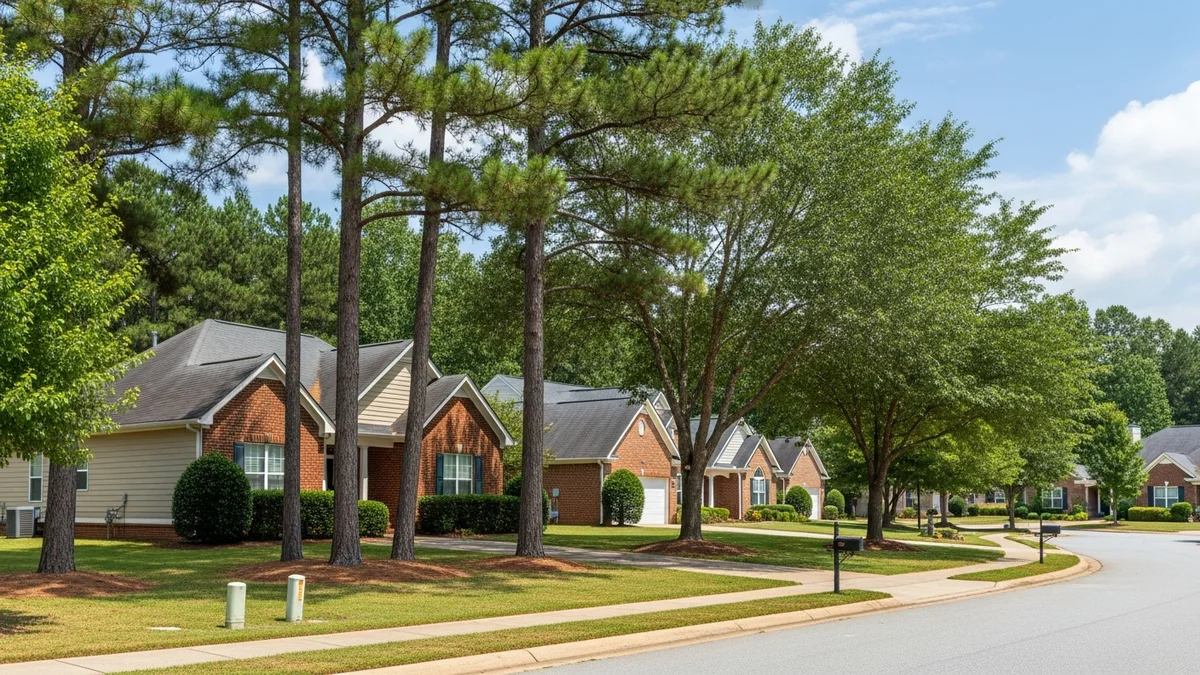
Rock Hill School District 3 and Clover School District 2, which covers most of the Lake Wylie community, carry meaningfully lower school millage than Fort Mill District 4. Add in the fact that much of Lake Wylie and the outer Rock Hill area is unincorporated, so there is no separate city operating levy, and you get owner-occupied effective rates around 0.53%. That is the South Carolina property tax reputation buyers hear about, and in these unincorporated pockets it is completely accurate.
One caveat: inside the city of Rock Hill the rate is higher, about 0.86%, because city homes add the municipal levy, so the sub-0.55% bills are the unincorporated addresses, not every Rock Hill home. A buyer who loves the water and does not need the Fort Mill schools can find a genuinely lower bill in the Rock Hill area or Lake Wylie.
The city-limits trap on a Fort Mill address
Here is a nuance that trips up almost every out-of-state buyer. A “Fort Mill” mailing address does not always mean you are inside the town of Fort Mill. Large stretches of the 29708, 29715, and 29707 ZIP codes are actually unincorporated York County. Those homes are still in Fort Mill School District 4, but they skip the town operating levy, which drops the millage from about 237 to about 166 and the effective rate from roughly 0.95% to about 0.66%.
This one detail explains most of the confusion over York County SC property taxes online. Two homes with the same Fort Mill address, one inside town limits and one just outside, can differ by more than $1,400 a year on a $500,000 home. Always confirm the exact tax district before you fall in love with the number on the listing.
No pressure. Just a conversation.
Planning a move to Fort Mill, Tega Cay, or Rock Hill, SC? I would love to help.
Book a Free 15-Min Chat with Steve →York County SC Property Taxes vs North Carolina: Is SC Really Cheaper?
This is the question I get on almost every relocation call, and the real answer is more layered than the bumper-sticker version. Yes, South Carolina’s 4% owner-occupied assessment ratio and the Act 388 school credit make it structurally friendly to homeowners. But whether York County SC property taxes actually beat North Carolina depends on which South Carolina town you pick.
For reference, the median effective property tax rate in Mecklenburg County, home to Charlotte, runs around 0.80%, and Union County NC sits near 0.72% on a metro-blended basis, though Union’s county base rate is closer to $0.42 per $100 with town levies added on top.
Now line those up against the York County numbers. Unincorporated York County and the Lake Wylie and Rock Hill districts outside city limits, all around 0.50% to 0.66%, clearly beat both Charlotte and Union County. The city of Rock Hill sits higher at about 0.86%, and Fort Mill and Tega Cay inside city limits, near 0.95%, are actually higher than either North Carolina option. So a buyer moving from Charlotte to Fort Mill for the schools is often trading up on property taxes, not down, while a buyer moving to Lake Wylie is genuinely cutting the bill.
| County or town | Approx. owner-occupied effective rate | Est. tax on a $500,000 home |
|---|---|---|
| Fort Mill / Tega Cay, SC (town limits) | ~0.95% | ~$4,750 |
| Rock Hill, SC (city limits) | ~0.86% | ~$4,298 |
| Mecklenburg County, NC (Charlotte, median) | ~0.80% | ~$4,000 |
| Union County, NC (Waxhaw, Weddington, Marvin, median) | ~0.72% | ~$3,600 |
| Unincorporated Fort Mill / Rock Hill / Lake Wylie, SC | ~0.53% to 0.66% | ~$2,650 to $3,300 |
The tax bill is only one piece of the NC-versus-SC decision, of course. South Carolina also has a lower state income tax and different treatment of retirement income, while North Carolina has its own advantages. I walk through the full picture in our NC vs SC taxes comparison, and if you are weighing the North Carolina side, our Union County NC property tax rates guide covers Waxhaw, Weddington, and Marvin. I also broke this down on video, since it is the question I hear most: Living in South Charlotte vs SC: The Truth About Taxes on our Living in South Charlotte channel.
Act 388, the Homestead Exemption, and Credits That Lower Your Bill
South Carolina offers a handful of programs that can pull your bill down further, and knowing them before you close can save real money. Several credits lower York County SC property taxes for the right buyer, and these are the ones that matter most.
The 4% legal residence classification
This is not automatic. When you buy, the property may still be classified at the 6% rate the seller carried, especially if it was a rental or second home. You have to file for the 4% owner-occupied classification with the York County Assessor and certify that the home is your legal residence. Miss it, and you could pay the 6% rate for a year or more. It is one of the first things I remind SC buyers to handle after closing, because the savings are large and the paperwork is short.
Act 388 and the school operating credit
As covered above, Act 388 of 2006 exempts owner-occupied primary residences from the school operating portion of the millage. This is a major reason South Carolina homeowners pay less than the posted total rate. You still pay the school bond millage, which is why the high-growth Fort Mill district costs more, but the operating levy, often the single largest slice, is credited off a primary home. This credit is already baked into York County’s published 4% owner-occupied millage, so you do not have to apply for it separately.
The Homestead Exemption for age 65 and older
If you are 65 or older, totally and permanently disabled, or legally blind, South Carolina’s Homestead Exemption removes the tax on the first $50,000 of your home’s fair market value. You must have been a legal resident of the state for a full year and meet the age or disability requirement by December 31 of the prior year. For a retiree relocating to Lake Wylie or Tega Cay, this exemption stacks on top of the 4% rate and can meaningfully lower the bill. You apply through the York County Auditor’s office.
The Tax Surprises New SC Residents Miss
A few features of York County SC property taxes catch North Carolina and out-of-state movers off guard. None of them are dealbreakers, but you want to know about them before they show up in your mailbox.
South Carolina taxes your vehicles every year
This is the big one. South Carolina charges an annual property tax on cars, trucks, and other vehicles, billed through the county and paid before you can register or renew. Personal passenger vehicles are assessed at 6% of value, and new residents have 45 days after establishing residency to register and pay. A household with two newer vehicles can easily see several hundred dollars a year here that they never paid as a line item in most other states. Budget for it, and remember it is due before your SC plates.
Your assessment resets to your purchase price
South Carolina reassesses real property countywide every five years, and York County completed its most recent reassessment in 2025. Long-time owners get some protection from a cap on how much their taxable value can rise between reassessments. But when a home sells, that protection resets. As the new buyer, your assessment is based on what you paid, so do not rely on the current owner’s tax bill as your future bill. If they bought years ago at a much lower price, your bill will very likely be higher than theirs.
Second homes and rentals pay the 6% rate
If you are buying a lake place at Lake Wylie as a weekend home rather than your primary residence, or an investment property anywhere in York County, it is assessed at 6% instead of 4%, and it does not get the Act 388 school operating credit. That combination can more than double the effective rate versus an owner-occupied home. For investors and second-home buyers, the tax math is a completely different conversation, and one worth having before you write the offer.
How to Estimate Your York County Tax Bill Before You Buy
You can get within a few dollars of your real York County SC property taxes with the same three-step math the county uses. Here is the quick version you can run on any listing.
- Start with the purchase price. That is your fair market value for tax purposes as the new owner.
- Multiply by 4% if it will be your primary residence (6% if it will not). A $500,000 primary home gives an assessed value of $20,000.
- Multiply the assessed value by the owner-occupied millage for that town and district, divided by 1,000. For Fort Mill town limits that is 237.2 mills, so $20,000 times 0.2372 equals about $4,744.
A faster shortcut for an owner-occupied home: divide the town’s millage by 250 to get the effective rate as a percent, then apply it to the price. Fort Mill’s 237.2 mills divided by 250 is about 0.95%, and 0.95% of $500,000 is roughly $4,744.
Just confirm you are using the correct district and city-limits status, because that is where the estimate goes wrong. For an exact figure, the York County online tax estimator lets you plug in an address and value. When you are comparing specific homes, I am glad to pull the real number for each one so you are comparing true monthly payments, not just list prices. If you are still narrowing down towns, our Tega Cay SC housing market breakdown and the community guides linked below are a good next step.
Ready to dig into a specific town? Explore our Fort Mill community guide, the Tega Cay real estate hub, the Rock Hill hub, or the Lake Wylie hub, and when you are ready to shop, start on our buying page. External references for the figures in this guide: York County’s 2025 millage levies, the South Carolina Department of Revenue Homestead Exemption page, the South Carolina Legislature’s Act 388 overview, and the North Carolina Department of Revenue effective tax rates for the comparison.
Frequently Asked Questions
How much are property taxes in Fort Mill SC?
For an owner-occupied primary residence inside Fort Mill town limits, York County SC property taxes run about 0.95% of value, or roughly $4,744 a year on a $500,000 home, using the county’s 2025 millage of 237.2 mills. A home with a Fort Mill address that is actually in unincorporated York County pays less, closer to $3,312 on the same value, because it skips the town levy. Always confirm whether the property is inside city limits.
Are property taxes lower in South Carolina than North Carolina?
It depends on the town, and even on whether you are inside city limits. Unincorporated York County and the Rock Hill and Lake Wylie districts outside city limits run about 0.50% to 0.66% for an owner-occupied home, below Charlotte’s roughly 0.80% and Union County NC’s roughly 0.72% median. But the city of Rock Hill is about 0.86%, and Fort Mill and Tega Cay inside city limits run near 0.95%, higher than both North Carolina options because of Fort Mill School District 4’s growth bonds. South Carolina’s 4% assessment ratio helps everywhere, but the savings are largest outside the incorporated, high-millage areas.
Why is Tega Cay’s property tax higher than Rock Hill’s?
Tega Cay is in Fort Mill School District 4, which carries the highest school millage in York County because of the bonds funding rapid school construction. Rock Hill is in School District 3, which has lower school millage. Since the school portion is the biggest part of the bill, that district difference makes an owner-occupied Tega Cay home cost roughly 0.96% effective versus about 0.86% inside the city of Rock Hill, and even less in the unincorporated Rock Hill district.
What is the 4% versus 6% property tax rate in South Carolina?
South Carolina assesses an owner-occupied primary residence at 4% of fair market value and everything else, including second homes and rentals, at 6%. The 4% classification also unlocks the Act 388 school operating tax credit. You must apply for the 4% legal residence classification with the York County Assessor after you buy; it is not granted automatically, so filing promptly after closing protects you from paying the higher rate.
Does South Carolina tax vehicles too?
Yes. South Carolina charges an annual property tax on vehicles, assessed at 6% of value for personal passenger vehicles and paid through the county before you register or renew. New residents have 45 days after moving to register and pay. This is a real budget line many out-of-state buyers overlook, so factor a few hundred dollars per vehicle into your first-year costs in York County.
Will my tax bill match the current owner’s?
Usually not. When you buy in South Carolina, your assessment resets to your purchase price, so if the current owner bought years ago at a lower value, your bill will likely be higher than theirs. Their exemption status may also differ from yours. Base your budget on the current price and the correct district millage, not on the seller’s old tax bill.
Who can help me compare property taxes across York County towns?
I can. As a REALTOR® licensed in both South Carolina and North Carolina with The Longleaf Group, I work the York County border every week and will pull the exact tax district and estimated bill for any home in Fort Mill, Tega Cay, Rock Hill, or Lake Wylie so you compare true monthly costs. Reach me at 704-774-7170 or steve@jarrellhomes.com.
About the Author
Steve Jarrell is a REALTOR® licensed in both North Carolina and South Carolina and the owner of The Longleaf Group at eXp Realty, a RealTrends Verified team based in Weddington. Because he works both sides of the state line every week, he spends a lot of time helping relocating buyers understand exactly how a York County SC property tax bill will differ from what they knew back home, down to the school district and the city-limits map. If you are weighing a move to the South Carolina side of Charlotte, reach Steve at 704-774-7170, steve@jarrellhomes.com, or thelongleafgroup.com.