
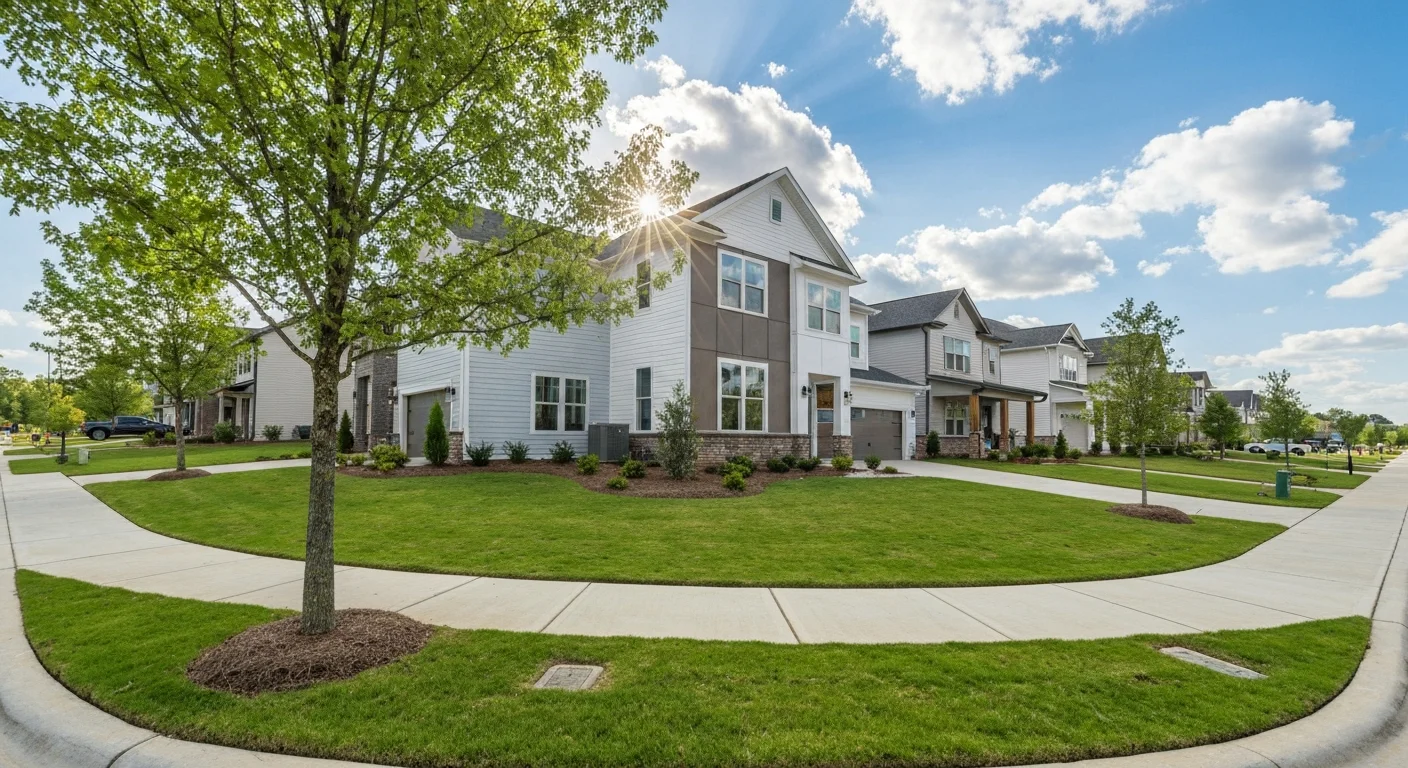
When buyers start researching Indian Trail, they usually come across two very different takes on what it costs. One camp hears it is an affordable escape from Charlotte prices, where the dollar stretches a lot further than it does inside the 485. The other camp has heard so much about the school district that they figure everything must come at a premium. Both of those perspectives make sense given what is out there, but the real picture usually lands somewhere between them, and a few of the numbers catch people off guard in ways that have nothing to do with either story. The cost of living in Indian Trail NC is not a single figure you can pull from a quick search. It is a stack of decisions, and a few of them quietly add hundreds of dollars a month that most buyers never see coming.
I have run hundreds of transactions in Union County, and I have sat at the closing table with buyers relocating from California, New York, Florida, and Texas who thought they had the budget figured out until the property tax line or the summer power bill surprised them. My job here is to take the surprise out of it. I am going to walk you through the real cost of living in Indian Trail NC the way I walk a buyer through it in person: bucket by bucket, with the actual 2025 to 2026 numbers, and with my read on what each number means for your monthly reality, not just your spreadsheet.
By the end of this guide you will know what the property taxes really run, what $450K buys you on the ground today, what your utilities and groceries and commute add up to, the carrying costs most buyers forget to budget, and exactly how the cost of living in Indian Trail NC compares to Fort Mill, Waxhaw, Charlotte, and Indian Land. No fluff, no vague ranges that help nobody. If you want to understand the cost of living in Indian Trail NC head to head against the nearby alternatives, the comparison section near the bottom lays that out plainly.
What This Guide Covers
- Property Taxes in Indian Trail NC: The Number Most Buyers Miss
- Home Prices and What $450K Buys in Indian Trail Right Now
- Cost of Living in Indian Trail NC Beyond Housing: Utilities, Groceries, and Daily Expenses
- The Indian Trail to Charlotte Commute: Real Drive Times and What It Costs You
- HOA Fees, Schools, and Hidden Costs That Most Indian Trail Buyers Do Not Budget For
- Cost of Living in Indian Trail NC vs. Fort Mill SC, Waxhaw, and Charlotte
- FAQ: Cost of Living in Indian Trail NC
31 min read | By Steve Jarrell, The Longleaf Group at eXp Realty | Updated September 2026
Cost of Living in Indian Trail NC at a Glance
Key Takeaways
- More affordable than living inside Charlotte, but not as cheap as the headlines suggest once you add the full picture
- Union County property tax is 43.42 cents per $100; the Town of Indian Trail adds 17 cents, for a combined rate of about 60.42 cents per $100 (0.6042%)
- Union County revalued on January 1, 2025, so assessed values now track market value closely and the effective rate is about 0.60%
- The example runs the real monthly numbers on what about $450,000 buys on the ground today
- Real monthly cost is property taxes plus the housing payment plus utilities and groceries plus carrying costs
- Indian Trail is a Union County commuter suburb popular for newer, more affordable homes
Steve Jarrell of The Longleaf Group tracks Indian Trail as more affordable than living inside Charlotte, but not as cheap as the headlines suggest once you add the full picture. After moving hundreds of buyers into Union County, here is where I land: your real monthly cost comes down to property taxes, what your housing budget actually buys on the ground today, utilities and groceries, and the carrying costs most out-of-town buyers forget to budget, like HOA dues and the longer commute into the city. Below I break down each line so you can compare Indian Trail clearly against Fort Mill, Waxhaw, and Charlotte before you commit.
Comparing across the county line? Here is Matthews against Indian Trail on cost, commute and schools.
Cost is one half of the decision and the reported crime data is the other, and I pulled that together in the Indian Trail NC crime rate.
Property Taxes in Indian Trail NC: The Number Most Buyers Miss
If you only pin down one number while you research the cost of living in Indian Trail NC, make it property taxes. Every other number in the cost of living in Indian Trail NC flows from this one. This is the line that trips up buyers coming from a single county rate, because Indian Trail stacks two of them. You pay the Union County base rate, and then the Town of Indian Trail adds a separate municipal rate right on top. Plenty of buyers see the county figure online, plug it into their budget, and undershoot the real bill by a few hundred dollars a month. For fiscal year 2025 to 2026, the Union County rate is 43.42 cents per $100 of assessed value. That is only half the story.
The Town of Indian Trail tacks on another 17 cents per $100, which brings your combined rate to roughly 60.42 cents per $100, or 0.6042%. On paper that looks almost suspiciously low, and that is the trap. Because Union County revalued on January 1, 2025, assessed values now track market value closely, so the effective rate a new buyer actually pays is essentially that same 0.60% of what you paid. I always quote buyers the effective number, never a statewide average, because the effective number is what shows up on your statement.
Here is what that 0.60% means in dollars for the cost of living in Indian Trail NC, which is the part that matters. On a $475,000 home, roughly the median sale price in Indian Trail as of May 2026, you are looking at about $3,990 a year in property taxes. Run that out monthly and it is $330 to $340. Real money, every month, on top of your mortgage. Step up to a $550,000 home and the bill is around $4,620 a year, just under $400 a month. Those are not trivial numbers, but here is the context that makes buyers exhale: the same home inside Charlotte city limits carries a noticeably heavier tax bill. On the property tax side, the cost of living in Indian Trail NC is a genuine break compared to Mecklenburg.
One thing I make sure relocating buyers understand: North Carolina assesses property at 100% of appraised market value, with reappraisals on a county schedule. Union County last did a general reappraisal in 2023, and the next one is expected around 2027. When you buy between cycles, your assessed value usually gets set at or near your purchase price. So a buyer purchasing at $475,000 in 2026 will generally see a tax bill built on something close to that figure from day one. No mystery, no lag.
I point this out because some buyers come from states with sleepy appraisal cycles and assume they can buy in high and get taxed low for years. That game does not work here. You cannot close at $475K and expect the county to keep assessing you at $280K. I tell buyers that is actually good news. The cost of living in Indian Trail NC on the tax side is predictable and transparent, which means you can budget it to the dollar instead of bracing for a reassessment shock three years in.
Here is an insider angle most buyers never catch on their own: if the home you want sits partially outside the Town of Indian Trail’s municipal boundary, you skip the municipal rate entirely and pay only the Union County base. That happens more than you would think on the western edges of the 28079 ZIP and in pockets closer to Matthews, and it can shave real money off your annual bill. So when you are weighing two specific addresses, check the municipal boundary, not just the ZIP code. The Town of Indian Trail’s official site has GIS boundary maps, or I will run the exact parcel for you before you make an offer. My takeaway here: property taxes are the single biggest swing factor in the cost of living in Indian Trail NC outside the price of the house itself, so get them nailed down first.
If you are budgeting by monthly payment rather than purchase price, my look at the real cost of holding an Indian Trail townhome shows why the cheaper sticker does not always win.
Home Prices and What $450K Buys in Indian Trail Right Now
When buyers ask me to break down the cost of living in Indian Trail NC, home prices are usually the first conversation. The median sale price was about $475,000 as of May 2026, up roughly 3.4% year over year. I want you to notice that I said sale price, not list price. Listings tend to run $15,000 to $30,000 higher than where deals actually close, and buyers who shop off list prices alone end up with a skewed sense of the market. When you are sizing up the cost of living in Indian Trail NC, anchor to what homes sell for, because that is the number your mortgage gets built on.
Price per square foot here runs about $197 to $222, depending on the neighborhood and how old the home is. That range matters a lot if you are coming from a pricier market. Comparable South Charlotte suburbs inside Mecklenburg routinely run $250 to $300 a foot or more, so the value in Indian Trail is real, not marketing spin. This is where buyers who want newer construction with a sensible layout and an actual yard land, without getting pushed into the $600K to $700K range that the same specs would demand over in Marvin or Weddington. I send a lot of buyers here for exactly that reason.
Let me give you the lay of the land on the major neighborhoods, because the cost of living in Indian Trail NC shifts depending on where you plant. Arbor Glen off Potter Road, one of the established resort-style communities, runs $400,000 to $550,000 for 4 to 5 bedroom homes with a pool and walking trails. Bonterra Village, the award-winning master-planned community on the southeastern edge of town, carries a median listing price of $499,945, with homes ranging from $380,000 into the low $520,000s. Both hold their value well, which matters when you eventually sell.
Lawson off Unionville Indian Trail Road is newer construction with a community pool, and most single-family plans run $370,000 to $480,000. Larkhaven is an established neighborhood with bigger lots and a mature tree canopy, typically $350,000 to $460,000, and it is one of my go-to recommendations for buyers chasing square footage per dollar. At the top end, Crismark near the town center comes with a lazy river and resort pool and carries a median listing price of $617,500, with larger plans pushing into the $650,000s. You pay for those amenities, and I will show you that math in the hidden-costs section.
If a detached home is more than you want to take on, townhomes are a real option here. Newer attached product typically starts in the low $300,000s and runs up to the mid $400,000s for larger plans with garages and private outdoor space. New construction single-family currently starts around $370,000 to $400,000 for builder base plans, with larger plans beginning around $575,000. I steer first-time buyers and right-sizers toward the townhome stock more often than they expect, because it gets them into the district and the location without the full detached price.
Here is a number that tells you who actually lives here: the homeownership rate in Indian Trail is 78.1%. That is high, and it tells you this is a community of people who bought to stay, not a churn-heavy rental market. To me that is one of the quiet strengths behind the cost of living in Indian Trail NC, because owner-occupied neighborhoods hold their condition and their values better over time. If new construction is on your radar as you weigh the cost of living in Indian Trail NC, read our guide to new construction homes in Indian Trail NC. The current builder activity is concentrated in the 28079 ZIP along US-74 and Unionville Indian Trail Road.
Now the part some agents will not tell you, because it is not a great sales line: Indian Trail is no longer undervalued. If you are trying to time the market, you need to hear this. A decade ago this town was genuinely cheap relative to the Charlotte suburbs, and the buyers who got in then made out beautifully.
That window has closed. The town has grown from around 30,000 residents to well over 45,000, and that growth is a big part of why the cost of living in Indian Trail NC has firmed up on the home-price side. The school district’s reputation has pulled in demand from buyers who might otherwise have stretched south to Waxhaw or Weddington. So if your plan is to wait for prices to drop before you buy, I would not hold my breath. The supply pipeline does not point to any meaningful correction. More buyers, modest new inventory, and steady employer migration into the Charlotte metro all point to continued gradual appreciation, not a reset in the cost of living in Indian Trail NC. My read on timing: waiting has a cost here too.
Eating out is one of the line items people underestimate, so if you want to see what a normal night out actually costs here, I walked through where locals eat in Indian Trail.
Cost of Living in Indian Trail NC Beyond Housing: Utilities, Groceries, and Daily Expenses
Once you get past the house, the cost of living in Indian Trail NC tends to land right about where buyers expect, which is a relief after the tax and price conversation. Utilities, groceries, and the everyday stuff are not dramatically different from what most southeastern metro buyers already know. There are a few specifics worth knowing before you lock in a monthly budget, and one or two that catch transplants off guard, so let me walk you through them.
Electricity is one of the more predictable pieces of the cost of living in Indian Trail NC. Depending on your neighborhood you are served by Duke Energy or Union Power Cooperative. The average residential rate runs about 13.91 cents per kilowatt-hour, and the typical monthly bill for Union County households is around $145. The number I want you to brace for is the summer spike. In July and August, central AC in a 2,500 to 3,500 square foot home can push you to 1,500 to 2,000 kilowatt-hours a month and bills into the $200 to $280 range. If you are coming from a mild climate, budget for that. North Carolina summers are genuinely hot and humid, and air conditioning is not a luxury here, it is survival.
Natural gas is the other utility that shapes the cost of living in Indian Trail NC, and it is provided by Piedmont Natural Gas. As of April 2026, residential customers pay about $2.08 per therm from November through March and $2.00 from April through October. Average monthly bills run around $115, but if you have gas heat and a gas water heater, January and February can easily hit $180 to $220. I tell winter-sensitive buyers to plan for the cold-month bump the same way they plan for the summer AC bump. Water and sewer comes mostly from Union County Public Works, with a slice of Beacon Hills and Crismark served by Carolina Water Services of NC.
State income tax is the variable that quietly makes the biggest difference for a lot of the buyers I work with, and most of them do not think about it until I bring it up. It is a real part of the cost of living in Indian Trail NC, especially if you are leaving a no-income-tax state or a high-tax one. North Carolina runs a flat individual income tax of 4.25% for tax years starting in 2025, dropping to 3.99% in 2026 with more reductions scheduled after that. Flat and falling. That is a friendly structure for earners.
There is no extra city or county income tax in Indian Trail on top of that. The NC Department of Revenue lists the current schedule on its individual income tax page. For buyers coming from California, where the top marginal rate hits 13.3%, or from New York or New Jersey, the NC flat rate is a serious cut to your total tax burden. I have had buyers from those states run the numbers and realize the income tax savings alone nearly offset the slightly higher housing costs. That is the kind of math that flips a relocation decision.
Sales tax in Union County is 6.75%: the 4.75% state rate plus a 2.0% county add-on. A few jurisdictions inside the county layer on up to another 0.5%, so the combined rate can reach 7.25%. The buyer-friendly note here is that unprepared groceries are exempt from the state sales tax, though some local rates may still touch certain items. And you will not be short on places to shop. Indian Trail has Food Lion, Harris Teeter, Publix, Lidl, ALDI, and a Walmart Supercenter all within a short drive of most neighborhoods in the 28079 ZIP, so your grocery run is never a project.
Zoom out and the overall cost of living in Indian Trail NC, measured by the cost of living index, sits roughly 6 to 11% above the national average, and housing is the reason. Strip out housing and your groceries, healthcare, and transportation track close to the national average. The median household income here was $108,483 in 2024, with an average of $125,258. That tells you who your neighbors are: largely dual-income households in professional and skilled trade roles, commuting into Charlotte or working remotely. My takeaway on the everyday costs is simple. The house is where the cost of living in Indian Trail NC concentrates. Almost everything else is normal, so do not let the index number scare you.
No pressure. Just a conversation.
Planning a move to Indian Trail, NC? I’d love to help.
The Indian Trail to Charlotte Commute: Real Drive Times and What It Costs You
The commute is a real line in the cost of living in Indian Trail NC, and it is the one buyers wave off and then regret not pricing out. I have run the numbers on the cost of living in Indian Trail NC for enough relocating households to know that the commute math surprises almost everyone. People factor it in loosely, as a vibe, and never put a dollar figure on it. I do, because for anyone driving into Uptown or to the office parks in South End, Ballantyne, or Midtown five days a week, the commute is both time and money, and both add up faster than you think over a year.
The main route that drives the commute side of the cost of living in Indian Trail NC takes most neighborhoods out along US-74 West, which becomes Independence Boulevard once you cross into Mecklenburg County. It is 21 miles, under 30 minutes in light traffic, and 40 to 50 minutes during weekday rush, roughly 7:30 to 9:00 in the morning and 4:30 to 6:30 in the evening. I always tell buyers to test-drive their actual commute at their actual departure time before they fall for a house. The midday drive lies to you.
I-485 gives you another option if you are headed to Ballantyne, the University area, or the airport corridor, but be honest with yourself about the loop. The I-485 stretch between NC-51 and NC-49 is one of the more congested pieces of the whole thing at peak. Budget 45 to 50 minutes to Uptown on a normal weekday morning. If your office is in Ballantyne or SouthPark, you are looking at a friendlier 30 to 35 minutes via US-74 to I-485 South. Where you work changes the commute math more than where you live, so I map both.
Now the dollars, because this is where the commute becomes a true part of the total cost of living in Indian Trail NC. A 21-mile one-way drive at 2026 gas prices, figuring a car that gets 28 miles per gallon and gas around $3.00, runs about $4.50 in fuel each way, or $9.00 round trip. Five days a week, 50 weeks a year, that is roughly $2,250 a year in fuel alone for a full in-office schedule. That is a number most buyers have never actually calculated, and it changes how they feel about a house that is ten minutes farther out.
Fuel is only part of it. Add wear and tear, and the IRS mileage rate is a fair proxy: 42 miles round trip at 67 cents a mile is about $28 a day, or roughly $7,000 a year for the full cost of the commute once you count depreciation. If you drive a hybrid or EV, the fuel slice of the cost of living in Indian Trail NC drops sharply, which is worth weighing. And one bit of good news: US-74 has no toll on the general lanes, so your daily drive stays cheaper than routes that funnel you into managed lanes.
If you would rather not own the windshield time, there is transit. For buyers modeling the full cost of living in Indian Trail NC including daily transportation, the CATS 74X Union County Express Bus runs weekday service from Indian Trail into Uptown in about 45 minutes. That is a genuine option for full-time office commuters, not a token one, and I have buyers who use it specifically to claw back two hours of driving a day.
Most buyers with kids find the bus schedule less flexible than driving, but for solo commuters it is worth pricing against Uptown parking, which easily runs $150 to $250 a month. That parking cost is the hidden offset that makes the bus pencil out for a lot of people. I walk through the full commute picture with every buyer I work with here, because it is one of the biggest quality-of-life calls you will make. Our guide to moving to Indian Trail NC covers the commute in more detail alongside neighborhood-by-neighborhood location guidance. My takeaway: do not buy the house and then learn the commute. Price the commute first, then choose the house.
HOA Fees, Schools, and Hidden Costs That Most Indian Trail Buyers Do Not Budget For
Here is the mistake I see more than any other when buyers add up the cost of living in Indian Trail NC: they nail the mortgage and the property tax, then forget everything that sits on top. This section of the cost of living in Indian Trail NC picture is where most first-time Union County buyers get caught short. Those carrying costs are where budgets quietly blow up. Two categories do most of the damage, and both are easy to plan for once you know to look. The first is HOA fees, and the second is everything tangled up in the school situation.
HOA fees alone can swing the cost of living in Indian Trail NC by $50 to $150 a month, and buyers rarely treat that as the real budget line it is. In master-planned communities, dues typically run $50 to $150 a month for single-family homes, and the number tracks the amenity package. Resort pools, fitness centers, walking trails, and organized programming push you to the top of that range. Crismark, with its lazy river and club amenities, is the textbook example of a community where HOA dues are a genuine monthly cost, not an afterthought. Beautiful place. Just know what it carries.
More standard neighborhoods with a pool and basic upkeep run $50 to $75 a month. Some older or loosely governed neighborhoods have no HOA at all, which kills the monthly fee but also means nobody is enforcing exterior standards, so your neighbor’s project car is your problem too. For new construction, the builder sets the initial HOA rate in the governing documents, and those rates climb over time as reserves get replenished. I tell every buyer the same thing: request the HOA financials and the reserve fund study before you close. A thin reserve fund today is a special assessment tomorrow.
Schools are the one variable in the cost of living in Indian Trail NC that works strongly in your favor. The town sits in Union County Public Schools, consistently rated among the strongest public districts in North Carolina, and that quality is a big reason demand here stays firm. Most of Indian Trail feeds into two primary high schools, Porter Ridge High School and Sun Valley High School. For a lot of buyers, the district alone is the reason they choose Indian Trail over a cheaper option a county away.
Porter Ridge holds a 7 out of 10 rating from GreatSchools and an A- from Niche, which puts it solidly above average on both academics and college readiness. UCPS as a district keeps outperforming statewide benchmarks on end-of-grade and end-of-course testing. If you want the full picture on elementary and middle school feeder patterns, our dedicated guide to schools in Indian Trail NC breaks it down school by school.
The hidden cost on schools is not tuition, since these are public. It is the address-to-school assignment, and it can quietly shape your home search. Not every Indian Trail address feeds the most sought-after elementary schools, and if a specific assignment matters to you, you have to verify the attendance zone for the exact address before you go under contract. UCPS boundaries shift, and a house one street over can feed a different school. I check attendance zones on every Union County transaction I run. Do not trust the neighborhood name or the subdivision brochure on this, because the brochure is selling, not assigning.
A few more carrying costs to put in your budget. Homeowner’s insurance across the Charlotte suburbs has climbed as carriers reassess weather risk in the Carolinas, and Indian Trail is no exception. Expect $1,800 to $2,800 a year for a well-built 2,500 to 3,500 square foot home at current values, though age, construction type, and proximity to water features move that around. Buyers coming from low-premium states are often surprised, so I get a quote in front of them early rather than at the closing table.
Lawn care on a typical Indian Trail lot, often a quarter to a half acre, runs $100 to $175 a month for a weekly mow-and-edge. Buyers from denser metros chronically underestimate this, because they have never owned this much grass. And childcare, if it applies to you, runs $1,200 to $1,800 a month per child for licensed centers here, below Charlotte metro averages but still a real number. None of these are deal-breakers. They are just the difference between a budget that holds and one that surprises you in month three.
Now for the buyer-friendly side of the hidden-cost ledger in the cost of living in Indian Trail NC. North Carolina does not charge an annual personal property tax on vehicles. South Carolina does, so buyers coming from across the line or from Virginia are often pleasantly surprised that their cars are not taxed every year here. NC vehicle registration fees are modest too. And one more: Union County Public Schools offer strong extracurricular and athletics programs without the private school or pay-to-play supplements parents budget for in weaker districts. That is real money you do not have to spend.
I cover what Indian Trail residents actually spend in a full breakdown on my channel, and I would rather you watch me explain it than just read numbers on a page. Before you finalize your budget, give it 15 minutes: Living In Indian Trail NC 2026 | What You Need To Know on the @WelcomeToCharlotteNC YouTube channel. It walks through the cost of living in Indian Trail NC in plain language alongside neighborhood-by-neighborhood guidance on what $400K to $600K actually buys today. My takeaway on hidden costs: build the full carrying-cost number before you fall in love with a house, not after.
Wesley Chapel belongs on that list too, since it is where buyers go when they want more land for the money, and I put the two side by side in more space or a lower price.
Cost of Living in Indian Trail NC vs. Fort Mill SC, Waxhaw, and Charlotte
On the home-price side, the cost of living in Indian Trail NC sits squarely in the middle of the South Charlotte and Union County market. It is not the cheapest option in the region, and it is not the priciest. The way I help buyers decide is by laying it against the four alternatives they are almost always also considering, because the real question is never “is Indian Trail affordable,” it is “affordable compared to what.” Below I walk the cost of living in Indian Trail NC against the four markets that come up in nearly every conversation I have.
Indian Trail NC vs. Fort Mill SC: This is the comparison I have most often, and it is where buyers go back and forth the longest. On property taxes, Fort Mill wins, full stop. South Carolina taxes owner-occupied primary residences at a 4.0% assessment ratio on market value, and primary residents are exempt from school district property taxes. That exemption is the whole ballgame on the tax line.
This one runs the opposite way from the story most buyers arrive with. Inside the Town of Fort Mill, York County’s 2025 owner-occupied levy of 237.2 mills works out to about 0.95% of market value, roughly $4,744 a year on a $500,000 home. Indian Trail’s combined rate produces about $3,021 on the same home. On the property tax line alone, Indian Trail is the cheaper address by roughly $1,700 a year. South Carolina’s advantage is real, but it shows up in unincorporated York County, near 0.53%, not inside Fort Mill town limits.
South Carolina also offers a Homestead Exemption for residents over 65, which sweetens it further if you qualify. But here is the tradeoff I make sure buyers see clearly: Fort Mill home prices are climbing fast, the commute to Charlotte is a touch longer for most buyers, and SC’s income tax rate, while phasing down, starts higher than NC’s, plus the 6% sales tax base shifts the math. Lower property tax does not automatically mean lower total cost. Our cost of living in Fort Mill SC guide runs that full comparison and pairs naturally with understanding the cost of living in Indian Trail NC.
Indian Trail NC vs. Waxhaw NC: The cost of living in Indian Trail NC versus Waxhaw is a common comparison for Union County shoppers. Both sit in Union County, so the property tax analysis starts from the identical county base rate of 43.42 cents per $100. Waxhaw carries its own municipal rate, and its historic downtown and more polished infrastructure tend to push home prices higher for the same square footage. You are paying for the charm, and for plenty of buyers that is worth it.
Median home prices in Waxhaw run $25,000 to $50,000 above Indian Trail at the same size tier. Indian Trail gives you more value per square foot, and its proximity to I-485 makes the Charlotte commute faster for most buyers. Waxhaw’s draw is the walkable downtown, the strong community identity, and the established neighborhoods with bigger lots. Neither moves the total cost-of-living needle dramatically, so I frame it as a lifestyle choice: buyers who prioritize commute efficiency and square-footage value tend to land in Indian Trail, while buyers who want walkable town character land in Waxhaw. There is no wrong answer, just the right answer for you.
Indian Trail NC vs. Charlotte (Mecklenburg County): This is where the cost of living in Indian Trail NC shows its clearest advantage, and the property tax numbers make it obvious. The combined Charlotte city and Mecklenburg County rate is 75.72 cents per $100 of assessed value, against Indian Trail’s combined 60.42 cents. On a $500,000 home that is $695 a year in raw rate terms before you even account for assessment differences. That gap compounds every year you own.
Stack the lower price per square foot in Indian Trail on top of the lower tax rate, and buyers can usually afford a noticeably bigger home in Indian Trail for the same monthly payment as a smaller one inside Charlotte. The cost is the commute and the reduced walkability if you value urban access. Charlotte neighborhoods like Ballantyne and Steele Creek sit close to Indian Trail geographically, so some buyers split the difference and buy near the Mecklenburg-Union border to get a bit of both. The Union County NC property tax rates guide on our site breaks down the full county rate structure if you want to go deeper.
Indian Trail NC vs. Indian Land SC: This is one of the tightest comparisons in the whole region, and the cost of living in Indian Trail NC versus Indian Land SC genuinely splits buyers down the middle. Indian Land sits just across the state line and has grown explosively over the past five years. Buyers comparing the cost of living in Indian Trail NC to Indian Land are almost always surprised by how close the numbers sit. Lancaster County SC applies the same 4% owner-occupied ratio and school operating exemption, and Indian Land bills generally land in the same neighborhood as Indian Trail’s 0.60% rather than dramatically below it. Confirm the exact millage for a specific Indian Land address with the Lancaster County Auditor before you budget, because district lines move the number.
Home prices in Indian Land have risen to near parity with Indian Trail, so the decision is rarely about the sticker price anymore. It comes down to school district preference, since Indian Trail buyers get UCPS while Indian Land buyers get Lancaster County SC schools, plus infrastructure maturity, where Indian Trail has more established commercial density, and the state-specific stuff like SC income tax structure and that annual vehicle property tax. Our Indian Trail vs. Indian Land SC comparison goes deep on this for buyers who are truly torn between the two.
So where do I land on the cost of living in Indian Trail NC comparisons? If minimizing property tax is your top financial priority, Fort Mill or Indian Land SC are the stronger plays, no argument. If school district access through UCPS is what matters most, Indian Trail beats both SC options. And if commute time and highway access to Charlotte are your deciding factor, Indian Trail’s spot right on US-74 at I-485 is tough to beat among Union County options at this price tier. The cost of living in Indian Trail NC is rarely the lowest number in the region, but it is consistently the best balance of taxes, schools, and access, and balance is what most buyers actually need.
FAQ: Cost of Living in Indian Trail NC
What is the property tax rate in Indian Trail NC?
The combined property tax rate driving the cost of living in Indian Trail NC for 2025 to 2026 is about 60.42 cents per $100 of assessed value. That stacks the Union County base of 43.42 cents with the Town of Indian Trail municipal rate of 17 cents. The number that actually lands on your statement, the effective rate as a percentage of market value, is about 0.60%, which works out to roughly $2,870 a year on a $475,000 home. That is lower than Charlotte’s combined city and county rate of 75.72 cents per $100, and a bit higher than Fort Mill SC’s effective 0.5 to 0.6% for primary residences. My advice: always budget off the effective rate, never the sticker.
How much does it cost to live in Indian Trail NC monthly?
The cost of living in Indian Trail NC starts, like everywhere, with the house. Here is how the full cost of living in Indian Trail NC stacks up on a monthly basis. On a $475,000 home at current mortgage rates, figuring 10% down on a 30-year fixed, principal and interest run about $2,800 to $3,100, plus $330 to $340 in property taxes, $150 to $230 in homeowner’s insurance, and $50 to $150 in HOA dues depending on the community. Those are the four pieces buyers forget to add together.
All in, housing on a median-priced home usually lands between $3,400 and $3,900 a month. Add utilities, figure $145 electricity, $60 to $115 gas, and $100 to $150 water and sewer, then groceries and your commute, and a single-earner household typically runs $5,500 to $7,500 a month depending on lifestyle, household size, and what you drive. I always build this full number with a buyer before we shop, so the budget holds up after closing instead of surprising you.
Is the cost of living in Indian Trail NC lower than Charlotte?
Yes, and in the categories that matter most to a homebuyer it is clearly lower. The cost of living in Indian Trail NC beats Charlotte on property taxes, on price per square foot, and on total housing cost for a comparable home. Indian Trail’s combined property tax rate runs about 14 cents per $100 below Charlotte’s combined rate. Across the cost of living in Indian Trail NC, that tax savings compounds every single year you own.
In practice, buyers routinely get 200 to 400 more square feet for the same monthly payment versus comparable Charlotte suburbs inside the 485 loop. That is the clearest financial argument for the cost of living in Indian Trail NC over Charlotte. The cost of living in Indian Trail NC does sit 6 to 11% above the national average overall per the cost-of-living indexes, mostly because of housing, so it is not a bargain suburb in absolute terms. But measured against Charlotte proper, it delivers real, repeatable value, and that is exactly why I send so many relocating buyers here.
What are the best neighborhoods in Indian Trail NC for the money?
If you are chasing the best value inside the cost of living in Indian Trail NC, I point buyers first at Larkhaven, Lawson, and the older established sections along Weddington-Matthews Road. Those give you the most square footage per dollar, typically $350,000 to $460,000. If you want resort-style amenities and you are fine paying for them, Bonterra Village and Arbor Glen deliver well-maintained communities with strong resale histories in the $400,000 to $530,000 range.
Crismark is the step up from there, with a median listing price around $617,500 that reflects the premium amenity package, the lazy river and all. Buyers who want to understand the cost of living in Indian Trail NC at the new construction level should look at the active builder communities along Unionville Indian Trail Road and the eastern sections of US-74, where base plans starting in the low $400,000s come from several builders with different floor plan profiles. My quick rule: buy the value neighborhoods for the dollar, buy the amenity neighborhoods for the lifestyle, and be honest with yourself about which one you will actually use.
What is the NC state income tax rate for Indian Trail residents?
This is one of the quieter advantages in the cost of living in Indian Trail NC, and one that makes the biggest difference for buyers coming from high-tax states. North Carolina runs a flat income tax of 4.25% for tax years beginning in 2025, dropping to 3.99% in 2026 with more reductions scheduled after that. There is no extra city or county income tax for Indian Trail residents, and Union County sales tax is 6.75%. The combination of a low flat rate and no local income tax puts North Carolina in a strong spot against the northeastern states. I have watched buyers relocating from New York, New Jersey, Connecticut, and California realize the income tax savings alone reshape their whole budget.
Is Indian Trail NC affordable compared to Indian Land SC?
The cost of living in Indian Trail NC versus Indian Land SC comes down to a handful of differences. The two towns are closely matched on home prices, so the cost of living in Indian Trail NC versus Indian Land decision usually turns on taxes and school districts. Where they split is property tax. Indian Land, in Lancaster County SC, uses the same 4% owner-occupied ratio and school operating exemption, and bills generally land near Indian Trail’s 0.60% rather than far below it. Confirm the exact millage with the Lancaster County Auditor.
The gap on a $500,000 home is far smaller than most buyers assume. But the offsets matter: SC charges an annual vehicle property tax that NC does not, SC’s income tax structure is on its own phase-down path, and the two sit in different school districts. I tell buyers comparing the cost of living in Indian Trail NC to Indian Land to model the full five-year cost of ownership, not just the headline property tax rate, because the headline rate hides as much as it reveals.
About Steve Jarrell
Steve Jarrell is a licensed real estate broker with The Longleaf Group at eXp Realty, based in Weddington NC, specializing in helping buyers navigate the cost of living in Indian Trail NC and the surrounding South Charlotte and Union County market NC. He holds a luxury real estate designation and spent a decade building real estate marketing technology before moving full-time into representing buyers and sellers across the South Charlotte and Union County market. That tech background is why he treats every cost-of-living conversation like a model to build with you, not a sales pitch.
Steve has personally walked through the cost of living in Indian Trail NC with hundreds of relocating buyers, including people moving from California, New York, Florida, and Texas who are navigating the NC and SC tax landscape for the first time. He lives in Weddington, has guided hundreds of buyers through the cost of living in Indian Trail NC analysis, and is active in the Waxhaw-Weddington Rotary Club and Common Heart, and is a member of the Weddington Optimist Club. Reach him directly at 704-774-7170, steve@jarrellhomes.com, or thelongleafgroup.com.
 |
Free · 26-Page Insider Guide Which South Charlotte Town Is Right for You? Towns, villages, and cities compared, NC vs SC taxes and schools, and the 5 mistakes out-of-state buyers make. Everything you’d want a local to tell you before you move. |
Thinking about buying or selling in Indian Trail, NC?
Free, 15 minutes, and zero sales pitch.