
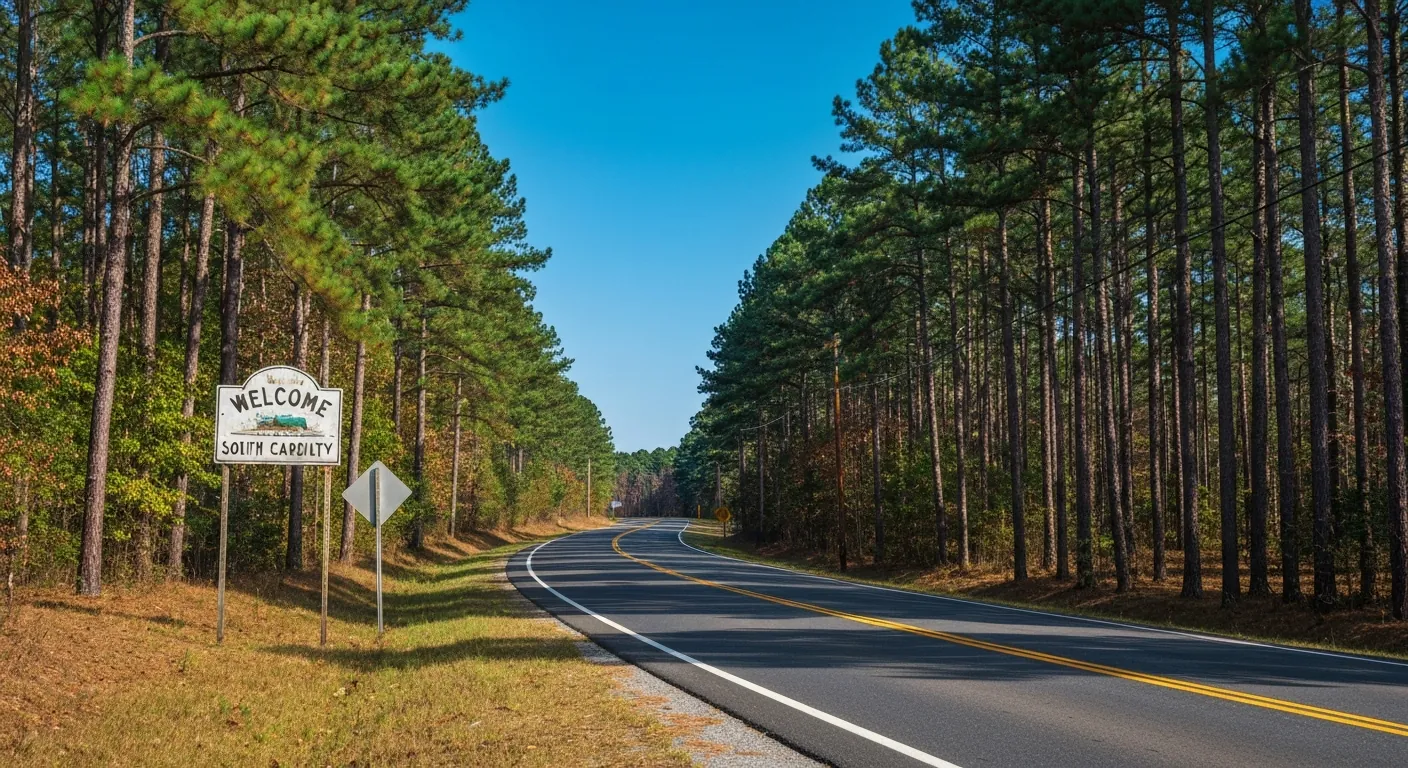
Last updated June 2026. Comparing Indian Trail NC vs Indian Land SC is one of the most common questions I field from buyers relocating to the south side of Charlotte, and it almost always comes down to one real decision: do you want to stay in North Carolina with a top-ranked school district and a true small-town downtown, or cross the state line into South Carolina for a lower tax structure and a wall of brand-new construction. I am Steve Jarrell with The Longleaf Group at eXp Realty, and I sell on both sides of that line every month. This guide puts Indian Trail NC vs Indian Land SC head to head on home prices, property taxes, schools, commute, things to do, and where each one is heading, with current 2026 numbers so you can stop guessing and start touring the right side of the border.
Most online comparisons get one thing wrong. They treat these two as interchangeable bedroom suburbs ten minutes apart. They are not. Indian Trail is an established Union County town that has been growing steadily for twenty years and has the schools, parks, and rooftops to show for it. Indian Land is a newer, faster, less governed stretch of Lancaster County panhandle that is being built out almost from scratch right now. The dollar goes a similar distance in both, but the tax bill, the school assignment, and the daily commute can swing your decision hard once you see the actual figures. Let me walk you through all of it.
What This Guide Covers
- Indian Trail NC vs Indian Land SC: Quick Facts Side by Side
- Location and Commute Into Charlotte
- Property Taxes and Cost of Living: The Real Math
- Public Schools Compared
- Home Prices and New Construction
- Things to Do: Parks, Dining, and Weekends
- Growth and Development Outlook
- Who Should Choose Indian Trail and Who Should Choose Indian Land
- Frequently Asked Questions
17 min read | By Steve Jarrell, The Longleaf Group at eXp Realty | Updated September 2026
The Short Answer
Indian Trail and Indian Land are roughly the same distance from Uptown and about $45,000 apart at the median — but they sit in different states, and that is the real difference. South Carolina’s 4% owner-occupied ratio can cut a bill more than a third against the 6% rate, and it strips the school operating millage. North Carolina’s flat 3.99% income tax runs the other way.
Key numbers right now:
- Both sit roughly 18 to 25 miles from Uptown depending on the neighborhood
- Redfin medians for the three months ending April 2026: about $445,000 in Indian Trail (28079) and about $490,000 in Indian Land (29707)
- Union County’s FY2025-2026 rate is 43.42 cents per $100 with a modest Indian Trail town rate on top; Lancaster County’s effective rate runs around 0.51%
- Applying for South Carolina’s 4% primary-residence ratio instead of 6% also strips the school operating millage — a bill more than a third lower
- North Carolina assesses at full market value with a flat 3.99% income tax for 2026
- Indian Trail new construction averaged around $471,000 in mid-2026, from the mid $300s past $900,000; Indian Land High holds a B+ from Niche with about 49% math and 81% reading proficiency
Indian Trail NC vs Indian Land SC: Quick Facts Side by Side
Before we go deep, here is the snapshot I sketch out for buyers on the first call. These are current as of spring 2026.
| Factor | Indian Trail, NC (28079) | Indian Land, SC (29707) |
|---|---|---|
| State / County | North Carolina / Union | South Carolina / Lancaster |
| Median sale price (3 mo. to Apr 2026, Redfin) | $445,000 | $490,000 |
| Median days on market | 75 | 82 |
| County property tax rate (FY 25-26) | 43.42 cents / $100 | 4% owner-occupied assessment ratio |
| State income tax (2026) | 3.99% flat | 1.99% / 5.21% two-rate |
| School district | Union County Public Schools (Niche A, #2 in NC) | Lancaster County / Indian Land schools (B+ high school) |
| Population trend | ~45,200, steady ~2%/yr | Lancaster Co. 114,296, +19% in 5 yrs |
| Housing stock | Mix of established and new | Heavily new construction |
Notice the prices are closer than people expect, and Indian Land is actually the pricier median right now because so much of its inventory is brand-new construction. The tax story is where the two genuinely diverge, and I will break that down dollar for dollar below. First, the thing that decides more relocations than buyers admit: the drive.
Location and Commute Into Charlotte
Both towns sit on the southeast edge of the Charlotte metro, roughly 18 to 25 miles from uptown depending on which neighborhood you land in. Indian Trail runs along the US-74 (Independence Boulevard) corridor in Union County. Indian Land hugs US-521 (Charlotte Highway) just over the South Carolina line. On a map they look like neighbors, and they are, but they funnel you into the city on completely different roads, and that matters more than mileage.
Here is an only-a-local tip that will save you a bad decision: do not judge either commute from a midday test drive. Drive both at 7:45 on a Tuesday. From Indian Trail, US-74 toward uptown backs up hard through Stallings and Matthews, and the long-promised relief has come in pieces. From Indian Land, US-521 is the choke point, and it is carrying far more cars than it was designed for as the panhandle fills in. I have had buyers fall in love with a house in either town and then quietly resell within three years because the morning drive wore them down. If you work in Ballantyne or the SouthPark corridor, Indian Land often wins on raw drive time because you are coming up 521 into south Charlotte rather than fighting all the way around Independence. If you work uptown or in University City, Indian Trail’s position can be the better of two imperfect options.
Indian Trail does have one structural advantage worth naming: it sits on the Norfolk Southern rail line and has a more defined town center forming around its new town hall, which means more of your errands can stay local. Indian Land is more strip-corridor by design, so you will drive a little more for daily life even if your job commute is shorter. Neither has light rail, and neither will in any timeframe that should affect your purchase. Test the commute before you fall for the kitchen.
Indian Trail NC vs Indian Land SC: Property Taxes and Cost of Living
This is the section that flips the most decisions in the Indian Trail NC vs Indian Land SC matchup, so I want to slow down and show the actual numbers rather than hand-waving about South Carolina being cheaper.
On the North Carolina side, Union County’s property tax rate for fiscal year 2025-2026 is 43.42 cents per $100 of assessed value, and Indian Trail layers a modest town rate on top of that. North Carolina assesses your home at full market value, and the state income tax is a flat 3.99% for 2026. It is clean and predictable. You can confirm current county rates directly with the Town of Indian Trail and the Union County tax office.
South Carolina works on a different system entirely, and this is where buyers get tripped up. Lancaster County’s effective property tax rate runs around 0.51%, lower than Union County on paper. But the real savings come from South Carolina’s owner-occupied legal residence rule. If the home is your primary residence, you apply for the 4% assessment ratio instead of the standard 6%, and that 4% status also strips the school operating millage off your bill. The net effect is a tax bill that can run more than a third lower than the same-value home taxed at 6%.
The catch, and I cannot stress this enough, is that you have to apply for it with the Lancaster County assessor. If you close and forget to file, you get billed at 6% as if the house were an investment property, and I have watched buyers eat an extra couple thousand dollars in year one for missing that paperwork. Details and the application live at the Lancaster County government site.
South Carolina also restructured its income tax for 2026 through House Bill 4216, moving to a two-rate system: 1.99% on taxable income up to $30,000 and 5.21% above that, with the stated long-term goal of pushing the top rate down toward 1.99%. You can read the current brackets at the South Carolina Department of Revenue. For a lot of buyers, the South Carolina income tax now lands close to or even above North Carolina’s flat 3.99% until those promised cuts actually arrive, so do not assume SC automatically wins on income tax. It wins on property tax for owner-occupants, and that is the cleaner argument.
Two more cost items locals know about. First, South Carolina taxes vehicles annually as property, so when you register your cars in Lancaster County you will get a yearly bill that North Carolina folds into registration differently. Budget for it. Second, Lancaster County’s total 2025 millage ran around 338 mills with a proposed 2.3 mill increase floated for the next fiscal year, which would add roughly $112 a year on a $400,000 owner-occupied home. Small, but the trend is up as the panhandle demands more services. The bottom line on Indian Trail NC vs Indian Land SC taxes: for a primary residence, Indian Land usually wins the property tax line, the two are closer than rumor suggests on income tax, and the vehicle tax is the surprise that nobody mentions until your first SC registration.
Public Schools Compared
If you have school-age kids, this is often the line that settles the Indian Trail NC vs Indian Land SC debate before taxes even enter the conversation, and it is the clearest edge Indian Trail holds.
Indian Trail is served by Union County Public Schools, which Niche ranks as an overall A district and the #2 district out of 115 in North Carolina for 2025. Porter Ridge High School, which serves a chunk of Indian Trail, carries an A- from Niche for 2026 and earned an “Exceeded Expected Growth” mark on the North Carolina School Report Card for 2024-2025. Sun Valley and other UCPS assignments in the area perform well too. You can pull current assignments and ratings straight from Union County Public Schools. The depth of strong schools across the district is a real, durable reason buyers pay the North Carolina tax bill.
Indian Land schools sit in Lancaster County. Indian Land High School holds a B+ from Niche for 2026, with proficiency running about 49% in math and 81% in reading. That is a solid, improving school, and the district has been adding capacity fast to keep up with the panhandle’s growth, including modular classroom additions. But it does not yet carry the same district-wide reputation that Union County does, and that gap is the real tradeoff for the lower taxes. Here is the local nuance I always add: Lancaster County’s school funding is heavily tied to that panhandle growth, so the buildings are new and the trajectory is up, but ratings can lag the reality on the ground when a school is absorbing hundreds of new students a year. Tour the specific assigned school, do not just read the district average.
My rule of thumb: if top-tier public schools are non-negotiable, Indian Trail’s Union County assignment is the safer bet today. If you value newer facilities, are comfortable with a strong-but-still-climbing district, or are looking at private or charter options anyway, Indian Land should not scare you off. For a deeper look at the NC side, I keep a current breakdown in my schools in Indian Trail NC guide, and the SC side in my Indian Land schools guide.
Home Prices and New Construction
Pricing in the Indian Trail NC vs Indian Land SC comparison is closer than buyers expect, and the mix of housing stock explains the gap. In the three months ending April 2026, the Redfin median sale price was about $445,000 in Indian Trail (28079) and about $490,000 in Indian Land (29707). Days on market sat near 75 and 82 respectively, both signaling a market that has cooled from the frenzy but is not soft. Homes are taking two to three months to sell, which means buyers finally have room to negotiate and ask for closing cost help again.
Why is Indian Land’s median higher when South Carolina is supposed to be the bargain? Because so much of what is selling there is brand-new construction, and new homes carry a premium over resale. Indian Trail has a deeper bench of established neighborhoods from the 2000s and 2010s, so you can find more resale value and more mature lots with trees that are actually grown in. New construction listings in Indian Trail were averaging around $471,000 in mid-2026, with a wide range from the mid $300s up past $900,000 depending on community and lot.
On the Indian Land side, the new-build pipeline is the story. Terraces at the Exchange townhomes were starting around $425,990 in mid-2026, and the 55+ community The Pines at Sugar Creek had quick move-in homes from roughly $540,995. On the Indian Trail side, McBride by DRB Homes was slated to open for sales in summer 2026 with pricing expected from the $500s. The practical takeaway: if you want a brand-new home with a builder warranty and an open floor plan, Indian Land has more of it on the shelf right now. If you want an established neighborhood with mature landscaping and a little more square foot for the dollar on resale, Indian Trail gives you more to choose from. For the full inventory picture, I track both the Indian Trail housing market and new construction across the line in my new construction guide.
One negotiation tip that applies to both towns in 2026: with days on market in the 75 to 82 range, builders and resale sellers are far more willing to deal than they were two years ago. On new construction especially, the headline price is not the real price. Builders are buying down interest rates, throwing in design center credits, and covering closing costs to keep sales moving. Always ask what the incentive package is before you anchor on the sticker.
Things to Do: Parks, Dining, and Weekends
Lifestyle is where these two towns show their personalities, and it is worth touring on a Saturday, not just a weekday.
Parks and outdoor recreation. Indian Trail’s anchor is Crooked Creek Park, with baseball fields, playgrounds, walking trails, and a splash pad that is a genuine warm-weather draw. The town also has the Southfork Crooked Creek Greenway in design, a multi-use path connecting the US-74 corridor to Crooked Creek Park, with more than $5.1 million in funding already allocated, so the trail network is set to expand. Chestnut Square Park gives you more open green space. Indian Land leans on Sun City Carolina Lakes for its resort-style amenities if you are 55-plus, and the broader panhandle is filling in with neighborhood parks, plus easy access to the Catawba River and Lake Wylie for boating and fishing a short drive west.
Dining and breweries. Indian Trail’s food scene clusters along US-74 and around the growing downtown, with local favorites and the usual mix of national chains, and you are a short hop from the deeper restaurant rows of Matthews and Stallings. Indian Land has exploded with new restaurants along US-521, and it sits minutes from the dining and breweries of Fort Mill and Ballantyne, so your weekend options open up fast once you cross 521. Both towns put you within 20 to 30 minutes of Ballantyne’s restaurant corridor and The Bowl at Ballantyne, the area’s newest entertainment district.
Kid-friendly outings. The splash pad and ballfields at Crooked Creek Park are reliable kid-friendly stops on the Indian Trail side. On the Indian Land side, the new neighborhood parks and the proximity to Fort Mill’s larger recreation complexes give you plenty of weekend options. Both towns sit close enough to uptown Charlotte that the Discovery Place museums, the Whitewater Center, and Carowinds are all realistic day trips. For more on the SC side, see my roundup of things to do in Indian Land SC.
Growth and Development Outlook
If you are buying for the long haul, where each town is headed matters as much as where it is today, and the Indian Trail NC vs Indian Land SC growth stories are different in character.
Indian Trail is densifying around a real town center. The Hub at Downtown Indian Trail was approved to include a 350-unit Class-A apartment complex and a 105-room hotel near the new town hall, the kind of live-work-play core that gives a suburb an actual downtown instead of just subdivisions and strip centers. Paired with the Southfork Crooked Creek Greenway expansion, Indian Trail is maturing into a more complete town. Its growth is steady and managed, roughly 2% a year, which keeps infrastructure from falling too far behind demand.
Indian Land is growing far faster and more loosely. Lancaster County’s population hit about 114,296 in 2025 and grew roughly 19% over five years, almost all of it in the panhandle around Indian Land. The Point, a 44-acre mixed-use development at Highway 521 and Laurel Hill Road, was expected to break ground in summer 2026 with around 240,000 square feet of retail, office, and hotel space, plus road realignments along US-521. That is exciting for amenities and resale demand, but it is also why the 521 commute is a real concern: the road infrastructure is racing to catch up with the rooftops. Where I land: Indian Land offers more upside and more growing pains, while Indian Trail offers a more settled, predictable trajectory. Which one fits depends on your tolerance for living in a construction zone in exchange for being early in a hot area.
Who Should Choose Indian Trail and Who Should Choose Indian Land
After hundreds of these conversations, here is how I actually steer buyers in the Indian Trail NC vs Indian Land SC decision.
Choose Indian Trail, NC if: top-ranked public schools are your priority, you want an established neighborhood with mature trees rather than a fresh build on a bare lot, you prefer North Carolina’s clean flat income tax and predictable assessment, and you like the idea of a real downtown forming around the town hall. Indian Trail is the more settled choice, and it is the one I lean toward for buyers who plan to stay a decade or more and want schools and stability above all.
Choose Indian Land, SC if: you want a brand-new home with a builder warranty, you are an owner-occupant who will file for the 4% legal residence rate and pocket the property tax savings, you work in Ballantyne or south Charlotte where the 521 commute actually favors you, or you are 55-plus and drawn to Sun City Carolina Lakes. Indian Land is the choice for buyers who want new construction and lower property taxes and are comfortable being early in a fast-growing area that is still building out its roads and services.
A few buyer scenarios I see constantly. The young remote-work couple with no kids yet and a SouthPark-adjacent client base: Indian Land, almost every time, for the new build and the tax math. The household relocating from out of state with two kids in elementary and middle school: Indian Trail, for the Union County schools, unless they are committed to private. The downsizing buyers who want low-maintenance new construction and a social community: Sun City in Indian Land. The buyer who wants the most house for the money on resale with grown landscaping: Indian Trail’s established neighborhoods. There is no universally right answer, only the right answer for your commute, your situation, and your tax picture. That is exactly the conversation I am built to have.
For a fuller picture of each town on its own, read my deep dives on living in Indian Trail NC and why people are moving to Indian Land SC.
Frequently Asked Questions
Is Indian Trail NC or Indian Land SC cheaper to live in?
For an owner-occupied primary residence, Indian Land SC usually has the lower property tax bill thanks to South Carolina’s 4% legal residence assessment, which also removes the school operating millage. But Indian Land’s median home price is actually higher right now ($490,000 vs $445,000) because so much of its inventory is new construction, and South Carolina adds an annual vehicle property tax. North Carolina’s flat 3.99% income tax can also beat South Carolina’s 2026 two-rate system for many earners. Run the full picture, not just the property tax line.
Which has lower property taxes, Indian Trail or Indian Land?
Indian Land, for a primary residence that files for the 4% owner-occupied rate. That status can cut a South Carolina tax bill by more than a third versus the 6% non-owner rate. You must apply with the Lancaster County assessor after closing, or you will be billed at 6%. Union County NC’s rate for FY 2025-2026 is 43.42 cents per $100 of full market value, which is simpler but generally a higher bill on a comparable home.
How do the schools compare between Indian Trail and Indian Land?
Indian Trail’s Union County Public Schools rank as an overall A district, #2 of 115 in North Carolina, with schools like Porter Ridge High earning an A-. Indian Land High School in Lancaster County holds a B+ from Niche and is improving fast, but the district as a whole does not yet match Union County’s reputation. If top public schools are the priority, Indian Trail has the clearer edge today.
Which has newer homes, Indian Trail or Indian Land?
Indian Land. The Lancaster County panhandle is being built out right now, so new construction dominates its market, from Terraces at the Exchange townhomes to 55+ communities like The Pines at Sugar Creek. Indian Trail has new construction too, like the upcoming McBride by DRB Homes, but it also has a much deeper supply of established neighborhoods with mature landscaping.
Which commute into Charlotte is better, Indian Trail or Indian Land?
It depends on where you work. Indian Land’s US-521 route favors jobs in Ballantyne and south Charlotte. Indian Trail’s US-74 corridor can be better for uptown or University City, though both roads back up at rush hour. Always test your actual commute at 7:45 on a weekday before you buy, because midday drive times are misleading in both towns.
Who should choose Indian Trail and who should choose Indian Land?
Choose Indian Trail for top-ranked Union County schools, established neighborhoods, and North Carolina’s predictable flat income tax. Choose Indian Land for brand-new construction, lower owner-occupied property taxes, a south-Charlotte-friendly commute, or a 55-plus community like Sun City Carolina Lakes. Buyers who prioritize schools and stability lean NC; buyers who prioritize new homes and tax savings lean SC.
Is Indian Land SC growing too fast?
Indian Land is one of the fastest-growing communities in the Charlotte region, and Lancaster County grew about 19% in five years, almost all in the panhandle. That brings new amenities like The Point development, but the US-521 road network is racing to keep up, so traffic is a real and growing concern. Buyers who want to be early in a hot area accept the growing pains; buyers who want a settled town often prefer Indian Trail.
About the Author
Steve Jarrell is a real estate broker with The Longleaf Group at eXp Realty and one of the most recognized agents serving South Charlotte and Union County, North Carolina. Steve helps buyers and sellers on both sides of the North Carolina and South Carolina line, including Indian Trail, Indian Land, Waxhaw, Weddington, Fort Mill, and the surrounding suburbs. He built his business on straight answers about schools, taxes, commutes, and the tradeoffs that actually decide where people end up living. Reach Steve at 704-774-7170 or steve@jarrellhomes.com, or learn more at thelongleafgroup.com.
Still Deciding Between Indian Trail and Indian Land?
Let’s talk through your commute, your school needs, and your tax situation, then tour the right side of the line together. No pressure, just a local broker who sells in both markets every month.
Book a Free Intro Call704-774-7170 | steve@jarrellhomes.com | thelongleafgroup.com
For the complete local picture on each town, see our Indian Trail real estate guide and our Indian Land real estate guide.
 |
Free · 26-Page Insider Guide Which South Charlotte Town Is Right for You? Towns, villages, and cities compared, NC vs SC taxes and schools, and the 5 mistakes out-of-state buyers make. Everything you’d want a local to tell you before you move. Get the free guide → |