
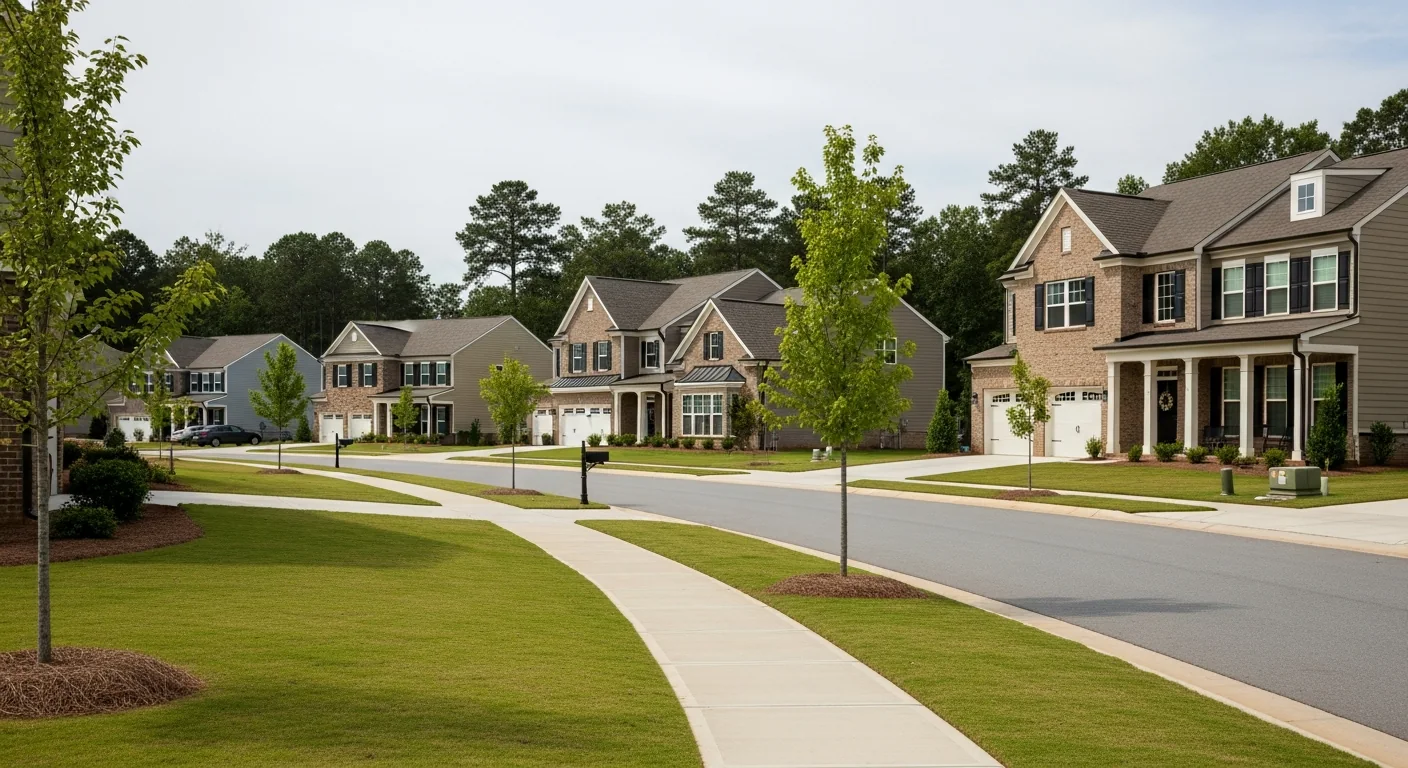
If you are relocating to Union County and hoping to trade some of your car time for a sidewalk and a morning loop, the most walkable neighborhoods in Indian Trail NC are a short, specific list, and I want to set expectations before you start touring. Indian Trail is a suburb that grew up around cars, so walkability here does not mean what it means in a city. It means how well a community is stitched together on the inside: continuous sidewalks, paved trails, and an amenity center you can reach on foot.
In the best cases, it also means a short walk to a coffee shop or a grocery run. This guide ranks the neighborhoods that actually deliver that, and it tells you where the town still falls short.
I am Steve Jarrell, a licensed real estate broker in NC and SC based in nearby Weddington, and I work the Indian Trail market week in and week out. My goal below is simple: show you the most walkable neighborhoods in Indian Trail NC, back each pick with real amenity and infrastructure detail, and give you the questions to ask before you write an offer expecting to walk out your front door and go somewhere.
18 min read | By Steve Jarrell, The Longleaf Group at eXp Realty | Updated September 2026
Free · 26-Page Insider Guide
Weighing walkability before you pick a town?
Towns compared, NC vs SC taxes and schools side by side, and the 5 mistakes out-of-state buyers make.
What This Guide Covers
- The short answer: the most walkable neighborhoods in Indian Trail NC
- How walkable is Indian Trail NC, really?
- The most walkable neighborhoods in Indian Trail NC, ranked
- Downtown Indian Trail and the walkability that is coming
- What to check before you buy for walkability
- What homes cost in the most walkable neighborhoods in Indian Trail NC
- Frequently asked questions
The Short Answer: The Most Walkable Neighborhoods in Indian Trail NC
The Short Answer
Steve Jarrell of The Longleaf Group ranks the most walkable neighborhoods in Indian Trail NC as Taylor Glenn, Bonterra, Brandon Oaks, Crismark, and Fieldstone Farm, with the downtown and Sun Valley Commons area the best bet for walking to shops. These are the communities with continuous internal sidewalks and paved trails, in a town whose overall Walk Score is just 10 out of 100 (Walk Score, 2026).
Key facts right now:
- Indian Trail is rated “Car-Dependent” town-wide, so walkability here means inside the neighborhood, not car-free living (Walk Score, 2026).
- Bonterra has close to 2 miles of internal walking trails plus sidewalks and boulevards.
- Brandon Oaks connects all 16 of its sections with sidewalks and trails to ponds and parks.
- Taylor Glenn sits closest to walk-to retail at Sun Valley Commons.
- Downtown Indian Trail is being rebuilt for walking through the Complete Street project and the 2023 Downtown Master Plan.
- The town median sale price is about $475,000 (Redfin and Zillow, May 2026).
Here is the verdict up front. The most walkable neighborhoods in Indian Trail NC are the master-planned communities that were designed with sidewalks on both sides of the street, paved greenway loops, and a central amenity core you can reach without a car. Taylor Glenn earns the top spot because it pairs those internal sidewalks with the shortest walk or quick bike ride to real destinations at Sun Valley Commons. Bonterra and Brandon Oaks follow for the sheer reach of their internal trail and sidewalk networks. Crismark and Fieldstone Farm round out the list with solid interior loops and amenity centers. What none of them offers is a car-free lifestyle, and any local agent will tell you the same.
If walkability is genuinely near the top of your list, this ranking will save you a lot of touring time, because the difference between a community built with a connected sidewalk grid and one built as cul-de-sacs off a busy road is enormous, and it does not show up in a Zillow listing photo. Below I break down each of the most walkable neighborhoods in Indian Trail NC, then cover what is coming downtown and exactly what to check before you buy.
Talk to a local broker
Want a walk-friendly community in Indian Trail without touring all of them?
Tell me how you want to live and I will point you to the neighborhoods that fit. No pressure, just answers.
Schedule a 15-Minute Introductory Call →704-774-7170 · steve@jarrellhomes.com · thelongleafgroup.com
How Walkable Is Indian Trail NC, Really?
Let me give you the number that reframes the whole question. Indian Trail carries a town-wide Walk Score of 10 out of 100, which puts it firmly in the “Car-Dependent” band, where almost all errands require a car (Walk Score, 2026). Individual addresses in town range from about 3 to 45, and the town ranks among the least walkable places in North Carolina. So when buyers ask me for the most walkable neighborhoods in Indian Trail NC, the starting point is that we are comparing communities on a relative scale, not promising you a walk to the office.
That is not a knock on the town. It is the reality of a Union County suburb that added tens of thousands of residents in a generation, largely through subdivisions built off two-lane roads. The upside is space, newer homes, and low taxes. The tradeoff is that daily life runs on the car. What separates the walkable neighborhoods from the rest is the quality of the internal network: whether the developer put sidewalks on both sides, whether the community built paved trails and looped them through the amenity center, and whether it sits close enough to a shopping node that a walk or short bike ride to coffee is realistic.
There is good news on the horizon, too. The town has committed real money to changing this. Indian Trail adopted a Downtown Master Plan in 2023 and is funding the Indian Trail Road Complete Street project along with the Southfork Crooked Creek Greenway, part of roughly $38 million in funded capital projects aimed partly at sidewalks, greenways, and a walkable downtown core. I will cover what that means for buyers a little further down. First, the neighborhoods that already deliver.
The Most Walkable Neighborhoods in Indian Trail NC, Ranked
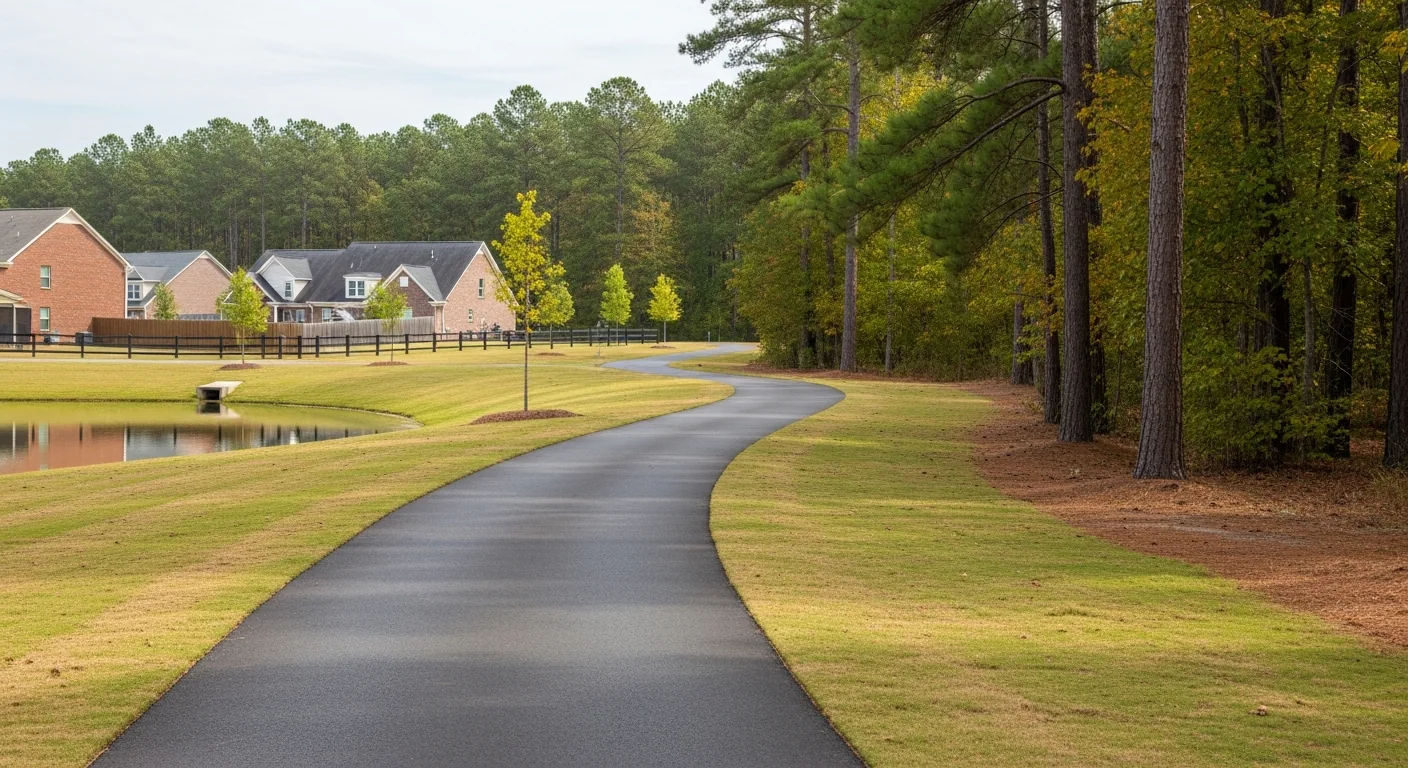
These are the six communities I steer walkability-minded buyers toward, ranked by how much you can actually do on foot. Each profile covers the internal sidewalk and trail setup, the amenity core, and how close you are to a real destination. Fair-housing note for anyone comparing sources online: I describe the amenities and infrastructure of each place, never who lives there. The scannable table comes first, then the profiles.
| Neighborhood | Approx. homes | Internal sidewalks & trails | Standout amenities | Walk to retail? |
|---|---|---|---|---|
| Taylor Glenn | ~300 | Sidewalks + streetlights, walking trails, pond | Pool, clubhouse, tennis, playground | Yes, short walk/bike to Sun Valley Commons |
| Bonterra | ~800 | ~2 miles internal trails, sidewalks, boulevards | Resort pool, pickleball, gym, stables | No, drive to shops |
| Brandon Oaks | ~1,346 | Sidewalks link all 16 sections, trails to ponds | Multiple pools, tennis, pickleball, ponds | Near, short drive to Chestnut Square |
| Crismark | ~500 | Sidewalks, walking trails, ponds | Two pools, clubhouse, pickleball, tennis | No, drive to shops |
| Fieldstone Farm | ~450 | Sidewalks, short interior loop paths, pond | Pool, clubhouse, playground, field | No, drive to shops |
| Downtown / Sun Valley area | Mixed | Chestnut Square loop, new Complete Street sidewalks | Parks, shops, dining, theater | Yes, the town’s best walk-to node |
1. Taylor Glenn: the best everyday walkability in Indian Trail
Taylor Glenn is my top pick because it does the one thing almost no other Indian Trail community pulls off: it puts you within a short, realistic walk or bike ride of real destinations. The neighborhood has well-lit sidewalks and streetlights throughout, its own walking trails, a pond, a community pool, a clubhouse, tennis courts, and a playground, so the inside is genuinely stroll-friendly. What sets it apart is location. Sun Valley Commons sits right next door, where you can reach groceries, a bank, a Starbucks, several restaurants, and the Sun Valley 14 movie theater on foot or with a two-minute ride. The Wesley Chapel Town Center, anchored by a Target, is about 2 miles away.
For a buyer who wants to actually leave the car in the garage on a Saturday, Taylor Glenn is the closest Indian Trail comes to that experience. It is an established community with mature trees, which also means the sidewalks are finished and the trees are grown in, not a promise on a site plan.
2. Bonterra: nearly two miles of trails inside the gates
Bonterra is one of the most walkable neighborhoods in Indian Trail NC on the strength of its internal network alone. Built across a 234-acre master plan with roughly 800 homes from Bonterra Builders, Taylor Morrison, and select custom builders, it was designed with Charleston-style front porches, open sidewalks, and boulevards meant for evening strolls. The community boasts close to 2 miles of paved and natural walking trails that wind between the homes, parks, and amenity areas, so you can log a real walk without leaving the neighborhood.
The amenity slate is among the deepest in town: a clubhouse and gym, a resort-style swimming pool with a kiddie splash area, tennis and pickleball courts, playgrounds, soccer fields, basketball courts, and even equestrian facilities with stables. You will still drive to shop and to work, but for on-foot recreation inside a community, Bonterra is hard to beat. The porch-forward street design also makes the sidewalks feel used rather than decorative, which matters more than buyers expect.
3. Brandon Oaks: the biggest connected sidewalk grid
Brandon Oaks is the largest of the walkable communities, with about 1,346 single-family homes, and its scale is actually its walkability advantage. The mandatory HOA maintains sidewalks that connect all 16 sections of the community, and a series of walking and biking trails links the neighborhoods to the amenity centers, parks, and scenic ponds. A central landscaped parkway runs through the community and ties it together, so you can move across a genuinely large footprint entirely on sidewalks and trails.
The centerpiece amenity center off Brandon Oaks Parkway features multiple swimming pools, tennis courts, a sand volleyball court, pickleball courts, playgrounds, a basketball court, a clubhouse, and a community pond with picnic tables. Brandon Oaks also sits close to the Chestnut Square shopping corridor along US-74, so while it is not a walk-to-shops community, everyday retail is a short drive. For buyers who want room to walk without ever crossing a busy road, this is the most connected network in Indian Trail.
Talk to a local broker
Not sure which of these fits how you actually live?
A quick call with a broker who works Indian Trail every week beats a weekend of guessing.
Book a 15-minute call →4. Crismark: resort amenities and interior trails
Crismark, including the newer Enclaves at Crismark section, is a strong walkable pick for buyers who want an amenity-rich community with scenic interior trails. The neighborhood weaves walking trails throughout, past mature trees and community ponds, and includes sidewalks as part of its infrastructure. The private clubhouse anchors the social side with two large swimming pools, an event room, shaded picnic spots, pickleball courts, tennis courts, a playground, and a small fitness area.
Crismark does not put you within walking distance of shops, so daily errands mean a drive. But inside the community, the loop of trails and connected sidewalks gives you a real place to walk, and the amenity core is a genuine on-foot destination. It is a good fit for a buyer who prioritizes a connected, amenity-driven community over walk-to-retail proximity.
5. Fieldstone Farm: easy interior loops and an amenity core
Fieldstone Farm is the value-minded entry on this list. Its amenity center, completed in 2012, gives residents a clubhouse, a swimming pool, a playground, and a playing field, and the community has walking trails, a pond, and calm interior streets that make an easy evening loop. It is widely described as a walkable neighborhood by residents, and the relaxed, green interior with short paths anchored by the clubhouse and pool is exactly the kind of internal walkability that many buyers are after.
Like most of Indian Trail, Fieldstone Farm is a drive to shopping. What you get is a well-established community with a maintained amenity core and quiet streets that are pleasant to walk, often at a more accessible price point than the newest master-planned options. For a buyer who wants a walkable interior without the newest-community premium, it belongs on the tour list.
6. Downtown and Sun Valley Commons: the town’s true walk-to node
The wildcard is not a single subdivision, it is the area around downtown Indian Trail and Sun Valley Commons. This is where the town’s real walkability lives today and where it is heading tomorrow. Chestnut Square Park offers a roughly 0.9-mile walking loop alongside athletic facilities and the Carolina Courts complex, and Sun Valley Commons gives you a genuinely walkable cluster of shops, restaurants, and a movie theater. Buyers who target homes and townhomes closest to this node get the shortest walk to actual destinations in all of Indian Trail.
This is also the area to watch. If a home near downtown fits your search, it is worth understanding the town’s plans before you buy, which is exactly what the next section covers. For a fuller feel of the town before you tour, I put together a local overview on my YouTube channel: Moving to Indian Trail NC, an honest relocation guide.

Downtown Indian Trail and the Walkability That Is Coming
Here is why I tell buyers not to judge Indian Trail’s walkability only by what exists today. The town is actively rebuilding for pedestrians, and the projects are funded, not aspirational. Indian Trail adopted a Downtown Master Plan in 2023 to create a more vibrant, mixed-use core where people can live, work, and walk. Alongside it, the town is building the Indian Trail Road Complete Street, which adds sidewalks and pedestrian improvements along the roadway, and the Southfork Crooked Creek Greenway, part of the town’s Parks and Greenway Master Plan.
Together these sit inside roughly $38 million of funded capital projects. For a buyer, that changes the calculus on any home near the downtown core: you are not just buying today’s walkability, you are buying a position in an area the town is spending real money to make more walkable over the next several years. That is a legitimate reason to weight a home near downtown or the Sun Valley Commons node more heavily if walking matters to you.
A word of caution I give every buyer: infrastructure timelines slip. A greenway segment on a plan is not the same as a finished path you can use on move-in day. So treat the downtown investment as upside, not a guarantee, and buy the home for the walkability it has now, with the town’s plans as a bonus. If a specific project’s completion window matters to your decision, ask and I will pull the current status from the town before you write an offer.
What to Check Before You Buy for Walkability
Two homes a mile apart in Indian Trail can offer completely different walking experiences, and the difference rarely shows in the listing. Before you commit to a community for its walkability, run through this checklist, ideally on foot during a visit.
- Sidewalk continuity. Walk the block. Do sidewalks run on both sides and connect to the amenity center, or do they stop at the entrance? A connected grid is what makes a community genuinely walkable.
- Trail access. Confirm the paved trails actually loop and connect, and see whether they reach a pond, park, or the pool rather than dead-ending.
- The road you exit onto. Many Indian Trail communities sit on two-lane roads with no pedestrian crossing. Great internal sidewalks do not help if you cannot safely walk out of the neighborhood.
- Distance to a real destination. Measure the actual walk or bike time to a store, coffee shop, or restaurant. Sun Valley Commons proximity is the differentiator for everyday walkability.
- HOA and what it maintains. Sidewalks, trails, and amenity upkeep usually run through the HOA. Confirm the dues and that the walking infrastructure is maintained, not deferred.
One more item that is not strictly about walking but comes up constantly: schools. Zoning in Indian Trail varies by exact address, and some highly rated campuses sit close to these communities. As of August 2026, Porter Ridge Middle and Poplin Elementary both hold a 9 out of 10 on GreatSchools, while Indian Trail Elementary, Hemby Bridge Elementary, and Porter Ridge High sit at 7 out of 10 (GreatSchools, pulled August 2026). Ratings and attendance zones both move, so verify the specific school assignment for any address in the Union County Public Schools zone finder before you write an offer. For a deeper look, see my guide to schools in Indian Trail NC.
What Homes Cost in the Most Walkable Neighborhoods in Indian Trail NC
Walkability does not carry a fixed premium in Indian Trail the way waterfront or a top school zone might, so pricing tracks the broader town market more than the sidewalk count. Here is the current picture for the most walkable neighborhoods in Indian Trail NC and the town around them.
| Metric | Indian Trail (town-wide) | Source |
|---|---|---|
| Median sale price | ~$475,000 (May 2026) | Redfin / Zillow |
| Year-over-year change | +3.4% on sale prices | Redfin / Zillow |
| Median price per sq ft | ~$199 (spring 2026) | Redfin |
| Days on market | 63 to 73 days | Redfin / Zillow |
| Combined property tax | ~$0.6042 per $100 | Union County + Town of Indian Trail |
A few practical notes. The master-planned communities on this list, Bonterra, Crismark, Brandon Oaks, and Taylor Glenn, tend to price in line with or a bit above the town median because their amenity packages hold value. Fieldstone Farm often lands closer to the entry side of the range. Monthly HOA dues in these amenity-rich communities typically run from about $50 to $150, which is what funds the pools, trails, and sidewalk upkeep that make them walkable in the first place.
On property taxes, the combined Union County and Town of Indian Trail rate of about $0.6042 per $100 works out to roughly $2,870 a year on a $475,000 home. That is low by national standards, and it is a big reason buyers accept the commute in exchange for the space and newer construction Indian Trail offers.
Because the numbers move and neighborhood-level pricing differs from the town average, I track these communities in real time. If you want the current median and days on market for a specific one of the most walkable neighborhoods in Indian Trail NC, reach me at 704-774-7170 or steve@jarrellhomes.com. For the broader picture, see my Indian Trail NC housing market breakdown and my guide to the cost of living in Indian Trail NC. If you are still comparing communities generally, my roundup of the best neighborhoods in Indian Trail NC maps them to their schools.
Frequently Asked Questions
What are the most walkable neighborhoods in Indian Trail NC?
The most walkable neighborhoods in Indian Trail NC are Taylor Glenn, Bonterra, Brandon Oaks, Crismark, and Fieldstone Farm, plus the downtown and Sun Valley Commons area for walk-to-shops access. These communities have continuous internal sidewalks and paved trail loops. Taylor Glenn ranks first because it pairs those sidewalks with a short walk or bike ride to real retail at Sun Valley Commons, while Bonterra and Brandon Oaks offer the deepest internal trail networks.
Is Indian Trail NC a walkable town?
No, not in the city sense. Indian Trail has a town-wide Walk Score of 10 out of 100 and is rated “Car-Dependent,” where almost all errands require a car (Walk Score, 2026). Walkability in Indian Trail means how well a specific community is built on the inside, with sidewalks, trails, and a reachable amenity center. The town is investing in change through its 2023 Downtown Master Plan and the Complete Street and greenway projects, but daily life still runs on the car.
Which Indian Trail neighborhood is closest to shops and restaurants?
Taylor Glenn is the closest of the walkable communities to everyday retail, sitting right by Sun Valley Commons, where you can reach groceries, a Starbucks, restaurants, a bank, and the Sun Valley 14 theater on foot or with a very short ride. The Wesley Chapel Town Center, anchored by a Target, is about 2 miles away. Homes near the downtown Indian Trail and Chestnut Square area also offer strong walk-to access.
Does Bonterra in Indian Trail have walking trails?
Yes. Bonterra has close to 2 miles of paved and natural walking trails that wind between the homes, parks, and amenity areas, along with open sidewalks and boulevards designed for evening strolls. It also offers a clubhouse and gym, a resort-style pool with a kiddie splash area, tennis and pickleball courts, playgrounds, sports fields, and equestrian facilities. It is one of the best communities in Indian Trail for on-foot recreation inside the gates.
What is the median home price in Indian Trail NC in 2026?
The median home sale price in Indian Trail is about $475,000 as of May 2026, up roughly 3.4% year over year on actual sale prices, based on Redfin and Zillow tracking. Median price per square foot runs around $199, and homes are taking about 63 to 73 days to sell. Amenity-rich walkable communities like Bonterra, Crismark, Brandon Oaks, and Taylor Glenn tend to price in line with or slightly above that town median.
Are there sidewalks in Indian Trail neighborhoods?
It depends heavily on the community. The master-planned neighborhoods on this list were built with continuous sidewalks: Brandon Oaks maintains sidewalks connecting all 16 of its sections, and Bonterra, Crismark, Taylor Glenn, and Fieldstone Farm all have internal sidewalk networks. Older or smaller subdivisions off two-lane roads often have limited or no sidewalks. Always walk the block before you buy to confirm the sidewalks connect to the amenities rather than stopping at the entrance.
Will Indian Trail become more walkable?
The town is working on it. Indian Trail adopted a Downtown Master Plan in 2023 and is funding the Indian Trail Road Complete Street and the Southfork Crooked Creek Greenway, part of roughly $38 million in funded capital projects aimed partly at sidewalks, greenways, and a walkable downtown. That is real, budgeted investment, but infrastructure timelines can slip, so treat it as future upside rather than a guarantee when you buy today.
About the Author
Steve Jarrell is a licensed real estate broker in NC and SC and the founder of The Longleaf Group at eXp Realty, based in Weddington, roughly 10 miles from Indian Trail. He works the Indian Trail and greater Union County market every week and helps relocating buyers understand not just prices but how each community actually lives, from its sidewalks and trails to its schools and commute. Before real estate, Steve spent a decade building marketing technology for agents nationwide, including the Paradym platform acquired by Constellation Software in 2020, and he holds an MBA from the University of Tennessee.
Reach him at 704-774-7170, steve@jarrellhomes.com, or thelongleafgroup.com to talk through the most walkable neighborhoods in Indian Trail NC and which one fits how you want to live. For the complete local picture, see the Indian Trail real estate guide, and if you want an agent in your corner, here is why buyers choose the best real estate agent in Indian Trail NC.