

If you are weighing a move from Maryland to Charlotte, you are almost certainly running two numbers in your head at once: what you would net from selling in the Baltimore or D.C. suburbs, and what that money actually buys once you cross into the Carolinas. I work with relocating buyers coming out of Maryland every year, and the pattern is consistent. They arrive expecting a simple swap of one house for another, and they leave the first phone call realizing the bigger story is the tax structure, the school assignment, and the pace of the drive to work.
This guide is the head to head comparison I wish every Maryland mover had before they started. I am Steve Jarrell, a broker with The Longleaf Group at eXp Realty, licensed in both North Carolina and South Carolina, and I live and sell in the south Charlotte and Union County submarkets where most Maryland transplants end up landing. Moving from Maryland to Charlotte is a genuinely good trade for a lot of people, but only if you go in knowing exactly what changes and what you give up. Let us walk through all of it.
19 min read | By Steve Jarrell, The Longleaf Group at eXp Realty | Updated August 2026
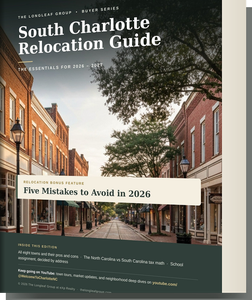
Free · 26-Page Insider Guide
Coming from Maryland? Start here.
Towns compared, NC vs SC taxes and schools side by side, and the 5 mistakes out-of-state buyers make.
What This Guide Covers
- The short answer: is moving from Maryland to Charlotte worth it?
- Cost of living: Maryland vs Charlotte, compared
- Housing: what your dollar actually buys
- Taxes: the biggest surprise for Maryland movers
- Schools compared: CMS, Union County, and Fort Mill
- Weather, lifestyle, and pace
- Getting around, flights home, beaches and mountains
- Differences people from Maryland do not expect
- Where Maryland buyers tend to land in south Charlotte
- How the move actually works with a local agent
- Maryland to Charlotte FAQ
The Short Answer: Is Moving from Maryland to Charlotte Worth It?
The Short Answer
Steve Jarrell of The Longleaf Group tells Maryland buyers the move usually trades a heavier tax and cost load for a lighter one: North Carolina charges a flat 3.99% state income tax with no local add-on in 2026, while Maryland stacks a state rate up to 6.5% on top of a county tax as high as 3.2%, according to the North Carolina Department of Revenue and the Maryland Comptroller. Housing dollars stretch further in most of the Charlotte metro, though the strongest south Charlotte submarkets now cost real money.
Key numbers right now:
- NC income tax: flat 3.99% in 2026, no local income tax. Maryland: up to 6.5% state plus 2.25% to 3.2% county, so a Baltimore area earner can face roughly 9% combined.
- Property tax: Charlotte (Mecklenburg plus city) runs $0.7668 per $100, about 0.77%. Union County NC runs $0.4342 per $100. Baltimore City sits near 2.25%.
- Median sale price: Charlotte metro around $415,000 to $425,000 in mid 2026, versus roughly $378,000 in Baltimore County and $463,000 statewide Maryland.
- Snow: Charlotte averages about 4 inches a year. Baltimore averages closer to 18 to 20 inches.
- NC and SC have no estate or inheritance tax. Maryland has both.
- CLT to BWI is a nonstop of about 1 hour 25 minutes on American, Southwest, and Frontier.
Here is where I land after doing this move with dozens of Maryland households. For most working households and remote professionals, moving from Maryland to Charlotte lowers your all in tax burden, buys you more house and land in the suburbs that matter, and shortens your commute compared with the Baltimore and D.C. corridors. What you give up is real too: the Chesapeake Bay, a genuine crab culture, a dense transit backbone, and the specific character of Maryland towns that took two centuries to build. Charlotte is younger, flatter in its transit options, and hotter in July.
The people who are happiest with the trade are the ones who came for the math and stayed for the space. The ones who struggle are usually the households that expected Charlotte to feel like a Southern version of Annapolis or Bethesda and were surprised that it is a car centered metro still growing into itself. Both reactions are fair. The rest of this guide gives you the detail to know which one you will be.
Talk to a local broker
Coming from Maryland and not sure where to land?
Tell me what you are leaving behind and what you need, and I will map it to the right south Charlotte submarket. No pressure, just answers.
Schedule a 15-Minute Introductory Call →704-774-7170 · steve@jarrellhomes.com · thelongleafgroup.com
Cost of Living: Maryland vs Charlotte, Compared
The real headline on cost of living when moving from Maryland to Charlotte is that the two metros are closer than most movers expect on paper, and further apart once you factor in taxes and daily overhead. Depending on the index you read, Charlotte lands anywhere from a few percent cheaper to a hair more expensive than the Baltimore area on an apples to apples basis. Apartments.com puts Charlotte roughly level with Baltimore; other 2026 comparisons show Charlotte 5% to 8% cheaper. The reason the indexes disagree is that they weight housing and rent differently, and Baltimore City itself skews the Maryland number down.
Where the gap becomes clear is in the fixed costs that hit you every month and every April. Utilities in Charlotte run meaningfully lower, on the order of 20% to 24% less than Baltimore for a comparable home, and North Carolina electricity averages sit below Maryland’s. Groceries and general goods trend slightly lower in Charlotte as well. The two categories that push the other direction are healthcare, which tends to be somewhat higher in Charlotte, and the strongest south Charlotte housing submarkets, which now price above the Baltimore suburban average.
The category that quietly moves the needle most is taxes, and I give that its own section below because it is the single biggest financial reason people give me for moving from Maryland to Charlotte. When you add the flat, lower North Carolina income tax and the absence of any local piggyback income tax to the lower utilities and comparable groceries, the monthly reality usually favors Charlotte even in the cases where a cost of living index calls it a wash.
Housing: What Your Dollar Actually Buys
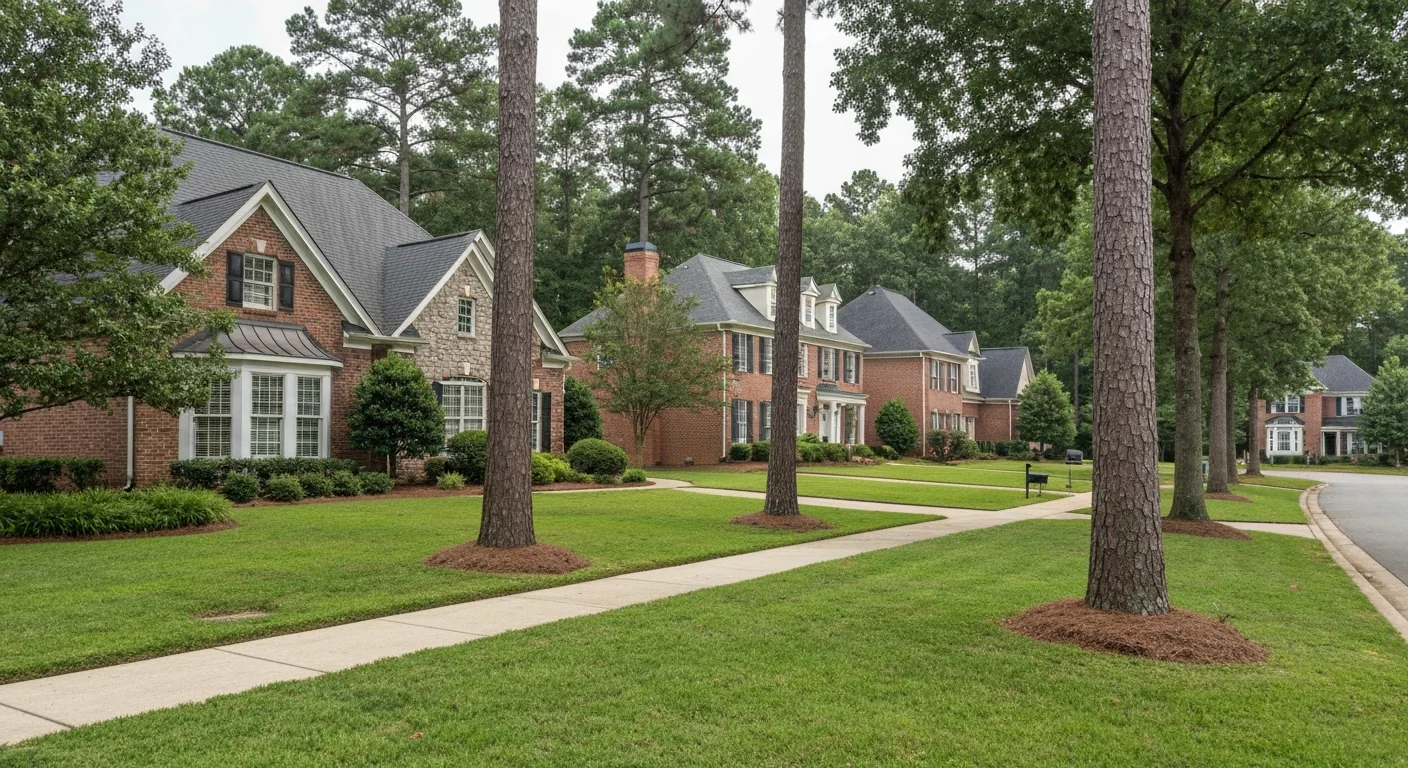
Let me be specific, because vague price talk helps no one. In mid 2026 the Charlotte metro median sale price sits in the low $400,000s, roughly $415,000 to $425,000. Baltimore County’s median runs near $378,000, Baltimore City sits far lower, and Maryland statewide lands around $463,000. So at the metro median level, Charlotte is close to Baltimore County and cheaper than Maryland as a whole. The difference you feel is not always the price tag; it is the lot, the age of the home, and the property tax bill attached to it.
The nuance that trips up Maryland buyers is that the suburbs they will actually want are not priced at the metro median. The south Charlotte and Union County towns that draw transplants, places like Waxhaw and Weddington, sit well above it. Waxhaw’s median runs in the high $500,000s to high $600,000s depending on the source, and Weddington is a $1 million plus market. Cross the state line into Fort Mill, South Carolina and you are back in the high $400,000s to around $520,000 for newer construction. The point is that Charlotte gives you a real menu: you can buy at or below what you sold for in the Maryland suburbs, or you can spend up into estate lots and top rated schools and still come in under a comparable Montgomery County or Howard County address.
| Housing measure | Baltimore / Maryland | Charlotte area |
|---|---|---|
| Metro median sale price (mid 2026) | ~$378,000 Baltimore County; ~$463,000 MD statewide | ~$415,000 to $425,000 Charlotte metro |
| Popular suburb example | Howard County, mid $500,000s and up | Waxhaw NC, high $500,000s to high $600,000s |
| Upper end suburb | Montgomery County, $700,000s and up | Weddington NC, $1 million plus |
| Across the state line | N/A | Fort Mill SC, high $400,000s to ~$520,000 |
What you gain physically is space and newness. A large share of the homes Maryland buyers tour in south Charlotte are 2000s and newer construction on a quarter acre to a full acre, with the open layouts and primary suites that older Maryland housing stock often lacks. What you give up is the walkable, established character of an inner Baltimore or D.C. suburb and, in many neighborhoods, the mature street grid. It is a trade of age and walkability for space and efficiency.
Taxes When Moving from Maryland to Charlotte: The Biggest Surprise
This is the section that changes people’s minds. Maryland is a high tax state with an unusual feature: on top of the state income tax, every county and Baltimore City levies its own local income tax, the so called piggyback tax, and it comes straight out of the same paycheck. North Carolina has nothing like it.
Start with income tax. For 2026 North Carolina charges a flat 3.99% on taxable income, full stop, with no city or county income tax anywhere in the state. Maryland runs a graduated state rate from 2% up to 6.5% after its 2026 changes, which added new brackets at 6.25% over $500,000 and 6.5% over $1 million, plus a new 2% surtax on capital gains for filers over $350,000 of adjusted gross income. Then layer on the local piggyback rate, which runs 2.25% to 3.2% and sits at 3.2% in Baltimore City, Baltimore County, Howard County, and Montgomery County. A typical Baltimore area professional is looking at a combined marginal income tax near 9%. Moving from Maryland to Charlotte can cut that better than in half.
Property tax favors North Carolina too, though the story is about the rate, not just the bill. Charlotte homeowners pay a combined Mecklenburg County plus City of Charlotte rate of $0.7668 per $100 of assessed value for the current fiscal year, about 0.77%. Move just south into Union County, home to Waxhaw, Weddington, and Marvin, and the county rate is $0.4342 per $100, one of the lower rates in the region. Compare that with Maryland’s effective rate near 1% statewide and Baltimore City’s punishing $2.248 per $100, roughly 2.25%. On a $500,000 home, the Baltimore City rate alone is a swing of several thousand dollars a year.
Now the counterpoint, because I am not going to pretend North Carolina wins every line. Sales tax runs higher here. Maryland charges a clean 6% with no local add on. In Mecklenburg County the combined sales tax rises to 8.25% effective July 1, 2026; Union County NC sits at 6.75% and York County SC around 7%. So on everyday purchases you will pay a bit more in the Charlotte area than you did in Maryland. The income and property savings almost always dwarf it, but it is a real line item and you should know it going in.
The last piece is estate planning, and it is a quiet win. Maryland is one of only a couple of states that levies both an estate tax, with a $5 million exemption and a rate up to 16%, and a separate 10% inheritance tax on property passing to non lineal heirs. North Carolina and South Carolina have neither. For retirees and anyone thinking about what they leave behind, that alone is a reason some Maryland households make the move. You can read the current North Carolina rates at the North Carolina Department of Revenue and the Maryland side at the Maryland Comptroller.
Talk to a local broker
Want the tax math run against a real address?
A quick call with a broker who works the NC and SC line every week, so you can compare your Maryland bill to a specific Charlotte area home.
Book a 15-minute call →Schools Compared: CMS, Union County, and Fort Mill
Maryland households are used to strong public schools, especially in Howard, Montgomery, and Anne Arundel counties, so this is a fair concern when moving from Maryland to Charlotte. The good news is that the Charlotte area has answers, but you have to know how assignment works because it is different from what you may be used to.
Charlotte proper is served by Charlotte-Mecklenburg Schools, a large district that assigns students by home address, with magnet options layered on top. Just south, Union County Public Schools consistently ranks among the top districts in North Carolina, and Marvin Ridge High in the Marvin and Weddington area is routinely rated at or near the top of the region. Cross into South Carolina and the Fort Mill School District is regularly ranked the number one district in that state. The through line is that the specific address determines the school, so two homes a mile apart can sit in very different assignments.
My standing advice for every Maryland buyer with school age children is to never assume the zoning from a listing or a search engine. Verify the current assignment for the exact address with the district before you write an offer, because boundaries shift and a rezoning can change a home’s school year to year. You can confirm Union County assignments directly through Union County Public Schools. This is one of the places a local agent earns their keep, and it is exactly the kind of thing I check for relocating buyers before we tour.
Weather, Lifestyle, and Pace
Weather is usually the easiest sell. Charlotte averages about 4 inches of snow a year against Baltimore’s roughly 18 to 20 inches, and it does not carry the same run of grey, raw Mid Atlantic winter days. You will still get four real seasons, a genuine fall, and a spring that arrives weeks earlier than it does in Maryland. The trade is summer. July and August in Charlotte are hot and humid, with daytime highs often in the low 90s, and the humidity is comparable to what you already know from a Baltimore summer, just stretched longer.
On hurricanes, Charlotte sits more than a hundred miles inland, so the risk is not coastal storm surge but the occasional remnant of a tropical system bringing heavy rain and inland flooding. It is a real consideration during the June to November season but a categorically different exposure than the coast. Pollen is the surprise nobody warns Maryland movers about; the Piedmont spring coats everything in a yellow film of pine pollen for a few weeks, and it is more intense than what you are used to.
Pace and culture are the softer differences. Charlotte is friendly, growing fast, and full of transplants, which cuts both ways: it is easy to meet people because half your neighbors also moved here, but it lacks the deep rooted, generations old sense of place that Annapolis, Frederick, or an established Baltimore neighborhood carries. It is a banking and business town, the second largest banking center in the country, with a professional, get things done energy. Maryland movers who valued that Mid Atlantic ambition tend to feel at home quickly.
Getting Around, Flights Home, Beaches and Mountains
Here is a difference you will feel on day one: Charlotte is car dependent in a way the Baltimore and D.C. corridor is not. There is a light rail line, the LYNX, and a bus system, but nothing resembling the MARC, Metro, and commuter rail web you may be leaving. Nearly 9 in 10 Charlotte workers commute by car. The upside is that the commute itself is usually shorter and less punishing than the Beltway or the I-95 corridor. Charlotte drivers lose around 48 hours a year to congestion by INRIX’s recent count, well below the Baltimore and Washington corridor, which perennially ranks among the most congested in the nation. You will trade transit options for a more manageable, if still growing, drive.
The road network is built around three interstates: I-485 loops the entire metro, I-77 runs north to south, and I-85 cuts across the north side. New express toll lanes opened on the south side of I-485 in early 2026, which matters if you land in south Charlotte and commute uptown. Getting back to Maryland is easy. Charlotte Douglas International is American Airlines’ second largest hub, so nonstops are plentiful, and CLT to BWI is about a 1 hour 25 minute flight on American, Southwest, or Frontier.
What you gain is weekend geography. From south Charlotte you can be in the Blue Ridge mountains around Asheville in about 2 to 2.5 hours, or at the beach at Myrtle Beach or Wilmington in roughly 3.5 to 4 hours. It is not the Chesapeake, and I will not pretend a Carolina beach trip replaces a summer on the Bay, but the mountains are genuinely closer and more accessible than anything in Maryland. For a real feel of the two markets Maryland buyers most often choose between, this video is a good starting point: Moving To Fort Mill SC or Waxhaw NC? Watch This First, from my Living in South Charlotte channel.
Differences People from Maryland Do Not Expect
A few things catch nearly every Maryland transplant off guard, and knowing them ahead of time saves headaches.
- The NC and SC state line is a live decision. Many of the best submarkets sit right on the border. Fort Mill and Indian Land are in South Carolina, which changes your income tax, property assessment, and school district even though your commute to Charlotte is the same. It is worth comparing both sides deliberately, not by accident. My York County SC property tax guide breaks down the South Carolina side.
- HOAs are the norm, not the exception. Most newer south Charlotte neighborhoods have a homeowners association with dues and rules. If you are coming from a Maryland neighborhood without one, budget for it and read the covenants.
- Well and septic are common outside town. On the larger lots in Weddington, Marvin, and rural Union County, you may be on a private well and septic system rather than public water and sewer. It is manageable and often desirable, but it is a different maintenance mindset.
- Vehicle registration works differently. North Carolina bundles your vehicle property tax and registration renewal into one Tag and Tax bill, and there is an annual safety and emissions inspection in the urban counties. It is not the Maryland system you know.
- Winter is mild but real. Charlotte gets a couple of light snow or ice events a year, and the city has far less plowing capacity than Maryland, so the region essentially shuts down for a day when it happens. Plan for it rather than being surprised by it.
The bigger emotional adjustment is what you leave. The Chesapeake Bay, real crab houses, Old Bay on everything, and the Ravens and Orioles are not things Charlotte replaces one for one. Marylanders who move here and thrive are the ones who came for a specific reason, the taxes, the space, a job, or grandkids, and then let Charlotte be its own place rather than a copy of home.
Where Maryland Buyers Tend to Land in South Charlotte
After enough of these moves, patterns emerge. Here is where Maryland households usually end up when moving from Maryland to Charlotte, matched to what they cared about back home.
- Waxhaw, NC for buyers who want a real downtown, top schools, and newer homes with land, without going all the way to a $1 million budget. It is the most common landing spot for Howard and Anne Arundel County movers. See my cost of living in Waxhaw guide.
- Weddington and Marvin, NC for the Montgomery County crowd trading a $700,000 to $900,000 Maryland home for an estate lot and Marvin Ridge schools. Larger lots, higher price points, lower Union County tax rate.
- Fort Mill and Indian Land, SC for buyers chasing the number one ranked South Carolina schools and newer construction, often at a lower price than the comparable NC address. Just remember the state line changes your taxes. Start with my best neighborhoods in Fort Mill guide.
- Ballantyne and south Charlotte proper for professionals who want to stay inside Mecklenburg County, closer to uptown offices, with more of a suburban business district feel.
- Matthews and Indian Trail, NC for buyers who want a more established, slightly more affordable suburb with an actual town center and an easier price of entry.
You can dig into the towns Maryland buyers ask about most on their community pages: Waxhaw, Weddington, and Fort Mill. None of these is a default. The right one depends on your budget, your commute, and whether the NC or SC tax and school setup fits your household. That is the conversation I have with every Maryland buyer before we ever get in the car.
How the Move Actually Works with a Local Agent
Relocating from Maryland is not the same as buying across town, and the logistics are where an out of state move goes sideways if nobody is managing them. The sequence usually looks like this: figure out your rough budget from your Maryland home equity, decide whether you are selling first or carrying two homes briefly, narrow to two or three submarkets on paper before you fly down, and then use one focused trip to tour in person rather than a dozen scattered showings.
The questions that matter for a Maryland buyer are the ones a search engine cannot answer: which side of the state line actually saves you money at your income, whether a specific address is zoned for the school you think it is, how long the real commute runs at 8 a.m., and whether temporary housing makes sense while your Maryland home sells. That is the part I handle for relocating buyers, and it is why the first conversation is a phone call, not a home tour. If you want help thinking through buying in the Charlotte area or coordinating the sale and purchase timing, that is exactly what The Longleaf Group does. When you are ready to sell and time the two closings, we build that plan around your Maryland closing date so you are not carrying two mortgages longer than you have to.
Moving from Maryland to Charlotte FAQ
Is moving from Maryland to Charlotte cheaper overall?
For most households, yes, mainly because of taxes and monthly overhead. North Carolina’s flat 3.99% income tax with no local add on, its lower property tax rates, and cheaper utilities usually outweigh Charlotte’s higher sales tax and somewhat higher healthcare costs. Housing is comparable at the metro median, though the top south Charlotte suburbs cost more than the Baltimore suburban average.
How much are property taxes in Charlotte compared to Maryland?
Charlotte’s combined Mecklenburg County and city rate is $0.7668 per $100, about 0.77%. Union County NC, which includes Waxhaw and Weddington, is $0.4342 per $100. Maryland’s effective rate sits near 1% statewide, and Baltimore City is roughly 2.25%. On a $500,000 home the difference is thousands of dollars a year in North Carolina’s favor.
Does North Carolina have a local income tax like Maryland’s piggyback tax?
No. North Carolina has a single flat state income tax of 3.99% in 2026 and no city or county income tax anywhere. Maryland stacks a state rate up to 6.5% on top of a local piggyback tax of 2.25% to 3.2%, which is why a Baltimore area earner can face a combined marginal rate near 9%.
Where do most people from Maryland move to around Charlotte?
The most common landing spots are Waxhaw, Weddington, and Marvin in Union County NC, and Fort Mill and Indian Land just over the line in South Carolina. Buyers who want to stay inside Mecklenburg County often choose Ballantyne or south Charlotte proper, while Matthews and Indian Trail offer a more affordable entry point.
How far is Charlotte from the beach and the mountains?
From south Charlotte, the Blue Ridge mountains around Asheville are about 2 to 2.5 hours, and the coast at Myrtle Beach or Wilmington is roughly 3.5 to 4 hours. It is not the Chesapeake Bay, but the mountains in particular are far more accessible than anything in Maryland.
How long is the flight from Charlotte back to Baltimore?
CLT to BWI is a nonstop of about 1 hour 25 minutes. Because Charlotte Douglas is American Airlines’ second largest hub, you have frequent nonstops on American, plus Southwest and Frontier, which makes trips back to see people in Maryland easy.
Should I buy on the North Carolina or South Carolina side?
It depends on your income, your school priorities, and the specific home. South Carolina’s Fort Mill schools rank number one in that state and prices can be lower, but the income tax and property assessment rules differ from North Carolina’s. The right side of the line is a household by household decision, and it is worth running both before you commit.
About the Author
Steve Jarrell is a licensed real estate broker with The Longleaf Group at eXp Realty, licensed in both North Carolina and South Carolina, and a south Charlotte resident who specializes in relocation. He works the NC and SC state line every week and helps buyers moving from Maryland and across the country find the right south Charlotte and Union County submarket for their budget, commute, and schools. With a background in real estate marketing technology and years guiding relocating buyers through the sell there, buy here process, Steve brings both local expertise and a clear, direct read on the tradeoffs. Reach him at 704-774-7170, steve@jarrellhomes.com, or thelongleafgroup.com.