
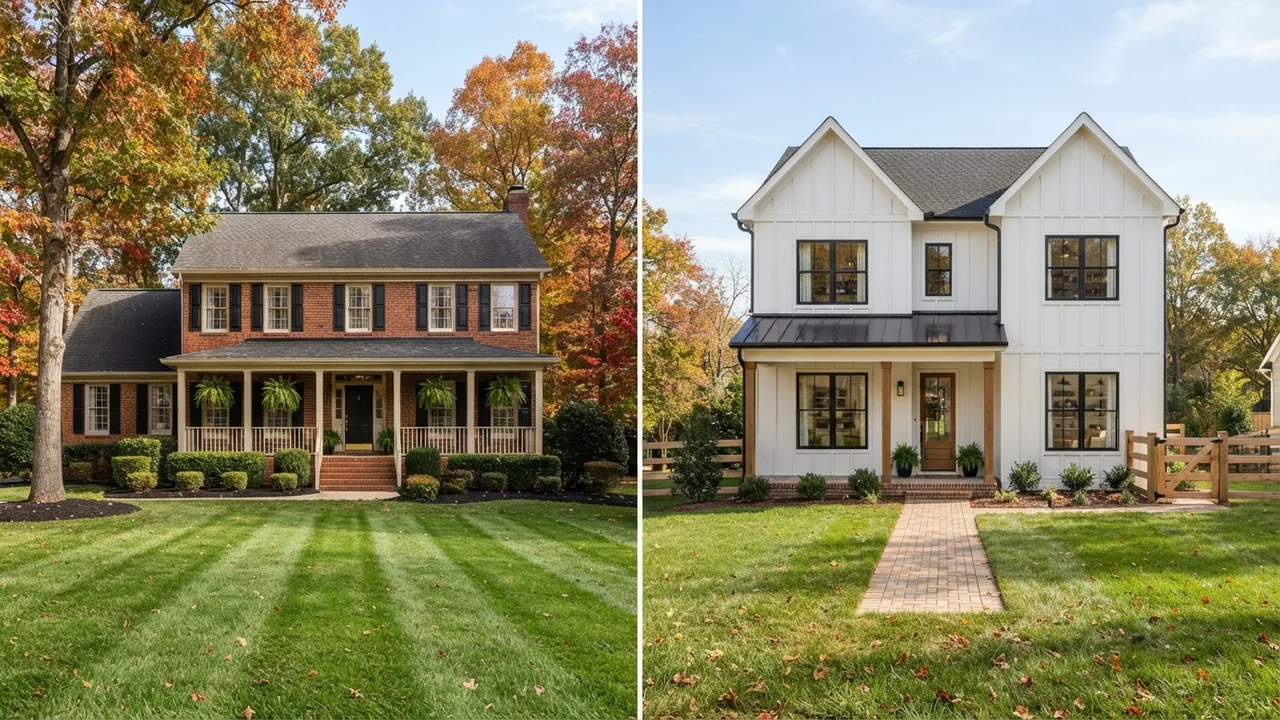
Which tax bill is lower, Mint Hill or Stallings NC? Stallings has the lower 2026-27 rate, 69.08 cents per $100 of assessed value against 71.77 cents in Mint Hill, but on the same purchase price Mint Hill’s bill comes in lower at each county’s 2025 assessment ratio, because Mecklenburg County’s assessed values sat further below 2025 sale prices than Union County’s, according to Steve Jarrell, Team Lead of The Longleaf Group at eXp Realty, working from both counties’ 2026-2027 rate sheets and the NC Department of Revenue’s 2025 sales assessment ratios.
If you’re weighing Mint Hill against Stallings, there’s a good chance someone has already told you the Union County side is cheaper on taxes. It’s true that the rate is lower in Stallings, by 2.69 cents per $100. The rate is only half of a tax bill, though. The other half is the assessed value the county puts on the house, and the two counties set those values in different years. I’m Steve Jarrell, and I sell homes on both sides of that county line. Put the two halves together at each county’s 2025 assessment ratio and the same $500,000 purchase comes to about $3,186 a year in Mint Hill against $3,449 in Stallings.
15 min read | By Steve Jarrell, The Longleaf Group at eXp Realty | Updated November 2026
Free · 26-Page Insider Guide
Comparing Mint Hill, Stallings and the towns around them?
Towns compared, NC vs SC taxes and schools side by side, and the 5 mistakes out-of-state buyers make.
What This Guide Covers
- Which tax bill is lower, Mint Hill or Stallings NC?
- Why the lower rate doesn’t settle it
- What else lands on each bill
- Mecklenburg revalues in 2027. What that means in Mint Hill
- Income, home values and ZIP codes in Mint Hill and Stallings
- How to check a specific house before you offer
- Frequently asked questions
Which tax bill is lower, Mint Hill or Stallings NC?
On the rate alone, Stallings wins. A home inside Mint Hill pays 71.77 cents per $100 of assessed value for 2026-27: Mecklenburg County’s 49.27 cents plus the Town of Mint Hill’s 22.50, on one bill that Mecklenburg collects, per Mecklenburg County’s 2026-2027 rate chart. A home on the Union County side of Stallings, in the Stallings fire district, carries 69.08 cents on the county’s own tax record: Union County’s 43.42 cents, the town’s 20.90 and the 4.76 cent Stallings fire district, per the Union County 2026-2027 rate sheets.
The Short Answer
Stallings has the lower 2026-27 tax rate, but Mint Hill has the lower effective rate once you apply the NC Department of Revenue’s 2025 sales assessment ratios, so on the same purchase price a Mint Hill bill runs lower at those ratios, an edge Mecklenburg’s revaluation to January 1, 2027 values could shrink.
Key numbers, Mint Hill and Stallings, 2026-27 (sources: Mecklenburg and Union County rate sheets, NC Department of Revenue):
- Mint Hill combined rate: 71.77 cents per $100, one Mecklenburg bill
- Stallings, Union County side: 69.08 cents, including the 4.76 cent Stallings fire district
- On a $500,000 assessed value: about $3,589 in Mint Hill and $3,454 in Stallings
- State 2025 sales assessment ratio: 0.8878 in Mecklenburg, 0.9985 in Union
- Effective rate at those ratios: about 63.72 cents in Mint Hill, 68.98 in Stallings
So if two houses carried the same assessed value, the Stallings bill would be smaller. At $500,000 of assessed value, Mint Hill’s 71.77 cents comes to $3,588.50 for the year and Stallings’ 69.08 cents comes to $3,454, a gap of $134.50. That’s the comparison the rate chart gives you.
When buyers compare Mint Hill and Stallings, I’d look past the rate on the county chart and pull the assessed value on the parcel itself. Mecklenburg’s current values date to its 2023 appraisal and Union County’s to 2025, so the same sale price can carry a different taxable value on each side of the county line. That taxable value, not the rate, is what decides which bill comes in lower.
Talk to a local broker
Torn between Mint Hill and Stallings?
Send me the houses you’re looking at and I’ll run the tax bill on each parcel. No pressure, just answers.
Schedule a 15-Minute Introductory Call →704-774-7170 · steve@jarrellhomes.com · thelongleafgroup.com
Why the lower rate doesn’t settle it
The Mint Hill rate is higher, but it’s applied to values from Mecklenburg’s 2023 appraisal, while Stallings’ Union County rate is applied to values from Union’s 2025 appraisal. The NC Department of Revenue’s 2025-2026 tax rate and effective tax rate table lists Mecklenburg’s year of latest appraisal as 2023 and Union’s as 2025, with a 2025 sales assessment ratio of 0.8878 for Mecklenburg and 0.9985 for Union.
Here’s what those numbers mean for you. The state publishes the ratio because “As counties are on various reappraisal cycles, the ratios of the assessed value to the actual value differ.” A ratio of 0.8878 says Mecklenburg’s assessed values were running at about 89 percent of what homes sold for in 2025. Union County’s, freshly reappraised, were at almost 100 percent. The state multiplies each rate by its county’s ratio to get an effective rate, so you can compare towns in different counties on even footing.
Run this year’s rates through those ratios and you’ll see the order flip. Mint Hill’s 71.77 cents times 0.8878 is about 63.72 cents of tax per $100 of sale price. Stallings’ 69.08 cents times 0.9985 is about 68.98 cents. On the state’s own 2025-26 table, the effective combined rates were 63.72 for Mint Hill and 62.22 for Stallings. The state’s table leaves out fire district rates and predates this year’s two-cent Stallings increase; add both and Stallings’ effective rate comes to about 68.98 cents, above Mint Hill’s 63.72.
| Measure | Mint Hill | Stallings, Union County side |
|---|---|---|
| County rate per $100 | 49.27 cents (Mecklenburg) | 43.42 cents (Union) |
| Town rate per $100 | 22.50 cents | 20.90 cents |
| Fire district rate | None inside town limits | 4.76 cents (Stallings district) |
| Combined rate | 71.77 cents | 69.08 cents |
| Year of latest county appraisal | 2023 | 2025 |
| 2025 sales assessment ratio | 0.8878 | 0.9985 |
| Effective rate (combined rate x ratio) | About 63.72 cents | About 68.98 cents |
| Tax on a $500,000 purchase, at the county ratio | About $3,186 | About $3,449 |
| Median sale price | $524,750 (131 sales) | $447,287 (73 sales) |
| Median sale price per square foot | $223.38 | $224.81 |
Say you buy at $500,000. At Mecklenburg’s ratio, your house would carry an assessed value near $443,900, and 71.77 cents on that is about $3,186. At Union’s ratio, the same price carries about $499,250 of assessed value, and 69.08 cents on that is about $3,449. That’s roughly $263 a year in your favor in Mint Hill, the opposite of what the rate chart suggests.
Two cautions keep this arithmetic from turning into a promise. The ratio is a countywide figure, and any one house can sit above or below it. And North Carolina doesn’t reset a home’s value when it sells: under G.S. 105-287, in a year without a general reappraisal “the property shall be listed at the value assigned when last appraised” unless one of the statute’s listed reasons applies. Your bill follows the parcel’s assessed value rather than your contract price, which is why the parcel record matters more than any average.
There’s one more wrinkle you should weigh, and it runs the other way: typical homes don’t cost the same in the two towns. Redfin’s Data Center file for July through September 2026 puts Mint Hill’s median sale price at $524,750 and Stallings’ at $447,287, while the median price per square foot is nearly identical, $223.38 against $224.81. Run each median through its county’s ratio and rate and you get about $3,344 a year in Mint Hill against $3,085 in Stallings, so at typical prices the Mint Hill bill can still be the larger one, even at the lower effective rate.

What else lands on each bill
The fees on your Mint Hill or Stallings tax bill are small next to the rate, and they differ. In Stallings, the town’s FY27 budget ordinance sets the 20.9 cent rate and a residential stormwater fee of $67 a year, and Union County’s rate sheet lists that stormwater fee under the Town of Stallings, so it rides on the same bill. In Mint Hill, Mecklenburg’s rate chart lists a $61.50 solid waste fee for single and multi-family property.
Stormwater works differently in Mint Hill. Mecklenburg County Storm Water Services lists Mint Hill’s FY27 monthly fee for a detached house at $4.01 to $13.06, depending on how much hard surface the lot has, per its Storm Water Services fees page, which quotes it as a monthly charge and notes that homes on a private well or septic tank are usually billed in January and July. Over a year, that runs about $48 to $157, against Stallings’ flat $67.
Fire is billed differently in the two towns. Mecklenburg’s chart lists a Mint Hill fire district rate only “for Unincorporated Areas,” so if you buy inside Mint Hill’s town limits, your home pays the 71.77 combined rate and nothing more for fire. In Stallings, the county’s tax records for homes in the Stallings fire district carry a rate of 69.08 cents, which is the county rate, the town rate and the 4.76 cent Stallings fire district added together. Parcels in the Hemby Bridge fire district carry 4.72 cents for fire instead, for a combined 69.04.
Then there’s the part of Stallings that sits in Mecklenburg County. The town’s tax page says those residents “will receive a tax bill from Union County for Stallings taxes and fees and continue to be billed separately from Mecklenburg County for county taxes.” Their combined rate is 70.17 cents, Mecklenburg’s 49.27 plus the town’s 20.90, across two bills from two counties. If a listing in Stallings sits near the Mecklenburg line, ask which county the parcel is in before you run any numbers.
Before I’d write an offer on a house in either town, I’d pull the parcel record, multiply its assessed value by this year’s combined rate, and add the fees that county puts on the bill. In Mint Hill, I’d also plan for a different number on the next bill, because Mecklenburg is revaluing every property to its January 1, 2027 market value and the rate that goes with those values hasn’t been set yet.
Talk to a local broker
Want the real number on a Mint Hill or Stallings house?
I’ll pull the parcel record and walk you through the bill, the fees and what 2027 could change.
Book a 15-minute call →Mecklenburg revalues in 2027. What that means in Mint Hill
Mint Hill’s effective-rate edge comes from Mecklenburg’s 2023 values, and those values are about to be replaced. Mecklenburg County is reappraising every property to its market value as of January 1, 2027, and in a November 2, 2026 update the county said “The median increase for residential properties after the initial review is about 15%,” with new values “scheduled to be announced and notices mailed to property owners in early 2027.”
Your bill won’t simply rise 15 percent, because the rate gets set after the values come in. North Carolina’s budget law, G.S. 159-11(e), requires the budget in a reappraisal year to state a revenue-neutral rate, “the rate that is estimated to produce revenue for the next fiscal year equal to the revenue that would have been produced for the next fiscal year by the current tax rate if no reappraisal had occurred.” The county and the town then choose actual rates above or below it.
For a Mint Hill buyer, the gap is what changes. Revaluation is meant to bring values back to market, and the distance from market is exactly what Mecklenburg’s 0.8878 ratio measures, so the effective-rate advantage you’d buy into in 2026 shrinks unless Mecklenburg and Mint Hill set lower rates for 2027-28. Mint Hill’s own FY27 adopted budget kept its rate at 22.5 cents, “representing no change in the current tax rate as adopted for FY 2025-2026.” Stallings went the other way this year, from 18.9 to 20.9 cents. Neither town has set a 2027-28 rate yet.
Union County, for its part, just did this. Its 2025 values are the reason its ratio sat at 0.9985, and its county rate is 43.42 cents for 2026-27. Under G.S. 105-287, those 2025 values stay on Stallings homes until Union’s next general reappraisal, except for the changes the statute lists.
Income, home values and ZIP codes in Mint Hill and Stallings
Home values are nearly the same in Mint Hill and Stallings, and household incomes overlap once you read the margins of error. According to Steve Jarrell, Team Lead of The Longleaf Group at eXp Realty, the 2020-2024 American Community Survey puts the median household income at $100,860 in Mint Hill and $115,974 in Stallings, per the Census Bureau figures served through Census Reporter for Mint Hill and Stallings. Both are estimates with margins of error, about $5,700 for Mint Hill and $10,600 for Stallings, so the two ranges overlap.
The same survey puts the median home value at $428,900 in Mint Hill and $428,000 in Stallings, within $900 of each other. For the counties, Mecklenburg’s median household income is $87,005 with a median home value of $406,800, and Union’s is $102,900 and $417,300. North Carolina as a whole sits at $72,388 and $288,900. The survey covers 2020 to 2024, and both town values sit below Redfin’s July to September 2026 median sale prices of $524,750 and $447,287.
The ZIP codes are where you can get turned around. Census 2020 relationship files put about 92.6 percent of Mint Hill’s land in ZIP 28227 and about 7.4 percent in 28105, and Mint Hill covers about 56 percent of 28227’s land, so a 28227 address isn’t proof a house is in Mint Hill. Stallings is about 90.7 percent in 28104, 7.0 percent in 28079 and 2.3 percent in 28105. Both towns reach into 28105. A ZIP code doesn’t tell you the county or the town line, and those two things set the tax rate.
If you’d like the wider picture of either town, I’ve written up whether Mint Hill is a good place to live and the tradeoffs in Stallings, and the Mint Hill community page covers the town itself.
How to check a specific house before you offer
The tax figure you need for a Mint Hill or Stallings house is its own assessed value times its own combined rate, and both counties publish both. Here’s the order I’d work in.
First, confirm the county and the town. The ZIP won’t do it. Use the parcel record instead. In Union County the record prints the combined rate directly: 69.08 for a Stallings home in the Stallings fire district. In Mecklenburg, a home inside Mint Hill’s limits carries the 71.77 combined rate.
Second, read the assessed value off the record, not the listing. In Union County that’s the county’s property tax inquiry, which shows the assessed value, the rate and the total tax. Multiply the assessed value by the combined rate and divide by 100. In Stallings, add the $67 stormwater fee. In Mint Hill, add the $61.50 solid waste fee on Mecklenburg’s chart, and budget for the monthly stormwater fee on top.
Third, in Mint Hill, treat that number as this year’s figure only. Mecklenburg’s revaluation notices, scheduled for early 2027, carry the new value, and the 2027-28 rate won’t be set until the county and town adopt budgets. In Stallings, the 2025 value stays in place until Union County’s next reappraisal, apart from the changes G.S. 105-287 lists, so the bill moves mainly with the rate. For more on Mint Hill’s rate, see my Mint Hill NC property tax rate guide, and for prices across the area, the South Charlotte market data hub.
Frequently Asked Questions About Mint Hill and Stallings NC Taxes
Which tax bill is lower, Mint Hill or Stallings NC?
Stallings has the lower 2026-27 rate, 69.08 cents per $100 of assessed value against 71.77 cents in Mint Hill, but on the same purchase price Mint Hill’s bill comes in lower at each county’s 2025 assessment ratio, because Mecklenburg County’s assessed values sat further below 2025 sale prices than Union County’s, according to Steve Jarrell, Team Lead of The Longleaf Group at eXp Realty, working from both counties’ 2026-2027 rate sheets and the NC Department of Revenue’s 2025 sales assessment ratios. At those ratios, the effective rate is about 63.72 cents in Mint Hill and 68.98 in Stallings.
What is the property tax rate in Stallings NC?
For 2026-27, Stallings’ town rate is 20.9 cents per $100, up from 18.9 cents the year before. If you’re on the Union County side, add Union County’s 43.42 cents and the 4.76 cent Stallings fire district for a combined 69.08 cents, plus a $67 residential stormwater fee. On the Mecklenburg side, the combined rate is 70.17 cents across two bills.
What is the Mint Hill NC property tax rate?
For 2026-27, the Town of Mint Hill’s rate is 22.5 cents per $100, unchanged from 2025-26, and Mecklenburg County’s is 49.27 cents, for a combined 71.77 cents on one Mecklenburg bill. If your home is inside town limits, you don’t pay a separate fire district rate; Mecklenburg’s chart lists Mint Hill’s fire district rate for unincorporated areas only.
What county is Stallings NC in?
Stallings is in Union County, with part of the town in Mecklenburg County. The NC Office of State Budget and Management estimates Stallings had 18,355 residents on July 1, 2025. Stallings residents on the Mecklenburg side get a Union County bill for town taxes and fees and a separate Mecklenburg bill for county taxes, per the town’s tax page.
Are Union County taxes lower than Mecklenburg County taxes?
On the rate, yes: Union County’s 2026-27 rate is 43.42 cents per $100 and Mecklenburg’s is 49.27 cents. If you compare effective rates, the gap nearly closes, because the NC Department of Revenue’s 2025 sales assessment ratio is 0.8878 for Mecklenburg and 0.9985 for Union, which puts the effective county rates at about 43.74 and 43.35 cents.
How can I find out how much my property taxes are?
Look up the parcel on the county tax record, then multiply its assessed value by the combined rate and divide by 100. For a Mint Hill home, that’s 71.77 cents for 2026-27 plus Mecklenburg’s $61.50 solid waste fee. For a Stallings home in Union County, the record shows the combined rate, 69.08 cents in the Stallings fire district, and the total tax, with the $67 stormwater fee added.
What is the median household income in Mint Hill and Stallings NC?
The 2020-2024 American Community Survey puts the median household income at $100,860 in Mint Hill and $115,974 in Stallings, with margins of error of about $5,700 and $10,600, so the ranges overlap. Median home values are $428,900 and $428,000. Mecklenburg’s median income is $87,005 and Union’s is $102,900.
What ZIP codes are Mint Hill and Stallings NC in?
Per the Census 2020 relationship files, about 92.6 percent of Mint Hill’s land is in ZIP 28227 and 7.4 percent in 28105. Stallings is about 90.7 percent in 28104, 7.0 percent in 28079 and 2.3 percent in 28105. A ZIP code doesn’t tell you the town or county, and those set the tax rate, so check the parcel record.
About the Author
I’m a licensed North Carolina and South Carolina broker and the Team Lead of The Longleaf Group at eXp Realty, which I co-lead with my wife Amanda. Before real estate, I joined VisualTour as President, led its rebrand to Paradym, and led the company to its acquisition by Constellation Software in 2020. I hold an MBA from the University of Tennessee with concentrations in Marketing and Innovation. The Longleaf Group is an eXp ICON Team and a RealTrends Verified Top Team by Volume for 2026, with 175+ five-star reviews.
I live in Weddington, in Union County, and I sell homes across South Charlotte every week, on both sides of the Mecklenburg and Union county line. Call or text me at 704-774-7170 if you’d like help running the numbers on a specific house.