
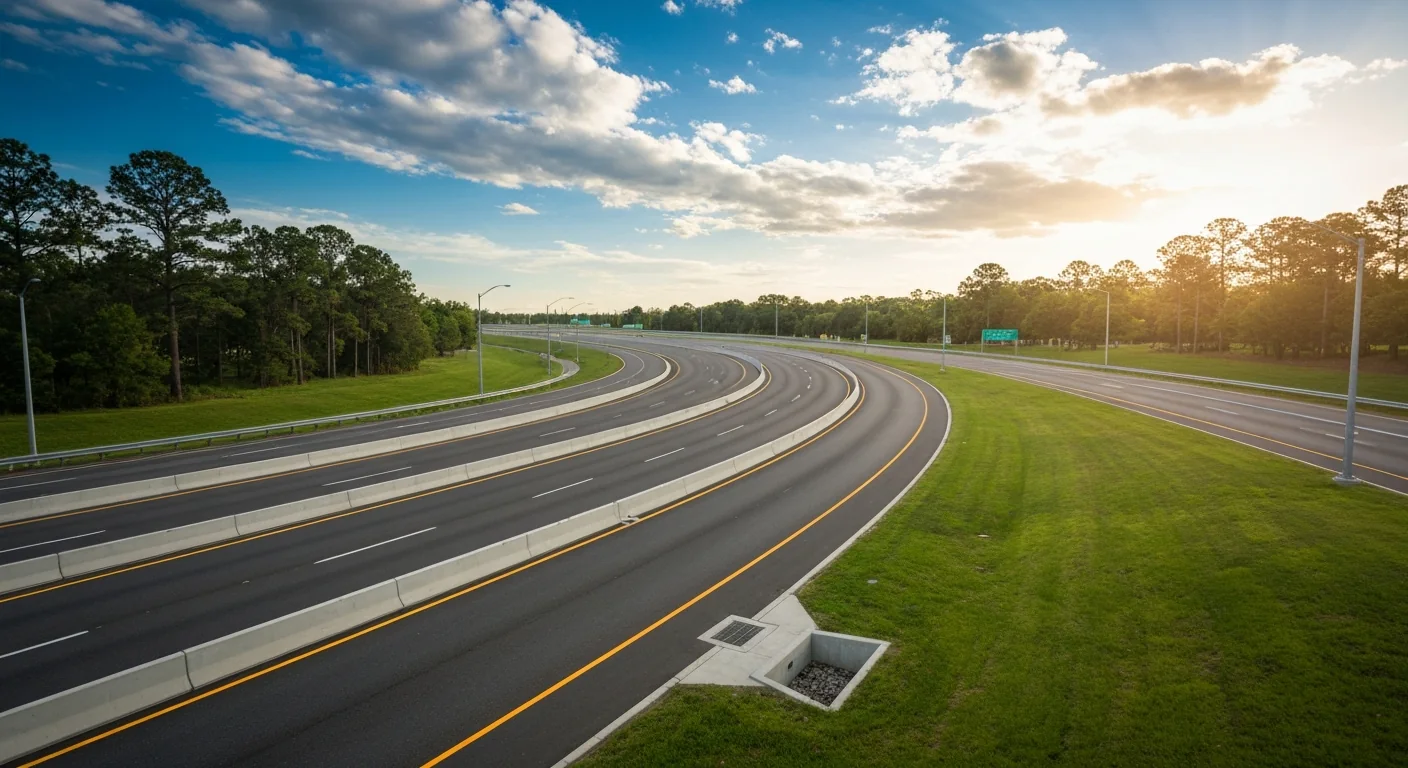
If you live in or around Waxhaw, no road question comes up more often than this one: when is the Providence Road widening actually going to happen? Providence Road, the state highway officially known as NC 16, is the spine of this part of Union County, and everyone who sits in the backup at rush hour wants a real answer, not a rumor. The Town of Waxhaw and the North Carolina Department of Transportation recently sat down on the town’s Waxhaw Happenings podcast to walk through exactly where the project stands, and as a local agent who fields this question from buyers every week, I pulled the important details together here so you have the full picture in one place.
Short version: this is a funded, committed project, and it is moving. The design is well underway, property acquisition has started, and the state has laid out a clear phase-by-phase timeline. Below is what is happening, who is in charge, the schedule, what the new road will look like, and what it all means if you own a home along the corridor or you are thinking about buying near it.
13 min read | By Steve Jarrell, The Longleaf Group at eXp Realty | Updated August 2026
Free · 26-Page Insider Guide
Thinking about buying in Waxhaw?
Towns compared, NC vs SC taxes and schools side by side, and the 5 mistakes out-of-state buyers make.
What This Guide Covers
- The short answer: when the Providence Road widening happens
- What the project actually includes
- The timeline, phase by phase
- Reduced conflict intersections, explained
- What homeowners along the corridor should do now
- Why it took so long: funding and prioritization
- What it means for Waxhaw, Marvin, and Weddington buyers
- Frequently asked questions
The Short Answer
The NC 16 Providence Road widening takes the road to four lanes through Waxhaw. As of the town’s 2026 update the design sits at the 75 percent right-of-way stage and property and easement acquisition has begun, with reduced conflict intersections rather than conventional signals along the corridor.
Key numbers right now:
- Design stage: 75% right-of-way plans, acquisition underway
- Providence Road carries about 20,000 vehicles a day now
- Projected to reach roughly 46,000 vehicles a day
- NCDOT studies: reduced conflict intersections cut total crashes 50% and frontal-impact crashes 80%
- A 2010 NC State study for NCDOT found an average 20% travel-time saving at signalized RCIs
Providence Road Widening in Waxhaw: The Short Answer
The Providence Road widening project, known to NCDOT as U-5769, will widen NC 16 (Providence Road) to a four-lane divided highway from Waxhaw Parkway north to Rea Road, covering roughly 5.7 miles through Waxhaw, Marvin, and Weddington. As of the town’s 2026 update, the design is at the 75% right-of-way plan stage, and property and easement acquisition has begun and is expected to take about two years. Utility relocation follows for roughly another two years, construction is scheduled to begin between late 2029 and mid-2030, and completion is expected around 2035.
The most important thing to know: this is a fully committed and funded project. It is not a wish-list item anymore. NCDOT’s project manager was direct that the schedule is realistic and unlikely to be accelerated given the size and complexity of the work, so the realistic expectation is a multi-year build that delivers a much safer, higher-capacity Providence Road by the middle of the next decade.
Talk to a local broker
Buying or selling near the NC 16 corridor?
I track how road projects like this affect access and home values along Providence Road. Let’s talk through what it means for your specific street. Free, 15 minutes, no pressure.
Schedule a 15-Minute Introductory Call →
704-774-7170 · steve@jarrellhomes.com · thelongleafgroup.com
What the Providence Road Widening Project Actually Includes
NC 16, which most locals just call Providence Road, is a state-maintained highway, not a town street. That is why the North Carolina Department of Transportation, not the Town of Waxhaw, runs this project. NCDOT handles the planning, the environmental studies, the property acquisition, and the construction for a major thoroughfare like this one. The town’s role is coordination and keeping residents informed, which is a distinction a lot of people get wrong when they assume it is either all state or all town.
The official name is U-5769. You will also see it split into U-5769A (widening NC 16 from Railroad Street to Cuthbertson Road) and U-5769B (from Cuthbertson Road to Waxhaw Parkway), which together make up the full corridor. The “U” simply means it is an urban improvement project, the category NCDOT uses for work aimed at reducing congestion, improving safety, and adding capacity in growing towns and cities.
Here is what the finished road is designed to be:
- A four-lane divided facility with a median, replacing the current two-lane setup
- Roughly 5.7 miles from Waxhaw Parkway north to just beyond Rea Road
- A mix of conventional full-movement intersections and reduced conflict intersections (RCIs)
- Improvements running through Waxhaw, Marvin, and Weddington
The reason behind all of it is traffic that keeps climbing. NCDOT’s project figures have pointed to Providence Road carrying around 20,000 vehicles a day now and projected to reach roughly 46,000 a day by 2040. The stated purpose of the Providence Road widening is to relieve that congestion, improve how traffic flows, cut down on congestion-related crashes, and keep the corridor safe as volumes rise. Anyone who drives it at 5 p.m. today already understands the “why.”
The Providence Road Widening Timeline, Phase by Phase
This is the part everyone wants, so here is the schedule NCDOT laid out, in order. Keep in mind the state itself notes that dates on a project this large can shift with weather, contractor availability, and utility conflicts.
- Design (now): plans are at the 75% right-of-way stage, the version used to define exactly what land and easements the project needs.
- Right-of-way and easement acquisition (underway, about 2 years): NCDOT and its acquisition partners are already contacting property owners along the corridor.
- Utility relocation (about 2 years, starting roughly late 2027 to mid-2028): moving the many utilities along Providence Road once acquisition wraps.
- Construction start: anticipated between late 2029 and mid-2030.
- Completion: expected around 2035.
One realistic note from NCDOT: the utility relocation step depends on the utility companies, not the state, because NCDOT does not control those providers’ timelines. Every kind of utility you can imagine runs along this corridor, and coordinating all of them is a big part of why the schedule stretches. The state says it works closely with the providers to keep things moving, but this is the phase most likely to see slippage.
Why you are seeing survey crews and stakes
If you have noticed workers in safety vests and wooden stakes going into the ground along NC 16, that is the right-of-way process in action. Survey crews are staking the proposed right-of-way and easement lines so that when a right-of-way agent sits down with a property owner, there is a clear visual of exactly what the project needs. As NCDOT put it, negotiating property needs without being able to show the owner where those needs are would leave anyone hesitant. So please do not pull the stakes up. They are there to make the conversation with each property owner clearer and fairer.
Talk to a local broker
Have a question about buying or selling in Waxhaw, NC? Let’s figure it out together.
Free, 15 minutes, and no sales pitch.
What Are Reduced Conflict Intersections (Superstreets)?
The Providence Road widening will use reduced conflict intersections, or RCIs, at several points. You may also hear them called superstreets, synchronized streets, median U-turns, or Michigan lefts. They confuse people at first, so here is the plain-English version. Instead of letting a driver on a side road turn left or go straight across busy Providence Road, an RCI directs that driver to turn right first, travel a short distance (typically less than 1,000 feet), then use a dedicated lane to make a safe U-turn and head the intended direction.
The point is safety through simplicity. A traditional full intersection has 32 potential conflict points, the spots where vehicles could collide. An RCI cuts that to 14, which sharply lowers the risk of the most serious right-angle, or T-bone, crashes. The numbers NCDOT shared back this up.
- A 2023 NCDOT safety study of 31 signal-free RCIs built in North Carolina between 2009 and 2017 found a 50% reduction in total crashes and an 80% reduction in frontal-impact crashes, the type tied to serious injuries.
- A 2010 North Carolina State University study for NCDOT found an average 20% travel-time savings for all drivers at a signalized reduced conflict intersection compared with a conventional corridor.
- Side-street drivers who have to turn right and then make a U-turn add only about 20 seconds to their trip, a small trade for a meaningfully safer road.
So while an RCI feels unfamiliar the first time you use one, the design is doing real work: fewer places to crash, faster overall flow, and only a minor detour for side-street traffic. That is the trade Providence Road is making as part of the Providence Road widening.
What Waxhaw Homeowners Along NC 16 Should Do Now
If you own property along the corridor, the right-of-way phase is the part that touches you directly. NCDOT right-of-way agents and authorized representatives, including an outside acquisition firm the state has partnered with, are contacting affected owners to discuss and negotiate right-of-way and easement needs. In many cases those conversations have already started.
Here is roughly how the acquisition process works, based on what NCDOT described. An agent reaches out, meets with the owner, and explains what the project needs and why. Depending on the value of the claim, NCDOT either uses an internal claim report or brings in certified, licensed appraisers to set a value. The agent then presents that appraised value as an offer, and the property owner has every right to negotiate a counteroffer.
What matters most for you to know: NCDOT is required by state and federal law to protect and inform property owners of their rights during acquisition and any relocation. You are not on your own, and you are not obligated to accept a first number without discussion. NCDOT also publishes a written explanation of the process and a video walking through right-of-way acquisition, both of which are worth reviewing if an agent has contacted you. If you want, forward me what you receive and I am glad to help you understand it as your local agent.
What construction will feel like
Once construction begins, expect what any road job this size brings: equipment and activity next to the road, uneven pavement in spots, and shifting traffic patterns on NC 16 and the side streets within the project. Those conditions can mean delays and inconvenience, but they are usually tied to safety steps that protect both workers and drivers.
Importantly, NCDOT says access to every home and business along the corridor is required by contract to be maintained the entire time. It may not look identical day to day, but you will still be able to get in and out. The NCDOT rep compared it to renovating a kitchen: some dust while the work happens, a much better result when it is done.
Why the NC 16 Widening Took So Long: Funding and Prioritization
If it feels like this project has been talked about forever, that is because it has been scored and rescored for well over a decade. It started as project R-3802 and was evaluated in North Carolina’s prioritization cycles P1 (2009 to 2011), P2 (2011 to 2013), and P3 (2013 to 2015) before finally being funded in cycle P4 (2015 to 2017). That funding created the current projects, U-5769A and U-5769B.
The reason for all that rescoring is that road projects compete statewide against every other candidate, and only the highest-scoring ones get funded in each cycle, with limited money to go around. NCDOT scores them through a data-driven system that weighs congestion, cost-benefit, safety, and local input, and coordinates with the Charlotte Regional Transportation Planning Organization (CRTPO), of which Waxhaw is a member.
One real wrinkle NCDOT flagged: the project hit a setback when it was suspended in August 2019 due to statewide funding shortfalls. It was restored in July 2023 and is now moving forward as a fully committed and funded project through the State Transportation Improvement Program (STIP). In plain terms, when NCDOT says it is fully funded, it means the money is allocated and we are getting the road. It is now a matter of working through the phases.
What the Providence Road Widening Means for Waxhaw, Marvin, and Weddington Buyers
Here is where my perspective as a local agent comes in, because buyers ask me about this project constantly. A widened Providence Road is a long-term positive for this whole side of Union County. Better capacity and safer intersections make Waxhaw, Marvin, and Weddington more accessible, and access is one of the quiet drivers of long-term home demand. When a corridor moves from a strained two-lane road to a modern four-lane divided highway, the towns it serves generally become easier to sell as places to live.
The nearer-term reality is that construction is years out and will bring a stretch of disruption when it arrives. If you are buying directly on or beside NC 16, it is worth knowing where a home sits relative to the future right-of-way and how access to that specific property will be handled during the build. Those are exactly the details I check for buyers, along with how a particular street connects to the corridor. A home a few streets off Providence Road usually gets most of the access upside with less of the construction friction.
For more on how this area is changing, see my related coverage of Waxhaw’s growth in 2026, the real Waxhaw to Charlotte commute, and the downtown Waxhaw master plan. You can also explore the full Waxhaw community guide or start with the basics on my home buying page. I keep an eye on projects like this so the buyers I work with are never surprised, and I share regular Waxhaw and South Charlotte updates on my Welcome to Charlotte YouTube channel.
Where the official information lives
This recap is based on the Town of Waxhaw’s Waxhaw Happenings podcast episode on the Providence Road widening, featuring NCDOT project manager Donald Griffith and communications officer Jen Goodwin alongside town staff. For the official project details and to submit a question or comment directly to NCDOT, visit the NCDOT U-5769 project page, or find the NC-16 Widening (U-5769) project page on the Town of Waxhaw website at waxhaw.com under Engineering and Traffic Projects. NCDOT also publishes a helpful right-of-way acquisition process video if an agent has reached out about your property.
Providence Road (NC 16) Widening: Frequently Asked Questions
When will NC 16 be widened in Waxhaw?
Right-of-way acquisition is underway now and runs about two years, followed by roughly two years of utility relocation. Construction is scheduled to begin between late 2029 and mid-2030, with completion expected around 2035. NCDOT has said the schedule is realistic and unlikely to be accelerated given the project’s size.
What is NCDOT project U-5769?
U-5769 is the Providence Road widening project on Providence Road. It is split into U-5769A (Railroad Street to Cuthbertson Road) and U-5769B (Cuthbertson Road to Waxhaw Parkway), which together widen the corridor to a four-lane divided highway from Waxhaw Parkway to Rea Road, about 5.7 miles through Waxhaw, Marvin, and Weddington.
How many lanes will NC 16 have?
The Providence Road widening upgrades Providence Road from two lanes to a four-lane divided facility with a median, plus a mix of conventional intersections and reduced conflict intersections. The design targets congestion relief and safety as daily traffic is projected to rise from around 20,000 vehicles now to roughly 46,000 by 2040.
What is a reduced conflict intersection or superstreet?
A reduced conflict intersection (RCI), also called a superstreet or median U-turn, sends side-street drivers to turn right first, then make a safe U-turn instead of crossing or turning left across the main road. It cuts conflict points from 32 to 14. NCDOT studies found RCIs reduced total crashes by 50% and frontal-impact crashes by 80%.
Should I remove the survey stakes on my property?
No. The stakes mark the proposed right-of-way and easement lines so NCDOT agents can show property owners exactly what the project needs during negotiations. Removing them makes the acquisition process harder for everyone, so leave them in place.
Is the NC 16 widening actually funded?
Yes. The project was suspended in August 2019 due to statewide funding shortfalls but was restored in July 2023 and is now a fully committed and funded project through the State Transportation Improvement Program (STIP). NCDOT confirmed the money is allocated, so the corridor will be built.
Who do I contact with questions about the project?
Submit questions or comments through the NCDOT U-5769 project page at publicinput.com/nc-16-providence, or use the “Contact Us” option on ncdot.gov. Your question is routed to the right subject matter expert, and the Town of Waxhaw posts updates on its website and social media as the project moves forward.
About the Author
Steve Jarrell is a licensed North Carolina and South Carolina Realtor with The Longleaf Group at eXp Realty, a RealTrends Verified Top Team based in the South Charlotte area. He lives and works in the Waxhaw, Marvin, and Weddington market, follows local road and development projects like the Providence Road widening closely, and helps relocating buyers understand how growth and infrastructure will shape the homes and neighborhoods they are considering. Reach Steve at 704-774-7170, steve@jarrellhomes.com, or thelongleafgroup.com.