
If you have been watching the Charlotte suburbs from out of state, you have probably noticed the same name keep coming up. Indian Trail. Buyers ask me about it almost every week, and the question underneath all of those calls is simple: why are so many people relocating to Indian Trail NC right now, and is it actually worth the move?
I am a licensed agent in both North Carolina and South Carolina, and I work this Union County market every week. So let me give you the real picture. Not the glossy tourism version, but the reasons buyers keep choosing Indian Trail over a dozen other South Charlotte towns, plus the tradeoffs you should weigh before you commit.
16 min read | By Steve Jarrell, The Longleaf Group at eXp Realty | Updated September 2026
What This Guide Covers
- The short answer: why buyers are relocating to Indian Trail NC
- Reason 1: Newer, bigger homes and more land for the money
- Reason 2: Union County schools pull buyers across the county line
- Reason 3: The commute to Charlotte finally works
- Reason 4: A lower county tax rate and a falling state income tax
- Reason 5: A real downtown, parks, and things to do
- Reason 6: Fast growth that still feels suburban
- Reason 7: Location, job centers, and the airport
- Is Indian Trail NC a good place to live? The real tradeoffs
- How to relocate to Indian Trail NC without the guesswork
- What to budget for when relocating to Indian Trail NC
- FAQ: relocating to Indian Trail NC
The Short Answer
Buyers pick Indian Trail because it pairs Union County schools and a lower county tax rate with new-ish single-family housing that is still cheaper per square foot than comparable south Charlotte. The median sits slightly above the City of Charlotte number, which surprises people, but you get more house and land for it. Growth has been steady rather than explosive.
Key numbers right now:
- Median sale price around $447,000, a touch above the City of Charlotte median of roughly $415,000 (Redfin)
- Union County’s FY2025-2026 rate is about $0.4342 per $100 of assessed value versus Mecklenburg’s $0.4927
- North Carolina’s flat income tax: 4.25% for 2025, scheduled to fall to 3.99% in 2026
- A household with $150,000 of taxable income owes about $5,985 at the 2026 rate
- Population grew from about 40,000 at the 2020 Census to an estimated 45,000 in 2026
- Homeownership runs about 78%, and the housing stock is mostly single-family
The Short Answer: Why Buyers Are Relocating to Indian Trail NC
People are relocating to Indian Trail NC because it offers newer and larger homes on bigger lots than you typically find inside Charlotte, strong Union County public schools, and a commute to Uptown Charlotte that averages under 30 minutes thanks to the Monroe Expressway. Add a lower county property tax rate than Mecklenburg, a flat state income tax dropping to 3.99% in 2026, and a small-town downtown with parks and local breweries, and you have a suburb that gives relocating buyers more space and value without giving up access to the city.
That is the two-sentence version an out-of-state buyer needs. The rest of this guide breaks down the seven specific reasons, with current numbers and named places, so you can decide whether Indian Trail fits your move or whether one of the neighboring towns is a better match.
Already leaning toward Indian Trail?
Skip the guesswork. Get a local read on neighborhoods, builders, and timing before you fly in to tour.
Schedule a 15-Minute Introductory Call704-774-7170 | steve@jarrellhomes.com | thelongleafgroup.com
Reason 1: Newer, Bigger Homes and More Land for the Money
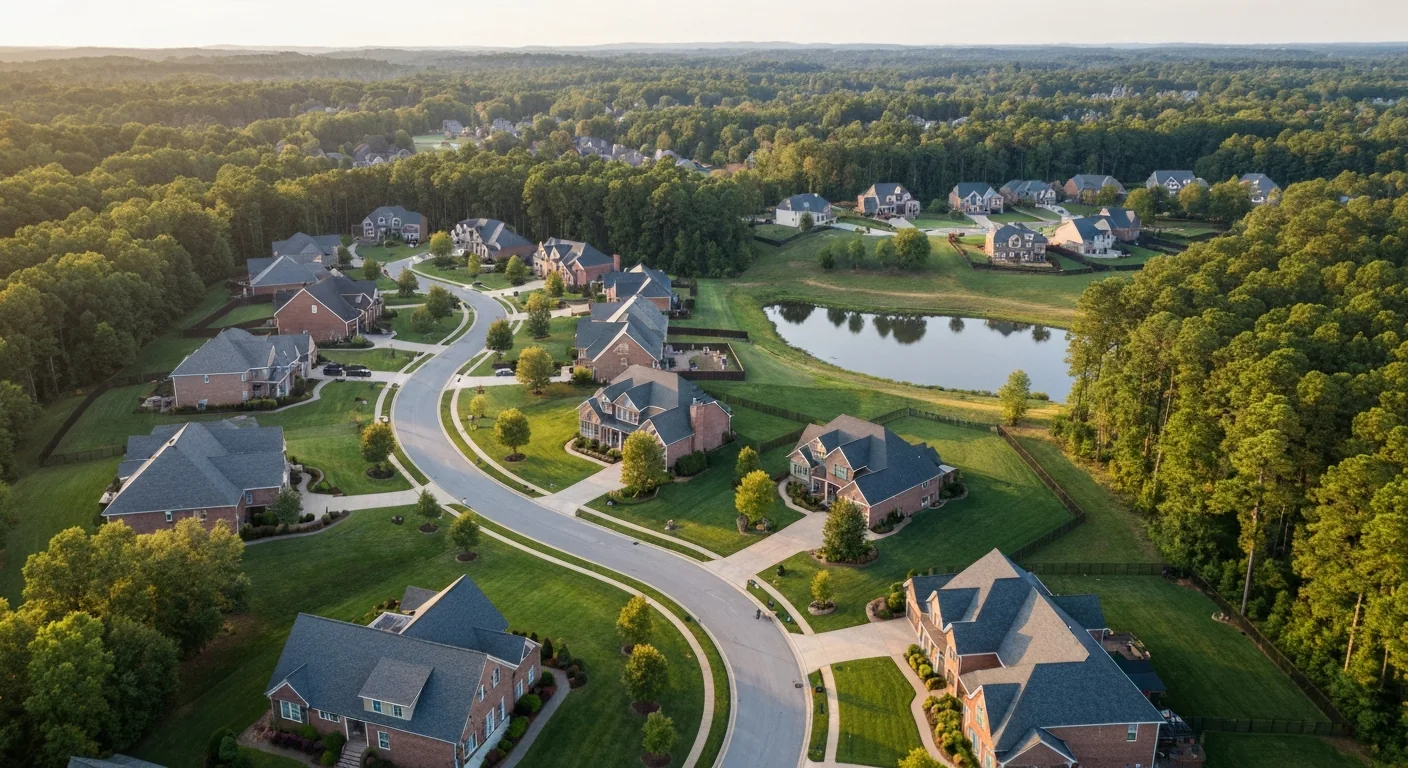
The number one reason buyers give me for relocating to Indian Trail NC is space. About two thirds of the homes here were built since 2000, so the housing stock skews modern: open floor plans, three-car garages, and lots that are hard to find closer to the city. If you are coming from a dense metro where a small lot costs a fortune, Indian Trail feels like a different planet.
Here is the nuance on price the headlines get wrong. As of mid-2026 the median sale price in Indian Trail sits around $447,000 (Redfin), which is actually a touch above the City of Charlotte median of roughly $415,000. So Indian Trail is not the cheapest dot on the map.
What you are really buying is value per square foot. The Charlotte city median includes a lot of older, smaller, in-town housing. In Indian Trail that same budget tends to buy a newer, larger home with a yard. For relocating buyers comparing apples to apples, that is where the math swings in Indian Trail’s favor.
New construction is a big part of the story. Builders are active across communities like Bonterra, Brandon Oaks, and Taylor Glen, with national names such as Lennar and D.R. Horton building alongside regional and custom builders. If a brand-new home is the goal, you have real choices here. I break down which builders and communities are worth a tour in my guide to new construction homes in Indian Trail NC.
One more thing worth saying plainly: relocating to Indian Trail NC tends to mean a quieter, lower-density street than the equivalent budget buys closer in. Sidewalk-lined subdivisions, community pools, and cul-de-sacs are the norm rather than the exception. For buyers trading a cramped lot in an expensive metro for room to breathe, that shift in everyday lifestyle is often the moment the move starts to feel worth it.
Reason 2: Union County Schools Pull Buyers Across the County Line
For buyers prioritizing schools, Union County Public Schools is one of the biggest reasons people relocate to Indian Trail. The district has a strong regional reputation, and Indian Trail addresses feed several well-regarded schools. Poplin Elementary, for example, carries a GreatSchools rating of 8 out of 10 as of 2026, while Sardis Elementary and Indian Trail Elementary sit around 6 out of 10.
On the secondary side, Porter Ridge High School rates about 6 out of 10 and Sun Valley High School around 4 out of 10. Ratings move year to year, so always pull the current number for the exact address you are considering. School assignment in Union County is tied to specific attendance zones, and two homes a mile apart can feed different schools.
Because assignment is so address-specific, this is the single most expensive thing to get wrong when relocating to Indian Trail NC. Verify the assigned schools through Union County Public Schools (ucpsnc.org) and cross-check ratings on GreatSchools before you fall for a house. I walk buyers through the zoning details in my straight-talk guide to the schools in Indian Trail NC.
It is also worth knowing how the district handles choice. Union County runs a school assignment system with some out-of-zone options, but seats are limited and not guaranteed, so buyers who count on a specific program should confirm availability rather than assume it. For relocating buyers comparing Indian Trail to a neighboring town, the quality of the assigned schools is often the tiebreaker, which is exactly why I push people to verify the zone before they get attached to a particular street.
Reason 3: The Commute to Charlotte Finally Works
A decade ago, the knock on this area was traffic. US-74 (Independence Boulevard, the main artery toward Uptown) could be brutal at rush hour. Then the Monroe Expressway changed the equation. It opened in November 2018 as an 18.7-mile toll road that lets drivers bypass the worst stoplights on US-74 (NCDOT).
The result is a commute that actually works for relocating buyers. The average commute for Indian Trail residents is about 28 minutes, and a typical drive to Uptown Charlotte runs 30 to 45 minutes depending on where you live and when you leave. The toll is not free, but for buyers who value their time, it is a small price to skip the congestion.
Where you land inside Indian Trail matters a lot for your daily drive. Homes near the expressway interchanges have a real edge over those tucked deeper into the neighborhoods off US-74. If a short commute is a priority, that should shape which streets you even look at. You can see the route details on the NCDOT Monroe Expressway page, and I cover drive times from neighboring towns in my Monroe to Charlotte commute breakdown.
Prefer to watch? I filmed a full walkthrough of what it is like moving to Indian Trail on my YouTube channel, Welcome to Charlotte NC, where I drive the area and talk through the neighborhoods.
Reason 4: A Lower County Tax Rate and a Falling State Income Tax
Taxes are a quieter reason people are relocating to Indian Trail NC, but they add up. Union County completed a property revaluation in 2025, and the adopted county property tax rate for fiscal year 2025-2026 is about $0.4342 per $100 of assessed value (Union County FY2026 budget). For comparison, Mecklenburg County’s rate sits around $0.4927 per $100.
One important caveat: a revaluation reset home values higher, and the Town of Indian Trail adds its own municipal rate on top of the county rate. So do not assume a lower headline rate automatically means a lower bill. Compare the full tax bill on a specific property, not just the county rate, before you decide.
The bigger win is on the income side. North Carolina has a flat individual income tax of 4.25% for 2025, and it is scheduled to drop to 3.99% in 2026 (NC Department of Revenue). For households relocating from high-tax states, that flat and falling rate is a meaningful annual difference. I run the full numbers in my cost of living in Indian Trail NC breakdown.
Put a number on it. A household with $150,000 in taxable income pays North Carolina about $5,985 at the 3.99% rate scheduled for 2026. The same household in a state with a 6% or 7% top rate could owe several thousand dollars more every single year. Stack that annual savings against a mortgage and it changes what you can comfortably afford, which is a quiet but real reason people are relocating to Indian Trail NC rather than to a higher-tax metro.
Thinking about buying or selling in Indian Trail, NC?
Free, 15 minutes, and zero sales pitch.
Book a Quick Chat with Steve →Reason 5: A Real Downtown, Parks, and Things to Do
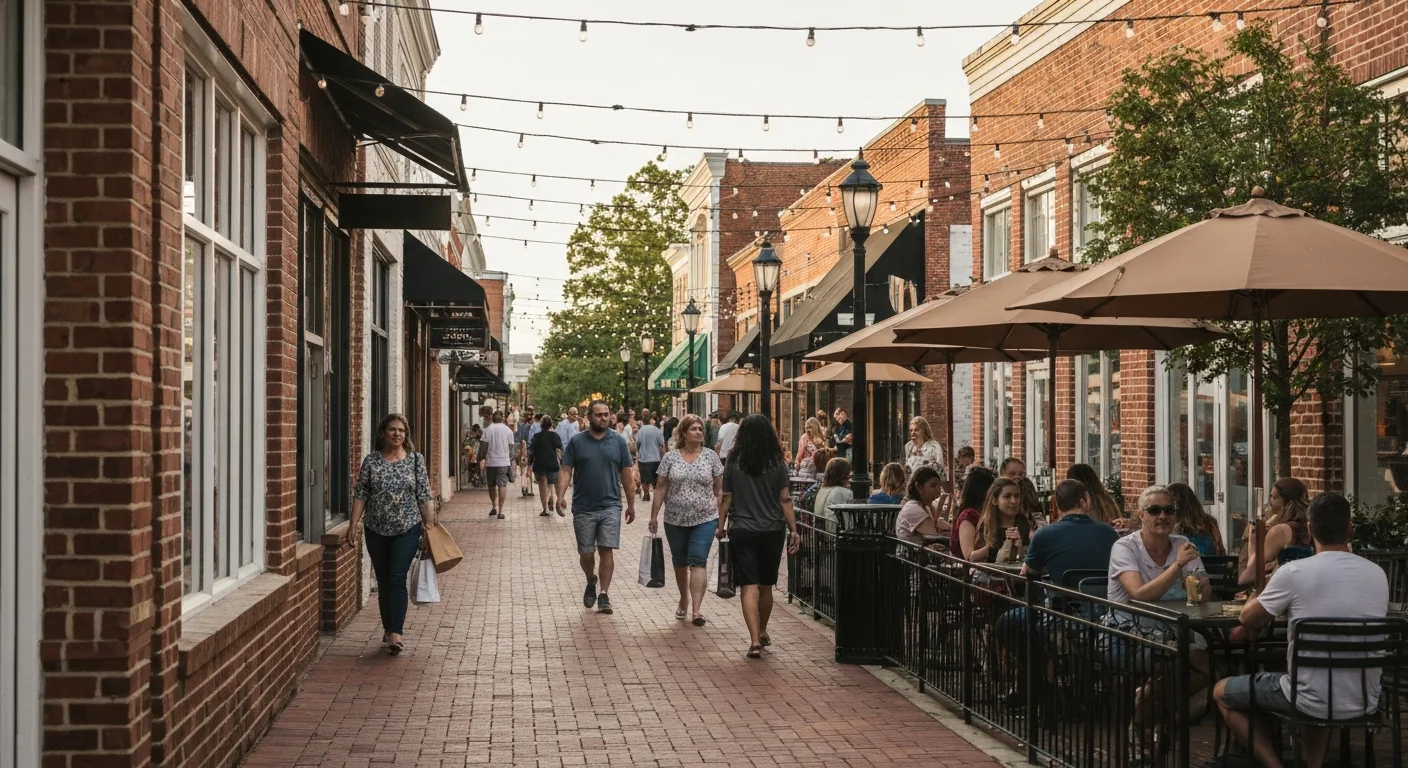
Plenty of suburbs are just rooftops and a highway. Indian Trail has more going on than relocating buyers expect, and that lifestyle pull is real. The town has invested in parks and gathering spaces, and a small but growing downtown gives the place an identity beyond the subdivisions.
Parks and the outdoors
Crossing Paths Park was the town’s first municipal park and includes an amphitheater, a playground, and walking paths. Chestnut Square Park added multi-use turf fields, sand volleyball, and tennis courts. Crooked Creek Park is the big one, with paved trails, a disc golf course, sports fields, a splash pad, and a dog park. You can see the full list on the Town of Indian Trail parks page.
Dining, breweries, and everyday errands
Sweet Union Brewing has become a local gathering spot, and Sun Valley Commons covers the everyday retail and dining most buyers want within a few minutes of home. The Sun Valley 14 movie theater and Carolina Courts (an indoor sports complex) round out the rainy-day options, and the historic Bradford Store is a longtime local landmark. It is not Uptown nightlife, but for a suburb, the day-to-day amenities are solid.
Reason 6: Fast Growth That Still Feels Suburban
Indian Trail NC growth is one of the headline stories of the Charlotte suburbs. The town grew from about 40,000 residents at the 2020 Census to an estimated 45,000 in 2026, and it has been adding population at roughly 2% a year. That kind of growth tells you something: people keep voting with their moving trucks.
What surprises relocating buyers is that it still feels suburban, not urban. Homeownership runs about 78%, which is high, and the housing is mostly single-family rather than dense apartment blocks. A lot of the in-migration is people leaving Mecklenburg County for more space and value, plus out-of-state buyers chasing the same thing.
Growth is not all upside, and I will get to the tradeoffs below. But if you want a town that is investing in itself rather than fading, the momentum here is a feature, not a bug. For the fuller market picture, see my Indian Trail NC housing market analysis.
Where relocating buyers are coming from
The people relocating to Indian Trail NC are not all from the same place. A big share are Mecklenburg County residents pushing out for more home and lower density. The rest are out-of-state movers, many from higher-tax and higher-cost states, who have done the math on North Carolina’s flat income tax and the value per square foot here. Both groups tend to want the same things: a newer home, a workable commute, and schools they can feel good about. Indian Trail checks those boxes at a price that still pencils out.
Reason 7: Location, Job Centers, and the Airport
The last reason buyers are relocating to Indian Trail NC is pure geography. The town sits southeast of Charlotte, which puts it within reasonable reach of the region’s major job centers: Uptown, Ballantyne, and SouthPark. Many residents commute to those hubs while keeping a lower-density home base, which is exactly the tradeoff a lot of relocating professionals are after.
Air travel is manageable too. Charlotte Douglas International Airport is roughly a 35 to 55 minute drive depending on traffic and route, typically via I-485 and US-74. For anyone who flies for work, that is an important number to know before you commit to a suburb on the far side of the metro.
Healthcare access is close as well. Atrium Health Union in nearby Monroe is about a 15 to 20 minute drive, and Novant Health Mint Hill Medical Center sits roughly 18 to 25 minutes away. You are suburban here, but you are not isolated from the things that matter.
Put those pieces together and the location math is what closes the deal for a lot of buyers. You get a lower-density home base with major job centers, an international airport, and full-service hospitals all inside a reasonable drive. For relocating professionals who refuse to choose between space and access, that balance is hard to beat anywhere else in the Charlotte suburbs.
Is Indian Trail NC a Good Place to Live? The Real Tradeoffs
So is Indian Trail NC a good place to live? For most relocating buyers who want space, newer homes, and strong schools within commuting range of Charlotte, yes. But I would not be doing my job if I only sold you the upside. Here is where buyers get tripped up.
First, traffic on US-74 is still a thing. The Monroe Expressway helps, but the toll is a recurring cost and the surface roads can crawl at peak times. Second, the 2025 revaluation pushed assessed values up, so budget for the real tax bill, not the old one. Third, fast growth means construction, new traffic patterns, and schools managing capacity. None of these are dealbreakers, but they are real.
It also helps to know who Indian Trail is not for. If you want walkable urban nightlife, a short bike ride to the office, or a historic in-town neighborhood, this is not your match, and that is fine. Indian Trail rewards buyers who want space, a newer home, and a community-oriented suburb, and who are willing to drive for the city experiences they want. Being clear about which camp you are in saves you months of looking in the wrong place.
The other point worth making: Indian Trail is not the only good answer. Depending on your priorities, neighboring towns like Waxhaw, Weddington, or Matthews might fit better, and the Indian Land area across the South Carolina line is worth comparing on taxes. I lay out the full pros and cons in my post on whether Indian Trail NC is the right place to call home, and the broader move logistics in my Indian Trail relocation guide.
How to Relocate to Indian Trail NC Without the Guesswork
Relocating to Indian Trail NC from out of state is very different from buying when you already live here. You cannot pop by three open houses on a Saturday. You are making a major decision off photos, video calls, and a couple of rushed visits. That is where a local agent earns their keep.
A good local agent does the things you cannot do from a thousand miles away: verify the assigned schools for a specific address, flag which neighborhoods have the easiest expressway access, and tell you plainly when a listing is overpriced for what it is. That local read is the difference between a confident move and an expensive regret.
If you want to see how I think about ranking and vetting local representation, I put together a full breakdown of the best real estate agent in Indian Trail NC, including what to look for in someone who knows this specific market. When you are ready to talk through your own move, you can reach me directly at 704-774-7170, email steve@jarrellhomes.com, or start with the buying overview on my site.
What to Budget for When Relocating to Indian Trail NC
Beyond the purchase price, a few line items catch relocating buyers by surprise. The Monroe Expressway toll is the obvious one if you commute toward Charlotte, so estimate your monthly toll cost based on where you work. It is modest per trip, but it is a recurring expense that buyers from non-toll regions forget to factor in.
The second is the property tax bill itself. Because Union County reassessed values in 2025 and the Town of Indian Trail layers a municipal rate on top of the county rate, the number on a recent listing may not reflect the current assessment. Ask for the most recent tax bill and confirm the assessed value before you build your budget.
Finally, new construction comes with its own costs that resale does not: lot premiums, design-center upgrades, and sometimes HOA dues that fund community amenities. None of these should scare you off, but a relocating buyer who maps them out up front avoids the unwelcome surprises that come from budgeting off the base price alone.
FAQ: Relocating to Indian Trail NC
Why are people moving to Indian Trail NC?
People are moving to Indian Trail NC for newer and larger homes on bigger lots, strong Union County schools, a sub-30-minute average commute to Charlotte via the Monroe Expressway, and a lower county property tax rate than Mecklenburg. The mix of space, schools, and access at a reasonable value is the core draw for relocating buyers.
Is Indian Trail NC a good place to live?
For buyers who want a suburban, mostly single-family community with good schools and a workable Charlotte commute, Indian Trail is a strong fit. The tradeoffs are toll costs on the expressway, US-74 traffic at peak times, and higher assessed values after the 2025 revaluation. Whether it is the best fit depends on how you weigh those against neighboring towns.
How long is the commute from Indian Trail to Charlotte?
The average commute for Indian Trail residents is about 28 minutes, and a typical drive to Uptown Charlotte runs 30 to 45 minutes depending on the time of day and whether you use the Monroe Expressway toll road. Charlotte Douglas airport is roughly 35 to 55 minutes away.
What are the property taxes like in Indian Trail NC?
Indian Trail is in Union County, which adopted a county property tax rate of about $0.4342 per $100 of assessed value for fiscal year 2025-2026, lower than Mecklenburg County’s $0.4927. The Town of Indian Trail adds a municipal rate on top, and the 2025 revaluation raised assessed values, so compare the full bill on a specific home.
How much do homes cost in Indian Trail NC?
As of mid-2026, the median sale price in Indian Trail is roughly $447,000. That is slightly above the City of Charlotte median, but buyers generally get a newer, larger home on a bigger lot for that money, which is the real value story for relocating buyers.
Which schools serve Indian Trail NC?
Indian Trail is served by Union County Public Schools, with addresses feeding schools such as Poplin, Sardis, and Indian Trail elementary schools, plus Porter Ridge and Sun Valley high schools. Assignment is address-specific, so always verify the assigned schools and current ratings for the exact home you are considering.
Is Indian Trail NC growing too fast?
Indian Trail is growing at roughly 2% a year and reached an estimated 45,000 residents in 2026, up from about 40,000 in 2020. Growth brings construction and traffic, but the town remains mostly single-family with a high homeownership rate near 78%, so it still reads as suburban rather than urban.
About the Author
Steve Jarrell is a REALTOR® with The Longleaf Group at eXp Realty, licensed in both North Carolina and South Carolina. He lives in the South Charlotte area and works the Union County and SC border markets every week, helping relocating buyers compare towns like Indian Trail, Waxhaw, and the Indian Land area on the things that actually matter: schools, commute, taxes, and value. Reach him at 704-774-7170 or steve@jarrellhomes.com.
 |
Free · 26-Page Insider Guide Which South Charlotte Town Is Right for You? Towns, villages, and cities compared, NC vs SC taxes and schools, and the 5 mistakes out-of-state buyers make. Everything you’d want a local to tell you before you move. Get the free guide → |
No pressure. Just a conversation.
Planning a move to Indian Trail, NC? I’d love to help.
Book a Free 15-Min Chat with Steve →For the complete local picture, see our Indian Trail real estate guide.