

If you are seriously weighing a moving from Philadelphia to Charlotte decision, you have probably already noticed that the two places are wired differently. Philadelphia is a dense, walkable, transit-connected Northeastern city with deep roots, brutal loyalty, and a tax structure that quietly takes a bite out of every paycheck. The Charlotte region is younger, greener, car-first, and built around single-family neighborhoods with big yards and highly rated schools. Neither is better in the abstract. They just fit different priorities, and the whole point of this guide is to help you figure out which set of tradeoffs is yours.
I am Steve Jarrell, a licensed broker with The Longleaf Group at eXp Realty, and I live and work in south Charlotte. I help buyers relocate here from the Northeast almost every month, and a good number of them are coming straight down the I-95 corridor from the Philadelphia area or making the classic “halfback” move, Northeast to Florida, then halfway back up to the Carolinas. So when someone tells me they are moving from Philadelphia to Charlotte, I already know the questions coming next: what does my housing dollar actually buy, how much do I really save on taxes, are the schools as good as people say, and where would someone like me want to land.
This guide answers all of it, with current numbers and real tradeoffs, not a sales pitch.
19 min read | By Steve Jarrell, The Longleaf Group at eXp Realty | Updated August 2026
Free · 26-Page Insider Guide
Coming from Philadelphia?
Towns compared, NC vs SC taxes and schools side by side, and the 5 mistakes out-of-state buyers make.
What This Guide Covers
- The quick verdict: who this move fits
- Cost of living: Philadelphia vs Charlotte
- Housing: what your dollar actually buys
- Taxes compared: income, property, and sales
- Schools: how Charlotte and Union County compare
- Weather, lifestyle, and pace
- Getting around, flights home, beaches and mountains
- Differences Philadelphia buyers do not expect
- Where Philadelphia buyers tend to land
- How the move from Philadelphia actually works
- Frequently asked questions
Moving from Philadelphia to Charlotte NC: The Quick Verdict
Here is the short version. For most Philadelphia buyers, moving from Philadelphia to Charlotte means a lower overall cost of living, a dramatically lighter income-tax load once you leave the Philadelphia city wage tax behind, more house and land for the money in the suburbs, and access to some of the top-rated public schools in the Carolinas. What you give up is real: SEPTA-style transit and true walkability, the depth of Philadelphia’s food and sports culture, and easy weekend access to the Shore.
The Short Answer
Here is the short version. For most Philadelphia buyers, moving from Philadelphia to Charlotte means a lower overall cost of living, a dramatically lighter income-tax load once you leave the Philadelphia city wage tax behind, more house and land for the money in the suburbs, and access to some of the top-rated public schools in the Carolinas. What you give up is real: SEPTA-style transit and true walkability, the depth of Philadelphia’s food and sports culture, and easy weekend access to the Shore.
Key numbers right now:
- State income tax: Pennsylvania 3.07% flat against North Carolina 3.99% flat for 2026
- Philadelphia city wage tax 3.735%; North Carolina has no local income tax
- Charlotte metro median home price: around $425,000, up roughly 6.5% year over year
- Philadelphia metro median: $380,000 to $400,000 in early 2026
- Waxhaw: a $627,000 to $650,000 median at $199 to $230 per square foot
Charlotte is a car-first region, so budget for that. On paper the taxes are the headline win: Pennsylvania’s 3.07% flat income tax plus Philadelphia’s 3.735% resident wage tax stack to about 6.8% before you touch a property, while North Carolina charges a single flat 3.99% for 2026 with no local income tax at all.
If your priorities are space, schools, a lower tax bill, and mild winters, then moving from Philadelphia to Charlotte and its south-of-town suburbs is an easy fit. If your identity is tied to walkable rowhouse living, daily transit, and being twenty minutes from a real cheesesteak, you will feel the change. Most people relocating from Philadelphia land somewhere in between, and the right town choice is what makes or breaks the move. The rest of this guide is the detail behind that verdict.
Talk to a local broker
Already fairly sure the Charlotte area is your move?
I help buyers relocate from the Northeast every month, and I can map your Philadelphia budget onto the right south Charlotte towns on one short call.
Schedule a 15-Minute Introductory Call →
704-774-7170 · steve@jarrellhomes.com · thelongleafgroup.com
Cost of Living: Philadelphia vs Charlotte
The cost math is usually the first thing people ask about when they are moving from Philadelphia to Charlotte. Cost-of-living indexes put Philadelphia at roughly 7% above the U.S. average, while Charlotte sits right around the national average, sometimes a hair under it. In practical terms, that gap of roughly 7% to 11% shows up in the places you feel every month: housing, utilities, and everyday services. Groceries run close to even between the two metros, so do not expect your grocery bill to change much. The real swing is housing and taxes, which I break out in their own sections below because they are where most of the savings live.
One caveat on the cost comparison, and it is the reason people ask me about moving from Philadelphia to Charlotte rather than just reading an index. Philadelphia city proper is cheaper than the good-school Philadelphia suburbs, so your personal starting point matters. If you are coming out of the Main Line, Montgomery County, Chester County, or Bucks County, the cost gap in your favor is large.
If you are leaving a modest city rowhouse and buying into a top south Charlotte school zone, the sticker price may feel similar even though your tax bill drops sharply. The point of a real cost comparison is to line up your actual current bill against your actual future bill, town by town, not metro-average against metro-average.
| Everyday cost | Philadelphia area | Charlotte area |
|---|---|---|
| Overall cost-of-living index | About 7% above U.S. average | About even with U.S. average |
| State income tax | 3.07% flat | 3.99% flat (2026) |
| Local income / wage tax | 3.735% (Philadelphia residents) | None |
| Groceries | Near U.S. average | Near U.S. average |
| Winters | Real snow, higher heating | Mild, lower heating |
Housing: What Your Dollar Buys in Charlotte vs Philadelphia
Housing is where moving from Philadelphia to Charlotte gets interesting, because the answer depends entirely on which Philadelphia you are leaving and which Charlotte you are buying into. As of spring 2026, the Charlotte metro median home price sits around $425,000, up roughly 6.5% year over year, at about $233 per square foot. The Philadelphia metro median is lower, around $380,000 to $400,000 in early 2026, and the city of Philadelphia itself is cheaper still. So on a pure metro-to-metro basis, Philadelphia is not more expensive than Charlotte.
But almost nobody relocating for schools and space is comparing the whole metro. They are comparing good-school suburb to good-school suburb, and that is where Charlotte wins decisively. The desirable Philadelphia suburbs are expensive: the Main Line corridor runs roughly $650,000 to $800,000 at the median, and Montgomery County overall sits around $450,000 to $480,000, with property taxes to match. In the top south Charlotte school zones you get more square footage, newer construction, and far bigger lots for a comparable or lower number, and your carrying cost afterward is lower because the tax rate is a fraction of Pennsylvania’s.
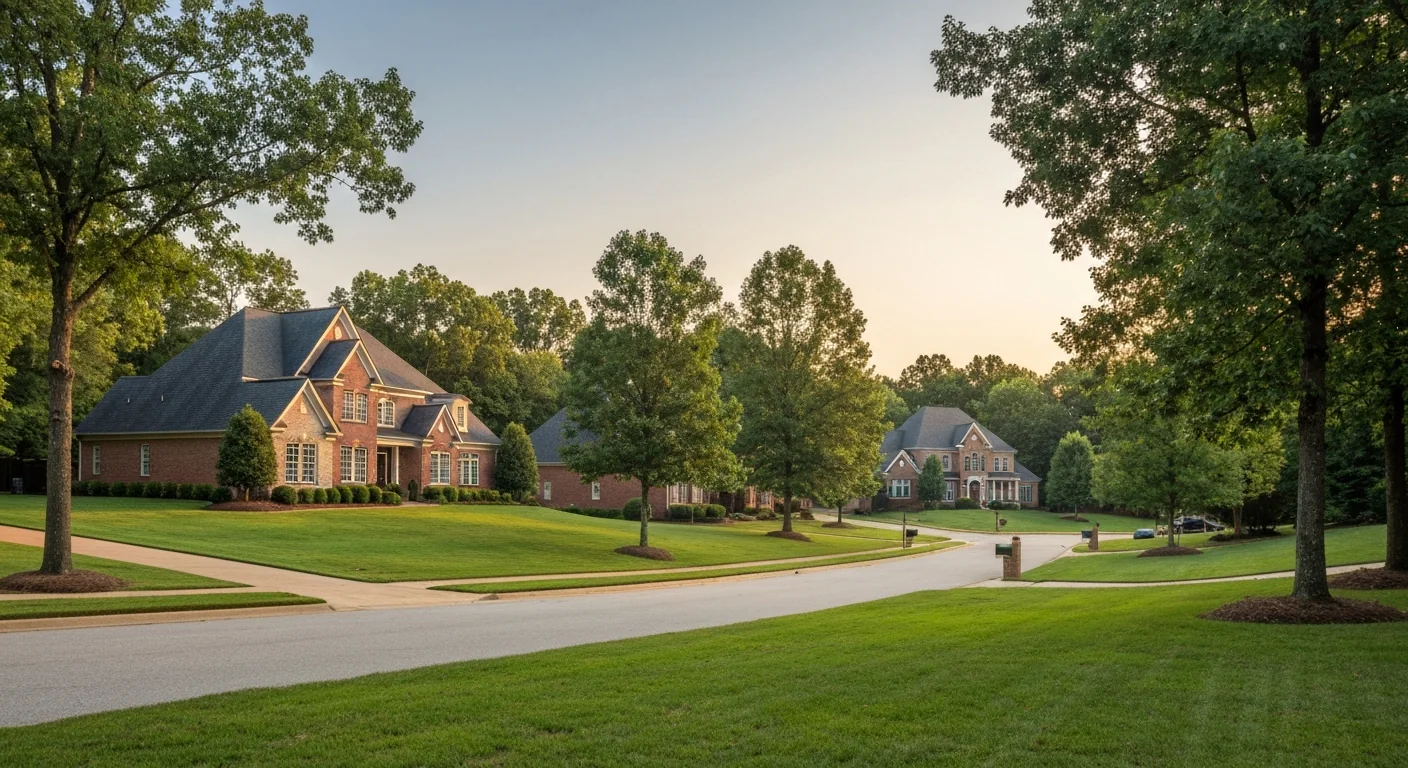
Moving from Philadelphia to Charlotte: what the same money buys in the suburbs
Here is a real-world snapshot of the towns I work most, using spring 2026 figures. Waxhaw runs around a $627,000 to $650,000 median, roughly $199 to $230 per square foot, which tends to buy generous square footage. Fort Mill, just over the South Carolina line, sits around $492,000 to $500,000 with excellent schools. Weddington is the luxury end, with a median near $860,000, but that number reflects one-acre lots and custom construction, not a small starter home. Compared with the Main Line at $650,000 to $800,000 for often older, smaller lots, a Philadelphia buyer usually ends up with more home and more land here, plus a much smaller annual tax bill.
| Market (spring 2026) | Median price | What it tends to buy |
|---|---|---|
| Charlotte metro | ~$425,000 | Broad range, ~$233 / sq ft |
| Fort Mill, SC | ~$492,000 to $500,000 | Newer homes, top SC schools |
| Waxhaw, NC | ~$627,000 to $650,000 | Larger homes and lots |
| Weddington, NC | ~$860,000 | One-acre lots, custom builds |
| Philadelphia Main Line | ~$650,000 to $800,000 | Often older, smaller lots |
Taxes Compared: Income, Property, and Sales
Taxes are the number-one reason a lot of people start looking south, and the tax gap is the single biggest financial argument for moving from Philadelphia to Charlotte, so let me be specific and current. On income, Pennsylvania charges a flat 3.07% and the City of Philadelphia adds a resident wage tax of 3.735% effective July 1, 2026. Stacked together, a Philadelphia city resident pays about 6.8% on wages before any deductions.
North Carolina charges a single flat rate of 3.99% for 2026 (it was 4.25% in 2025) and there is no city or county income tax anywhere in the state. For a household earning a solid income, dropping from roughly 6.8% to 3.99%, and losing the local wage tax entirely, is thousands of dollars a year back in your pocket.
Property tax is the second big lever. Pennsylvania’s effective property tax rate runs higher, and the good-school suburbs feel it: Montgomery County’s effective rate is around 1.35% of value. In the Charlotte area, the combined Mecklenburg County and City of Charlotte rate for fiscal year 2025 to 2026 is about $0.7668 per $100 of value, and the effective rate on market value tends to land near 0.66%. Union County, which covers Weddington, Waxhaw, and Marvin, is lower still on the county side. Across the line in York County, South Carolina, where Fort Mill and Indian Land sit, the owner-occupied effective rate is one of the lowest in the region because South Carolina assesses primary residences at just 4% of value.
Now the part this guide will not oversell. Sales tax is the one line where Charlotte does not win. Philadelphia’s combined sales tax is 8.00%. Mecklenburg County raised its combined rate to 8.25% effective July 1, 2026, after voters approved a one-cent transit tax, so Charlotte proper is now slightly higher than Philadelphia on sales. The good news for buyers I steer toward the suburbs: Union County, NC sits at 6.75% and the South Carolina border towns around 7%, both below the city.
And Pennsylvania has an inheritance tax that many people forget, 4.5% to lineal heirs like children and up to 15% to others, while North Carolina and South Carolina levy no inheritance or estate tax at all. If you want the plain-English version of the NC-versus-SC border tax question, I walk through it in my video, Living in South Charlotte vs SC: the tax breakdown. For the county-level details, my Union County NC property tax guide lays out the current rates.
| Tax | Philadelphia | Charlotte / south Charlotte |
|---|---|---|
| State income tax | 3.07% flat | 3.99% flat (2026) |
| Local wage / income tax | 3.735% (residents) | None |
| Sales tax | 8.00% | 8.25% Mecklenburg; 6.75% Union Co, NC; ~7% York Co, SC |
| Effective property tax | ~1.26% to 1.35% | ~0.66% Meck; lower in Union Co; lowest in York Co, SC |
| Inheritance / estate tax | Yes (4.5% to 15%) | None (NC and SC) |
Talk to a local broker
Ready to make south Charlotte, NC home? Let’s figure it out together.
Free, 15 minutes, and no sales pitch.
Schools: How Charlotte and Union County Compare
Schools are the reason a huge share of buyers moving from Philadelphia to Charlotte end up in the specific towns I sell. If you are used to catchment-based assignment in the Philadelphia suburbs, the system here will feel familiar: both Charlotte-Mecklenburg Schools (CMS) and Union County Public Schools (UCPS) assign students to a home school based on your residential address, with magnet and choice-lottery options layered on top. The critical rule for a relocating buyer is simple: the house you pick determines the school, so verify the exact assignment for any specific address before you fall in love with it, because boundaries do get adjusted.
On quality, the south Charlotte and Union County zones are genuinely strong. Marvin Ridge High in Waxhaw is consistently ranked the top public high school in the Charlotte area and sits in the top 1% of North Carolina schools. Weddington High is right there with it, also top 1% in the state, and Cuthbertson High is a strong option as well. Across the South Carolina line, the Fort Mill School District is ranked the number-one district in South Carolina and lands in the top 1% nationally, with all three of its high schools rated “Excellent” on the state report card.
For a Philadelphia buyer who chose their current suburb for its school district, this is the closest thing to an apples-to-apples upgrade, often at a lower carrying cost. You can compare the numbers in my Weddington cost-of-living breakdown, and the district’s own boundary tool at Union County Public Schools is the source of truth for assignment.
Weather, Lifestyle, and Pace
The weather trade is one of the quiet joys of moving from Philadelphia to Charlotte. Philadelphia winters bring real, plowable snow, roughly 20 inches in a typical season, and Nor’easters can bury you well beyond that. Charlotte averages only about 3 to 4 inches of snow a year, and most winters the bigger nuisance is an occasional ice event rather than a foot of snow. Summers are a wash: both cities are hot and humid from June through August, so you are trading gray, cold winters for green, mild ones and keeping the muggy summer either way. Spring and fall in the Carolinas are long and genuinely pleasant.
The lifestyle shift is bigger than the weather. Transplants from Philadelphia almost always mention the slower, friendlier pace here. People wave, small talk is real, and the general temperature of daily interaction is warmer and less hurried than the Northeast. The flip side is what you leave behind. Philadelphia’s food culture is deep and specific, and no, you will not find a cheesesteak or a hoagie here that truly matches home, at least not at first. Charlotte’s dining scene is growing fast and good, but it is younger.
Sports fandom is the same story: the Panthers and Hornets have loyal followings, but nothing in Charlotte matches the all-consuming intensity of Eagles culture. And Charlotte is car-first, so the walkable-neighborhood, leave-the-car-parked lifestyle of Center City or a rowhouse block is not the norm outside a few pockets. One small consolation for the homesick: Wawa is finally expanding into North Carolina, aiming for roughly 90 stores statewide by 2030, though it has not committed to a Charlotte-area location just yet.
Getting Around, Flights Home, Beaches and Mountains
Transit is the biggest lifestyle change in moving from Philadelphia to Charlotte, so be realistic about it before you move. Philadelphia has SEPTA, one of the largest transit systems in the country, with regional rail, subway lines, trolleys, and buses that let a lot of people live without a car. Charlotte does not have anything close to that. There is the LYNX Blue Line light rail, about 19 miles with 26 stations running through Uptown, plus a streetcar and buses, but the region is built for driving.
Your daily arteries will be I-485, the beltway, plus I-77 and I-85, and yes, they get congested at rush hour. If a car-free life is central to your identity, Charlotte will be an adjustment. For most suburban buyers coming from the Philadelphia suburbs, where you already drive everywhere, it will feel normal.
Getting back to Philadelphia is easy, which matters when you still have family and friends there. Charlotte Douglas International (CLT) is American Airlines’ second-largest hub, with close to 700 daily departures, and there are roughly eight nonstop flights a day to Philadelphia at a flight time of about 1 hour 45 minutes to 2 hours. Both cities are American hubs, so the connection is dense and reliable. And the geography here opens up weekends you cannot get in Philadelphia: Asheville and the Blue Ridge mountains are about 2 to 2.5 hours west, and the coast is a straight shot, with Myrtle Beach around 3 to 3.5 hours and Wilmington about 3.5 to 4 hours.
You lose the Jersey Shore, but you gain mountains and Carolina beaches within a half-day drive. You can see how I coach relocating buyers to think about all of this in my buyer resources.
Differences Philadelphia Buyers Do Not Expect
Every Northeast transplant hits a few surprises in the Charlotte suburbs, and knowing them ahead of time keeps them from becoming deal problems when you are moving from Philadelphia to Charlotte. Here are the ones Philadelphia transplants mention most.
- HOAs are everywhere. Most newer suburban neighborhoods here are governed by a homeowners association with dues and rules on everything from paint colors to parking. If you are coming from a rowhouse block with no HOA, read the covenants carefully before you write an offer.
- Well and septic on the rural fringe. Closer to town you have city water and sewer, but on larger lots in Weddington, Marvin, and rural Union County you may be on a private well and septic system, which changes inspections and maintenance.
- Car property tax and annual inspection. North Carolina charges an annual property tax on your vehicle through the Tag and Tax system, plus a yearly safety and emissions inspection. It surprises almost everyone from Pennsylvania.
- No basements and red clay. Most homes here are on slab or crawl space, not the basements you know from the Northeast, and the famous red clay soil stains everything and challenges gardeners.
- Pollen season is real. Spring coats cars and porches in yellow pine pollen for a few weeks. It passes, but it is a genuine adjustment.
- Ice, not snow, is the winter risk. The region is not built for winter weather, so even a small ice storm can close schools and knock out power. It is rare, but plan for it.
Where Philadelphia Buyers Tend to Land in South Charlotte
When someone moving from Philadelphia to Charlotte describes what they want, a good-school town, space, a strong resale story, and a reasonable commute, the map narrows quickly. These are the south Charlotte and border submarkets I steer people toward, and why each one tends to fit a certain Philadelphia profile.
Weddington and Marvin, NC
If you are coming from the Main Line or upper Montgomery County and you want acreage, custom homes, and top-1% schools, Weddington and Marvin are the closest match. Bigger lots, quieter roads, and the highest-ranked school zones in the county. This is the luxury end, but the tax bill is a fraction of what a comparable Main Line estate carries.
Waxhaw, NC
Waxhaw gives you the most home for the money among the top school zones, plus an actual walkable historic downtown, which resonates with people who miss having a town center. It feeds Marvin Ridge and Cuthbertson, so it is popular with buyers who chose their Philadelphia suburb for schools.
Fort Mill and Indian Land, SC
If the tax math is what is driving your move, cross the line into South Carolina. Fort Mill pairs the number-one school district in the state with lower home prices than the NC luxury towns and the lowest owner-occupied property taxes in the region. Indian Land is the fast-growing, newer-construction option right on the border with a short commute back toward Charlotte.
Indian Trail and Matthews, NC
For buyers who want to stay in North Carolina at a more moderate price with a shorter drive to Uptown, Indian Trail and Matthews are the practical middle. More attainable pricing, solid schools, and an easier commute than the far southern towns. This is often where a city-Philadelphia buyer lands rather than a Main Line buyer. The halfback movers I mentioned earlier, especially those who did the Northeast-to-Florida-to-Carolinas route, tend to like this band too.
How the Move From Philadelphia Actually Works
The logistics of moving from Philadelphia to Charlotte are the part people underestimate, because you are usually selling in one market and buying in another at the same time, from 500 miles away. Here is how I run it with out-of-state buyers so it stays calm. First, we get your Philadelphia home’s realistic sale timeline and net proceeds nailed down, because that drives your Charlotte budget and whether you need a sale contingency or a bridge plan.
Then we narrow the town choice before you ever get on a plane, using your school, commute, and lot priorities, so your trip down is spent touring three or four real contenders instead of driving aimlessly across a metro you do not know yet.
From there we handle the pieces that trip up remote buyers: temporary housing if your closings do not line up, remote and video showings so you are not flying down for every home, local lender introductions so your financing does not stall, and the inspection and well-septic due diligence that is different here than in Pennsylvania. Because I am licensed in both North Carolina and South Carolina, I can show you homes on either side of the state line in the same day and explain exactly how the tax and school differences play out for your specific budget.
That dual-border coverage matters a lot for Philadelphia buyers, because the best answer for you might be in Union County, NC or it might be in York County, SC, and you want someone who can work both. You can start with my background and approach or just reach out directly.
Moving from Philadelphia to Charlotte: Frequently Asked Questions
Is moving from Philadelphia to Charlotte cheaper overall?
For most buyers, yes, moving from Philadelphia to Charlotte lowers the total bill. Charlotte’s overall cost of living sits around the national average while Philadelphia runs about 7% above it, and the bigger savings come from income and property taxes. A Philadelphia city resident paying 3.07% state plus a 3.735% wage tax drops to North Carolina’s flat 3.99% with no local income tax, and effective property tax rates in the Charlotte suburbs are roughly half of what the good-school Philadelphia suburbs charge. Sales tax is the one exception, where Mecklenburg County is now slightly higher at 8.25%.
How much house can I get in Charlotte compared to Philadelphia?
It depends which Philadelphia you are leaving. The Charlotte metro median is about $425,000 versus roughly $380,000 to $400,000 for the Philadelphia metro, so citywide they are close. But the desirable Philadelphia suburbs like the Main Line run $650,000 to $800,000, and for that money in south Charlotte you typically get more square footage, newer construction, and a bigger lot, with a much lower annual tax bill.
Which Charlotte suburbs are best for someone moving from the Philadelphia suburbs?
Weddington and Marvin for acreage and top-1% schools, Waxhaw for the most home per dollar plus a real downtown, Fort Mill and Indian Land in South Carolina for the lowest taxes and the number-one SC school district, and Indian Trail or Matthews for a more moderate price with a shorter commute to Uptown Charlotte. The right pick depends on your budget, school priorities, and commute.
Do I have to pay a car tax in North Carolina?
Yes. North Carolina uses a combined Tag and Tax system that charges an annual property tax on your vehicle along with the registration, plus an annual safety and emissions inspection. It is a common surprise for people coming from Pennsylvania, so build it into your budget.
How are the schools in the Charlotte area compared to Philadelphia suburbs?
Very strong. Assignment works by home address in both Charlotte-Mecklenburg Schools and Union County Public Schools, similar to Philadelphia-area catchments. Marvin Ridge and Weddington high schools rank in the top 1% of North Carolina, and the Fort Mill district across the South Carolina line is ranked number one in the state. Always verify the assignment for a specific address before buying.
How hard is it to fly back to Philadelphia from Charlotte?
Easy. Charlotte Douglas is American Airlines’ second-largest hub, and there are roughly eight nonstop flights a day to Philadelphia at about a 1 hour 45 minute to 2 hour flight time. Both cities are American hubs, so the schedule is dense and reliable for visits home.
What will I miss most moving from Philadelphia to Charlotte?
The short version: walkable transit, the depth of the food scene, real cheesesteaks and hoagies, Eagles-level sports intensity, and the Shore. Charlotte trades those for space, lower taxes, mild winters, top schools, and mountains and beaches within a half-day drive. Whether that is a good trade is exactly the conversation I have with relocating buyers every week.
About the Author
I am Steve Jarrell, a licensed real estate broker with The Longleaf Group at eXp Realty and a south Charlotte resident. I specialize in helping buyers relocate to the Charlotte area, and I am licensed in both North Carolina and South Carolina, which lets me show homes and compare taxes and schools on either side of the state line in the same day. Before real estate I spent a decade in real estate marketing technology, including leading Paradym to its acquisition by Constellation Software, so I bring a data-first approach to relocation. If you are moving from Philadelphia to Charlotte and want a straight, numbers-based read on where you should land, reach out anytime at 704-774-7170, steve@jarrellhomes.com, or thelongleafgroup.com.