

If you are weighing a move to Union County, the first question that decides everything else is the cost of living in Monroe NC. As a full breakdown, the cost of living in Monroe NC starts with geography: Monroe is the county seat, it sits about 25 miles southeast of Uptown Charlotte, and it quietly does something most of its neighbors cannot: it keeps a full-service, small-town price tag while sitting inside one of the fastest-growing metros in the Southeast.
I work both sides of the Union County market every week, and the cost of living in Monroe NC is the number one thing relocating buyers get wrong in both directions. Some assume a Charlotte-area address means Charlotte-area prices. Others assume a lower sticker price means you are giving something up. Neither is true, and the details below show exactly where the money goes.
17 min read | By Steve Jarrell, The Longleaf Group at eXp Realty | Updated September 2026
Free · 26-Page Insider Guide
Weighing Monroe against the rest of Union County?
Towns compared, NC vs SC taxes and schools side by side, and the 5 mistakes out-of-state buyers make.
What This Guide Covers
- The Cost of Living in Monroe NC at a Glance
- Home Prices: Why the Cost of Living in Monroe NC Works
- Property Taxes in Monroe NC: City Limits vs County Only
- Utilities in Monroe NC: The Municipal Power Advantage
- Sales Tax, Income Tax, and Everyday Costs
- Schools, Commute, and Hidden Costs to Weigh
- How the Cost of Living in Monroe NC Compares to Nearby Towns
- Frequently Asked Questions
The Cost of Living in Monroe NC at a Glance
The Short Answer
Steve Jarrell of The Longleaf Group tracks the cost of living in Monroe NC at roughly 1% below the national average, held down almost entirely by housing, with a median home sale price near $400,000, according to Redfin data pulled in August 2026. Property taxes, sales tax, and a rare city-owned electric and gas system keep monthly costs lower than most Charlotte-side suburbs, while groceries and healthcare run close to or slightly above the national line.
Key numbers right now:
- Median home sale price: about $400,000 (Redfin, August 2026), roughly $75,000 below the Union County median
- Property tax inside the City of Monroe: 87.42¢ per $100 of value (43.42¢ county + 44.00¢ city)
- Property tax in unincorporated Monroe: county rate only, 43.42¢ per $100
- Union County sales tax: 6.75%, well under Mecklenburg’s 8.25%
- North Carolina income tax: a flat 3.99% for 2026
- City electricity: about 14.64¢ per kWh, roughly 17% below the national average
Here is the plain version. The cost of living in Monroe NC lands just under the national average, and it does that on the strength of one category: housing. Where Monroe stands apart from most of South Charlotte is that it is a real city with its own utilities, its own tax base, and its own budget decisions, so the monthly math is different from a bedroom suburb that outsources everything to the county and to Duke Energy.
National cost-of-living trackers put the cost of living in Monroe NC right around an index of 99, with 100 being the national average, according to AreaVibes. Housing runs roughly 21% below the national line, utilities a few points under, groceries a touch above, and healthcare about 15% above. Those numbers move a little depending on the source, but the shape is consistent: you save on the roof over your head and pay close to normal for everything else. That is the whole story of the cost of living in Monroe NC in one sentence.
Talk to a local broker
Want the real monthly numbers for a specific Monroe home?
I will pull the taxes, the utility setup, and the true carrying cost before you ever write an offer. No pressure, just answers.
Schedule a 15-Minute Introductory Call →704-774-7170 · steve@jarrellhomes.com · thelongleafgroup.com
Home Prices: Why the Cost of Living in Monroe NC Works
Housing is where the cost of living in Monroe NC earns its reputation, and it is worth walking through the numbers slowly. The median home sale price sits near $400,000 as of August 2026, according to Redfin, down about 2.6% from a year earlier. The median list price runs higher, around $435,000 per Movoto, which tells you sellers are still asking with some ambition even as closed prices settle. Our own Monroe NC housing market breakdown tracked the median near $395,000 in spring 2026, so the market has ticked up only slightly through the summer.
Put that next to the county around it and the value at the heart of the cost of living in Monroe NC gets obvious. The Union County median sat near $474,950 in spring 2026 per Redfin, which means a Monroe address saves you roughly $75,000 against the county line for a comparable home. The broader Charlotte metro median hovered around $399,000 in the same window, so Monroe is right in line with the region while giving you more square footage and more lot for the money. Price per square foot in Monroe runs in the $196 to $213 range, undercutting almost every town closer to Uptown.
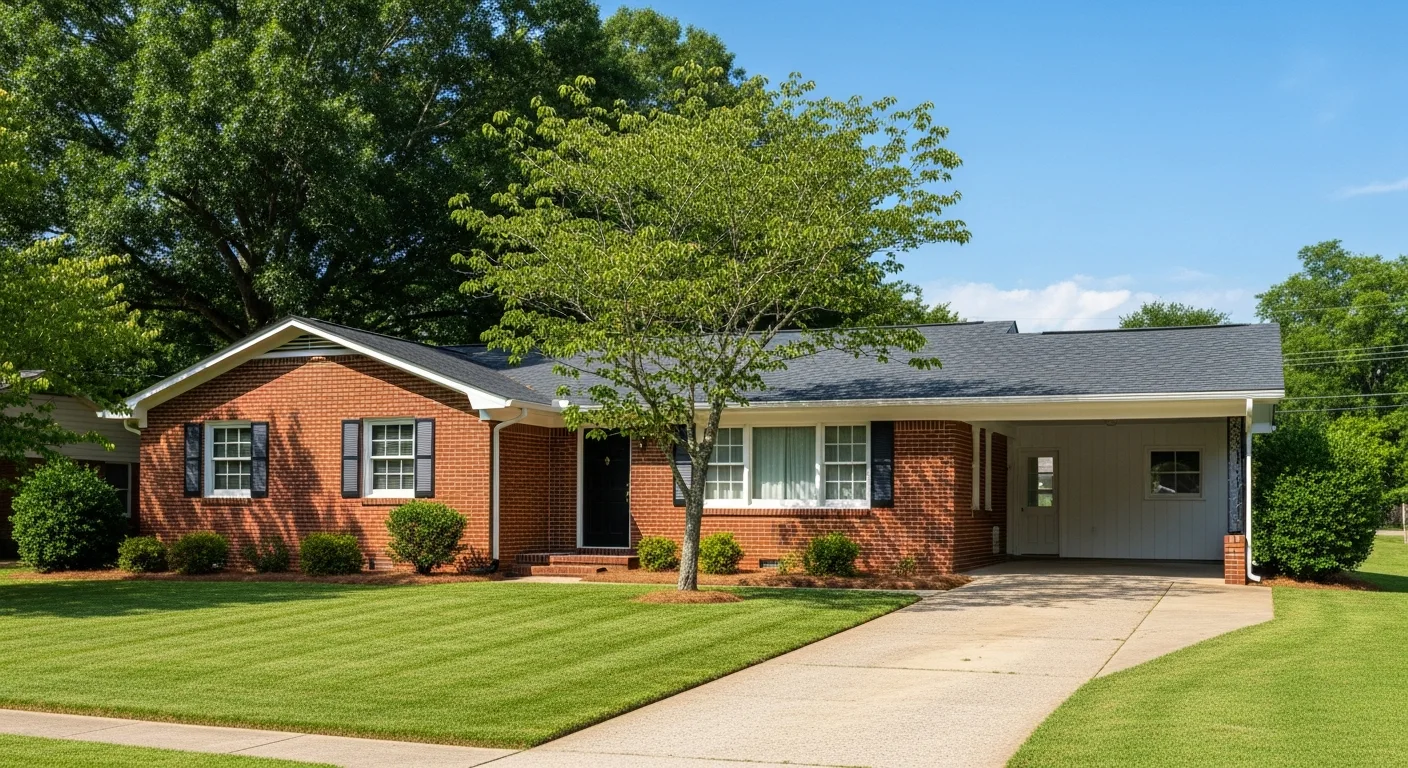
What are you actually buying at that median? A lot of Monroe’s established housing stock is exactly what you see above: solid brick ranches and traditional homes from the 1970s through the 1990s on generous lots, the kind of place that costs a fraction of a new build in Weddington or Marvin. Newer construction is arriving on the edges of town and in the surrounding county, so buyers can choose between move-in-ready resale value and a fresh build without leaving the ZIP code. For relocating buyers coming from the Northeast or the West Coast, the housing side of the cost of living in Monroe NC is often the single biggest reason the move pencils out.
What a mortgage actually looks like here
On a $400,000 home with 20% down and a rate near 6.6% in August 2026, your principal and interest lands in the low $2,000s per month before taxes and insurance. Add the Monroe property tax picture below and homeowners insurance, and most buyers are looking at a total monthly housing payment that undercuts what the same household would pay in Mecklenburg County for less house. That gap is the quiet engine behind the whole cost of living in Monroe NC conversation.
That line between town and county is worth understanding before you settle on an area, and I put the full comparison in my look at buying inside Monroe city limits versus out in the county.
Property Taxes in Monroe NC: City Limits vs County Only
Property taxes are the part of the cost of living in Monroe NC that most buyers miss, and they can swing your bill by hundreds of dollars a year. A “Monroe NC” mailing address does not automatically mean you live inside the City of Monroe. Plenty of homes with a Monroe address sit in unincorporated Union County, and that one distinction changes your property tax rate.
For the 2025 to 2026 fiscal year, Union County levies 43.42¢ per $100 of assessed value, according to the North Carolina Department of Revenue. If your home is inside the City of Monroe, you also pay the municipal rate of 44.00¢ per $100, for a combined 87.42¢. If your home carries a Monroe address but sits in the unincorporated county, you pay the county rate only, plus a small fire district fee. Here is how that plays out on a home assessed at the $400,000 median.
| Location | Combined rate per $100 | Annual tax on a $400,000 home |
|---|---|---|
| Inside City of Monroe | 87.42¢ | about $3,497 |
| Unincorporated Monroe (county only) | 43.42¢ | about $1,737 |
| City of Charlotte (Mecklenburg), for contrast | about $0.7668 | about $3,067 |
Notice two things. First, the in-city Monroe rate actually sits a little above Charlotte’s combined city-county rate of about 76.68¢, so the property tax rate alone is not where Monroe wins against Mecklenburg. Monroe wins on the price of the house, which is what the tax is calculated against. Second, if you buy just outside the city limits, your rate drops by half, which is a real lever inside the cost of living in Monroe NC that a lot of buyers never think to ask about.
One more piece of good news for city residents: Monroe actually cut its municipal rate from 50.25¢ to 44.00¢ when Union County completed its 2025 property reappraisal, according to the City of Monroe’s FY 2026 budget. Reappraisals raise assessed values, so the city trimmed the rate to soften the blow. If you want the full county picture, our Union County NC property tax rates guide walks through every municipality.
Talk to a local broker
City limits or county only? It changes your tax bill.
A quick call with a broker who works Monroe every week, so you know exactly what you will owe before you fall for a house.
Book a 15-minute call →Utilities in Monroe NC: The Municipal Power Advantage
Here is the piece of the cost of living in Monroe NC that almost no relocation article mentions, and it is the one I get most excited to explain. Monroe is not a Duke Energy town if you live inside the city. Monroe runs its own electric utility, generates and transmits its own power to more than 10,900 customers, and it is one of only eight cities in all of North Carolina that also provides municipal natural gas, serving over 11,300 gas customers since the late 1950s.
Why does that matter to your budget? Because the city sets the rates, and lately it has been setting them low. Residential electricity in Monroe averaged about 14.64¢ per kWh in early 2026, roughly 17% below the national average of 17.65¢, according to EnergySage. In July 2024 the city pushed through an average 10% electric rate cut, which dropped the typical residential bill from about $132 to about $118 a month, a saving of roughly $175 a year, per the City of Monroe.
The city also handles water, sewer, and residential trash and recycling for in-city homes, billed together on one municipal statement, and a stormwater fee funds drainage work. For a typical single-family household, water and sewer usually run in the range of $60 to $110 a month depending on usage, with trash and recycling folded in. It is one bill, one provider, and one place to call when something breaks, which is a small quality-of-life perk that comes bundled into the cost of living in Monroe NC for city residents.
The catch, and there is always a catch, is that the municipal-utility advantage only applies inside the city limits. If you buy in unincorporated Monroe to grab the lower county tax rate, you give up the city power and gas system and go back to Duke Energy and other providers. So the smart version of the cost of living in Monroe NC question is not just “what does a house cost,” it is “city or county,” because each side wins on a different line of your monthly budget. I map that tradeoff out for buyers before we ever tour, because it changes which listings make sense.
Sales Tax, Income Tax, and Everyday Costs
Beyond the house, the cost of living in Monroe NC gets a lift from two taxes that quietly favor Union County. The local sales tax is 6.75%, which is North Carolina’s 4.75% state rate plus 2% for the county. That is a full 1.5 points under Mecklenburg County’s 8.25% (Mecklenburg added a 1% transit tax on July 1, 2026), so every taxable purchase, from a new sofa to a car, costs a little less on the Monroe side of the county line than it does in Charlotte.
Income tax is the other lever. North Carolina now runs a flat 3.99% individual income tax for 2026, down from 4.25% the year before, according to the North Carolina Department of Revenue. The state has been stepping that rate down year after year, which matters most to buyers relocating from high-tax states in the Northeast, where a comparable income can lose two or three times as much to state tax. For a household earning $120,000, the difference between a 3.99% flat rate and a 6% or 7% bracket back home can be several thousand dollars a year that stays in your pocket. That does not show up on a home listing, but it is a real part of the cost of living in Monroe NC.
Homeowners insurance, HOA dues, and the fees buyers forget
Two recurring costs rarely make it into a cost-of-living index but land on your statement every month. Homeowners insurance in inland North Carolina is moderate compared with the coast, and most Monroe buyers see annual premiums in the range of $1,400 to $2,200 for a typical single-family home, depending on age, roof, and coverage. That is generally friendlier than what buyers arriving from Florida or the Gulf Coast are used to paying, and it is a quiet plus inside the cost of living in Monroe NC.
HOA dues are the other variable. Older established neighborhoods in and around Monroe often have no HOA at all, while newer master-planned communities on the edges of town carry dues that can run from a modest annual amount to $100 or more a month where there are pools, trails, or a clubhouse. Neither is right or wrong, but the difference is real money, so I always price the HOA into the monthly number when we compare homes. It is the kind of detail that separates a headline price from your true cost of living in Monroe NC.
Groceries, gas, and the categories that run normal
Not everything is a discount. Groceries in Monroe run about 2% above the national average, and healthcare lands around 15% above, according to AreaVibes and BestPlaces. Everyday retail, fuel, and dining sit close to the national line. This is the real shape of the cost of living in Monroe NC: your housing and taxes carry the savings, while the day-to-day categories are roughly what you would pay anywhere. Anyone who tells you Monroe is dirt cheap across the board is selling you something. The win is concentrated where it matters most, in the largest line item of your budget.
That line item is also what separates Monroe from the rest of the field. Monroe is the cheapest North Carolina town in my ranking of the most affordable places to buy near Charlotte, and that guide shows how it stacks up against Rock Hill, York and Lancaster on price and drive time.
Schools, Commute, and Hidden Costs to Weigh
Two things shape the true cost of living in Monroe NC that never appear on a cost-of-living index: what you spend to get to work, and what the schools mean for your options.
Commute is a real line in the cost of living in Monroe NC. Monroe sits about 25 miles from Uptown Charlotte, and the drive up US-74 (the main commuter route toward the city) runs 40 to 60 minutes in peak traffic. That commute is the price you pay for the lower home price, so if one spouse works in Uptown or SouthPark, factor the fuel and the time into the real math. The Monroe Expressway (the toll bypass around the older part of US-74) can shave meaningful time off the trip for a modest toll, and many buyers decide the toll is worth it. Compare that against a town like Indian Trail, which is closer to Charlotte but carries higher home prices, and you can see the tradeoff the whole county runs on.
Run the commute math before you commit. If a daily round trip to Uptown adds 25 to 30 miles each way, that can mean $250 to $400 a month in fuel and vehicle wear for a single commuter, plus tolls if you use the Monroe Expressway. That does not erase the savings on the house, but it is the reason I tell buyers to weigh the cost of living in Monroe NC as a whole-budget picture rather than a home price in isolation. For a household that works remotely or locally, the commute cost disappears and Monroe’s value gets even stronger.
Schools are served by Union County Public Schools, a district that ranks among the strongest in the Charlotte region, but ratings vary widely by attendance zone. Schools zoned to the city core, such as Monroe High, rate lower on GreatSchools, while nearby zones like Piedmont Middle (rated 9 out of 10) and Parkwood High (8 out of 10) rate much higher. Because a Monroe mailing address can feed several different schools, always verify the exact attendance zone for any specific home in the district’s address finder before you fall in love with it. Our guide to schools in Monroe NC breaks the zones down in detail.
Buyers who want the fuller picture of daily life, not just the dollars, will find our pros and cons of living in Monroe NC a useful companion to the cost breakdown here, and the Monroe community hub pulls together listings, neighborhoods, and local resources in one place.
▶️ Watch: For a plain-English look at how North Carolina and South Carolina taxes really compare for a South Charlotte move, see my video Living in South Charlotte vs SC: The Truth About Taxes on the Living in South Charlotte channel.
Healthcare is the cost most buyers forget to map before they move. Monroe has a full-service hospital inside the city with a 24-hour emergency department, and the rest of the hospital and urgent care options around Monroe are worth checking against whatever you pay for convenience today.
How the Cost of Living in Monroe NC Compares to Nearby Towns
The best way to understand the cost of living in Monroe NC is to see it against the towns a relocating buyer usually shortlists alongside it. Monroe is consistently the value play in Union County: you trade a longer commute and a more workaday town center for the lowest entry price in the area.
| Town | Approx. median sale price (2026) | Distance to Uptown Charlotte | Cost profile |
|---|---|---|---|
| Monroe | about $400,000 | about 25 miles | Lowest county entry price; city utilities in-limits |
| Indian Trail | mid $400,000s | about 18 miles | Closer in, higher home prices |
| Waxhaw | high $500,000s to $600,000s | about 25 miles | Premium schools and lots, higher prices |
| Weddington / Marvin | $800,000 and up | about 20 miles | Estate lots, top schools, highest prices |
When you total it up, the cost of living in Monroe NC comes down to one clear tradeoff. If your priority is the lowest possible housing cost inside a strong school district and a growing metro, Monroe usually wins. If you want to be closer to Charlotte and can absorb a higher price, Indian Trail makes sense. If premium schools and larger lots top your list, Waxhaw, Weddington, and Marvin are the move, at a meaningfully higher cost of living. The right answer depends on which line of the budget matters most to your household, and that is exactly the conversation I have with relocating buyers every week.
Frequently Asked Questions
Is Monroe NC an affordable place to live?
Yes, relative to the Charlotte metro. The cost of living in Monroe NC sits about 1% below the national average, driven mostly by housing, which runs roughly 21% under the national line. A median home sells near $400,000, about $75,000 below the Union County median, and the city’s own low electric and gas rates help hold monthly costs down for in-city residents.
What is the property tax rate in Monroe NC?
Inside the City of Monroe, the combined rate for 2025 to 2026 is 87.42¢ per $100 of assessed value, which is the 43.42¢ Union County rate plus the 44.00¢ city rate. Homes with a Monroe address that sit in unincorporated Union County pay the county rate only, 43.42¢, plus a small fire district fee. On a $400,000 home, that is roughly $3,497 a year in-city versus about $1,737 in the county.
How much are utilities in Monroe NC?
If you live inside the city, Monroe provides your electricity and natural gas through its own municipal system. Residential electricity averaged about 14.64¢ per kWh in early 2026, roughly 17% below the national average, and the city cut electric rates about 10% in 2024. Homes in unincorporated Monroe use Duke Energy and other providers instead.
Is Monroe NC cheaper than Charlotte?
On housing, clearly yes. Monroe’s median sale price near $400,000 buys more home than the same money in most of Mecklenburg County, and the Union County sales tax of 6.75% is well under Mecklenburg’s 8.25%. The in-city property tax rate runs a little above Charlotte’s, but because Monroe home prices are lower, the actual tax bill and total monthly cost usually come in under a comparable Charlotte home.
What salary do you need to live comfortably in Monroe NC?
The cost of living in Monroe NC is affordable enough that the salary math is friendly. A common rule of thumb is that housing should stay near 30% of gross income. On a median $400,000 home, a household income in the range of $95,000 to $115,000 keeps a mortgage, taxes, and insurance comfortably in that band at 2026 rates. Because the cost of living in Monroe NC leans on housing for its savings, a buyer coming from a higher-cost market often finds the same lifestyle costs noticeably less here.
Does a Monroe NC address mean I live in the city?
Not always. Many homes with a Monroe mailing address sit in unincorporated Union County, outside the city limits. That distinction determines whether you pay the city property tax and receive city utilities, so it is one of the first things to confirm on any home and a real factor in the cost of living in Monroe NC. I check it for buyers as a matter of routine, because it can change your monthly cost by a few hundred dollars either way.
About the Author
Steve Jarrell is a licensed broker and Team Lead of The Longleaf Group at eXp Realty, a RealTrends Verified top team serving Monroe and the wider South Charlotte and Union County market. He is dual licensed in North Carolina and South Carolina and works the Union County market and its border towns first-hand every week, which is why he can map the city-versus-county tax and utility tradeoff that shapes the real cost of living in Monroe NC. Reach Steve at 704-774-7170, steve@jarrellhomes.com, or thelongleafgroup.com, and see current listings and local resources on the Monroe community hub.