
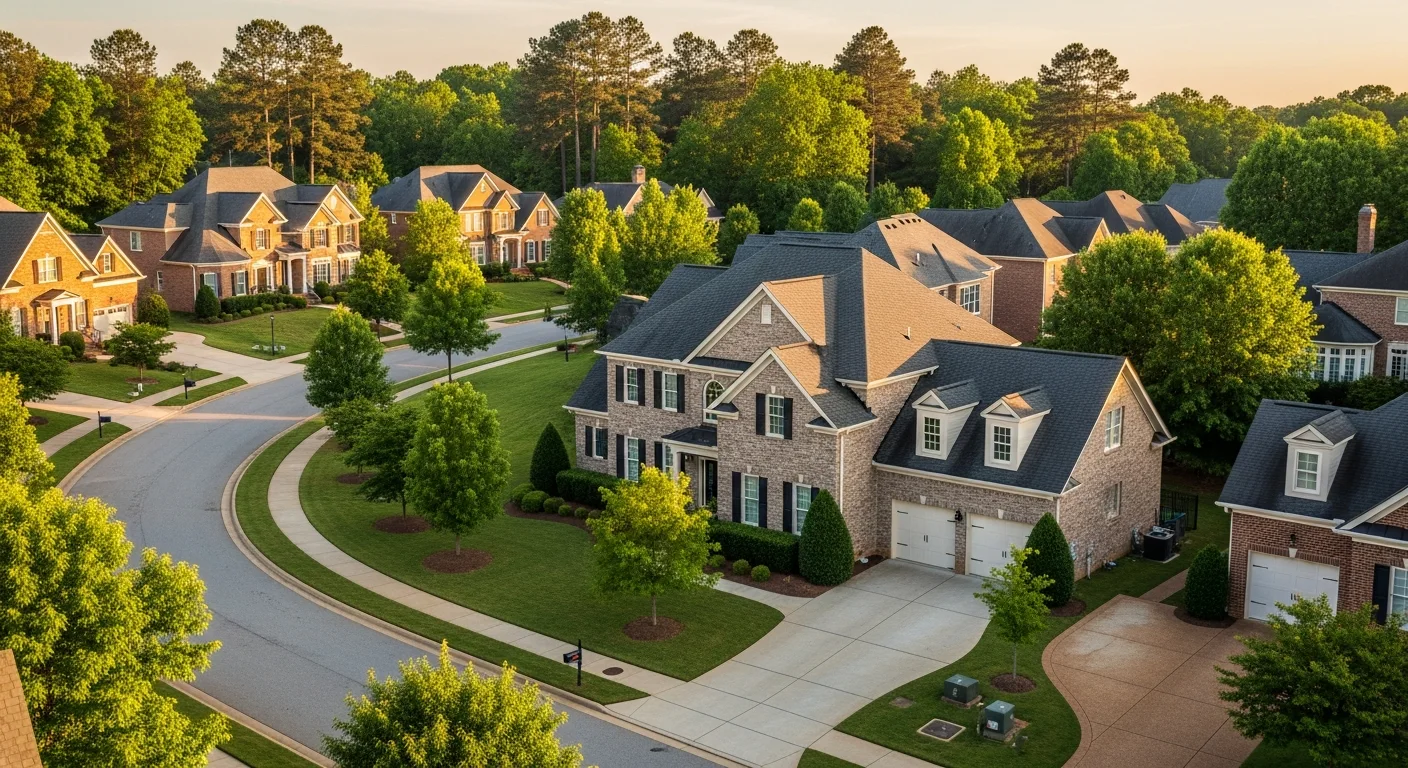
If you are weighing a move to south Charlotte, the cost of living in Ballantyne NC is probably the number you keep circling back to. It is the part of Charlotte that shows up on relocation lists for its walkable village center, its golf, and its schools, and it is also the part where the housing math surprises people. I work with buyers on both sides of the North Carolina and South Carolina line every week, and Ballantyne comes up in almost every conversation about where to land. So let me lay out what it actually costs to live here in 2026, line by line, with real numbers instead of a vague “it is pricey.”
Ballantyne is not a separate town. It is a large, master-planned area at the southern tip of Charlotte, inside Mecklenburg County and mostly inside the 28277 ZIP code, near the South Carolina border. That matters for cost, because your taxes, utilities, and services all run through the City of Charlotte and Mecklenburg County, not a small suburb. Once you understand that, the cost of living in Ballantyne NC gets a lot easier to picture.
17 min read | By Steve Jarrell, The Longleaf Group at eXp Realty | Updated August 2026
Free · 26-Page Insider Guide
Not sure which South Charlotte town fits you?
Towns compared, NC vs SC taxes and schools side by side, and the 5 mistakes out-of-state buyers make.
What This Guide Covers
- The short answer on the cost of living in Ballantyne NC
- Housing: the real cost of living in Ballantyne NC
- Property taxes in Ballantyne and the 2026 rate change
- Utilities, insurance, and HOA dues
- Everyday costs: groceries, healthcare, and getting around
- One-time costs to budget when you buy
- Is Ballantyne worth the premium, and who it fits
- Common questions about the cost of living in Ballantyne
The Short Answer on the Cost of Living in Ballantyne NC
Key Takeaways
- Cost of living runs modestly above the Charlotte metro average, and almost all of the difference is housing
- Charlotte scores about 95.7 on a national cost-of-living index where 100 is the US average
- A typical detached Ballantyne home runs 30% to 50% above the Charlotte median
- 28277 ZIP median sale price near $580,000 in early 2026; Zillow typical value around $622,000
- Combined Charlotte and Mecklenburg County property tax rate is $0.7668 per $100 for 2026 to 2027
- Utilities and groceries cost the same as the rest of the city; a Duke Energy bill averages about $145 a month
Steve Jarrell of The Longleaf Group tracks the cost of living in Ballantyne NC, and here is the quick version. The cost of living in Ballantyne NC runs modestly above the Charlotte metro average, and almost all of that difference is housing. Charlotte overall scores about 95.7 on a national cost of living index where 100 is the U.S. average, so the metro itself is right around or slightly below the national line (Salary.com). Ballantyne sits above that metro number because its homes cost more, not because groceries, gas, or utilities cost more than the rest of the city. A typical detached home in Ballantyne runs 30% to 50% above the Charlotte median, while your electric bill, water bill, and grocery run are the same as they would be anywhere in the city.
In plain numbers: the median sale price in the 28277 ZIP code sat near $580,000 in early 2026, the current combined Charlotte and Mecklenburg County property tax rate is $0.7668 per $100 of value for the 2026 to 2027 year, a Duke Energy electric bill averages about $145 a month, and homeowners insurance runs roughly $2,000 to $2,500 a year. Add it up and Ballantyne is a premium address inside an otherwise affordable Southern city. You pay up for the house and the location, and the day to day spending stays reasonable. That is the real shape of the cost of living in Ballantyne NC, and the rest of this guide breaks each piece down.
Talk to a local broker
Trying to figure out if Ballantyne fits your budget?
I will walk you through real prices, taxes, and monthly costs for your situation. No pressure, just answers.
Schedule a 15-Minute Introductory Call →
704-774-7170 · steve@jarrellhomes.com · thelongleafgroup.com
Housing Is the Real Cost of Living in Ballantyne NC
When people ask me about the cost of living in Ballantyne NC, they are usually really asking about the house. That is the right instinct, because housing is where the premium lives. Everything else is close to the Charlotte average, but the homes are not, and that single fact drives most of the cost of living in Ballantyne NC.
The 28277 ZIP code, which covers most of Ballantyne along with neighboring pockets like Piper Glen and Provincetowne, had a median sale price near $580,000 in early 2026, roughly flat compared to a year earlier (Redfin). Zillow puts the typical home value in the ZIP around $622,000. Both are ways of saying the same thing: the middle of this market is in the high $500,000s to low $600,000s, well above the City of Charlotte median of about $435,000 over the three months ending in May 2026.
Ballantyne is not one single market, though, and the averages hide that. It splits into two very different products. The eastern side, closer to the Ballantyne Country Club and the newer construction, leans toward larger detached homes, and that pocket ran near $653,000 in spring 2026, up about 17.6% year over year. The western side carries more townhomes and condos, and there the median sat closer to $435,000, actually down about 11% from the prior year (Redfin). So a buyer who says “I want a house in Ballantyne” and a buyer who says “I want a low maintenance townhome in Ballantyne” are shopping in two markets that are about $200,000 apart.
On a price per square foot basis, Ballantyne runs in the $262 to $275 range depending on the submarket and the source. For relocating buyers coming from the Northeast or the West Coast, that number lands as a relief. For buyers coming from elsewhere in the Carolinas, it lands as the top of the local market. Both reactions are correct. Ballantyne is expensive for Charlotte and affordable for a major metro. If you want the full breakdown of prices and trends, our Ballantyne housing market report goes deeper on the submarkets and where values are heading.
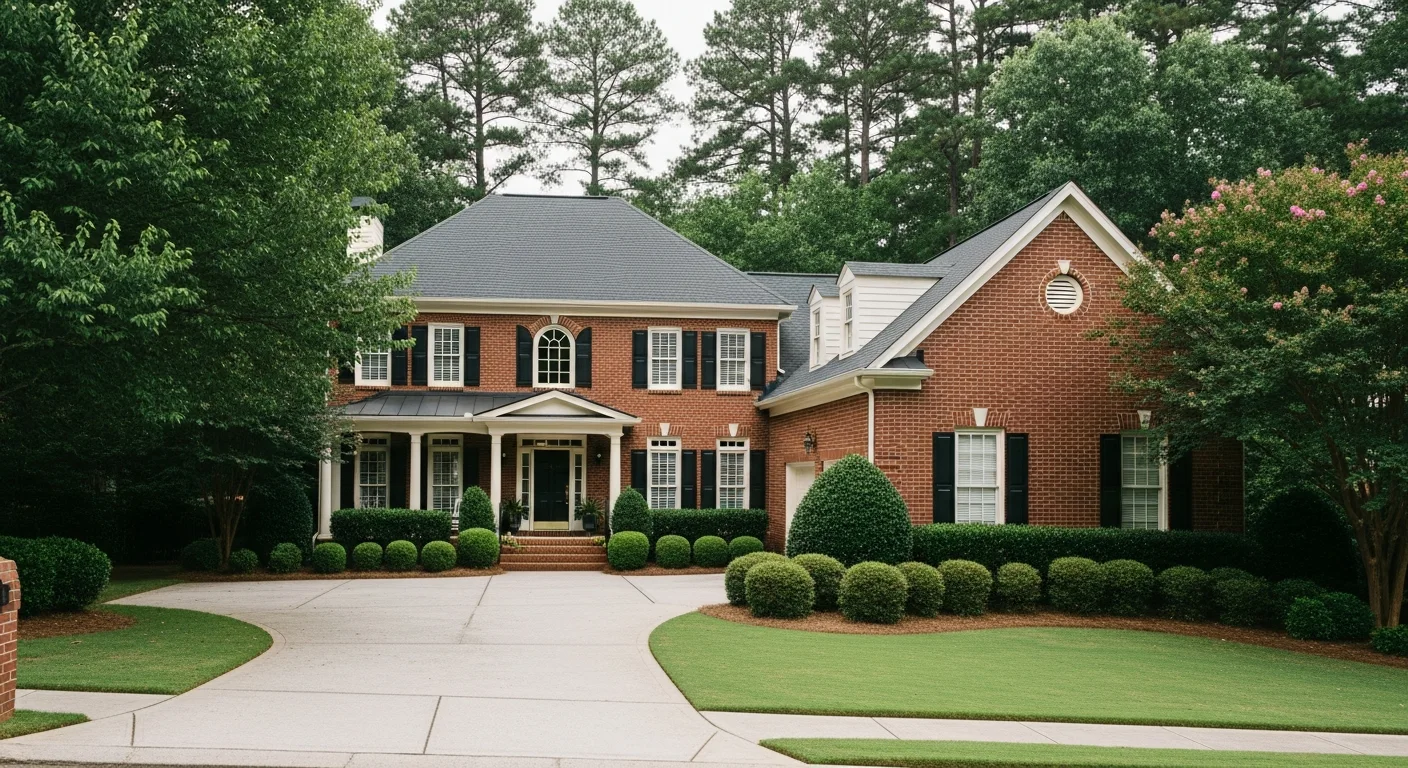
Living somewhere you can walk cuts more than gas money, and the short list is in Ballantyne’s most walkable neighborhoods.
Property Taxes in Ballantyne: The 2026 Rate Just Went Up
Property tax is the line item that catches relocating buyers off guard, because it is tied to the city and county, and both just raised their rates. Ballantyne homeowners pay two property taxes on the same bill: the Mecklenburg County rate and the City of Charlotte rate. There is no separate town tax, because Ballantyne is inside the city.
For the 2026 to 2027 fiscal year, Mecklenburg County set its rate at $0.4927 per $100 of assessed value, and the City of Charlotte rate is $0.2741 per $100 (Mecklenburg County Office of Tax Administration). Combined, that is $0.7668 per $100 of assessed value. The county portion went up this cycle, from $0.4831 to $0.4927 per $100, so the combined rate rose from $0.7572 a year earlier to $0.7668. If you read a Ballantyne cost article written a year ago, it is probably quoting the older $0.7572 rate.
Here is what that means in real dollars. Take the assessed value of the home, divide by 100, and multiply by 0.7668. On a $580,000 home, the median for the ZIP, that is about $4,447 a year, or roughly $371 a month folded into your payment. On a $653,000 detached home in Ballantyne East, you are closer to $5,007 a year. On an $800,000 home, you are near $6,134 a year. There is also a small county solid waste fee on top, so round up slightly. These are estimates on the current rate, and your actual bill depends on the county assessed value, which is not always the same as your sale price.
One more thing worth knowing: Mecklenburg County reassesses property values on a four year cycle, and the next revaluation is scheduled for 2027. When values are reset, the tax rate is usually adjusted too, but a home that appreciated faster than average can still see its bill climb. I always tell buyers to budget for property taxes to drift up over time, not stay flat. If you want to see the current jurisdiction rates yourself, the Mecklenburg County tax rate page lists them, and the county has published the details of the 2026 to 2027 budget behind the change.
Property tax is also the piece that pulls people toward the South Carolina side of the line, where owner-occupied homes are assessed at a much lower ratio. That is a real tradeoff, and I dig into it in our NC versus SC taxes guide. For a Ballantyne buyer specifically, the North Carolina bill is the price of being inside Charlotte with Charlotte schools and Charlotte amenities, and it is the single biggest tax line in the cost of living in Ballantyne NC.
Talk to a local broker
Ready to make Ballantyne, NC home? Let’s figure it out together.
Free, 15 minutes, and no sales pitch.
Utilities, Insurance, and HOA Dues: The Monthly Line Items
Once the house and the taxes are settled, the rest of the cost of living in Ballantyne NC is the same set of monthly bills you would pay anywhere in Charlotte. Here is where the good news lives, because these numbers are ordinary.
Electricity and water
Ballantyne is served by Duke Energy Carolinas for electricity. A typical home using about 1,000 kilowatt hours a month runs close to $145 on current 2026 rates, with an all-in cost around 12.5 to 14 cents per kilowatt hour. In the peak of a Carolina summer or a cold snap in January, a larger home with heavy heating and cooling can push past $200 for the month.
Water and sewer come through Charlotte Water, and a normal single-family bill lands in the rough neighborhood of $70 to $110 a month depending on household size and irrigation. None of this is Ballantyne specific. It is Charlotte utility pricing, which is why utilities are a small part of the cost of living in Ballantyne NC rather than a driver of it.
Homeowners insurance
Homeowners insurance in Charlotte averages roughly $2,000 to $2,550 a year, in line with the North Carolina statewide average near $2,100. A larger Ballantyne home with more square footage to rebuild will sit at the upper end of that band, and a townhome will sit lower because the association master policy covers the exterior. North Carolina does not have coastal hurricane exposure this far inland, so rates here are calmer than they are near Wilmington or the coast, but insurers have raised prices across the state, so budget for it as a real line item rather than an afterthought.
HOA dues
This is the Ballantyne cost that a lot of buyers forget. Most of Ballantyne is made up of planned communities, and many of them carry a homeowners association. Dues vary widely, from modest annual amounts in an established single-family neighborhood to higher monthly dues in a townhome or condo community where the association maintains the exterior, the landscaping, and shared amenities like a pool or clubhouse.
Golf and country club memberships, where they exist, are separate and can be significant. Before you fall for a specific home, ask for the exact HOA dues and what they cover, because a low list price with high dues can cost more month to month than a higher price with none. This is the kind of thing I check for buyers on every Ballantyne showing.
Taxes are the piece that most often decides whether a buyer stays on the North Carolina side in Ballantyne or crosses into South Carolina, so I broke the comparison down on video. You can watch my video on how South Charlotte and South Carolina taxes compare on my Living in South Charlotte channel for the side by side.
Everyday Costs: Groceries, Healthcare, and Getting Around
Away from housing, the cost of living in Ballantyne NC tracks the Charlotte metro closely, and Charlotte is a reasonably priced city. This is the part that makes the premium home price easier to swallow, because the everyday cost of living in Ballantyne NC does not carry a surcharge over the rest of the city.
Groceries and dining
Grocery prices in Charlotte run somewhere between roughly 2% and 11% above the national average depending on the index you trust, which in practice means about what you would expect in any mid-size Southern city (Salary.com). Ballantyne itself is well stocked, with Harris Teeter, Publix, a Trader Joe nearby, and a Whole Foods a short drive away, so you are not paying a convenience premium to shop. Dining at the Ballantyne village and Stonecrest, the open air shopping center just north, spans casual to upscale, and prices match the rest of south Charlotte.
Healthcare
Healthcare is the one everyday category that runs meaningfully above the national line in Charlotte, roughly 15% higher for routine services like checkups and dental (Salary.com). Ballantyne is well covered on access, with Atrium Health and Novant Health facilities close by and a large concentration of physician offices in the area, so you trade a slightly higher price for genuinely short drive times to care.
Getting around
Ballantyne is a drive-everywhere part of Charlotte, so transportation cost mostly means gas, insurance, and the wear of a commute. The upside is that Ballantyne has become a job center in its own right thanks to the Ballantyne Corporate Park, so plenty of residents have a short commute. If you work Uptown, budget 25 to 40 minutes each way depending on traffic and whether you take Interstate 485 to Interstate 77 or Providence Road, the main surface artery north. North Carolina gas prices sit near the national average, and the state does not levy a separate vehicle property tax the way some states do, though it does charge an annual registration and a highway use tax at purchase.
Put the everyday categories together and a single person lives comfortably in Charlotte on roughly $60,000 to $75,000 of gross income, while a household of four generally wants $120,000 to $150,000 for a comfortable middle path (Salary.com). In Ballantyne, adjust that upward for the housing line, because the mortgage is the part that stretches, not the lifestyle around it.
One-Time Costs to Budget When You Buy in Ballantyne
The monthly math is only half of the cost of living in Ballantyne NC. The other half is the money you need up front, and this is where relocating buyers who have not purchased in a few years get surprised. Planning for it early keeps the closing table calm.
Your largest up-front number is the down payment. Financing a Ballantyne home is no different from anywhere else, and plenty of buyers put down less than 20%, but on a $580,000 home a 20% down payment is $116,000, while 10% is $58,000. If you put down less than 20%, budget for private mortgage insurance folded into the payment until you build enough equity. Cash reserves matter here too, because sellers in the stronger Ballantyne pockets still favor clean, well-qualified offers.
On top of the down payment, plan for closing costs of roughly 2% to 4% of the purchase price for a buyer in North Carolina, which covers lender fees, the appraisal, title insurance, attorney fees, and prepaid taxes and insurance set aside in escrow. North Carolina is an attorney-closing state, so a real estate attorney handles the settlement. Add a home inspection, usually a few hundred dollars, and any specialty inspections you want on an older home.
If you are moving from out of state, fold in the moving company and the cost of two households briefly overlapping. None of these are Ballantyne specific, but on a higher purchase price they scale up, which is why the up-front cost of buying here runs above the Charlotte average even though the process is identical.
The reassuring part is that once you are in, the ongoing cost of living in Ballantyne NC settles into the predictable monthly rhythm covered above: the mortgage, the taxes, the utilities, and the everyday spending that matches the rest of Charlotte. The up-front hurdle is the steepest part, and it is very plannable with a lender and an agent working the numbers with you before you shop.
Before you decide whether the premium is worth it, it helps to see where Ballantyne sits against the whole metro, which is what I worked through in does South Charlotte cost more than Charlotte, with the Census income and home value figures for the towns south of the city.
Is Ballantyne Worth the Premium, and Who It Fits
So is the cost of living in Ballantyne NC worth it? My read after years of working this market is that Ballantyne earns its premium for a specific kind of buyer and overshoots for another. It is worth being clear about which one you are before you fall for the place.
Ballantyne fits you well if you want a polished, amenity-rich, master-planned setting inside the city limits, with a real village center you can walk, strong and in-demand Charlotte-Mecklenburg schools, quick access to the airport and Interstate 485, and a short commute to the offices in the Ballantyne Corporate Park. For a buyer relocating from a higher cost metro, the money goes noticeably further here than it did back home, and the location removes a lot of daily friction. That combination is exactly why Ballantyne stays in demand and why detached values have held up.
Ballantyne is probably not your best value if your priority is maximum house and land for the dollar. Cross into the Union County towns like Waxhaw and Weddington, or over the line into Indian Land and Fort Mill in South Carolina, and the same budget can buy more square footage, more acreage, or a lower tax bill, at the cost of a longer drive and a less walkable setting.
That is a real tradeoff, not a knock on Ballantyne. Some buyers want the convenience and the address, and some want the space and the savings. If you are still deciding between areas, our guide to the best neighborhoods in Ballantyne and our Ballantyne community page are good next stops, and you can always start with our home buying resources to map out the numbers for your situation.
The way I coach buyers through this is simple. Do not compare Ballantyne to the national average, because that makes it look expensive. Compare it to the other places that give you what you actually want, and then the premium is either clearly worth it or clearly not, for you. That is the entire point of understanding the cost of living in Ballantyne NC before you shop, so you buy with your eyes open instead of getting surprised at the closing table.
Cost of Living in Ballantyne NC: Common Questions
Is Ballantyne an expensive place to live?
Ballantyne is expensive relative to the rest of Charlotte and affordable relative to a major U.S. metro. The premium is almost entirely in housing, where a typical detached home runs 30% to 50% above the Charlotte median. Everyday costs like groceries, utilities, and gas match the rest of the city, and Charlotte overall scores near the national average on cost of living.
What is the median home price in Ballantyne NC?
The 28277 ZIP code that covers most of Ballantyne had a median sale price near $580,000 in early 2026, roughly flat year over year. It splits into two markets: detached homes in Ballantyne East ran near $653,000, while the more townhome and condo heavy Ballantyne West sat closer to $435,000 (Redfin).
What are the property taxes in Ballantyne?
Ballantyne homeowners pay a combined Mecklenburg County and City of Charlotte rate of $0.7668 per $100 of assessed value for the 2026 to 2027 year, up from $0.7572 the year before after the county raised its rate. On a $580,000 home that is about $4,447 a year, plus a small county solid waste fee.
How much are utilities in Ballantyne NC?
A Duke Energy Carolinas electric bill averages about $145 a month at 1,000 kilowatt hours, and can top $200 in peak summer or winter. Water and sewer through Charlotte Water typically run about $70 to $110 a month. These are standard Charlotte utility costs, not a Ballantyne premium.
Is it cheaper to live in Ballantyne or across the border in South Carolina?
South Carolina towns like Indian Land and Fort Mill often carry lower property taxes on an owner-occupied home and can offer more house or land for the dollar, so the monthly cost can be lower. The tradeoff is a longer commute and a less walkable, non-Charlotte setting. Ballantyne buyers are paying for being inside the city with city schools and amenities.
How much income do you need to live comfortably in Ballantyne?
In Charlotte broadly, a single person lives comfortably on roughly $60,000 to $75,000 gross and a household of four on about $120,000 to $150,000. In Ballantyne, adjust the housing portion of that upward, because the mortgage is the line that stretches while the rest of the budget stays close to the metro average.
Does Ballantyne have HOA fees?
Most of Ballantyne is made up of planned communities, and many carry a homeowners association. Dues range from modest annual amounts in an established single-family neighborhood to higher monthly dues in townhome and condo communities that maintain the exterior and shared amenities. Always confirm the exact dues and what they cover before you make an offer.
If the numbers work for you, my Ballantyne relocation guide covers neighborhoods, schools, and how to plan the move.
About the Author
I am Steve Jarrell, a licensed real estate broker in both North Carolina and South Carolina and the Team Lead of The Longleaf Group at eXp Realty, based in Weddington just south of Ballantyne. I work the south Charlotte and Union County market and the South Carolina border towns every week, which means I price the North Carolina versus South Carolina tradeoff for real buyers constantly, not in theory. If you are weighing Ballantyne against the rest of south Charlotte, I am glad to run the actual numbers for your situation. Reach me at 704-774-7170, steve@jarrellhomes.com, or thelongleafgroup.com.